
If your eyes are always red, the cause may be dry eyes, allergies, prolonged screen time, contact lens irritation, conjunctivitis, or another eye condition. Mild redness may improve with rest, but persistent redness—especially with pain, light sensitivity, discharge, or vision changes—should be evaluated by an eye doctor.
Red eyes are one of the most common eye complaints. Sometimes they are temporary and harmless, such as after a sleepless night or long hours in front of a screen. However, eyes that remain red or become red repeatedly may indicate an underlying problem that needs proper treatment.
Understanding the possible red eyes causes can help you know when simple eye care is enough and when you should consult an ophthalmologist.
What Does Eye Redness Mean?
Eye redness occurs when the small blood vessels on the surface of the eye become enlarged, irritated, or inflamed. This makes the normally white part of the eye appear pink or red.
Eye redness can affect one or both eyes and may occur with other symptoms, including:
- Itching
- Burning or stinging
- Excessive watering
- Dryness or gritty sensation
- Eye discharge
- Swollen eyelids
- Eye pain
- Sensitivity to light
- Blurred or reduced vision
- A feeling that something is stuck in the eye
The severity and combination of symptoms can provide clues about the possible cause. However, symptoms alone cannot always identify the problem.
If your eyes are always red or frequently become red without an obvious reason, an eye examination can help determine the underlying cause.
Common Red Eyes Causes
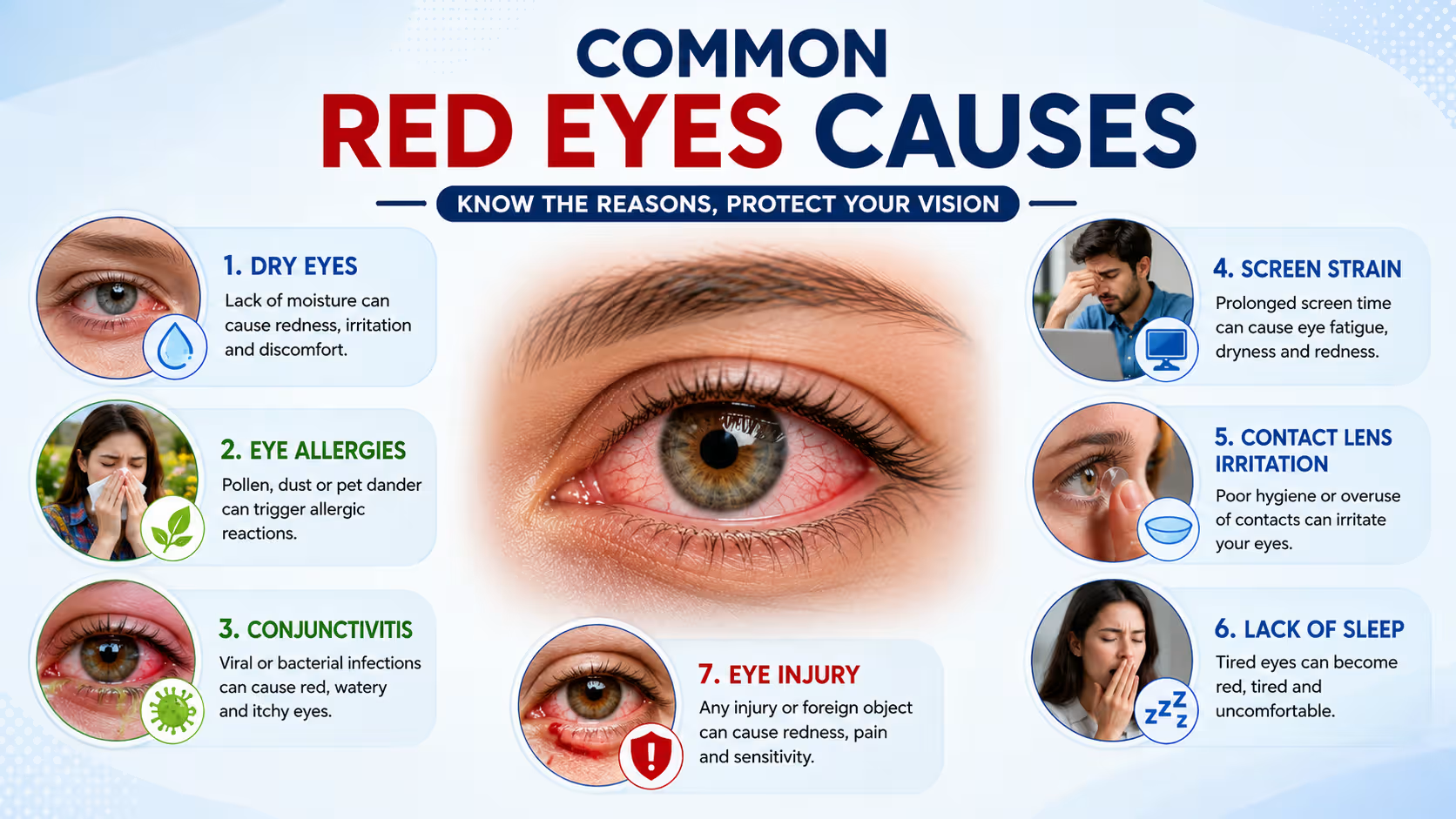
There are many possible causes of eye redness. Some are minor and temporary, while others require medical treatment.
1. Dry Eyes
Dry eye is a common reason for persistent redness. It can occur when the eyes do not produce enough tears or when tears evaporate too quickly.
Dry eyes may cause:
- Redness
- Burning
- Grittiness
- Excessive watering
- Eye fatigue
- Blurred vision that may come and go
Long screen hours, reduced blinking, air conditioning, pollution and certain environmental conditions can contribute to dry eye symptoms.
2. Eye Allergies
Allergic conjunctivitis can cause red, itchy and watery eyes. Common triggers include dust, pollen, pet dander, smoke and other allergens.
Intense itching is particularly common with eye allergies.
Allergy-related redness often affects both eyes.
3. Conjunctivitis or Pink Eye
Conjunctivitis occurs when the conjunctiva becomes inflamed. Viruses, bacteria or allergies can cause it.
Possible symptoms include:
- Redness
- Watering
- Eye discharge
- Swollen eyelids
- Irritation
- Itching
Viral and bacterial conjunctivitis can be contagious, so good hand hygiene and avoiding shared towels or cosmetics are important.
4. Prolonged Screen Time
Long hours on computers, smartphones and other digital devices can contribute to digital eye strain.
When concentrating on a screen, people often blink less frequently. Reduced blinking can destabilize the tear film and cause dryness and irritation, which may make the eyes look red.
5. Lack of Sleep
Insufficient sleep can leave the eyes looking tired, dry and bloodshot.
Occasional redness after a late night usually improves with adequate sleep and hydration. However, frequent redness should not automatically be blamed on lack of sleep.
6. Contact Lens Problems
Contact lenses can cause redness when they are worn incorrectly or for longer than recommended.
Poor lens hygiene, sleeping in unsuitable lenses, using expired lenses, improper cleaning or continuing to wear lenses despite irritation can increase the risk of eye-surface problems and infection.
7. Foreign Body or Eye Injury
Dust, sand, chemicals or another foreign object can irritate the eye and cause sudden redness.
Do not rub the eye because rubbing can worsen irritation or potentially damage the cornea.
Chemical exposure to the eye requires prompt medical attention.
8. Other Eye Conditions
In some cases, red eyes may be associated with more significant conditions involving the cornea, uvea, intraocular pressure or other eye structures.
This is particularly important when redness occurs with pain, blurred vision, light sensitivity, nausea, halos around lights or other sudden changes in vision.
Symptoms That May Point to the Cause
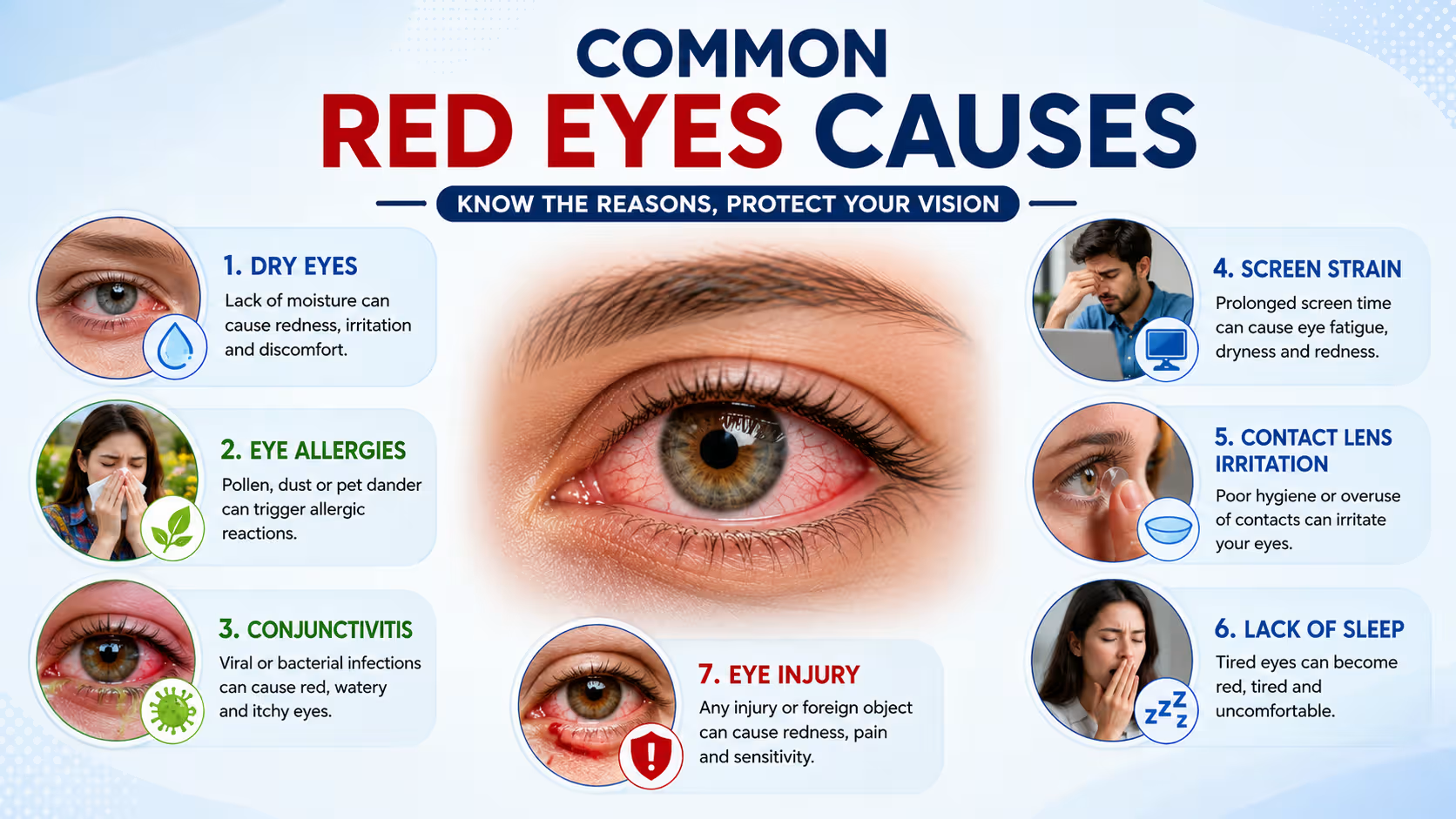
The symptoms occurring alongside redness can provide useful clues, although only an eye examination can establish the diagnosis.
| Symptoms | Possible Cause |
|---|---|
| Redness + intense itching | Eye allergy |
| Redness + watery discharge | Allergy or viral conjunctivitis |
| Redness + thick discharge | Possible bacterial conjunctivitis |
| Redness + burning or grittiness | Dry eye or irritation |
| Redness + contact lens use | Lens-related irritation or infection |
| Redness + significant pain | Requires prompt evaluation |
| Redness + blurred vision | Needs medical assessment |
| Redness + light sensitivity | May indicate a more significant eye problem |
| Redness after an injury | Possible eye trauma |
| Redness + sudden vision changes | Urgent eye assessment may be required |
These associations are only general indicators. Avoid self-diagnosing based on symptoms alone.
Can Contact Lenses Cause Redness?
Yes, contact lenses can cause eye redness, particularly when they are not used or maintained correctly.
Common reasons include:
- Wearing lenses longer than recommended
- Sleeping in lenses when they are not designed for overnight wear
- Touching lenses with unwashed hands
- Poor lens cleaning practices
- Using expired lenses or lens solution
- Wearing damaged lenses
- Failing to replace the lens case as recommended
- Continuing to wear lenses when the eyes become irritated
Contact lens wearers should pay particular attention to painful red eyes.
If you develop significant redness, pain, light sensitivity, discharge or reduced vision while wearing contact lenses, remove the lenses and seek professional eye care promptly.
Do not simply use redness-relieving drops and continue wearing the lenses.
Eye Allergy or Eye Infection: How Are They Different?
Eye allergies and eye infections can produce similar symptoms, making it difficult to distinguish between them without an examination.
Eye Allergy
Eye allergies commonly cause:
- Intense itching
- Redness
- Watery eyes
- Puffy or swollen eyelids
- Symptoms in both eyes
Symptoms may worsen after exposure to dust, pollen, smoke, pets or other allergens.
Eye Infection
An eye infection may cause:
- Redness
- Eye discharge
- Watering
- Eyelid swelling
- Irritation
- Sometimes pain or light sensitivity
Viral conjunctivitis often causes watery discharge, while bacterial conjunctivitis may produce thicker discharge.
However, these symptoms can overlap. Antibiotic eye drops should not be started simply because the eye is red, because antibiotics do not treat viral or allergic causes.
An ophthalmologist can determine the likely cause and recommend appropriate treatment.
Safe Care for Mild Redness
For mild redness without severe pain, vision changes or other warning signs, simple measures may help reduce irritation.
Helpful steps include:
- Take regular breaks during prolonged screen use.
- Follow the 20-20-20 rule.
- Blink frequently when using digital devices.
- Get adequate sleep.
- Avoid rubbing your eyes.
- Reduce exposure to smoke, dust and other irritants.
- Keep your hands clean before touching your eyes.
- Follow proper contact lens hygiene.
- Use lubricating eye drops when appropriate and preferably after professional advice.
- Avoid sharing towels, eye makeup or personal eye-care products.
Avoid these common mistakes
Do not repeatedly use eye drops marketed only to “remove redness” without understanding the cause. Temporary whitening of the eye does not necessarily mean the underlying problem has been treated.
Also avoid using leftover antibiotic or steroid eye drops without an ophthalmologist’s advice. Some eye conditions can worsen when inappropriate medication is used.
When to See an Eye Doctor
Not every red eye is an emergency, but persistent or recurrent eye redness should be evaluated if it does not improve or is associated with other symptoms.
Consult an eye doctor if:
- Your eyes remain red for several days.
- Redness keeps returning.
- You have persistent eye irritation or burning.
- You develop eye discharge.
- Your eyelids become swollen.
- You experience unexplained eye pain.
- You have increased sensitivity to light.
- Your vision becomes blurred or reduced.
- You wear contact lenses and develop a painful red eye.
- Redness occurs after an eye injury.
- Your eye has been exposed to a chemical.
- You experience sudden changes in vision.
Seek urgent eye care for:
- Sudden vision loss
- Severe eye pain
- Significant eye injury
- Chemical exposure
- Sudden severe redness associated with vision changes
- A sudden increase in flashes or floaters, particularly with a curtain-like shadow over your vision
These symptoms may indicate a more serious eye problem and should not be managed at home.
For people in Lucknow experiencing persistent or unexplained eye symptoms, an evaluation by an experienced ophthalmologist can help identify the cause and determine whether further treatment or specialist care is required.
How an Ophthalmologist Finds Red Eye Causes
When you visit an ophthalmologist for persistent red eyes, the doctor will first ask about your symptoms, medical history, medications, contact lens use and possible exposure to allergens or irritants.
The examination may include several steps.
1. Detailed Eye Examination
The doctor examines the eyelids, conjunctiva, cornea and other visible structures of the eye for signs of inflammation, infection, injury or irritation.
2. Slit-Lamp Examination
A slit-lamp microscope provides a magnified view of the front part of the eye. It can help identify abnormalities involving the conjunctiva, cornea and other structures.
3. Dry Eye Assessment
If dry eye is suspected, the ophthalmologist may evaluate the tear film and condition of the eye surface.
4. Eye Pressure Measurement
Depending on your symptoms and examination findings, intraocular pressure may be checked to help assess certain eye conditions.
5. Additional Testing
If the examination suggests a more complex problem, the ophthalmologist may recommend additional tests or specialist evaluation.
The goal is not simply to reduce the redness but to identify and treat the underlying cause.
Reducing Recurrent Eye Redness
If your eyes frequently become red, identifying the trigger is an important part of prevention.
Follow these eye-care habits:
- Take regular breaks from screens.
- Blink frequently.
- Maintain healthy sleep habits.
- Avoid smoking and second-hand smoke.
- Protect your eyes from excessive dust and wind.
- Do not rub your eyes.
- Wash your hands before touching your eyes.
- Follow recommended contact lens hygiene.
- Replace contact lenses and lens cases according to professional instructions.
- Manage known allergies appropriately.
- Avoid using someone else’s eye drops or eye makeup.
- Do not use prescription eye drops without medical guidance.
- Have recurrent redness evaluated by an eye doctor.
If redness repeatedly returns despite good eye-care habits, do not simply continue treating the symptom. Finding the reason behind recurrent eye redness is more important than temporarily making the eyes look less red.
Looking for an Eye Specialist in Lucknow?
If you have persistent eye redness, unexplained eye symptoms or concerns about your vision, an ophthalmologist can assess your eyes and determine whether further evaluation is required.
Dr Charu Chaudhary is a Vitreo Retina Surgeon at Medanta Hospital, Lucknow, with expertise in retinal conditions including diabetic retinopathy, retinal detachment, age-related macular degeneration and retinopathy of prematurity.
Conclusion
Red eyes are a symptom, not a diagnosis. While occasional redness may result from tiredness, dryness, allergies or prolonged screen use, persistent or recurrent redness can have several different causes.
If your eyes are always red, pay attention to accompanying symptoms such as pain, discharge, light sensitivity, blurred vision or sudden changes in vision.
Avoid repeatedly using redness-relieving or prescription eye drops without professional advice. If the redness persists, keeps returning or is associated with warning signs, schedule an eye examination.
Early evaluation can help identify the cause of eye redness and ensure that an underlying eye condition is not overlooked.
For patients in Lucknow who are concerned about persistent eye symptoms or retinal health, Dr Charu Chaudhary, Vitreo Retina Surgeon at Medanta Hospital, Lucknow, can provide specialist ophthalmic evaluation when appropriate.
Frequently Asked Questions
1. Why are my eyes always red?
Eyes that are always red may be caused by dry eye, allergies, prolonged screen exposure, contact lens irritation, conjunctivitis or other eye conditions. If redness persists or repeatedly returns without an obvious cause, an ophthalmologist should evaluate the eyes.
2. Is it normal to have red eyes every day?
Daily eye redness should not simply be considered normal. It may be related to chronic dryness, allergies, irritation, contact lens use or another condition. Persistent redness is worth discussing with an eye doctor, particularly when other symptoms are present.
3. When should I worry about red eyes?
Red eyes require prompt medical attention when accompanied by severe pain, blurred or reduced vision, significant light sensitivity, injury, chemical exposure or sudden changes in vision.
4. Can screen time cause red eyes?
Yes. Prolonged screen use can reduce blinking and contribute to dryness and eye-surface irritation. Taking regular screen breaks, blinking frequently and following the 20-20-20 rule may help reduce digital eye strain.
5. What eye drops are good for red eyes?
The appropriate eye drop depends on the cause of redness. Lubricating drops may help some people with dry or irritated eyes, but antibiotic, steroid or other medicated drops should not be used without appropriate medical advice.