
Have you ever wondered whether spending hours on your phone is more harmful than walking under the bright sun? This is one of the most common concerns people discuss with an eye specialist in Lucknow, especially as screen time continues to increase in both work and daily life. While smartphones, laptops, and tablets emit blue light, sunlight is the largest natural source of blue light and also contains harmful ultraviolet (UV) rays. Understanding the difference is essential for protecting your eyesight.
The truth is that normal screen use is more likely to cause temporary eye strain and dryness, whereas prolonged exposure to sunlight without proper protection poses a greater long-term risk to eye health because of UV radiation. Knowing how each affects your eyes can help you adopt healthier habits and reduce your risk of vision problems.
In this comprehensive guide, we’ll explain the science behind blue light and sunlight, separate myths from facts, and share expert-recommended strategies to keep your eyes healthy.
Understanding Blue Light vs Sunlight
Blue light is a part of the visible light spectrum, with wavelengths ranging from approximately 400 to 500 nanometers. It is often referred to as high-energy visible (HEV) light because it has a shorter wavelength and higher energy than most other visible colors.
Many people associate blue light only with smartphones or computers, but in reality, the sun is by far the strongest natural source of blue light. Digital devices emit only a small fraction of the blue light that reaches your eyes outdoors.
Common Sources of Blue Light
Natural sources include:
- Sunlight
- Clear daytime sky
Artificial sources include:
- Smartphones
- Laptops
- Desktop monitors
- Tablets
- LED televisions
- LED lighting
- Digital billboards
Although both sunlight and digital devices emit blue light, their intensity, duration, and accompanying radiation differ significantly, which is why they affect the eyes in different ways.
Why Blue Light Matters
Not all blue light is harmful. In fact, natural blue light plays an important role in maintaining overall health.
Benefits of Natural Blue Light
Natural blue light helps:
- Maintain your body’s circadian rhythm
- Improve daytime alertness
- Support better mood
- Enhance concentration
- Regulate healthy sleep cycles
Without exposure to natural daylight, our biological clock can become disrupted, affecting sleep quality and overall well-being.
However, excessive exposure to intense light—particularly sunlight without adequate eye protection – may increase the risk of certain eye conditions over time.
How the Eye Processes Light
Before understanding which type of light is more harmful, it’s helpful to know how light travels through the eye.
When light enters the eye, it passes through:
- Cornea
- Pupil
- Lens
- Vitreous gel
- Retina
The retina converts light into electrical signals, which are transmitted through the optic nerve to the brain, allowing us to see.
The eye has natural protective mechanisms that filter part of the blue light reaching the retina. However, ultraviolet (UV) rays from sunlight interact differently with eye tissues and can contribute to long-term damage when exposure is excessive.
Why Your Eyes Respond Differently to Blue Light and Sunlight
Many people assume that all blue light is equally harmful, but this is a misconception. The way your eyes respond depends on the intensity of the light source, duration of exposure, and whether ultraviolet (UV) radiation is present.
Blue Light From Digital Screens
Blue light emitted by digital screens is:
- Low in intensity
- Free from UV radiation
- Primarily associated with visual discomfort
- More likely to contribute to eye fatigue because of prolonged focus and reduced blinking
This is why people often experience symptoms such as dry eyes, headaches, and blurred vision after long hours of screen use.
Sunlight
Sunlight contains:
- High-intensity blue light
- UVA rays
- UVB rays
- Infrared radiation
- Full-spectrum visible light
Unlike screens, sunlight exposes your eyes to significantly higher energy levels and harmful UV radiation. Over many years, unprotected UV exposure may increase the risk of:
- Cataracts
- Pterygium
- Photokeratitis (sunburn of the eye)
- Age-related macular degeneration (AMD)
- Certain ocular surface disorders
This is why ophthalmologists recommend wearing UV400 sunglasses whenever you spend extended time outdoors.
Expert Insight
One of the biggest misconceptions is that mobile phones permanently damage the retina simply because they emit blue light. Current ophthalmic research indicates that the amount of blue light produced by smartphones and computers is substantially lower than that from natural sunlight. For most people, the symptoms experienced after prolonged screen use are related to digital eye strain, reduced blinking, glare, and poor ergonomics, rather than retinal injury.
Blue Light vs Sunlight: Key Differences
The following comparison highlights why sunlight and digital screens affect your eyes differently.
| Feature | Blue Light From Screens | Sunlight |
|---|---|---|
| Primary Source | Smartphones, tablets, laptops, LED screens | Natural sunlight |
| Blue Light Intensity | Low | Very High |
| Contains UV Rays | No | Yes |
| Causes Digital Eye Strain | Yes | Rarely |
| Can Cause Dry Eyes | Yes | No |
| Long-Term UV Damage | No | Yes |
| Risk of Cataracts | No direct link | Increased with prolonged UV exposure |
| Risk to Retina | No proven damage from normal use | Direct sun viewing can damage the retina |
| Best Protection | Screen breaks, blinking, ergonomic setup | UV400 sunglasses, hats, avoiding direct sun |
Does Blue Light From Screens Harm the Retina?
One of the most frequently searched questions online is whether blue light from smartphones permanently damages the retina.
The current scientific evidence provides reassuring answers.
Studies have not demonstrated that normal exposure to blue light from digital devices causes permanent retinal damage in healthy individuals. The amount of blue light emitted by screens is significantly lower than that produced by natural sunlight.
Most people who spend long hours using digital devices experience symptoms related to Digital Eye Strain (Computer Vision Syndrome) rather than retinal disease.
Common Symptoms Associated with Prolonged Screen Use
- Eye fatigue
- Dry eyes
- Burning sensation
- Headaches
- Temporary blurred vision
- Difficulty focusing
- Neck and shoulder discomfort
These symptoms usually improve with proper screen habits, regular breaks, and appropriate lighting.
However, individuals with pre-existing retinal conditions, such as diabetic retinopathy or age-related macular degeneration, should follow the advice of their ophthalmologist regarding prolonged screen use.
What Causes Digital Eye Strain?
One of the biggest misconceptions is that blue light itself is the main reason for eye discomfort after using digital devices. In reality, ophthalmologists agree that Digital Eye Strain, also known as Computer Vision Syndrome (CVS), is usually caused by the way we use screens rather than the blue light they emit.
Whether you’re working on a computer, attending online classes, or scrolling through social media, your eyes work harder to maintain focus on digital screens than they do when reading printed text. This constant effort, combined with poor viewing habits, can lead to a range of uncomfortable symptoms.
Why Does Digital Eye Strain Happen?
Several factors contribute to digital eye strain:
1. Reduced Blinking
Normally, people blink about 15–20 times per minute. However, while concentrating on a screen, the blink rate can decrease by nearly 50%, causing tears to evaporate more quickly and leaving the eyes dry and irritated.
2. Prolonged Near Focus
Staring at a screen for long periods forces the eye muscles to remain focused at the same distance, leading to fatigue.
3. Screen Glare
Reflections from windows, overhead lighting, or glossy displays make your eyes work harder to see clearly.
4. Incorrect Screen Position
A screen placed too high, too close, or too far away can strain your eyes, neck, and shoulders.
5. Uncorrected Vision Problems
Even a minor spectacle power that hasn’t been updated can make digital eye strain worse.
6. Poor Lighting
Working in a room that is either too bright or too dark increases visual stress.
Common Symptoms of Digital Eye Strain
You may experience:
- Dry eyes
- Burning or itching sensation
- Eye fatigue
- Blurred vision
- Headaches
- Difficulty focusing
- Watery eyes
- Increased light sensitivity
- Neck and shoulder pain
The good news is that these symptoms are usually temporary and improve with better screen habits and regular breaks.
Do Blue Light Glasses Work?
Blue-light-filtering glasses have become one of the most heavily marketed eye care products in recent years. Many advertisements claim they protect the retina, prevent eye diseases, and eliminate digital eye strain.
But what does the evidence say?
Current research suggests that blue light glasses may improve visual comfort for some people, particularly those who spend long hours working on digital devices. However, there is limited scientific evidence that they:
- Prevent retinal damage
- Improve eyesight
- Prevent myopia (short-sightedness)
- Cure digital eye strain
- Improve long-term eye health
Who May Benefit?
Blue-light-filtering lenses may be useful for:
- People working on computers for 8–10 hours daily
- Individuals who are sensitive to screen glare
- Users who feel more comfortable with slightly reduced screen brightness
- People using screens late in the evening who want to minimize sleep disruption
What Matters More Than Blue Light Glasses?
For most people, the following strategies are far more effective:
- Taking regular screen breaks
- Blinking frequently
- Maintaining proper screen distance
- Using lubricating eye drops if recommended by your doctor
- Ensuring your spectacle prescription is up to date
- Adjusting screen brightness to match room lighting
Expert Tip: Blue-light glasses should be viewed as a comfort aid rather than a medical necessity.
Everyday Protection for Screens and Sun
Protecting your eyes requires different strategies indoors and outdoors. Since sunlight and digital screens affect the eyes differently, your eye care routine should address both.
Protecting Your Eyes While Using Digital Devices
Follow these simple habits every day:
- Follow the 20-20-20 Rule
- Blink consciously and more often
- Increase text size to reduce eye strain
- Reduce screen glare with proper lighting
- Keep your screen clean
- Sit at an appropriate distance from the monitor
- Adjust screen brightness to match ambient lighting
- Limit unnecessary screen time before bed
Protecting Your Eyes Outdoors
Since sunlight contains ultraviolet radiation, outdoor protection is equally important.
Wear UV400 Sunglasses
Choose sunglasses that block 100% of UVA and UVB rays. UV400 lenses protect against nearly all harmful ultraviolet radiation.
Wear a Wide-Brimmed Hat
A hat can significantly reduce the amount of sunlight reaching your eyes from above.
Avoid Looking Directly at the Sun
Looking directly at the sun—even for a few seconds—can cause solar retinopathy, a condition in which intense sunlight damages the retina.
Stay Extra Cautious During Peak Sunlight Hours
UV exposure is generally strongest between 10:00 AM and 4:00 PM.
Better Screen Habits for Daily Eye Care
Healthy screen habits are one of the simplest ways to reduce eye fatigue and maintain comfortable vision.
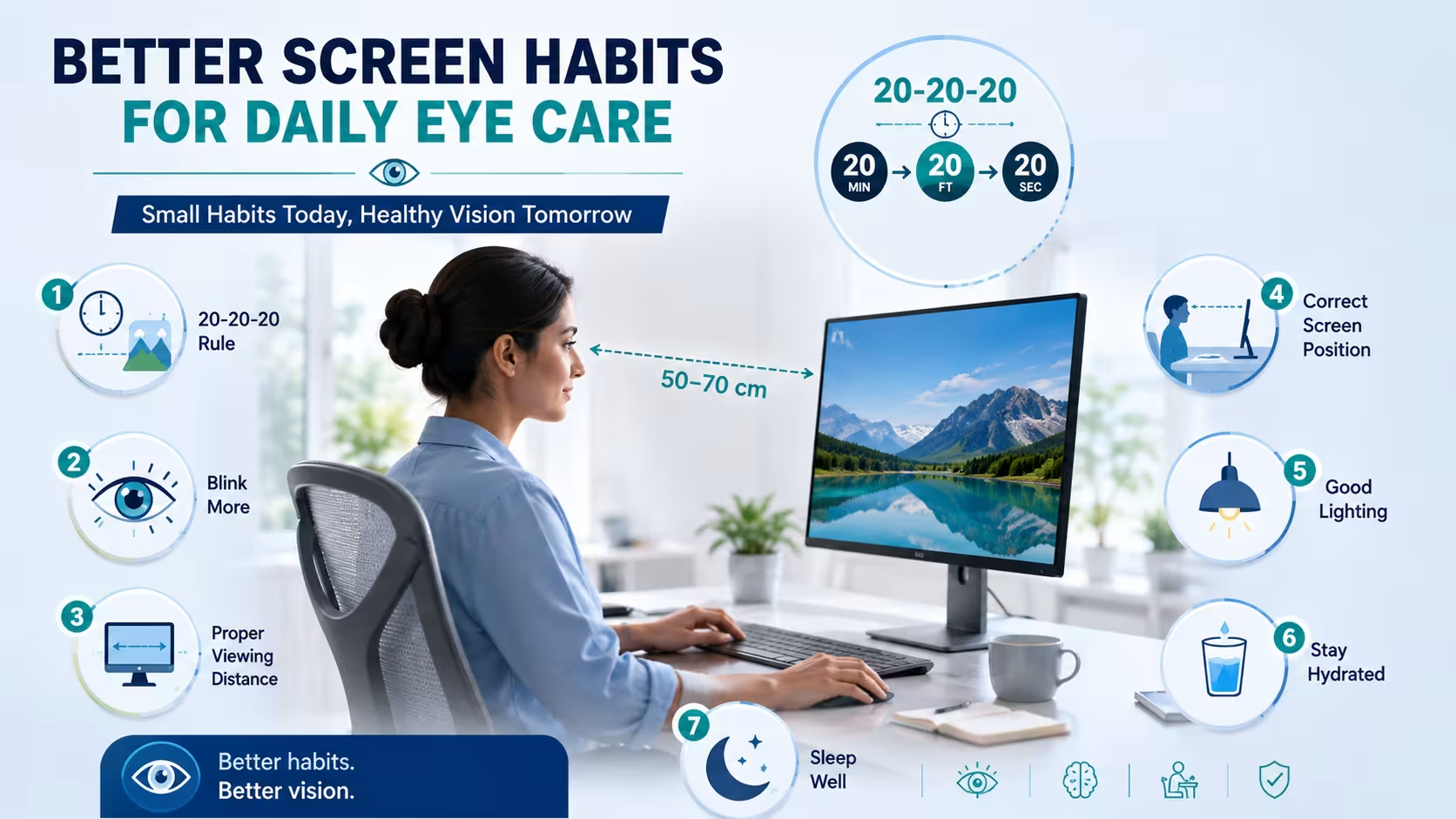
1. Follow the 20-20-20 Rule
Every 20 minutes, look at an object 20 feet away for 20 seconds.
This relaxes the eye muscles and reduces focusing fatigue.
2. Blink More Often
Conscious blinking helps spread tears evenly across the eye surface, preventing dryness.
If necessary, place a small reminder near your computer monitor until blinking becomes a habit.
3. Maintain Proper Viewing Distance
Keep your computer screen approximately 50–70 cm (20–28 inches) away from your eyes.
4. Position the Screen Correctly
The top of the monitor should be at or slightly below eye level.
This helps reduce both eye strain and neck discomfort.
5. Improve Your Workspace Lighting
Avoid bright light sources directly behind or in front of your monitor.
Soft, indirect lighting is usually the most comfortable.
6. Stay Hydrated
Adequate hydration supports healthy tear production and can reduce symptoms of dry eyes.
7. Sleep Well
Poor sleep can worsen eye fatigue and make digital eye strain more noticeable.
Aim for 7–8 hours of quality sleep every night.
8. Schedule Regular Eye Examinations
Routine eye check-ups can identify refractive errors, dry eye disease, and other vision problems before they become more troublesome.
Blue Light vs Sunlight: Which Is More Harmful?
Now that we’ve explored both sources of light, let’s answer the main question.
The Verdict
For most people, sunlight is significantly more harmful to the eyes than blue light from digital screens.
Why?
Because sunlight contains:
- High-intensity blue light
- Harmful UVA radiation
- Harmful UVB radiation
- Infrared radiation
- Much greater overall light intensity
By comparison, digital devices emit:
- Low-intensity blue light
- No ultraviolet radiation
- Light levels that are far lower than natural sunlight
Blue Light From Screens Mainly Causes:
- Eye strain
- Dry eyes
- Temporary blurred vision
- Headaches
- Difficulty focusing
These symptoms generally improve with healthy screen habits.
Excessive Sunlight Exposure Can Increase the Risk of:
- Cataracts
- Pterygium
- Photokeratitis
- Solar retinopathy (when looking directly at the sun)
- Long-term retinal and ocular surface damage
Final Comparison
| Digital Screens | Sunlight |
|---|---|
| Temporary discomfort | Potential long-term damage |
| Dry eyes | UV-related eye diseases |
| Eye fatigue | Cataracts |
| Blurred vision | Retinal injury from direct sun viewing |
| Usually reversible | Some damage may be permanent |
Bottom Line
You don’t need to fear normal screen use—but you should respect the power of sunlight. Protect your eyes from UV exposure outdoors and practice healthy screen habits indoors for the best long-term eye health.
Myth vs Fact
| Myth | Fact |
|---|---|
| Blue light from phones permanently damages the retina. | Current evidence does not support this for normal screen use. |
| Blue-light glasses prevent all eye problems. | They may improve comfort but are not a substitute for healthy screen habits. |
| Only sunny days require sunglasses. | UV rays can penetrate clouds, so eye protection is important even on overcast days. |
| Looking at the sun through sunglasses is safe. | No. Sunglasses do not make it safe to look directly at the sun. |
| Digital eye strain is caused only by blue light. | Reduced blinking, glare, poor posture, and prolonged near work are major contributors. |
| Children don’t need UV protection. | Children’s eyes are especially sensitive to UV exposure and should be protected outdoors. |
Expert Opinion from Dr. Charu Chaudhary
“One of the most common concerns I hear from patients is whether mobile phones permanently damage the retina. Based on current scientific evidence, the greater concern is not the blue light from screens but prolonged exposure without breaks, which leads to digital eye strain. At the same time, unprotected exposure to sunlight can increase the risk of UV-related eye diseases over the years. Following healthy screen habits, wearing UV400 sunglasses outdoors, and scheduling regular eye examinations are simple yet effective steps to protect your vision.”
Key Takeaways
If you’re short on time, here are the most important points to remember:
✅ Sunlight is more harmful than blue light from digital screens because it contains high-intensity blue light and harmful ultraviolet (UVA and UVB) rays.
✅ Normal screen use has not been proven to permanently damage the retina in healthy individuals.
✅ Most screen-related discomfort is caused by Digital Eye Strain (Computer Vision Syndrome) due to reduced blinking, prolonged near work, poor posture, and screen glare.
✅ Wearing UV400 sunglasses, avoiding direct sunlight, and following healthy screen habits are the best ways to protect your eyes.
✅ Regular comprehensive eye examinations help detect eye diseases early and preserve long-term vision.
When Should You See an Eye Specialist?
Occasional eye fatigue after long hours of screen use is common and usually improves with rest. However, some symptoms should never be ignored because they may indicate an underlying eye condition rather than simple digital eye strain.
Schedule an eye examination if you experience:
- Persistent blurred vision
- Severe or recurring headaches associated with eye strain
- Eye pain or discomfort that does not improve
- Sudden loss of vision
- Flashes of light
- New floaters or a sudden increase in floaters
- Double vision
- Redness lasting more than 48 hours
- Extreme sensitivity to light
- Difficulty focusing even after taking breaks
- Symptoms that interfere with your daily work or reading
Early diagnosis is the key to preventing vision-threatening eye diseases and maintaining healthy eyesight.
Frequently Asked Questions
Q1.Is phone blue light more dangerous than sunlight?
No. Sunlight emits significantly more blue light than smartphones and also contains harmful UVA and UVB radiation. While prolonged screen use may cause eye strain and dryness, sunlight poses a much greater long-term risk to eye health if your eyes are not adequately protected.
Q2.Can normal screen use permanently damage the eyes?
Current scientific evidence does not show that normal use of smartphones, computers, or tablets permanently damages healthy eyes. Most symptoms associated with prolonged screen use—such as dryness, headaches, and blurred vision—are temporary and improve with proper eye care and regular breaks.
Q3.Are blue-light-filtering spectacles essential?
Blue-light-filtering spectacles are not essential for everyone. Some users find them more comfortable during extended computer use, but there is limited evidence that they prevent retinal damage or improve long-term eye health. Good screen habits remain the most effective solution.
Q4.What sunglasses should I choose?
Choose sunglasses labeled UV400 or 100% UVA/UVB Protection. Wraparound or larger frames provide additional protection by reducing ultraviolet light entering from the sides.
Q5.Can cloudy weather still affect the eyes?
Yes. Up to 80% of ultraviolet rays can penetrate clouds, meaning your eyes may still be exposed on overcast days. Wearing UV-protective sunglasses is recommended whenever you spend extended time outdoors.
Q6.When should screen-related symptoms be checked?
If symptoms such as eye strain, blurred vision, headaches, or dryness continue despite taking regular breaks and adjusting your screen habits—or if you notice flashes, floaters, pain, or sudden vision changes—you should consult an ophthalmologist promptly.
Q7.Is it safe to look at the sun through sunglasses?
No. Never look directly at the sun, even while wearing sunglasses. Ordinary sunglasses do not make direct sun viewing safe and cannot prevent solar retinal damage.
Q8.What daily habit is most useful for screen users?
The 20-20-20 Rule is one of the simplest and most effective habits. Every 20 minutes, look at something 20 feet away for at least 20 seconds. Combine this with frequent blinking, proper posture, and regular eye examinations for optimal eye health.
Conclusion
The debate surrounding Blue Light vs Sunlight often leads to unnecessary concern about digital devices while overlooking the much greater risks associated with unprotected exposure to sunlight.
Current scientific evidence indicates that normal screen use is unlikely to cause permanent retinal damage. Instead, prolonged screen time commonly leads to Digital Eye Strain, which can usually be managed with healthy screen habits, adequate blinking, regular breaks, and proper workplace ergonomics.
In contrast, sunlight contains high-intensity blue light and harmful ultraviolet radiation, making it a far greater threat to long-term eye health. Excessive UV exposure can increase the risk of cataracts, pterygium, photokeratitis, and even retinal damage from direct sun viewing.
Protecting your vision doesn’t require avoiding technology or staying indoors—it simply requires making smart daily choices. Wear UV400 sunglasses outdoors, avoid looking directly at the sun, follow the 20-20-20 rule during screen use, and schedule routine eye examinations to detect problems early.
Healthy eyes are the result of consistent care, not fear of screens.
Protect Your Vision with Expert Eye Care
If you experience persistent eye strain, blurred vision, flashes of light, floaters, dryness, or have concerns about retinal health, don’t ignore these warning signs. A comprehensive eye examination can identify the underlying cause and help prevent vision-threatening complications.
Dr. Charu Chaudhary, a renowned Vitreo Retina Surgeon at Medanta Hospital, Lucknow, specializes in the diagnosis and treatment of retinal diseases, diabetic retinopathy, age-related macular degeneration (AMD), retinal detachment, and other complex eye conditions.
Whether you need expert advice on digital eye strain or advanced retina care, early consultation can make a significant difference in preserving your vision.
Book your appointment today and take the first step toward healthier eyes.
About Dr. Charu Chaudhary
Dr. Charu Chaudhary is a highly experienced Vitreo Retina Surgeon practicing at Medanta Hospital, Lucknow. With extensive expertise in medical and surgical retina care, Dr. Chaudhary is dedicated to delivering evidence-based, patient-centered treatment using advanced diagnostic and surgical techniques.
Areas of Expertise:
- Diabetic Retinopathy
- Retinal Detachment
- Age-related Macular Degeneration (AMD)
- Macular Hole
- Retinal Vein Occlusion
- Uveitis
- Vitreoretinal Surgery
- Intravitreal Injections
- Comprehensive Retina Evaluation
For appointments and retina consultations, visit retinasurgeonlucknow.com or contact the clinic directly.