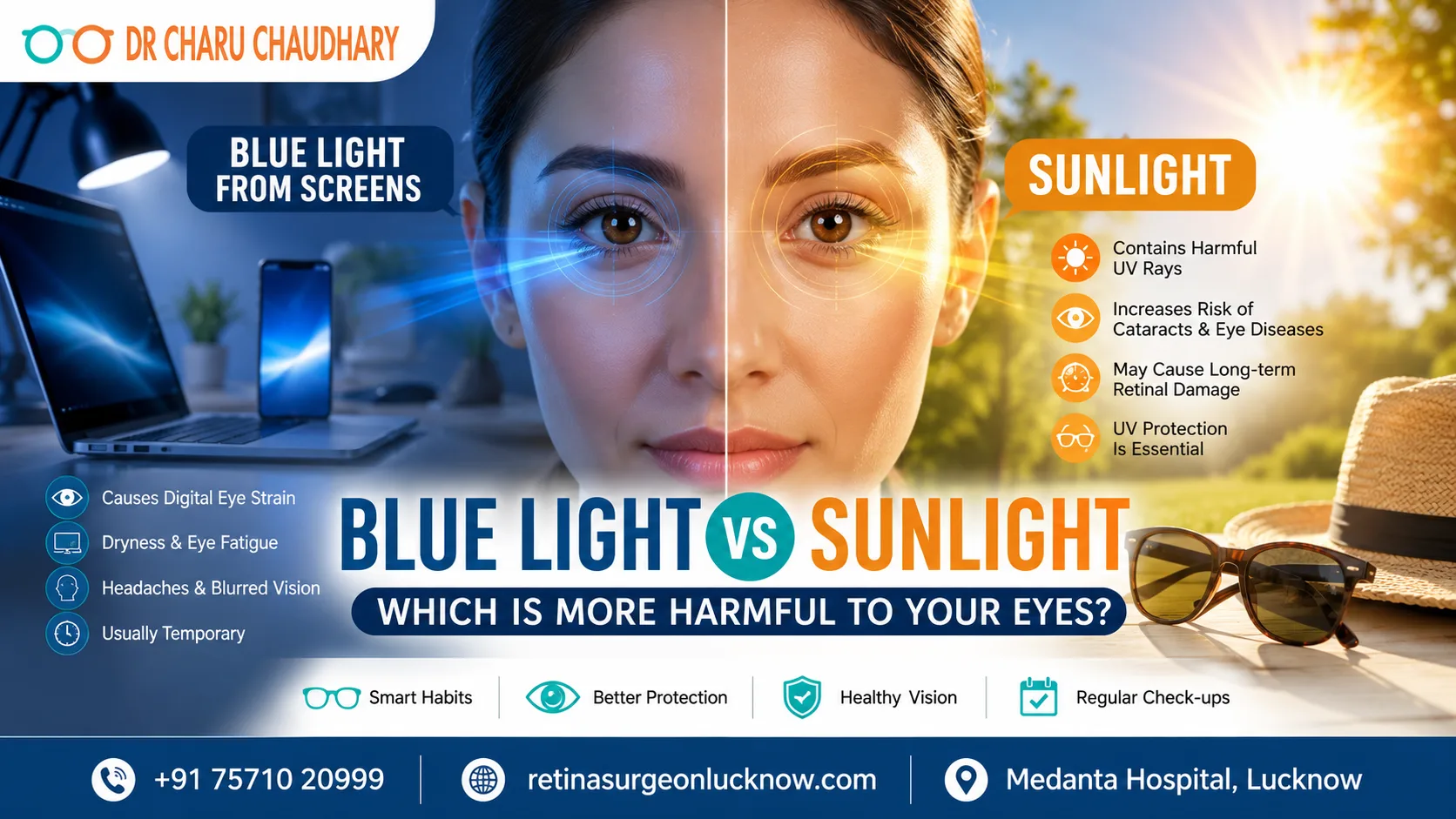
Have you ever wondered whether spending hours on your phone is more harmful than walking under the bright sun? This is one of the most common concerns people discuss with an eye specialist in Lucknow, especially as screen time continues to increase in both work and daily life. While smartphones, laptops, and tablets emit blue light, sunlight is the largest natural source of blue light and also contains harmful ultraviolet (UV) rays. Understanding the difference is essential for protecting your eyesight. The truth is that normal screen use is more likely to cause temporary eye strain and dryness, whereas prolonged exposure to sunlight without proper protection poses a greater long-term risk to eye health because of UV radiation. Knowing how each affects your eyes can help you adopt healthier habits and reduce your risk of vision problems. In this comprehensive guide, we’ll explain the science behind blue light and sunlight, separate myths from facts, and share expert-recommended strategies to keep your eyes healthy. Understanding Blue Light vs Sunlight Blue light is a part of the visible light spectrum, with wavelengths ranging from approximately 400 to 500 nanometers. It is often referred to as high-energy visible (HEV) light because it has a shorter wavelength and higher energy than most other visible colors. Many people associate blue light only with smartphones or computers, but in reality, the sun is by far the strongest natural source of blue light. Digital devices emit only a small fraction of the blue light that reaches your eyes outdoors. Common Sources of Blue Light Natural sources include: Artificial sources include: Although both sunlight and digital devices emit blue light, their intensity, duration, and accompanying radiation differ significantly, which is why they affect the eyes in different ways. Why Blue Light Matters Not all blue light is harmful. In fact, natural blue light plays an important role in maintaining overall health. Benefits of Natural Blue Light Natural blue light helps: Without exposure to natural daylight, our biological clock can become disrupted, affecting sleep quality and overall well-being. However, excessive exposure to intense light—particularly sunlight without adequate eye protection – may increase the risk of certain eye conditions over time. How the Eye Processes Light Before understanding which type of light is more harmful, it’s helpful to know how light travels through the eye. When light enters the eye, it passes through: The retina converts light into electrical signals, which are transmitted through the optic nerve to the brain, allowing us to see. The eye has natural protective mechanisms that filter part of the blue light reaching the retina. However, ultraviolet (UV) rays from sunlight interact differently with eye tissues and can contribute to long-term damage when exposure is excessive. Why Your Eyes Respond Differently to Blue Light and Sunlight Many people assume that all blue light is equally harmful, but this is a misconception. The way your eyes respond depends on the intensity of the light source, duration of exposure, and whether ultraviolet (UV) radiation is present. Blue Light From Digital Screens Blue light emitted by digital screens is: This is why people often experience symptoms such as dry eyes, headaches, and blurred vision after long hours of screen use. Sunlight Sunlight contains: Unlike screens, sunlight exposes your eyes to significantly higher energy levels and harmful UV radiation. Over many years, unprotected UV exposure may increase the risk of: This is why ophthalmologists recommend wearing UV400 sunglasses whenever you spend extended time outdoors. Expert Insight One of the biggest misconceptions is that mobile phones permanently damage the retina simply because they emit blue light. Current ophthalmic research indicates that the amount of blue light produced by smartphones and computers is substantially lower than that from natural sunlight. For most people, the symptoms experienced after prolonged screen use are related to digital eye strain, reduced blinking, glare, and poor ergonomics, rather than retinal injury. Blue Light vs Sunlight: Key Differences The following comparison highlights why sunlight and digital screens affect your eyes differently. Feature Blue Light From Screens Sunlight Primary Source Smartphones, tablets, laptops, LED screens Natural sunlight Blue Light Intensity Low Very High Contains UV Rays No Yes Causes Digital Eye Strain Yes Rarely Can Cause Dry Eyes Yes No Long-Term UV Damage No Yes Risk of Cataracts No direct link Increased with prolonged UV exposure Risk to Retina No proven damage from normal use Direct sun viewing can damage the retina Best Protection Screen breaks, blinking, ergonomic setup UV400 sunglasses, hats, avoiding direct sun Does Blue Light From Screens Harm the Retina? One of the most frequently searched questions online is whether blue light from smartphones permanently damages the retina. The current scientific evidence provides reassuring answers. Studies have not demonstrated that normal exposure to blue light from digital devices causes permanent retinal damage in healthy individuals. The amount of blue light emitted by screens is significantly lower than that produced by natural sunlight. Most people who spend long hours using digital devices experience symptoms related to Digital Eye Strain (Computer Vision Syndrome) rather than retinal disease. Common Symptoms Associated with Prolonged Screen Use These symptoms usually improve with proper screen habits, regular breaks, and appropriate lighting. However, individuals with pre-existing retinal conditions, such as diabetic retinopathy or age-related macular degeneration, should follow the advice of their ophthalmologist regarding prolonged screen use. What Causes Digital Eye Strain? One of the biggest misconceptions is that blue light itself is the main reason for eye discomfort after using digital devices. In reality, ophthalmologists agree that Digital Eye Strain, also known as Computer Vision Syndrome (CVS), is usually caused by the way we use screens rather than the blue light they emit. Whether you’re working on a computer, attending online classes, or scrolling through social media, your eyes work harder to maintain focus on digital screens than they do when reading printed text. This constant effort, combined with poor viewing habits, can lead to a range of uncomfortable symptoms. Why Does Digital Eye Strain Happen? Several factors contribute to
Why are dry eyes becoming common in young professionals?Dry eyes are rising among young professionals due to prolonged screen exposure, which reduces blink rates by up to 66%, causing rapid tear evaporation. Combined with air-conditioned offices, poor sleep, and digital lifestyles, the tear film becomes unstable, leading to chronic irritation, inflammation, and Digital Eye Strain. Introduction In the modern corporate landscape, the transition from traditional office setups to highly digitized environments has brought about a significant, yet often overlooked, health crisis. For the contemporary workforce, the day begins and ends with a glowing screen. Whether it is a software engineer in a high-pressure IT hub, a digital marketer managing multiple campaigns, or a student attending virtual lectures, the eyes are under constant duress. This shift has led to an unprecedented rise in Dry Eye Disease (DED), a condition that was once predominantly associated with aging but is now a hallmark of the young professional’s life. The rise of digital lifestyles is hurting eye health at a rate that traditional medical models are struggling to keep pace with. We are currently living in the “Smartphone Era,” where the blue light emitted from devices and the cognitive demand of digital tasks force our eyes to work harder than they were biologically designed to. If you find yourself frequently rubbing your eyes, experiencing a persistent “gritty” sensation, or noticing that your vision blurs toward the end of a workday, you are likely part of the growing demographic suffering from ocular surface distress. Ignoring these symptoms is not merely a matter of enduring discomfort; it can lead to long-term structural damage to the cornea. Seeking early intervention from an expert is critical. For those in North India, consulting Dr Charu Chaudhary, widely regarded as the Best Eye Specialist in Lucknow, can provide the specialized care necessary to manage this condition effectively. Understanding the “why” behind this epidemic is the first step toward reclaiming your eye health and ensuring that your career productivity is not hampered by preventable physical strain. Quick Facts About Dry Eyes To provide a quick overview for those seeking immediate information through voice search or AI summaries: What Is Dry Eye Disease? To truly grasp why young professionals are suffering, one must understand the delicate ecosystem of the eye’s surface. Healthy vision relies on a stable, continuous layer of moisture called the tear film. This film is not just “water”; it is a sophisticated three-layered shield: How Dry Eyes DevelopDry eye occurs when the quantity or quality of these layers is compromised. In the context of young professionals, the most common form is Evaporative Dry Eye. This happens when the oil layer is insufficient, often because the Meibomian glands are not being “pumped” effectively by regular blinking. Temporary vs. Chronic Dry EyeThere is a distinction between occasional dryness (after a long flight or a night of poor sleep) and chronic Dry Eye Disease. Chronic DED is a self-perpetuating cycle of inflammation. When the eye stays dry for too long, the surface becomes inflamed, which in turn damages the glands that produce tears, creating a feedback loop that requires medical intervention from a specialist like Dr Charu Chaudhary. Why Young Professionals Are More Vulnerable The modern professional’s environment is almost perfectly engineered to cause dry eyes. Several factors contribute to this vulnerability: Excessive Computer and Smartphone Use The primary culprit is “Digital Eye Strain” or “Computer Vision Syndrome.” When we work on a laptop or scroll through a smartphone, the level of visual concentration is intense. This leads to a phenomenon known as “staring,” where the natural blink reflex is suppressed. Blinking is essential for spreading a fresh layer of tears; without it, the eye surface becomes exposed and parched. Air-Conditioned Workspaces Most corporate offices and co-working spaces in cities like Lucknow rely on centralized air conditioning. These systems function by removing moisture from the air. In a low-humidity environment, the tears on your eyes evaporate significantly faster. For an IT professional sitting under an AC vent for 9 hours, the eyes are essentially being “freeze-dried” throughout the day. The Rise of Remote and Hybrid Work Remote work has removed the natural “micro-breaks” of the office—walking to a colleague’s desk, moving to a meeting room, or the commute. Home offices are also often poorly optimized. Screens may be at the wrong height, causing the eyes to open wider and expose more surface area to evaporation. Lack of Sleep and Recovery Young professionals often prioritize “hustle” over sleep. During sleep, the eyes are bathed in continuous moisture, and the corneal cells undergo repair. Chronic sleep deprivation prevents this essential recovery, making the eyes more susceptible to irritation the following day. How Screen Time Causes Dry Eyes: The Mechanics The relationship between screen time and dry eyes is mechanical. Under normal circumstances, humans blink about 15 to 20 times per minute. However, when focusing on a digital task, this rate drops to about 5 to 7 blinks per minute. Reduced Blinking and Increased EvaporationNot only do we blink less, but the quality of the blink also suffers. Research shows that screen users often perform “incomplete blinks,” where the upper eyelid does not fully meet the lower eyelid. This failure means the Meibomian glands aren’t squeezed, and the protective oil layer is never replenished. Blue Light Exposure and Eye FatigueWhile blue light is not the direct cause of dryness, it contributes to overall eye fatigue. The high-energy visible (HEV) light scatters more easily than other light, making it harder for the eye to focus. This increased focusing effort strains the ciliary muscles, making the symptoms of dryness feel more painful and exhausting. Screen Time Impact Chart Factor Mechanism of Action Clinical Impact Blink Rate Suppression 60-70% reduction in blinks Rapid tear film breakup Incomplete Blinks Oil glands are not compressed Meibomian Gland Dysfunction (MGD) Airflow (AC/Fans) Increased air velocity over the eye Accelerated evaporation of aqueous layer High Screen Brightness Pupil constriction and light scatter Photophobia (light sensitivity) Viewing Angle Looking straight ahead/upwards Increased ocular surface exposure Common

In the modern era, our lives are intrinsically linked to digital displays. From the moment we wake up to the minute we go to bed, we move from smartphones to laptop screens, tablets, and televisions. While this digital revolution has brought immense convenience and connectivity, it has also introduced a significant challenge for our ocular health: eye strain from screens. Whether you are a software professional in Lucknow, a student attending online classes, or someone who enjoys late-night scrolling, your eyes are likely working harder than they ever have before. At the clinic of Dr. Charu Chaudhary, a trusted eye specialist in Lucknow, we have seen a dramatic rise in patients complaining of “tired eyes,” persistent headaches, and dry sensations. These aren’t just minor inconveniences; they are signs that your visual system is being pushed beyond its natural limits. Understanding how to manage this digital fatigue is essential for maintaining long-term vision health and daily productivity. Eye strain from screens can cause dry eyes, headaches, blurry vision, and fatigue due to prolonged digital exposure. Healthy screen habits, regular breaks, proper lighting, and eye care practices may help reduce digital eye strain symptoms. What Is Digital Eye Strain? Digital Eye Strain (DES), often referred to medically as Computer Vision Syndrome (CVS), is a group of eye and vision-related problems that result from prolonged computer, tablet, e-reader, and smartphone use. Unlike reading a printed page, digital screens emit light, flicker slightly, and often have glare. This requires our eye muscles to constantly adjust and refocus, leading to exhaustion. When you look at a screen, your eyes must maintain a specific level of tension to keep the image sharp. This is much like holding a heavy weight at arm’s length; eventually, the muscle begins to ache. Because digital characters are made of pixels rather than solid ink, they have less contrast and “softer” edges, making it even harder for the brain to process the image, further increasing the demand on the visual system. Common Symptoms of Eye Strain from Screens Many people experience symptoms of digital eye strain without realizing the root cause. If you spend more than two hours a day on a device, you may notice: Why Screens Affect Eye Health To protect your vision, it is vital to understand the “why” behind the strain. Several factors contribute to the discomfort we feel after hours of digital usage. 1. The Blinking Problem Under normal circumstances, humans blink about 15–20 times per minute. Blinking spreads a fresh layer of tears across the cornea, keeping it moist and clear. However, when we concentrate on a digital screen, our blink rate drops significantly. This leads to “tear film instability,” where the moisture on the eye evaporates faster than it can be replaced. 2. Blue Light Exposure Digital devices emit High-Energy Visible (HEV) light, commonly known as blue light. While the sun is the largest source of blue light, the proximity of our screens and the duration of exposure are what concern eye specialists. Blue light can scatter more easily, reducing contrast and forcing the eyes to strain to see clearly. Furthermore, exposure to blue light in the evening suppresses melatonin, the hormone responsible for sleep. 3. Glare and Reflections Light reflecting off your screen from overhead lamps or windows creates glare. This forces your eyes to work harder to distinguish the text from the background reflections. 4. Poor Ergonomics The distance and angle at which we hold our devices matter. Laptops are often placed too low, and smartphones are held too close, forcing the eyes into an unnatural inward-turning position (convergence) for long periods. 📊 Digital Eye Strain Symptoms vs. Healthy Eye Habits Understanding the relationship between your habits and your symptoms is the first step toward relief. Use the following chart to identify changes you can make today. Common Problem Possible Cause Healthy Habit Dry Eyes Reduced blinking during screen use Blink consciously and use artificial tears Headache Screen glare and high brightness Adjust brightness and use anti-glare filters Blurry Vision Long focus time at a fixed distance Follow the 20-20-20 rule Eye Fatigue Excessive screen time without rest Take regular 5–10 minute breaks Neck Pain Poor posture (slouching) Use ergonomic seating and monitor stands Note: While these habits significantly reduce discomfort, persistent issues should always be evaluated by a professional like Dr. Charu Chaudhary to rule out underlying refractive errors. Step-by-Step: How to Reduce Eye Strain from Screens Protecting your eyes doesn’t require expensive equipment; it requires consistency. Here is a practical guide to creating a vision-friendly digital environment. Step 1: Follow the 20-20-20 Rule This is the “gold standard” of digital eye care. Every 20 minutes, look at something 20 feet away for at least 20 seconds. This allows the ciliary muscles inside your eye—which are responsible for focusing—to relax. Looking into the distance is like stretching your legs after a long flight; it releases the built-up tension. Step 2: Adjust Screen Brightness and Contrast Your screen should not be a light source that competes with the room. If your screen looks like a glowing light bulb in a dark room, it’s too bright. If it looks dull or grey, it’s too dark. Aim to match the screen’s brightness to the surrounding ambient light. Also, ensure the contrast is high (black text on a white/off-white background is usually best for the eyes). Step 3: Increase Blinking Frequency Post a “Blink!” sticky note on your monitor. Whenever you see it, take three slow, full blinks. This simple act re-lubricates the eye and prevents the burning sensation associated with eye strain from screens. Step 4: Maintain Proper Viewing Distance For desktop and laptop users, the screen should be about an arm’s length (20–28 inches) away from your face. The center of the screen should be about 10–15 degrees below eye level. This positioning reduces the amount of the eyeball exposed to the air, which helps minimize evaporation of the tear film. Step 5: Use Artificial Tears if Recommended If you live in a dry climate (like parts of Uttar Pradesh during summer)
Digital Screen & Eye Health: Impacts, Treatment & Prevention In today’s world, it is almost impossible to imagine a day without screens. Whether it is the smartphone you check first thing in the morning, the laptop you use for work, or the LED TV you watch in the evening, digital devices are everywhere. While these tools make our lives easier, they come with a hidden cost to our most precious sense: our vision. As an eye surgeon, I have seen a massive rise in patients coming to my clinic with complaints of tired eyes, stinging sensations, and frequent headaches. Many people worry that they are losing their sight when, in fact, they are suffering from the modern-day epidemic of screen-related fatigue. My name is Dr Charu Chaudhary, and as a Best eye specialist in Lucknow, my goal is to help you understand how these devices impact your eyes and what you can do to protect your vision in a digital-first world. How Digital Screens Affect Your Eyes To understand why screens are hard on the eyes, we need to look at how our eyes function. Unlike a printed page, which has sharp edges and high contrast, images on a screen are made of thousands of tiny pixels. This makes it harder for our eyes to maintain focus. Blue Light Exposure Digital screens emit high-energy visible (HEV) light, commonly known as blue light. While blue light is naturally present in sunlight, our eyes are not designed to stare at a concentrated source of it for hours at a close distance. Excessive exposure to blue light can disrupt our sleep cycles (circadian rhythm) and may contribute to retinal strain over long periods. Reduced Blinking Did you know that we normally blink about 15 to 20 times per minute? Blinking is essential because it spreads a fresh layer of tears over the surface of the eye, keeping it moist and clear. However, research shows that when we look at screens, our blink rate drops by more than 50%. This “staring” effect causes the tear film to evaporate quickly, leading to dryness and irritation. Eye Muscle Strain Our eyes have tiny muscles that help us focus on objects up close. When you spend hours looking at a phone or computer, these muscles remain in a state of constant contraction. Just like your legs would ache after a long run, your eye muscles become exhausted, leading to what we call “accommodative fatigue.” What Is Digital Eye Strain? If you spend more than two hours a day on a digital device, you are at a high risk of developing digital eye strain. This condition is a group of eye and vision-related problems that result from prolonged computer, tablet, e-reader, and cell phone use. In the medical community, we often refer to this as Computer Vision Syndrome. It is not a single disease but a collection of symptoms caused by the physical stress of digital interaction. As a Best eye specialist in Lucknow, I often explain to my patients that computer vision syndrome occurs because the demands placed on the eyes by the screen exceed the eyes’ ability to comfortably perform the task. Common Symptoms You Should Never Ignore Many people dismiss eye discomfort as a normal part of working hard. However, ignoring these signs can lead to chronic issues. If you experience the following, your eyes are crying out for help: Does digital eye strain cause blurry vision? Yes, it certainly does. When your eye muscles are overworked from staring at a close-up screen, they can “lock” into that position. When you look up at a wall or out the window, your eyes struggle to relax and refocus, making things look fuzzy. This is usually temporary, but it is a clear sign of strain. Can Looking at Screens Damage Eyes Permanently? This is the most common question I get at my practice in Lucknow. Patients ask, “Does looking at screens affect eyesight permanently?” The good news is that for most adults, digital eye strain does not cause permanent vision loss or eye diseases like glaucoma or cataracts. The discomfort is usually temporary and improves once you rest your eyes. However, the answer is slightly different for children. Is digital eye strain dangerous? For kids, excessive screen time is linked to the development of myopia (nearsightedness). Because a child’s eye is still growing, spending too much time on close-up work and not enough time outdoors can cause the eyeball to lengthen, leading to a permanent need for glasses. For adults, while the damage isn’t usually “permanent” in terms of blindness, chronic strain can lead to severe dry eye disease, which requires long-term medical management. How Much Screen Time Is Safe for Your Eyes? In a perfect world, we would all limit our screen time to a few hours. But in reality, many of us work 8-hour shifts on computers. So, how much screen time is healthy for the eyes in a day? The “safety” of screen time depends more on how you use it than on total hours. Frequent breaks are more important than the total duration. Best Ways to Prevent and Treat Digital Eye Strain Prevention is always better than a cure. If you must use screens, follow these expert tips for digital eye strain treatment and prevention: When Should You Visit an Eye Specialist in Lucknow? If you have tried the 20-20-20 rule and adjusted your lighting, but your eyes still hurt, it is time for a professional check-up. Persistent symptoms like double vision, severe redness, or localized pain should never be ignored. When symptoms become chronic, I recommend you consult Dr Charu Chaudhary. As a Best eye specialist in Lucknow, I perform comprehensive eye exams to rule out underlying issues like uncorrected refractive errors or tear duct problems. Sometimes, a simple pair of “computer glasses” with a specific tint or anti-reflective coating can make a world of difference. What Recent Research Says About Digital Eye Strain In any recent digital eye strain research paper, the statistics are alarming. Studies show that since 2020, the average person’s screen time has increased by