
Pressure behind the eyes can feel like heaviness, aching, tightness, or a sensation that something is pushing from inside or around the eyes. Sometimes it is temporary and related to eye strain, sinus congestion, headaches, or fatigue. However, persistent or severe pressure—especially when accompanied by eye pain, redness, blurred vision, halos, nausea, or sudden vision changes—can indicate a condition that needs prompt medical evaluation.
Importantly, the feeling of pressure behind the eyes does not always mean that your intraocular pressure (IOP) is high. High eye pressure often causes no noticeable symptoms and can only be identified through an eye examination and pressure measurement.
If you frequently experience pressure behind your eyes, understanding the possible causes can help you know when it is time to consult an eye specialist.
What Does Pressure Behind the Eyes Feel Like?
People may describe eye pressure in different ways, including:
- A dull ache behind one or both eyes
- Heaviness around the eyes
- Tightness or fullness
- Pain when moving the eyes
- Headache around the forehead or temples
- Burning or tired eyes
- Blurred or fluctuating vision
- Sensitivity to light
- A feeling of pressure when bending forward
The exact symptoms often depend on the underlying cause.
Common Causes of Pressure Behind the Eyes
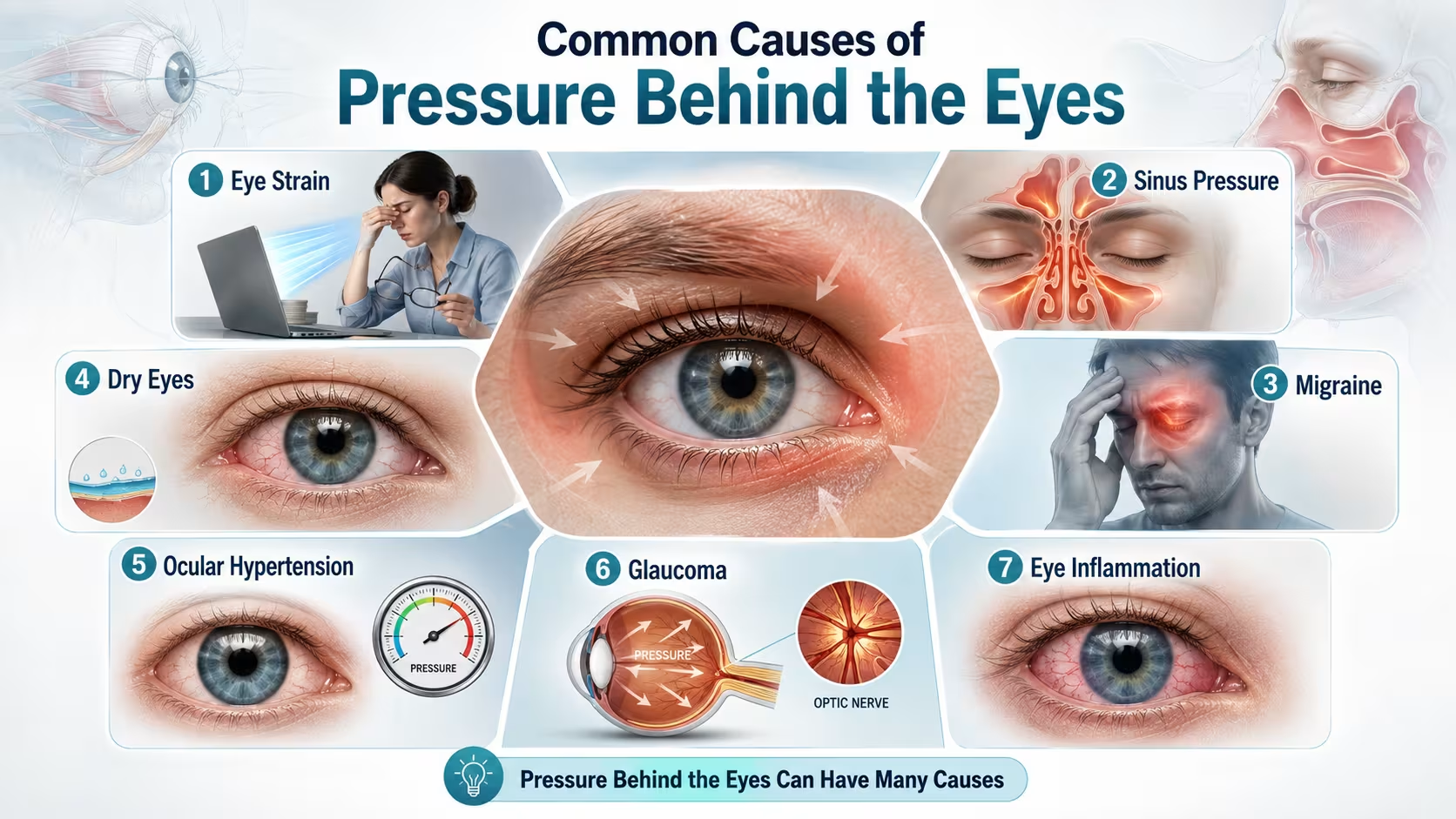
1. Eye Strain and Digital Eye Fatigue
Long hours on computers, smartphones, or tablets can cause eye fatigue. Concentrating on a screen may also reduce blinking, contributing to dryness and discomfort.
Common symptoms include:
- Tired eyes
- Dryness or burning
- Temporary blurred vision
- Headache
- Difficulty focusing
- Pressure or heaviness around the eyes
Taking regular screen breaks and adjusting screen distance, brightness, and lighting may help.
2. Sinus Congestion or Sinusitis
The sinuses are located around the eyes, nose and forehead. Inflammation or congestion can create pressure or aching around these areas. Sinus pressure commonly occurs with colds, allergies, or sinus infections.
You may also experience:
- Blocked or runny nose
- Facial pressure
- Forehead pain
- Headache
- Postnasal drip
- Reduced sense of smell
If severe sinus pressure persists or is associated with significant symptoms, medical evaluation may be appropriate.
3. Migraine or Other Headaches
Migraines can cause pain around or behind one eye. Some people also experience:
- Throbbing headache
- Nausea
- Light sensitivity
- Sound sensitivity
- Visual disturbances
The discomfort may occur even when there is no problem with the eye itself.
4. Dry Eyes
Insufficient or poor-quality tears can cause irritation and a sensation of heaviness or pressure around the eyes.
Typical symptoms include:
- Burning
- Gritty sensation
- Redness
- Watery eyes
- Blurred vision
- Eye fatigue
Screen use, air conditioning, smoke and environmental factors can aggravate dry-eye symptoms.
5. Ocular Hypertension
Ocular hypertension means that the pressure inside the eye is higher than normal without detectable optic nerve damage at that point.
A key point is that ocular hypertension generally does not cause noticeable symptoms. It is usually discovered during an eye examination.
This is why simply feeling pressure behind your eyes cannot tell you whether your eye pressure is actually elevated.
6. Glaucoma
Glaucoma involves damage to the optic nerve. Increased eye pressure is an important risk factor, although glaucoma can also occur when eye pressure is within the usual range.
Early glaucoma may have few or no symptoms. As the disease progresses, symptoms can include:
- Gradual loss of peripheral vision
- Blind spots
- Blurred vision
- Headache
- Eye discomfort or pressure
Certain forms, particularly acute angle-closure glaucoma, can cause sudden severe symptoms and require immediate treatment.
7. Eye Inflammation or Infection
Conditions affecting structures inside or around the eye can cause pain, pressure, redness and light sensitivity.
Possible accompanying symptoms include:
- Significant eye redness
- Eye pain
- Light sensitivity
- Watery eyes
- Blurred vision
- Swelling
These symptoms should not be ignored, particularly when vision is affected.
8. Problems Around the Eye Socket
Less commonly, inflammation, thyroid-related eye disease, injury, or other conditions affecting tissues behind the eye can produce pressure, discomfort or a feeling of fullness.
Bulging of the eye, double vision, reduced vision, swelling, or difficulty moving the eye warrants medical assessment.
Pressure Behind the Eyes: Cause vs Typical Symptoms
| Possible Cause | Common Associated Symptoms | Urgency |
|---|---|---|
| Eye strain | Tired eyes, headache, dryness | Usually low |
| Sinus pressure | Blocked nose, facial pressure, headache | Usually low–moderate |
| Migraine | Headache, nausea, light sensitivity | Varies |
| Dry eye | Burning, gritty feeling, fluctuating vision | Usually low |
| Ocular hypertension | Often no symptoms | Needs eye evaluation |
| Glaucoma | Vision changes, peripheral vision loss | Needs evaluation |
| Acute angle-closure glaucoma | Severe pain, red eye, halos, nausea | Emergency |
| Serious eye inflammation/injury | Pain, redness, light sensitivity, blurred vision | Prompt evaluation |
This comparison is educational; symptoms can overlap between conditions, so a proper eye examination is needed for diagnosis.
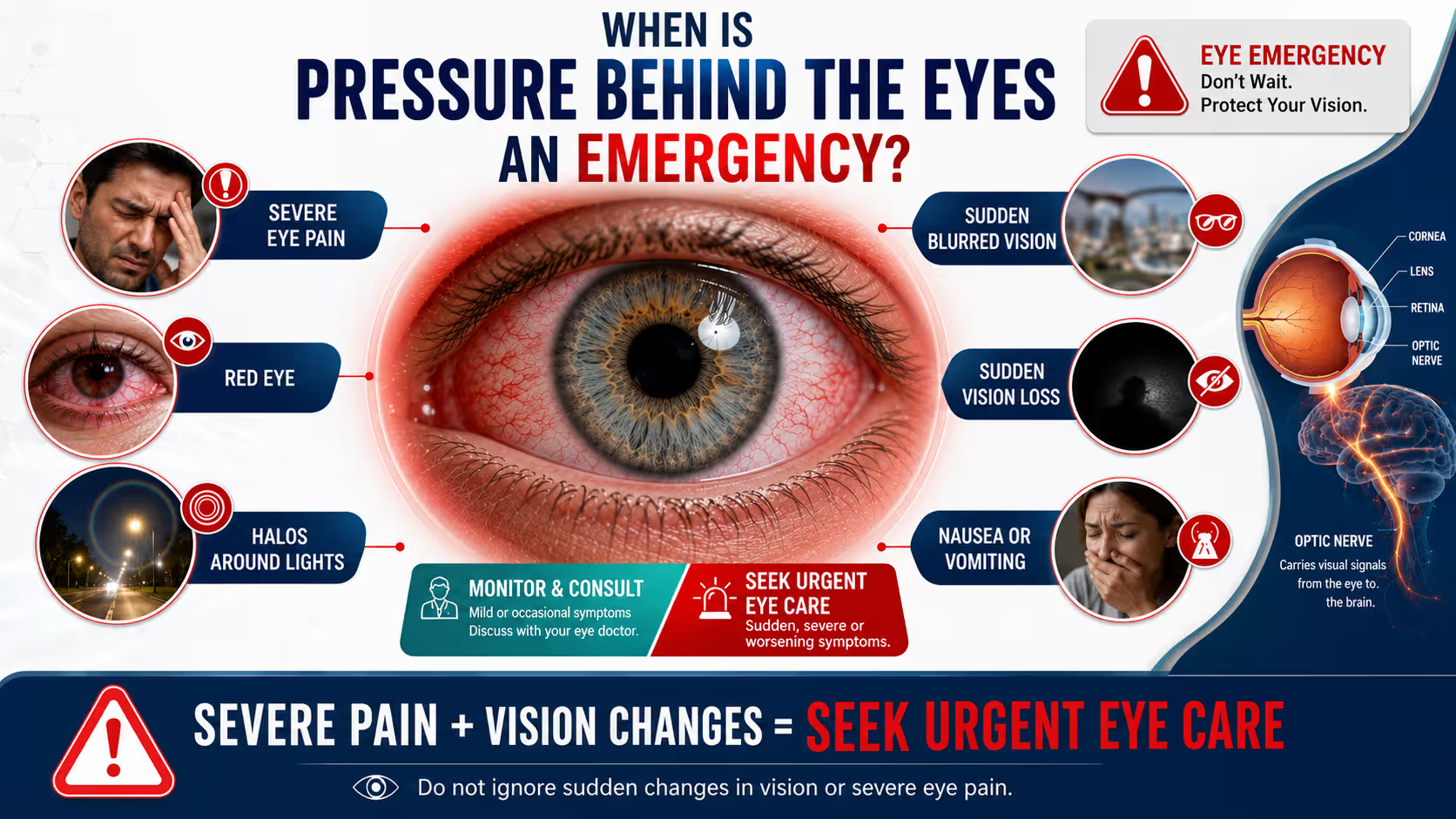
When Is Pressure Behind the Eyes a Warning Sign?
Seek urgent medical attention if pressure behind the eye occurs with:
- Sudden or severe eye pain
- Sudden vision loss or significant vision changes
- A very red eye with pain
- Rainbow-colored halos around lights
- Nausea or vomiting with eye pain
- New double vision
- Significant swelling around the eye
- Sudden bulging of the eye
- New flashes or a sudden increase in floaters
- Severe headache with visual symptoms
Acute angle-closure glaucoma can cause sudden eye pain or pressure, redness, blurred vision, halos and nausea/vomiting and is considered a medical emergency.
Sudden vision loss, severe eye pain, or new flashes and floaters should also be assessed urgently.
How Is Pressure Behind the Eyes Diagnosed?
Because several conditions can produce similar sensations, an ophthalmologist may use multiple tests.
Step 1: Medical and Eye History
Your doctor may ask:
- When did the pressure begin?
- Is it in one eye or both?
- Is it constant or intermittent?
- Do you have headaches or sinus symptoms?
- Has your vision changed?
- Are you using contact lenses?
- Have you had an eye injury?
- Do you have a family history of glaucoma?
Step 2: Comprehensive Eye Examination
The doctor may examine the cornea, conjunctiva, pupils, lens, retina and optic nerve.
Step 3: Measure Eye Pressure
Tonometry measures intraocular pressure. Common methods include non-contact air-puff testing and contact-based measurements.
Step 4: Check the Optic Nerve and Retina
If glaucoma or another retinal/optic nerve condition is suspected, additional examinations may be recommended.
Step 5: Additional Tests When Required
Depending on your symptoms, your ophthalmologist may recommend:
- Visual field testing
- OCT of the optic nerve/retina
- Gonioscopy
- Dilated retinal examination
- Corneal measurements
- Imaging or neurological evaluation in selected cases
What Can You Do If You Have Mild Eye Pressure?
If your symptoms are mild and there are no warning signs, you can consider these basic measures:
- Take regular screen breaks.
- Blink frequently during prolonged screen use.
- Stay adequately hydrated.
- Get sufficient sleep.
- Avoid rubbing your eyes.
- Manage known allergies or sinus problems appropriately.
- Use prescribed eye drops exactly as directed.
- Schedule an eye examination if symptoms persist or repeatedly return.
Do not assume that recurring pressure is simply due to screen use, especially if you have vision changes.
Can High Eye Pressure Cause a Feeling of Pressure?
Not necessarily.
This is one of the most important things to understand.
High intraocular pressure often has no obvious symptoms. A person can have elevated IOP without feeling pain or pressure. The only reliable way to determine whether your eye pressure is elevated is through an appropriate eye examination and pressure measurement.
Therefore:
Feeling pressure ≠ automatically having high eye pressure.
And:
Having high eye pressure ≠ necessarily feeling pressure.
This distinction is particularly important when screening for glaucoma.
When Should You See an Eye Specialist?
Consider scheduling an eye examination if:
- Pressure keeps returning
- Symptoms last longer than expected
- You develop blurred or reduced vision
- You have recurring headaches with eye discomfort
- One eye feels consistently different from the other
- You have a family history of glaucoma
- You have previously been diagnosed with high eye pressure
- You experience unexplained eye pain
- You notice changes in your peripheral vision
Regular eye examinations can help detect problems that may not cause symptoms in their early stages.
Pressure Behind the Eyes: Quick Decision Guide
Mild pressure + screen use + tired eyes
→ Take breaks, rest your eyes and monitor symptoms.
Pressure + blocked nose/facial congestion
→ A sinus or allergy-related cause may be possible.
Recurring pressure + blurred vision
→ Schedule an eye examination.
Pressure + severe pain/redness/halos/nausea
→ Seek urgent eye care immediately.
Sudden vision loss or major vision change
→ Treat it as an emergency.
Frequently Asked Questions
1. Is pressure behind the eyes always caused by glaucoma?
No. Eye strain, sinus problems, migraines, dry eyes and other conditions can cause pressure or discomfort. Glaucoma may not cause noticeable symptoms in its early stages.
2. Can sinus pressure feel like eye pressure?
Yes. Sinus inflammation and congestion can cause pressure or aching around the eyes, forehead and face.
3. What does high eye pressure feel like?
Often, it does not feel like anything. Ocular hypertension commonly has no symptoms, which is why eye-pressure testing is important.
4. Can screen time cause pressure behind the eyes?
Prolonged screen use can contribute to eye strain, dryness, headaches and eye fatigue, which may feel like pressure or heaviness.
5. When is pressure behind the eye an emergency?
Pressure accompanied by severe eye pain, redness, halos around lights, nausea/vomiting, sudden vision loss or significant visual changes requires urgent medical attention.
6. Should I get my eye pressure checked?
If you have recurring eye discomfort, vision changes, glaucoma risk factors or persistent symptoms, an ophthalmologist can determine whether IOP testing and a comprehensive eye examination are appropriate.
Final Takeaway
Pressure behind the eyes can have many causes, ranging from temporary eye strain and sinus congestion to glaucoma and other eye conditions. The sensation alone cannot tell you whether your intraocular pressure is high.
The most important warning signs are severe eye pain, redness, halos, nausea/vomiting, sudden vision changes, double vision or sudden vision loss. These symptoms should never be ignored.
If pressure behind your eyes is persistent, recurrent, or associated with changes in vision, getting a comprehensive eye examination is the safest way to identify the cause and protect your vision.
Schedule an Eye Consultation in Lucknow
If you are experiencing persistent eye pressure, eye pain, blurred vision or other unexplained visual symptoms, consult an experienced ophthalmologist rather than self-diagnosing the cause.
Dr. Charu Chaudhary, Vitreo Retina Surgeon at Medanta Hospital, Lucknow, provides evaluation and management of various retinal and eye conditions.
If you are looking for the best eye specialist in Lucknow or an experienced eye surgeon in Lucknow, schedule a consultation with Dr. Charu Chaudhary for an appropriate eye evaluation.
📍 Medanta Hospital, Lucknow
👁️ Dr. Charu Chaudhary – Vitreo Retina Surgeon
📞 +91 75710 20999
🌐 retinasurgeonlucknow.com
This article is intended for general education and does not replace an in-person eye examination or medical diagnosis.