
 No Comments
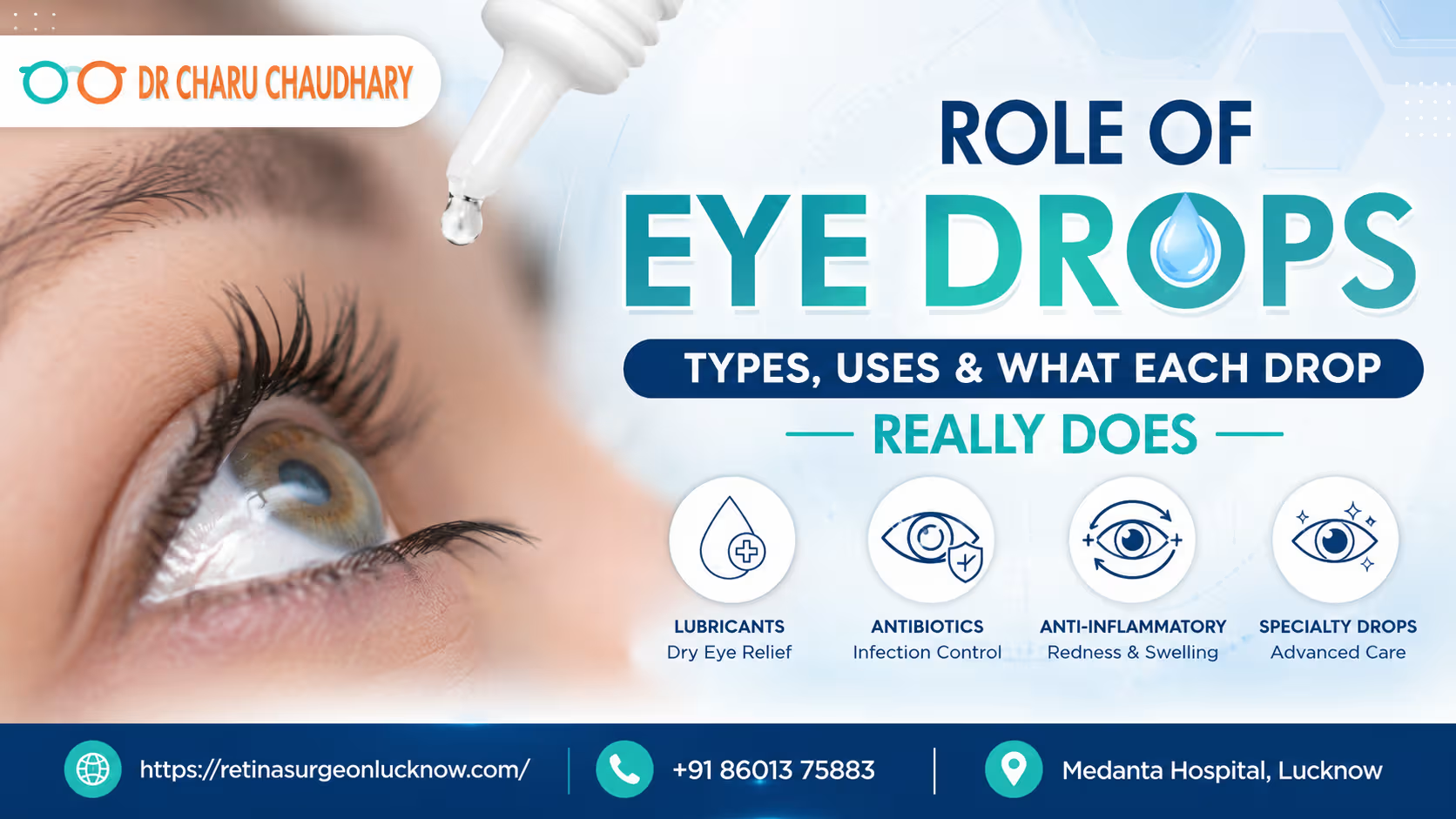
When your eyes feel itchy, dry, or red, the first thing most people reach for is a bottle of eye drops. However, walking into a pharmacy can be overwhelming. There are hundreds of bottles, each claiming to solve a different problem. Are they all the same? The short answer is no. Using the wrong eye drop can not only be ineffective but, in some cases, dangerous.
What do eye drops actually do?
Different eye drops are designed for specific medical purposes: lubricating drops soothe dry eyes, antibiotic drops fight bacterial infections, allergy drops block histamine, and glaucoma drops lower intraocular pressure. They also reduce inflammation, aid post-surgical recovery, or dilate pupils, ensuring targeted delivery of medication directly to ocular tissues.
If you are looking for an eye doctor in Lucknow, understanding the nuances of ocular medication is the first step toward better vision health. This guide will walk you through everything you need to know about the role of eye drops.
Introduction
Why So Many People Use Eye Drops Without Understanding Them
The eye is one of the most accessible organs for topical treatment. Because eye drops are available over the counter (OTC), many patients treat them like lip balm or moisturizer—something to use whenever there is slight discomfort. However, the eye is also incredibly delicate. Applying a liquid to the surface of the eye isn’t just about “washing” it; it’s about introducing active pharmacological agents into a complex biological system.
Are All Eye Drops the Same?
Far from it. While most eye drops look like clear water, their chemical compositions vary wildly. A drop designed to constrict blood vessels to “get the red out” works entirely differently than a drop designed to lower internal eye pressure for glaucoma. Confusing the two can lead to missed diagnoses and permanent vision loss.
Why Choosing the Right Eye Drop Matters
Using an antibiotic drop for a viral infection is useless. Using a steroid drop for a simple scratch on the cornea can lead to a fungal infection or a non-healing ulcer. As Dr Charu Chaudhary, a renowned Eye Specialist in Lucknow, often emphasizes, “The eye does not have a high tolerance for the wrong medication. Precision in diagnosis is the only way to ensure safety.”
Understanding How Eye Drops Work
How Medication Reaches the Eye
When you swallow a pill, the medication must travel through your digestive system, into your bloodstream, and eventually find its way to your eyes. The “blood-ocular barrier” makes this difficult, meaning high doses of oral medicine are often needed to treat the eyes. Eye drops bypass this. They deliver the medication directly to the site of the problem—the cornea, conjunctiva, and sometimes the internal chambers of the eye.
Why Eye Drops Work Faster Than Oral Medicines
Because the medication is applied topically, the concentration of the drug at the target site is much higher, and the effect is almost immediate. For example, numbing drops can desensitize the eye in seconds, whereas an oral painkiller would take 30 minutes or more.
The Anatomy of the Eye and Drug Absorption
The cornea (the clear front window) acts as a barrier. For a drop to work, it must penetrate this layer. Factors like the pH of the drop, the size of the molecules, and whether the drop is “water-loving” (hydrophilic) or “fat-loving” (lipophilic) determine how much medicine actually gets inside.
What Are Eye Drops?
Eye drops are sterile solutions or suspensions used to administer medication directly onto the eyeball.
Prescription vs. Over-the-Counter (OTC) Eye Drops
- OTC Drops: Generally include simple lubricants (artificial tears), some allergy drops, and redness relievers. They are designed for minor, self-limiting issues.
- Prescription Drops: These include antibiotics, high-potency steroids, and glaucoma medications. These require a diagnosis from the Best Eye Doctor in Lucknow because they carry risks if used improperly.
Short-Term vs. Long-Term Use
Some drops, like those for emergencies or infections, are used for 7–14 days. Others, like glaucoma drops or chronic dry eye treatments, may be used for a lifetime.
How Eye Drops Are Formulated
Eye drops are carefully balanced to match the natural salinity and pH of your tears. If they weren’t, they would cause intense stinging and damage the ocular surface.
Preservative-Free vs. Preserved Eye Drops
Most multi-use bottles contain preservatives (like Benzalkonium Chloride) to prevent bacteria from growing inside the bottle. However, some people are sensitive to these chemicals. Preservative-free drops usually come in single-use plastic vials and are much gentler on the eye’s surface.
Comparison Chart: Preserved vs. Preservative-Free
| Feature | Preserved Eye Drops | Preservative-Free Drops |
| Packaging | Multi-use bottle (lasts 30 days) | Single-use daily vials |
| Convenience | High (easy to carry) | Moderate (multiple vials) |
| Eye Sensitivity | Can cause irritation with frequent use | Highly recommended for sensitive eyes |
| Cost | Generally cheaper | Usually more expensive |
| Recommended for | Occasional use (4x a day or less) | Frequent use (more than 4-6x a day) |
Types of Eye Drops and Their Uses
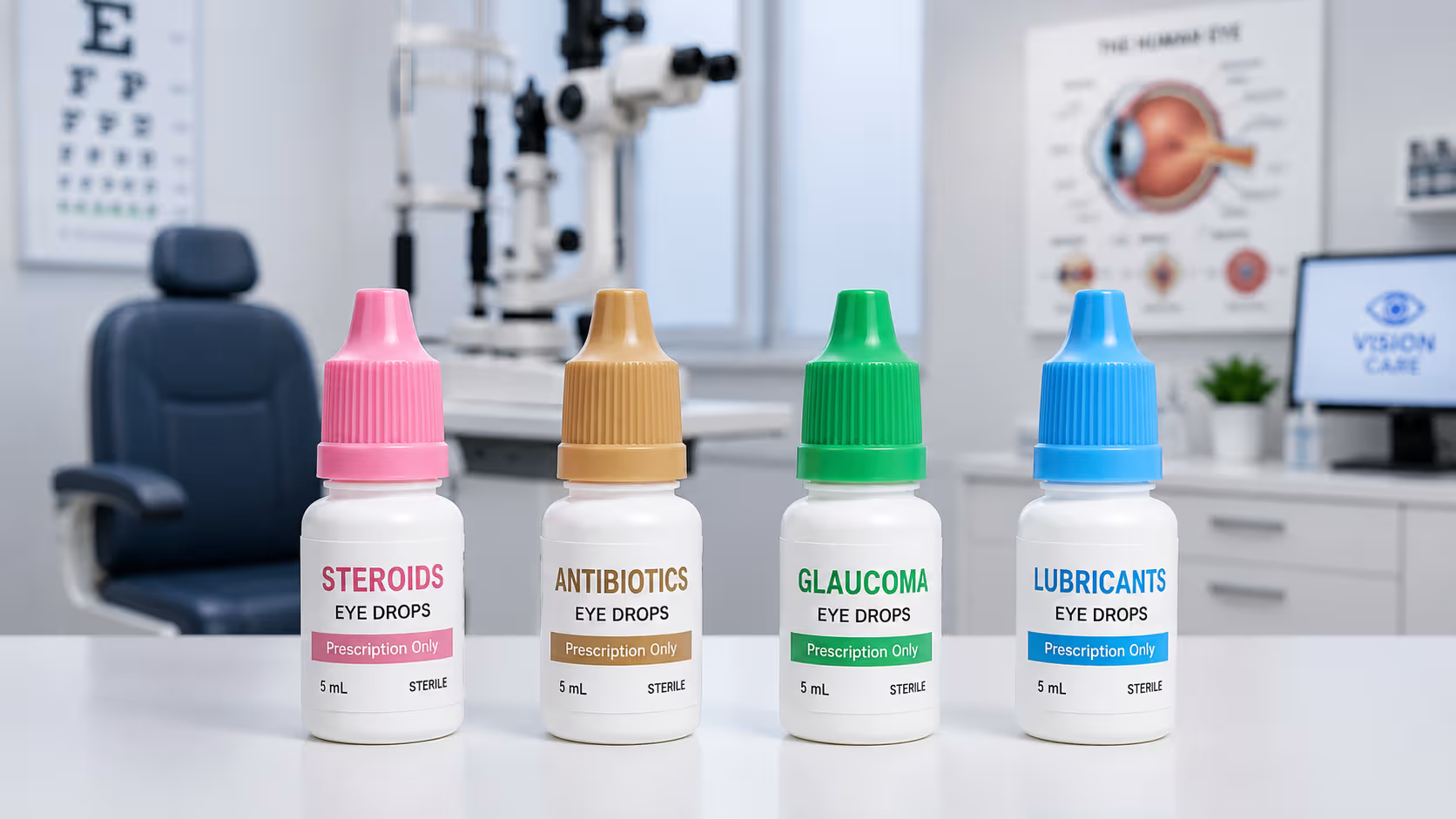
Understanding the classification of eye drops is essential for any patient. Below is a breakdown of the most common categories used in modern ophthalmology.
1. Artificial Tears and Lubricating Eye Drops
These are the workhorses of eye care. They mimic natural tears to provide relief from dryness, wind, or digital eye strain.
2. Antibiotic Eye Drops
Used to treat bacterial infections like “pink eye” (bacterial conjunctivitis) or corneal ulcers. They kill bacteria or stop them from reproducing.
3. Antiviral Eye Drops
Specifically designed for viral infections, most commonly the Herpes Simplex virus, which can affect the cornea.
4. Anti-Inflammatory Eye Drops
These are divided into two categories:
- NSAIDs: Non-steroidal anti-inflammatory drugs used for pain and swelling.
- Steroids: Powerful drugs used for severe inflammation or post-surgery.
5. Allergy Eye Drops
These contain antihistamines or mast-cell stabilizers. They stop the “itch” cycle by blocking the body’s reaction to allergens like pollen or pet dander.
6. Glaucoma Eye Drops
These are life-saving drops that lower the pressure inside the eye (intraocular pressure) to prevent damage to the optic nerve.
7. Redness-Relief Eye Drops
Often called “whitening” drops, these constrict the blood vessels on the white of the eye. Note: These are often discouraged by specialists for long-term use.
8. Dilating Eye Drops
Usually used during an exam by an Eye Specialist in Lucknow, these enlarge the pupil so the doctor can see the back of the eye (the retina).
Detailed Eye Drop Classification Table
| Type of Drop | Active Ingredient Examples | Primary Use | Duration |
| Lubricant | Carboxymethylcellulose, Hylo-Comod | Dryness, irritation | As needed |
| Antibiotic | Moxifloxacin, Tobramycin | Bacterial infections | 7–10 days |
| Steroid | Prednisolone, Loteprednol | Severe inflammation | Strictly as prescribed |
| Allergy | Olopatadine, Ketotifen | Itching, allergies | Seasonal/As needed |
| Glaucoma | Latanoprost, Timolol | Lowering eye pressure | Chronic/Lifetime |
| Decongestant | Naphazoline, Tetryzoline | Redness removal | Short-term only |
Artificial Tears: The Most Commonly Used Eye Drops
How They Help Dry Eyes
Our natural tear film has three layers: oil, water, and mucus. If any layer is deficient, the eye dries out. Artificial tears add moisture and “grease” the surface of the eye to prevent friction from the eyelids.
Who Should Use Them?
Anyone suffering from dry eye syndrome, people who spend long hours on computers, or those living in dry, dusty climates like Lucknow.
How Often Can They Be Used?
If the drops are preservative-free, they can be used as often as every hour. If they contain preservatives, limit use to 4 times a day to avoid chemical irritation.
Antibiotic Eye Drops
When Are They Prescribed?
Antibiotics are only for bacterial infections. If your eye is red due to a virus or an allergy, antibiotics will not help.
Why Self-Medication Can Be Risky
Using antibiotics when they aren’t needed leads to antibiotic resistance. This means that when you actually do have a serious infection, the medicine might not work anymore. Furthermore, unnecessary antibiotics can disrupt the natural “good bacteria” on the surface of your eye.
When Antibiotics Won’t Help
Viral conjunctivitis (the most common form of pink eye) is like a “cold in the eye.” It must run its course. Antibiotics will not speed up the healing of a viral infection.
Steroid Eye Drops: Powerful but Not for Everyone
How Steroids Reduce Inflammation
Steroids are incredibly effective at shutting down the body’s immune response. They are used to treat uveitis, severe allergies, and post-surgical swelling.
Potential Side Effects
This is where the danger lies. Long-term or unsupervised use of steroid eye drops can cause:
- Cataracts: Clouding of the eye’s natural lens.
- Glaucoma: Increased eye pressure that can lead to permanent blindness.
- Fungal Infections: Steroids suppress the immune system, making it easier for fungi to grow.
Why Medical Supervision Is Essential
You should never use a steroid drop that was prescribed for someone else, and you should never use an old bottle sitting in your medicine cabinet. Dr Charu Chaudhary, an expert Eye Specialist in Lucknow, monitors patients on steroids weekly to check their eye pressure.
Allergy Eye Drops
Seasonal Eye Allergies
Lucknow sees a spike in eye allergies during seasonal changes. Pollen, dust, and pollution trigger the release of histamines, causing redness and intense itching.
How They Work
Modern allergy drops like Olopatadine are “dual-action.” They provide immediate relief by blocking histamine receptors and long-term relief by stabilizing mast cells so they don’t release more histamine.
Glaucoma Eye Drops and Vision Protection
How Glaucoma Damages the Optic Nerve
Glaucoma is often called the “silent thief of sight.” High pressure inside the eye pushes against the optic nerve, killing the fibers that send visual information to the brain.
How Eye Drops Lower Eye Pressure
These drops work in two ways:
- Decreasing fluid production: They turn down the “faucet” in the eye.
- Increasing fluid drainage: They open the “drain” so fluid leaves the eye faster.
Importance of Daily Compliance
If you miss your glaucoma drops, your eye pressure will spike. This causes irreversible damage. Consistency is the key to saving your sight.
Eye Drops After Eye Surgery
Post-operative care is just as important as the surgery itself. Whether you have had cataract surgery, LASIK, or a retinal procedure, your drops are your lifeline.
Why Post-Operative Eye Drops Are Important
They serve three purposes:
- Preventing Infection: Antibiotics keep the surgical site sterile.
- Controlling Inflammation: Steroids or NSAIDs ensure the eye doesn’t get too swollen.
- Promoting Healing: Lubricants ensure the corneal surface heals smoothly.
As the Best Eye Doctor in Lucknow, Dr Charu Chaudhary provides a strict schedule for post-op drops to ensure the success of the procedure.
Which Eye Drop Should You Never Use Without a Doctor’s Advice?
Some drops are “high-risk.” Using them incorrectly can lead to vision loss.
- Steroid Eye Drops: As mentioned, these can cause glaucoma and cataracts.
- Combination Drops: These contain both an antibiotic and a steroid (e.g., Tobramycin + Dexamethasone). People often use them for minor redness, unknowingly putting themselves at risk of steroid side effects.
- Long-Term Redness Relief Drops: Using drops like Visine or Clearine for more than 2-3 days leads to “rebound redness.” The blood vessels become “addicted” to the drop and stay permanently dilated when you stop using it.
Warning Chart: The Danger Zone
| If you have… | NEVER use… | Instead… |
| A suspected scratch (abrasion) | Steroid drops | Use lubricating drops and see a doctor |
| Contact lenses in | Most medicated drops | Take lenses out first |
| Viral pink eye | Antibiotic drops | Use cold compresses and artificial tears |
| Chronic redness | Whitening drops | Find the root cause (Dry eye/Allergy) |
Common Mistakes People Make While Using Eye Drops
Even with the right medication, many patients fail to see results because of poor technique.
- Using Someone Else’s Medication: What worked for your neighbor’s “red eye” might be the exact opposite of what you need.
- Touching the Bottle Tip: The tip of the bottle must remain sterile. If it touches your eyelashes or skin, bacteria move into the bottle, contaminating the entire solution.
- Using Expired Drops: Most eye drops expire 30 days after opening, even if the date on the box says otherwise. Bacteria can grow in the bottle once the seal is broken.
- Incorrect Dosage: Using 5 drops at once doesn’t help. The eye can only hold about half of one drop. The rest just runs down your cheek.
- Mixing Multiple Eye Drops Incorrectly: If you put one drop in and immediately put another in, the second drop simply washes out the first.
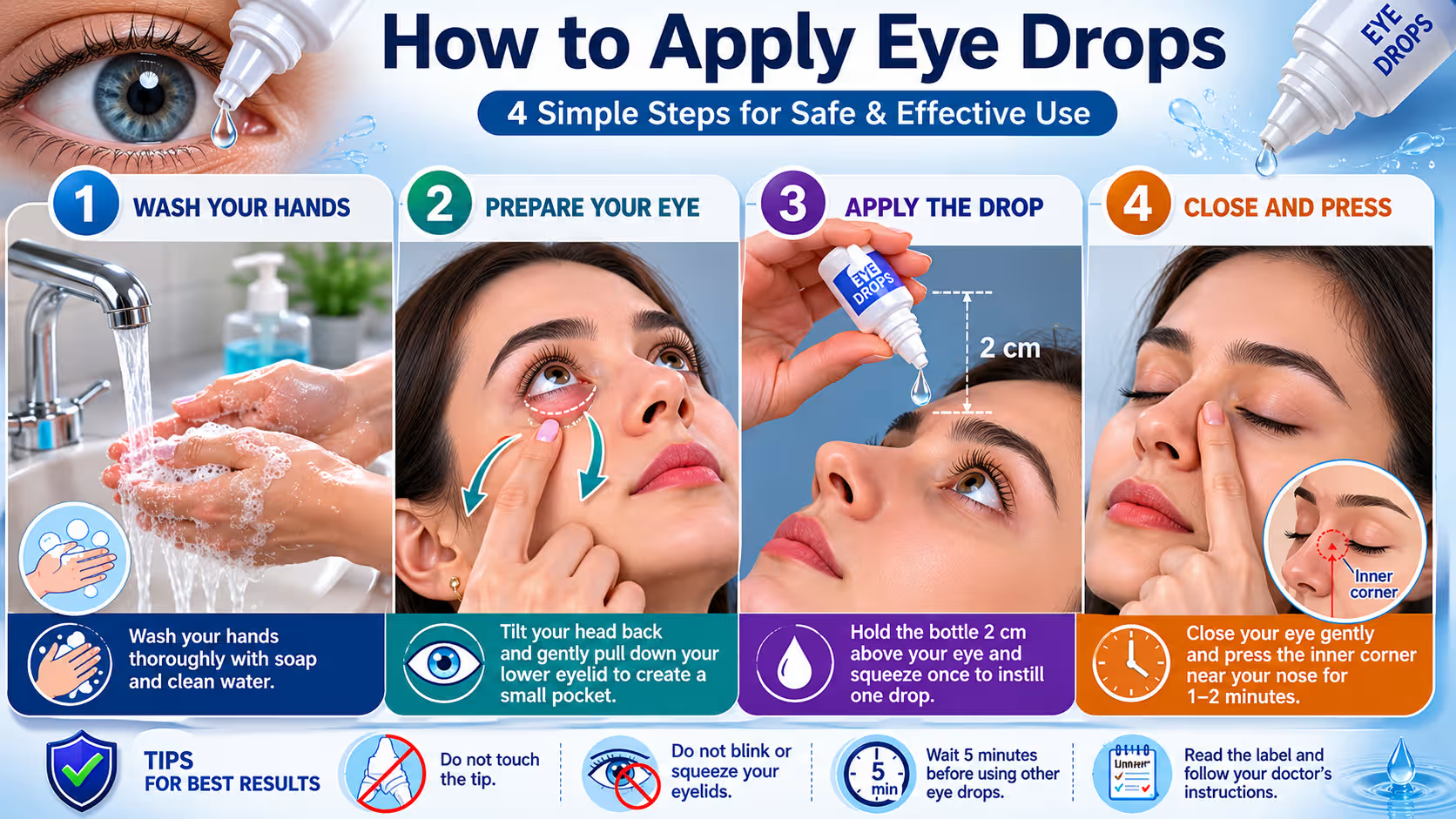
How to Use Eye Drops Correctly: A Step-by-Step Guide
To get the most out of your treatment, follow this checklist:
- Wash your hands: Always start with clean hands.
- Tilt your head back: Look at the ceiling.
- Create a pocket: Use one finger to gently pull down your lower eyelid.
- Drop, don’t touch: Hold the bottle above the eye and squeeze one drop into the pocket. Do not touch the tip to your eye.
- Close and press: Close your eyes gently (don’t squeeze). Press your finger against the inner corner of your eye (near the nose) for 1–2 minutes. This keeps the medicine in the eye and prevents it from draining into your throat.
- Wait: If you have a second type of drop, wait at least 5–10 minutes before applying it.
Side Effects of Eye Drops
While eye drops are generally safe, they are medications and can have side effects:
- Temporary Stinging: Common with many drops; usually lasts 10–30 seconds.
- Blurred Vision: Ointments and thick drops will blur vision temporarily.
- Increased Eye Pressure: A risk specifically with steroids.
- Systemic Effects: Some glaucoma drops can affect heart rate or asthma if they drain into the tear duct. (This is why pressing the corner of the eye is important!)
Can Eye Drops Damage Your Eyes?
Yes, if misused. Overuse of redness-relief drops can cause permanent “vasodilation,” making your eyes look chronically bloodshot. Steroid abuse is a leading cause of preventable blindness in some regions due to secondary glaucoma. Preservative toxicity can cause the surface of the cornea to look like “pitted orange peel,” leading to constant pain and blurry vision.
How to Choose the Right Eye Drops
Selection should be based on a professional diagnosis.
- Based on Symptoms: Itching usually requires antihistamines; grittiness requires lubricants.
- Based on Lifestyle: If you wear contacts, you need “contact lens safe” or preservative-free drops.
- Why Professional Evaluation Matters: A “red eye” could be a simple allergy, or it could be acute glaucoma—a medical emergency. Only an Eye Specialist in Lucknow has the tools (like a slit-lamp microscope) to tell the difference.
When Should You See an Eye Specialist?
If you experience any of the following, stop self-medicating and see the Best Eye Doctor in Lucknow immediately:
- Sudden vision changes or loss of vision.
- Severe eye pain.
- Seeing “halos” around lights.
- Eye redness accompanied by a thick discharge.
- A feeling that something is stuck in your eye that won’t come out.
Eye Drops Myths vs. Facts
- Myth: All eye drops are basically the same.
- Fact: They are chemically distinct and serve different medical purposes.
- Myth: You can use eye drops while wearing contact lenses.
- Fact: Many drops contain preservatives that can be absorbed by the lens and damage your cornea. Always ask your doctor.
- Myth: If one drop is good, four drops are better.
- Fact: The eye has a limited capacity. Excess drops are a waste of money and can increase side effects.
- Myth: “Natural” or “Herbal” eye drops are always safer.
- Fact: Many “herbal” drops are not manufactured under strict sterile conditions and can cause severe fungal infections.
Expert Insights: Why Self-Medication Is a Growing Concern
The rise of easy-access pharmacies has led to a surge in self-prescribing. Dr Charu Chaudhary, a trusted Eye Specialist in Lucknow and Best Eye Doctor in Lucknow, advises patients to avoid self-prescribing eye drops because the wrong medication can delay diagnosis and worsen eye conditions.
“I frequently see patients who have been using steroid-antibiotic combinations for a simple red eye,” says Dr Chaudhary. “By the time they reach my clinic, their eye pressure is dangerously high, and they have developed ‘Steroid-Induced Glaucoma.’ This is entirely preventable with an accurate initial diagnosis.”
Special Considerations for Children and Elderly Patients
Eye Drops for Children
Applying drops to a child can be a challenge. Tip: Have the child lie down with their eyes closed. Place the drop in the inner corner (near the nose). When the child opens their eye, the drop will naturally roll in.
Eye Drops for Senior Citizens
Arthritis can make squeezing small bottles difficult. There are “eye drop aids” (autodrop devices) available that make the process easier. Additionally, seniors must be extra careful about compliance with glaucoma medications.
Key Takeaways
- Different Eye Drops Have Different Purposes: Never substitute one for another.
- Correct Diagnosis Comes Before Treatment: Don’t guess; get an eye exam.
- Some Eye Drops Require Medical Supervision: Steroids and glaucoma drops are not “casual” medications.
- Proper Usage Improves Effectiveness: Follow the “wait 5 minutes” and “press the corner” rules.
- Never Ignore Persistent Eye Symptoms: If drops don’t work within 48 hours, see a specialist.
Conclusion
Eye drops are essential tools in modern eye care. They have the power to cure infections, soothe irritation, and save vision from the ravages of glaucoma. However, their effectiveness is entirely dependent on using the right drop for the right condition at the right time.
Self-medication may be harmful in some situations, leading to complications that are far worse than the original problem. Proper diagnosis ensures the safest and most effective treatment for your precious eyes.
For expert guidance and a comprehensive eye evaluation, consult Dr Charu Chaudhary, the Best Eye Doctor in Lucknow. Whether you are dealing with chronic dry eyes, allergies, or complex ocular conditions, visiting a qualified Eye Specialist in Lucknow is the best way to ensure your vision stays clear for years to come.
FAQs
Q1.Which eye drops are best for dry eyes?
The best drops for dry eyes are typically preservative-free artificial tears containing Carboxymethylcellulose or Sodium Hyaluronate. For chronic cases, your eye specialist may prescribe medicated drops like Cyclosporine to increase tear production.
Q2.Can I use eye drops every day?
Lubricating eye drops (artificial tears) are generally safe for daily use. However, medicated drops like steroids, antibiotics, or redness relievers should only be used daily if specifically instructed by your eye doctor for a set duration.
Q3.Are lubricating eye drops safe for long-term use?
Yes, especially if they are preservative-free. They are intended to supplement natural tears. However, if you find yourself needing them more than four times a day, you should consult an eye specialist to find the underlying cause of your dryness.
Q4.What happens if I use the wrong eye drops?
Using the wrong drops can lead to several issues: ineffective treatment of the actual condition, allergic reactions, increased intraocular pressure (from steroids), or masked symptoms that allow a serious infection to worsen.
Q5.Can steroid eye drops damage eyesight?
Yes. If used for too long or without supervision, steroid eye drops can cause “Steroid-Induced Glaucoma” (high eye pressure) and “Cataracts” (lens clouding), both of which can lead to permanent vision impairment.
Q6.How many times a day should eye drops be used?
The frequency depends entirely on the type of drop. Antibiotics might be used 4 times a day, while some glaucoma drops are used only once at night. Always follow the specific instructions on your prescription.
Q7.Can eye drops treat eye infections?
Only antibiotic, antifungal, or antiviral eye drops can treat infections. Over-the-counter lubricating or redness-relief drops will not cure an infection and might actually make it worse by spreading the pathogen.
Q8.How long should I wait between two eye drops?
You should wait at least 5 to 10 minutes between different eye drops. This prevents the second drop from washing out the first one, allowing each medication to be properly absorbed by the eye.
Q9.Are preservative-free eye drops better?
Preservative-free drops are better for patients with sensitive eyes, those who use drops more than 4 times a day, or those with severe dry eye syndrome. They eliminate the risk of irritation caused by chemicals like Benzalkonium Chloride.
Q10.When should I consult an eye specialist about eye drops?
Consult an eye specialist if you have eye pain, sudden vision loss, persistent redness, or if your symptoms do not improve after 48 hours of using OTC drops. Professional evaluation is vital to prevent permanent damage.


Leave A Comment