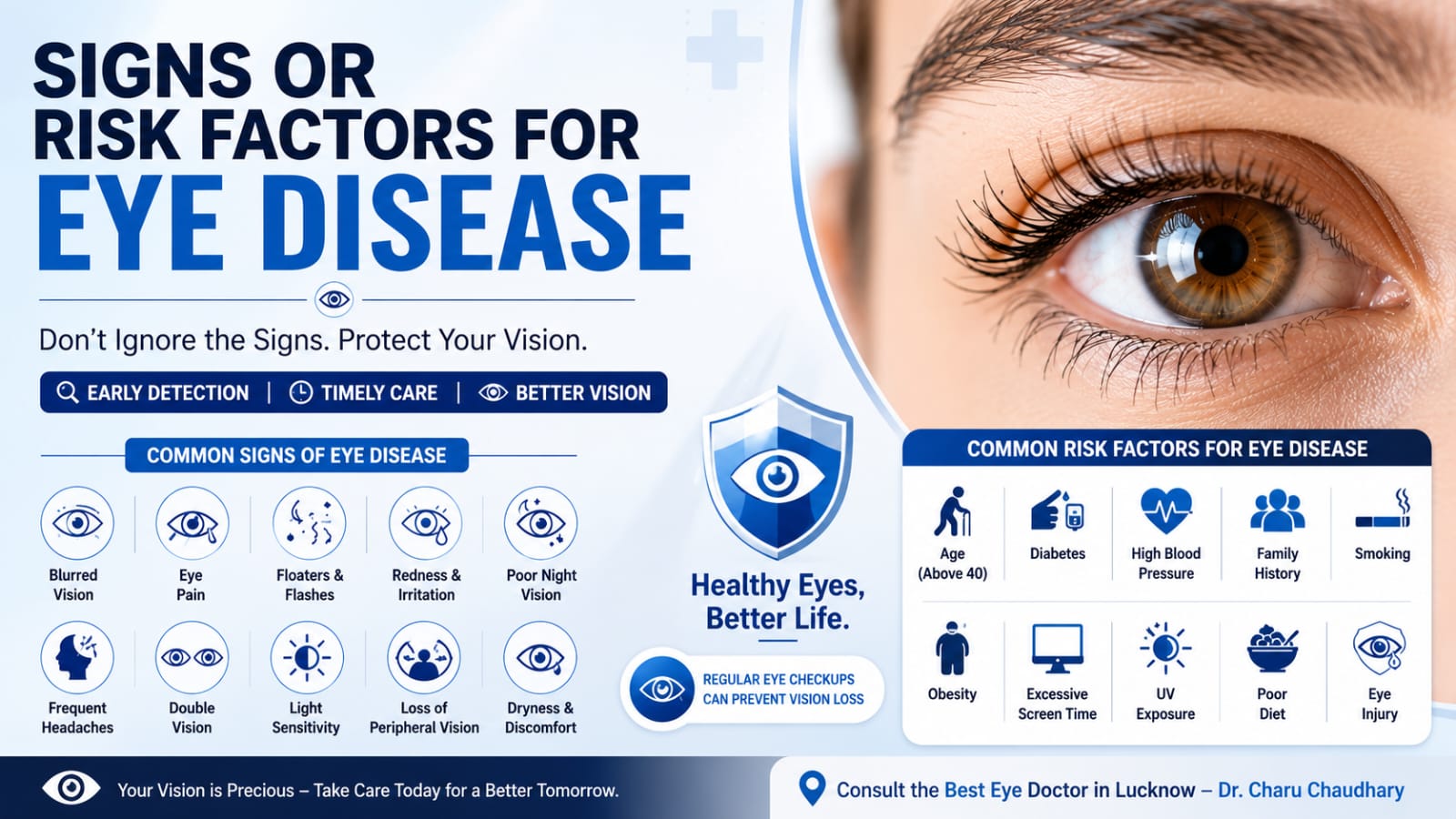
Signs and Risk Factors for Eye Disease Our eyes help us experience the world every day, yet many people ignore early symptoms of eye disease until the condition becomes serious. The truth is that many eye diseases develop slowly and may not cause pain in the beginning. Detecting them early can help protect your vision and prevent permanent damage. Whether you are young or old, understanding the warning signs and risk factors can help you take better care of your eyesight. If you notice any unusual changes in your vision, consulting Dr. Charu Chaudhary, widely regarded as the best eye specialist in Lucknow, can help identify problems before they become severe. Why Early Detection of Eye Disease Matters Many eye diseases do not show noticeable symptoms in their early stages. Conditions like glaucoma, diabetic retinopathy, and age-related macular degeneration can silently damage vision over time. Early diagnosis allows: Regular eye examinations remain the best way to detect these diseases before symptoms become severe. Common Signs of Eye Disease Recognizing the warning signs can save your eyesight. 1. Blurred Vision Blurred vision that does not improve with blinking may indicate: 2. Sudden Vision Loss Any sudden decrease in vision is a medical emergency and requires immediate attention. Possible causes include: 3. Eye Pain Pain inside or around the eye should never be ignored. It may indicate: 4. Frequent Headaches Persistent headaches accompanied by eye strain may result from: 5. Double Vision Seeing two images instead of one may indicate neurological or eye muscle disorders. 6. Floaters and Flashes Occasional floaters are common with age, but a sudden increase in floaters or flashes of light can signal retinal tears. 7. Red Eyes Redness lasting more than a day could indicate: 8. Difficulty Seeing at Night Poor night vision may be caused by: 9. Light Sensitivity Excessive sensitivity to light may indicate: 10. Loss of Peripheral Vision This is often one of the earliest signs of glaucoma. Common Risk Factors for Eye Disease Several factors increase your chances of developing eye disorders. Risk Factor Why It Increases Risk Age above 40 Higher risk of cataracts and glaucoma Diabetes Can damage retinal blood vessels High Blood Pressure Affects blood supply to the eyes Family History Many eye diseases are hereditary Smoking Increases cataract and macular degeneration risk Obesity Raises risk of diabetic eye disease Excessive Screen Time Causes eye strain and dry eyes UV Exposure Damages the lens and retina Poor Diet Lack of vitamins affects eye health Eye Injury Can lead to long-term complications Eye Diseases and Their Early Symptoms Eye Disease Early Symptoms Cataract Blurred vision, glare, poor night vision Glaucoma Peripheral vision loss, eye pressure Diabetic Retinopathy Blurred vision, floaters Dry Eye Syndrome Burning, irritation, redness Macular Degeneration Distorted central vision Retinal Detachment Flashes, floaters, sudden vision loss Conjunctivitis Redness, discharge, itching Who Should Get Regular Eye Checkups? You should schedule regular eye examinations if you: Routine checkups help detect hidden eye diseases before symptoms appear. How to Reduce Your Risk of Eye Disease Eat an Eye-Healthy Diet Include foods rich in: Good choices include carrots, spinach, kale, fish, eggs, citrus fruits, almonds, and sweet potatoes. Protect Your Eyes from UV Rays Wear sunglasses that block 100% UVA and UVB rays whenever outdoors. Control Diabetes and Blood Pressure Keeping blood sugar and blood pressure under control significantly reduces the risk of diabetic eye disease. Follow the 20-20-20 Rule If you use digital devices frequently: Every 20 minutes, Look 20 feet away, For at least 20 seconds. This helps reduce digital eye strain. Quit Smoking Smoking damages blood vessels in the eyes and increases the risk of cataracts and macular degeneration. Exercise Regularly Regular physical activity improves blood circulation and lowers the risk of chronic diseases that affect vision. When Should You Visit an Eye Doctor? Seek immediate medical attention if you experience: Ignoring these symptoms may result in permanent vision damage. Why Choose Dr. Charu Chaudhary for Eye Care? Choosing the right eye specialist plays an important role in protecting your vision. Dr. Charu Chaudhary is known for providing comprehensive eye care with advanced diagnostic techniques and personalized treatment plans. Whether you need a routine eye examination, cataract consultation, glaucoma screening, diabetic eye evaluation, or treatment for other eye conditions, patients trust her expertise and compassionate care. If you are searching for the best eye doctor in Lucknow, Dr. Charu Chaudhary offers modern eye care focused on early diagnosis, accurate treatment, and long-term vision protection. Frequently Asked Questions (FAQs) What are the first signs of eye disease? Blurred vision, eye pain, flashes of light, floaters, redness, and loss of peripheral vision are among the earliest warning signs. Can eye diseases be prevented? Many eye diseases cannot be completely prevented, but regular eye exams, a healthy lifestyle, and early treatment can significantly reduce the risk of vision loss. How often should adults have an eye examination? Adults should have a comprehensive eye examination every one to two years. People with diabetes, glaucoma risk, or existing eye problems may require more frequent checkups. Does screen time permanently damage eyesight? Screen time generally does not cause permanent vision damage but can lead to digital eye strain, dry eyes, headaches, and temporary blurred vision. Why should diabetic patients have regular eye checkups? Diabetes can silently damage the retina without early symptoms. Regular eye exams help detect diabetic retinopathy before permanent vision loss occurs. Conclusion Your eyesight is one of your most valuable assets. Many eye diseases begin silently, making regular eye examinations essential for early diagnosis and effective treatment. Recognizing warning signs such as blurred vision, eye pain, floaters, flashes of light, or persistent redness can help prevent serious complications. If you notice any of these symptoms or have risk factors like diabetes, high blood pressure, or a family history of eye disease, don’t delay seeking professional care. Dr. Charu Chaudhary, recognized by many patients as the best eye doctor in Lucknow, provides comprehensive eye care to help protect your vision and maintain lifelong