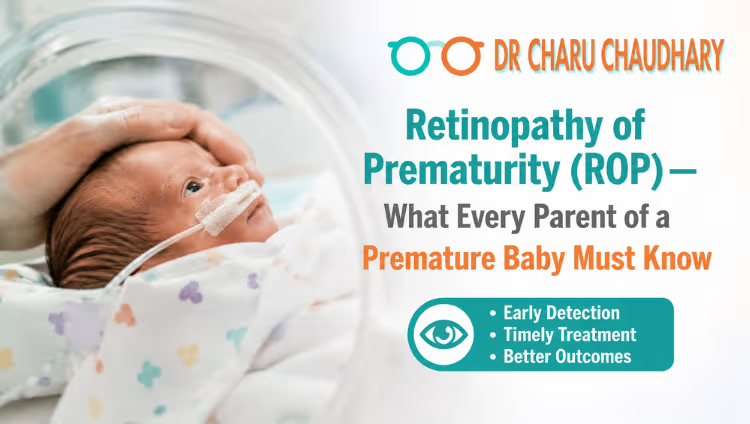
Retinopathy of Prematurity (ROP) is an eye condition that affects premature babies when abnormal blood vessels grow in the retina. If not detected early, ROP can lead to vision problems or even blindness. Timely ROP screening and treatment are extremely important to protect a baby’s eyesight and ensure healthy development. Bringing a premature baby into the world is a journey filled with both hope and anxiety. As a parent, you are likely navigating a whirlwind of medical terms, NICU monitors, and specialized care plans. Among these concerns, one of the most critical—yet often misunderstood—is Retinopathy of Prematurity (ROP). It is a condition that specifically targets the delicate eyes of our littlest fighters. As a retina specialist, I have sat with many parents, holding their hands as we discuss their baby’s eye health. My goal today is to help you understand ROP, why screening is vital, and how we can work together to protect your baby’s precious sight. What Is Retinopathy of Prematurity (ROP)? To understand ROP, think of the eye like a high-tech camera. The retina is the “film” at the back of the camera that captures images and sends them to the brain. In a full-term baby, the blood vessels that nourish the retina finish growing just before birth. However, when a baby is born too early, these vessels haven’t reached the edges of the retina yet. After birth, these vessels can start growing in a disorganized or “abnormal” way. Instead of lying flat, they might leak or bleed, leading to scarring. If this scarring pulls the retina away from the back of the eye, it causes vision loss. Premature babies are at risk because their internal systems are still learning to adapt to the world outside the womb. This is why consulting a Retina specialist in Lucknow for early evaluation is a non-negotiable step in your baby’s NICU journey. Which Babies Are at Higher Risk for ROP? Not every premature baby will develop ROP, but certain factors increase the risk significantly. We closely monitor babies who meet the following criteria: If your baby falls into these categories, please do not panic. Most babies with ROP have mild cases that resolve on their own, but we must watch them like a hawk to be sure. Retinopathy of Prematurity Symptoms Parents Should Know One of the most challenging things about ROP is that it has no visible symptoms in its early stages. You cannot see ROP by looking at your baby’s eyes in the nursery. There is no redness, no tearing, and no obvious pain. This is why the ROP eye test for premature babies is the only way to know what is happening. However, as a child grows, some signs might suggest that ROP occurred or is affecting their vision: Because early ROP is “invisible,” we rely entirely on clinical screening to save sight. 📊 Retinopathy of Prematurity Stages (Quick Chart) We categorize ROP into stages based on the severity of the abnormal vessel growth. ROP Stage What It Means Stage 1 Mildly abnormal blood vessel growth. Most babies get better without treatment. Stage 2 Moderate abnormal growth. Usually improves on its own but requires close monitoring. Stage 3 Severe abnormal growth. Vessels become tangled and scarred. Treatment is often needed. Stage 4 Partial retinal detachment. The retina begins to pull away from the eye wall. Stage 5 Complete retinal detachment. This is the most severe stage and can lead to blindness. Understanding the Stages: Stages 1 and 2 often resolve naturally as the baby grows. However, when a baby reaches Stage 3 “plus disease” (where vessels become dilated and twisted), we move quickly toward treatment. ROP stage 5 treatment is much more complex and involves major surgery, which is why we aim to catch everything at Stage 3 or earlier. Why Is the ROP Eye Test Important for Premature Babies? The window of opportunity to treat ROP is very small. If we miss the “threshold” for treatment, the condition can progress to permanent blindness within days. Timely screening is the only way to: I often tell parents in my clinic that “timing is everything.” Parents are strongly advised to consult a trusted eye specialist in Lucknow as soon as the neonatologist recommends an eye check, usually within 3 to 4 weeks after birth. How Is the ROP Screening Procedure Done? It is natural to feel protective when you see your tiny baby undergoing tests. Rest assured, the ROP procedure is a standard, safe, and quick examination. The exam usually takes only a few minutes. Your baby might cry a little because they don’t like being held still, but they are not in significant pain. ROP in Premature Babies — Treatment Options If we find that the ROP is progressing to a stage that threatens vision, we have several effective tools. Retinopathy of Prematurity Treatment in Lucknow has advanced significantly, offering babies a great chance at normal vision. Dr. Charu Chaudhary is known for advanced retina care and timely ROP management, ensuring that every baby receives a customized treatment plan based on their specific stage. A Story of Hope: The Journey of Baby Kabir I remember Baby Kabir, born at just 28 weeks. His parents were terrified when I told them he had reached Stage 3 ROP. They felt like they had already been through enough in the NICU. We performed a laser procedure the very next day. It was a stressful hour for the parents, but the procedure was a success. Today, Kabir is three years old. He wears glasses for mild nearsightedness, but he can see the world, chase his dog, and read his favorite picture books. Early screening was the hero of Kabir’s story. It can be the hero of your baby’s story, too. Recovery and Long-Term Vision Care After ROP Treatment Treatment is the first step, but the journey doesn’t end there. Even after successful treatment, premature babies need long-term follow-ups. Regular visits to a pediatric retina specialist ensure that any minor issues are caught before they affect your child’s learning and development. How Parents Can Protect Their