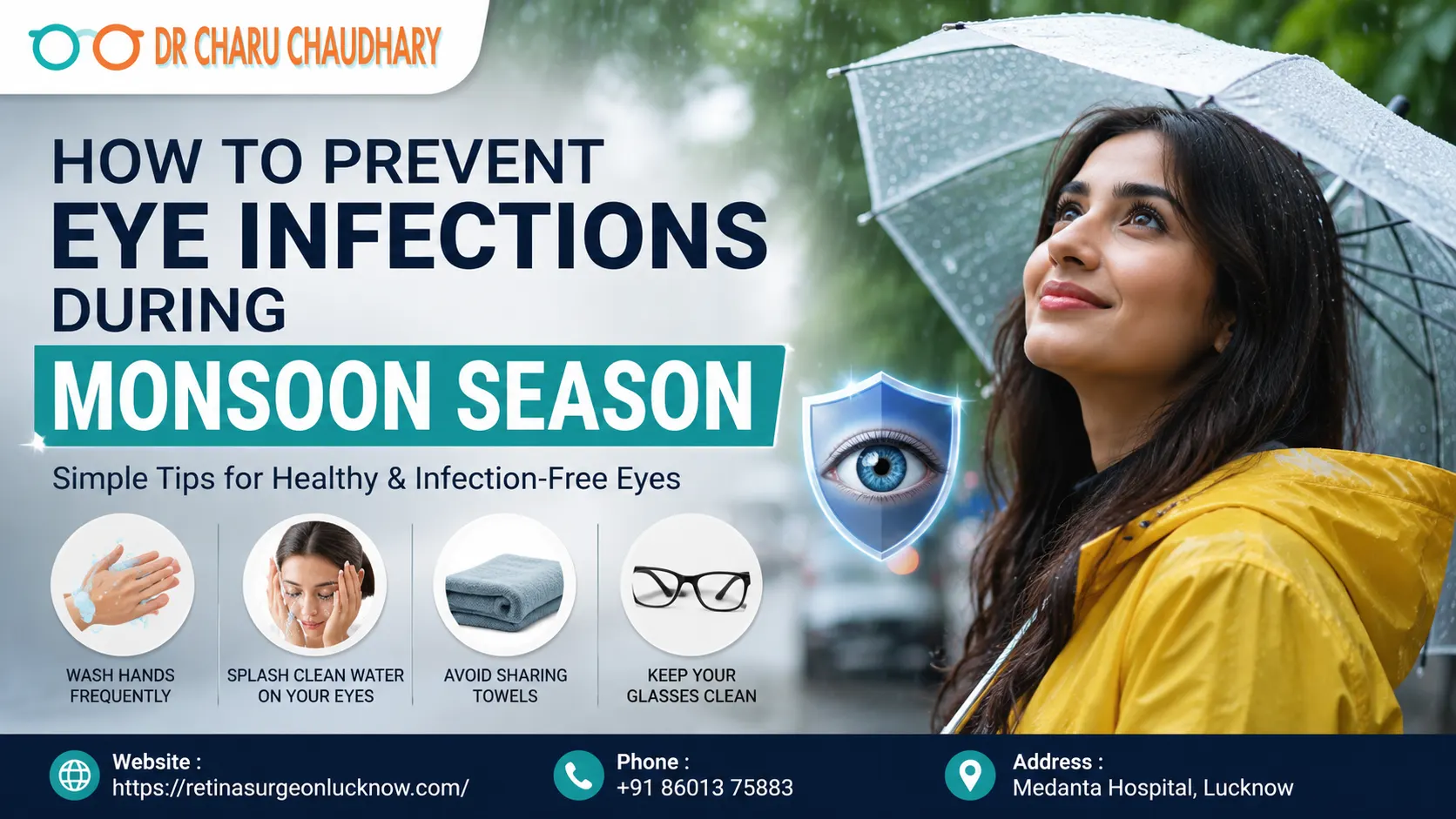
The monsoon season brings welcome relief from the summer heat, but it also creates ideal conditions for bacteria, viruses, fungi, and allergens to thrive. Increased humidity, stagnant water, and poor hygiene significantly raise the risk of eye infections. From viral conjunctivitis to styes and allergic eye irritation, monsoon-related eye problems can affect people of all ages. Fortunately, most eye infections are preventable with proper hygiene and timely care. In this comprehensive guide, you’ll learn how to prevent eye infections during monsoon season, recognize early warning signs, understand available treatments, and know when to consult the Eye Surgeon in Lucknow. Why Do Eye Infections Increase During the Monsoon? The rainy season creates an environment that promotes the growth and spread of microorganisms. Some common reasons include: Children, elderly individuals, contact lens users, diabetic patients, and people with weakened immunity are particularly vulnerable. Common Eye Infections During Monsoon 1. Viral Conjunctivitis (Pink Eye) One of the most common monsoon eye infections. Symptoms It spreads easily through direct contact and contaminated objects. 2. Bacterial Conjunctivitis Unlike viral conjunctivitis, bacterial infections often produce thick yellow or green discharge. Symptoms include: Prompt treatment prevents complications. 3. Stye (Eye Boil) A stye is a painful infection of an eyelid gland. Symptoms include: Poor eyelid hygiene increases the risk. 4. Fungal Eye Infection Although less common, fungal infections may occur after eye injuries involving contaminated water or soil. Symptoms: These infections require urgent ophthalmic evaluation. 5. Allergic Eye Disease Monsoon humidity increases mold spores and allergens. Symptoms: Unlike infections, allergies are not contagious. Signs You May Have an Eye Infection Watch for these warning symptoms: Never ignore sudden vision loss or severe eye pain. How to Prevent Eye Infections During Monsoon Season Preventive care is always better than treatment. Follow these practical eye care tips throughout the rainy season. 1. Wash Your Hands Frequently Hands carry thousands of germs every day. Always wash your hands: Use soap and clean water for at least 20 seconds. 2. Avoid Touching or Rubbing Your Eyes Eye rubbing transfers bacteria and viruses directly to the eye surface. Instead: 3. Keep Your Eyes Clean Clean your eyelids gently using: Avoid using dirty towels. 4. Never Share Personal Items Avoid sharing: Many eye infections spread through shared items. 5. Maintain Contact Lens Hygiene Contact lens users have a higher infection risk. Always: Stop wearing lenses immediately if your eyes become red or painful. 6. Protect Your Eyes from Rainwater Rainwater is not always clean. If rainwater enters your eyes: 7. Wear Protective Glasses Outdoors Protective eyewear helps prevent: Sunglasses also reduce irritation from wind. 8. Eat Eye-Healthy Foods Strong immunity reduces infection risk. Include: Vitamin A, Vitamin C, Vitamin E, zinc, and antioxidants support healthy eyes. 9. Stay Hydrated Even during rainy weather, dehydration can affect tear production. Drink: Good hydration supports healthy tear film function. 10. Avoid Self-Medication Never use: Improper treatment may worsen the infection. Eye Care Tips for Children During Monsoon Children frequently catch viral conjunctivitis. Parents should: Early treatment prevents spread within families and schools. What to Do if You Develop an Eye Infection If symptoms appear: Do Don’t When Should You Visit an Eye Specialist? Seek immediate medical attention if you experience: Prompt diagnosis helps prevent serious complications. Can Eye Infections Affect Vision? Most mild infections resolve completely with proper treatment. However, untreated infections can lead to: Early diagnosis greatly reduces these risks. How Eye Specialists Diagnose Eye Infections During your eye examination, your ophthalmologist may perform: Accurate diagnosis ensures appropriate treatment. Simple Daily Monsoon Eye Care Routine Follow this checklist every day: Consistency is the key to preventing seasonal eye infections. Conclusion Monsoon season increases the risk of eye infections, but simple preventive measures can keep your eyes healthy. Maintaining good hygiene, avoiding contaminated water, practicing safe contact lens care, and recognizing early symptoms can significantly reduce your chances of developing infections. If redness, pain, discharge, or blurred vision develops, don’t ignore the symptoms. Early diagnosis and timely treatment protect your eyesight and prevent complications. Consulting the Best Eye Specialist in Lucknow ensures you receive an accurate diagnosis and advanced treatment tailored to your condition.