
 No Comments
Clear vision is something many of us take for granted until things start to look a little blurry. Whether you are struggling to read the fine print on a menu, finding it hard to see road signs while driving, or noticing that your child is squinting at the television, vision changes can be unsettling.
The most common reasons for blurred vision are refractive errors. While the terms Myopia, Hypermetropia, and Presbyopia might sound like complex medical jargon, they represent the three most frequent ways our eyes struggle to focus light. Understanding these conditions is the first step toward reclaiming clear sight and maintaining long-term eye health.
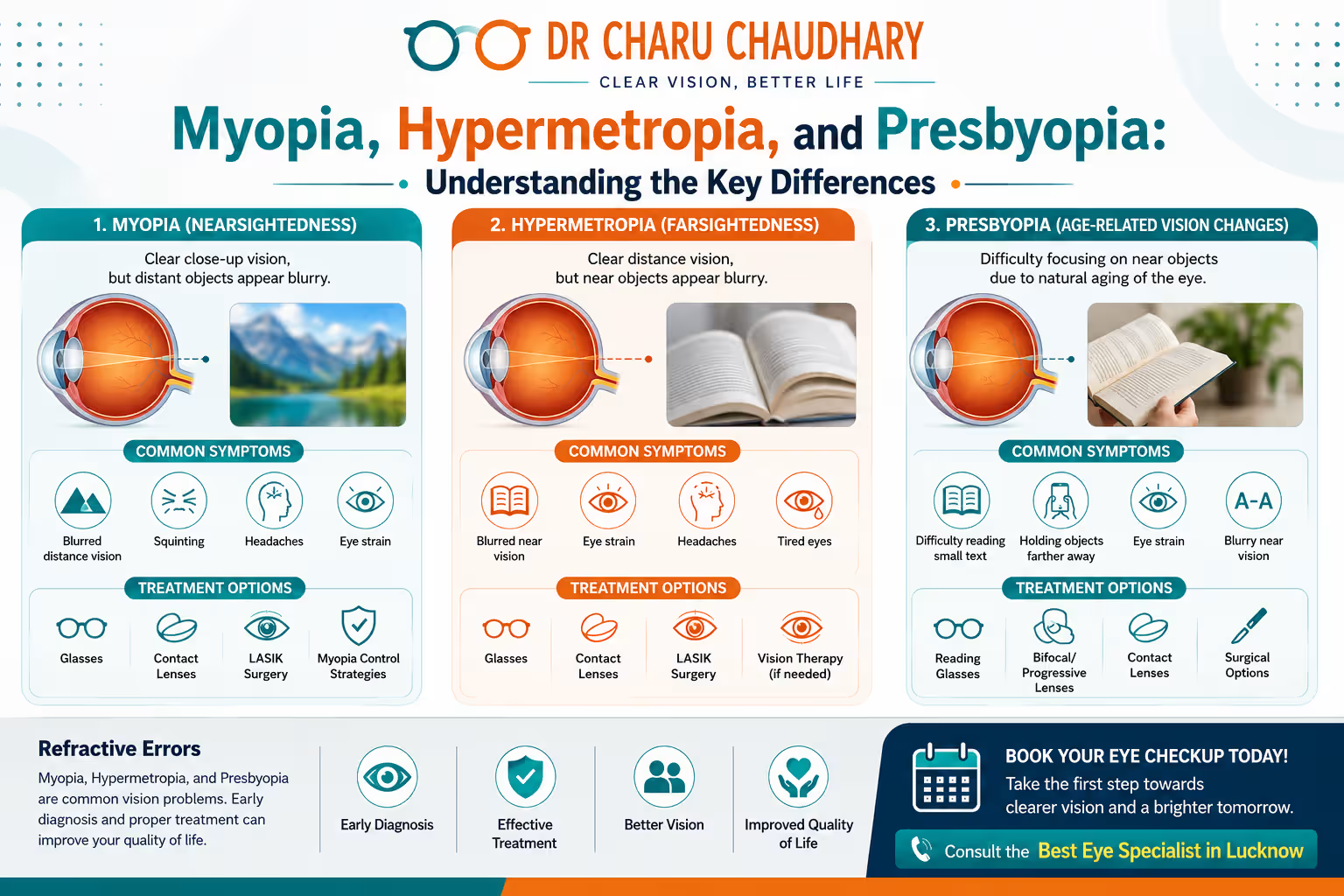
Myopia, Hypermetropia, and Presbyopia are common refractive errors affecting how the eye focuses light. Myopia (nearsightedness) causes difficulty seeing distant objects. Hypermetropia (farsightedness) affects near vision clarity. Presbyopia is an age-related condition where the eye’s lens loses flexibility, making it difficult to focus on close-up tasks like reading.
Introduction
Vision is perhaps our most dominant sense, guiding how we interact with the world, learn, and work. However, according to the World Health Organization, refractive errors are the leading cause of vision impairment globally. Despite their prevalence, many people confuse these conditions, leading to delayed treatment or incorrect assumptions about their eye health.
The modern lifestyle—characterized by increased screen time and less outdoor activity—has led to a surge in cases of Myopia, especially among children. On the other hand, as the global population ages, Presbyopia has become a universal experience for those over 40. Meanwhile, Hypermetropia often goes undiagnosed in children because the eye’s internal muscles work overtime to compensate, often leading to hidden eye strain.
Early diagnosis is vital. Uncorrected refractive errors don’t just cause blurriness; they can lead to chronic headaches, reduced productivity, and, in children, developmental delays or “lazy eye” (amblyopia). This guide will break down the mechanics of the eye, explain the differences between these three conditions, and help you understand the path to perfect vision.
How Normal Vision Works
To understand what goes wrong in refractive errors, we must first understand how a “normal” eye (emmetropia) functions.
Anatomy of the Eye
Think of your eye as a high-tech camera. It has a protective outer layer, a lens for focusing, and a “film” or sensor at the back that captures the image. The main components involved in vision are the cornea, the lens, and the retina.
Role of the Cornea and Lens
Light enters the eye through the cornea, the clear, dome-shaped front surface. The cornea provides most of the eye’s optical power by bending (refracting) incoming light. Behind the cornea sits the crystalline lens, which is flexible. This flexibility allows the lens to change shape to fine-tune your focus, a process called accommodation.
How Light Focuses on the Retina
In a perfectly shaped eye, the cornea and lens work in harmony to bend light rays so they land precisely on a single focal point on the retina. The retina is a light-sensitive layer of tissue at the back of the eye. It converts light into neural signals and sends them via the optic nerve to the brain, which interprets them as images.
What Happens When Vision Becomes Blurry
Vision becomes blurry when the light does not land exactly on the retina. If the eye is too long, too short, or the cornea is too curved, the light focus lands in front of or behind the retina. This mismatch is what we call a refractive error.
What Are Refractive Errors?
Definition of Refractive Errors
A refractive error is a type of vision problem that makes it hard to see clearly. It happens when the shape of your eye keeps light from focusing correctly on your retina. It is not a “disease” in the traditional sense, but rather an anatomical mismatch in the eye’s optical system.
Why Refractive Errors Occur
Refractive errors typically occur due to one of three factors:
- Eyeball Length: The eye is either too long (Myopia) or too short (Hypermetropia).
- Corneal Curvature: The cornea is too steeply curved or too flat.
- Lens Aging: The lens loses its ability to change shape (Presbyopia).
Common Types of Refractive Errors
The four main types are:
- Myopia: Nearsightedness.
- Hypermetropia: Farsightedness.
- Presbyopia: Age-related near-vision loss.
- Astigmatism: Distorted vision at all distances due to an irregularly shaped cornea.
Impact on Daily Life
Uncorrected refractive errors can make it difficult to perform everyday tasks. For a student, it means not being able to see the whiteboard. For a professional, it means digital eye strain and blurred text. For an older adult, it can mean a loss of independence when reading labels or using a phone.
What Is Myopia (Nearsightedness)?
Understanding Myopia
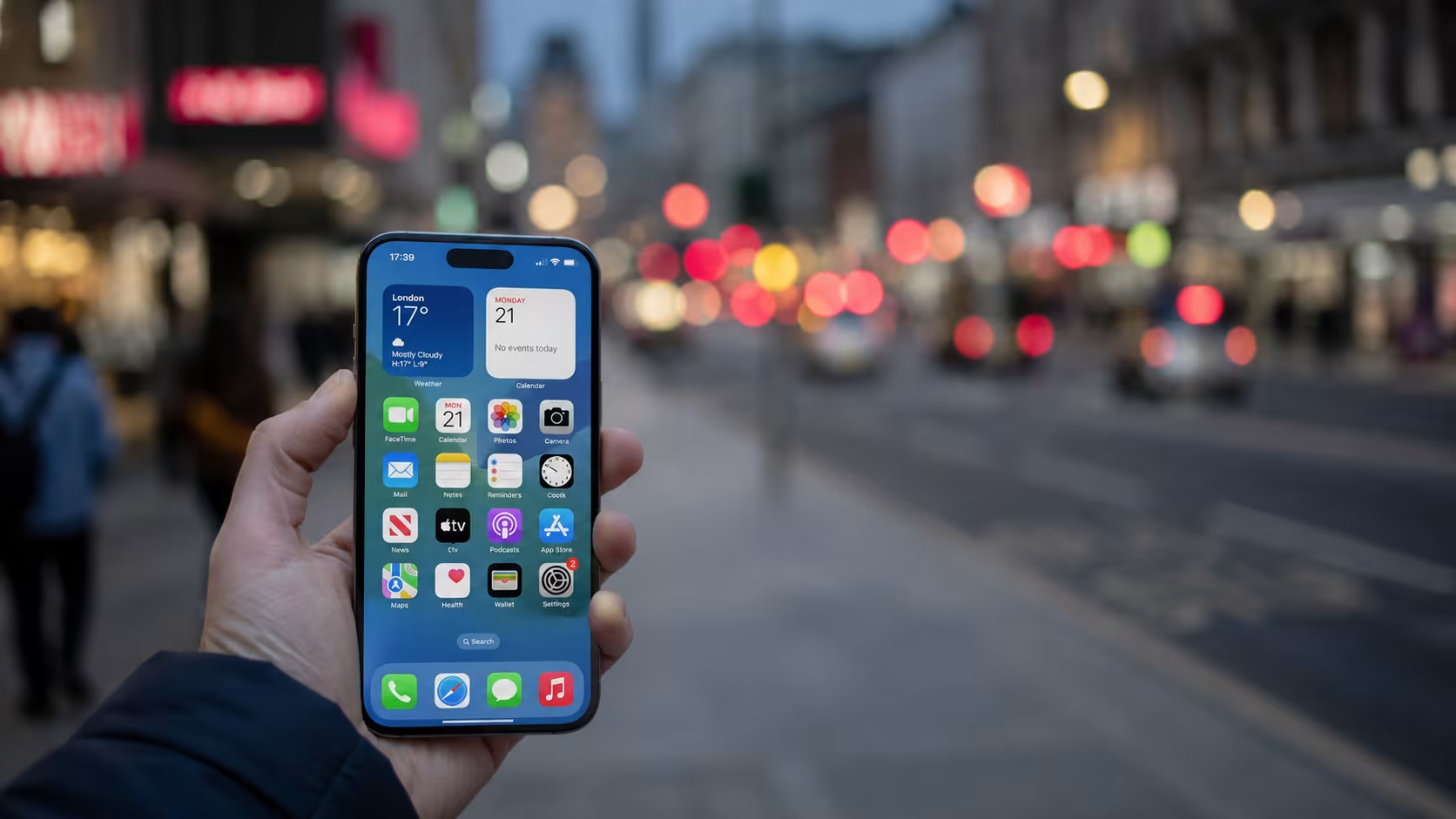
Myopia, commonly known as nearsightedness, is a condition where close-up objects appear clear, but distant objects—like street signs or a movie screen—look blurry. It is the most common refractive error worldwide and is reaching epidemic levels in urban populations.
Causes of Myopia
Myopia occurs when the eyeball is too long relative to the focusing power of the cornea and lens. This causes light rays to focus at a point in front of the retina instead of directly on its surface. It can also be caused by a cornea that is too steeply curved.
Symptoms of Myopia
- Blurry vision when looking at distant objects.
- The need to squint or partially close the eyelids to see clearly.
- Headaches caused by excessive eye strain.
- Difficulty seeing while driving, especially at night (night myopia).
Risk Factors
- Genetics: If one or both parents are myopic, the child has a higher risk.
- Environmental Factors: Lack of time spent outdoors and excessive “near work” (reading, using tablets/phones) are strongly linked to the onset of myopia in children.
How Myopia Progresses
Myopia usually starts in childhood and can progress until the early 20s as the eyeball continues to grow. High myopia (severe nearsightedness) increases the risk of serious eye conditions later in life, such as retinal detachment, cataracts, and glaucoma.
Treatment Options
- Glasses: Concave lenses (minus power) are used to move the focal point back onto the retina.
- Contact Lenses: Provide a wider field of vision than glasses.
- LASIK: A popular laser surgery that reshapes the cornea to correct the refractive error.
- Myopia Control: For children, specialized eye drops (Atropine) or Orthokeratology (special lenses worn at night) can slow down the progression of myopia.
What Is Hypermetropia (Farsightedness)?

Understanding Hypermetropia
Hypermetropia, or farsightedness, is a condition where distant objects are usually seen clearly, but close-up objects appear significantly blurred. However, the experience of hypermetropia varies by age; young people with mild hypermetropia may see clearly at all distances because their eyes can compensate, while older individuals may struggle with both near and far vision.
Causes of Hypermetropia
This occurs when the eyeball is too short or the cornea has too little curvature. As a result, light focuses at a point behind the retina.
Symptoms of Hypermetropia
- Nearby objects appearing blurry.
- The need to squint to see clearly.
- A dull ache in the eye or “brow ache.”
- General eye strain, especially after tasks like reading or writing.
Risk Factors
Hypermetropia is often present at birth, but children frequently “outgrow” it as the eyeball lengthens during normal growth. It is highly hereditary.
Complications if Left Untreated
In children, significant uncorrected hypermetropia can lead to strabismus (crossed eyes) or amblyopia (lazy eye) because the brain begins to ignore the signals from the eye that is more out of focus.
Treatment Options
- Glasses: Convex lenses (plus power) are used to pull the focal point forward onto the retina.
- Contact Lenses: Spherical contact lenses are a common choice.
- Refractive Surgery: Procedures like LASIK or CK (Conductive Keratoplasty) can be used for moderate hypermetropia in adults.
What Is Presbyopia?

Presbyopia Meaning
The word Presbyopia comes from the Greek word for “old eye.” It is an age-related condition where the eye slowly loses its ability to focus quickly on close objects. Unlike Myopia or Hypermetropia, which are related to the shape of the eyeball, Presbyopia is related to the aging of the internal lens.
Why Presbyopia Develops With Age
When you are young, the lens inside your eye is soft and flexible. It can easily change shape to focus on things both far and near. After age 40, the proteins in the lens begin to harden, making it less flexible. The tiny muscles (ciliary muscles) struggle to reshape the stiff lens, resulting in a loss of near-focusing power.
Common Symptoms
- Holding reading material at arm’s length to make the letters clearer.
- Blurred vision at normal reading distance.
- Eye strain or headaches after reading or doing close-up work.
- Requiring brighter lighting to read.
When Presbyopia Usually Starts
Almost everyone begins to notice the effects of presbyopia between the ages of 40 and 45. It continues to worsen until about age 65.
Impact on Reading and Daily Tasks
Presbyopia affects modern life significantly, especially with the use of smartphones and computers. Many people find themselves constantly switching between their “walking around” glasses and their reading glasses.
Treatment Options
- Reading Glasses: Only worn for close-up work.
- Bifocals: Lenses with two powers (top for distance, bottom for near).
- Progressive Lenses: Multi-focal lenses that provide a smooth transition between distance, intermediate, and near vision without a visible line.
- Contact Lenses: Multifocal contacts or “monovision” (one eye corrected for distance, one for near).
- Surgical Correction: Options include Refractive Lens Exchange (RLE), where the natural lens is replaced with a multifocal artificial lens.
Myopia vs Hypermetropia vs Presbyopia – Key Differences
To help you understand how these conditions differ at a glance, refer to the table below:
| Feature | Myopia (Nearsightedness) | Hypermetropia (Farsightedness) | Presbyopia (Age-related) |
| Primary Age Group | Often begins in childhood. | Can be present from birth. | Usually begins after age 40. |
| Near Vision | Clear (unless very severe). | Blurry. | Blurry. |
| Distance Vision | Blurry. | Usually clear (in young people). | Usually clear. |
| Cause | Eyeball too long / Steep cornea. | Eyeball too short / Flat cornea. | Loss of lens flexibility. |
| Focal Point | In front of the retina. | Behind the retina. | Behind the retina (due to lens stiffness). |
| Common Symptoms | Squinting, distant blur. | Eye strain, near blur. | Holding books at arm’s length. |
| Treatment | Concave (-) Lenses, LASIK. | Convex (+) Lenses, LASIK. | Reading glasses, Progressives, RLE. |
Detailed Comparison
While Myopia and Hypermetropia are opposites based on the length of the eye, Presbyopia is a functional decline that happens to everyone, regardless of whether they were previously nearsighted or farsighted. Interestingly, a person with Myopia will still develop Presbyopia as they age; they may simply find that taking their glasses off helps them read better for a short period of time.
Symptoms Comparison: How to Identify Each Condition
Signs of Myopia
If you find yourself moving closer to the TV, sitting at the front of the classroom, or feeling unsafe driving at night because road signs are “fuzzy,” you likely have Myopia.
Signs of Hypermetropia
If you see perfectly fine when looking at the horizon, but your eyes feel “heavy” or painful after 30 minutes of laptop work, or if you have a child who avoids reading because it makes them tired, Hypermetropia may be the cause.
Signs of Presbyopia
The “long-arm syndrome” is the classic sign. If you find yourself zooming in on your phone’s font size or needing more light to see the thread in a needle, Presbyopia has arrived.
Symptoms That Overlap
All three conditions share common “warning signs” of eye strain, including:
- Frontal headaches.
- Burning or watery eyes.
- The urge to rub your eyes frequently.
- Temporary blurred vision that clears after blinking or resting.
Who Is Most at Risk?
Children and Teenagers
This group is at the highest risk for Myopia. With the rise of digital learning and gaming, pediatric eye health is a growing concern.
Adults Working on Screens
Professionals who spend 8-10 hours on digital devices are susceptible to “Digital Eye Strain,” which can exacerbate existing mild Hypermetropia or early Presbyopia.
Individuals With Family History
Genetics plays a massive role. If you have a family history of high myopia, regular checkups are essential to monitor for retinal thinning.
Older Adults
After 40, Presbyopia is nearly universal. Additionally, as we age, the risk for other conditions like cataracts (which can change your refractive error) increases.
How Eye Specialists Diagnose Refractive Errors
Diagnosing these conditions requires more than just reading letters off a chart. A comprehensive eye examination is a multi-step process.
Vision Testing
Using a Snellen Chart (the one with the big ‘E’), an optometrist or ophthalmologist measures your visual acuity at various distances.
Refraction Assessment
This is the “which is better, one or two?” part of the exam. Using a phoropter or an automated refractor, the specialist determines the exact lens power needed to correct your vision.
Retinal Examination
The doctor may dilate your pupils to look at the health of the retina. This is crucial for myopic patients to ensure there are no tears or holes in the peripheral retina.
Digital Eye Assessment Technologies
Modern clinics now use advanced topography and wavefront technology to map the eye’s surface in 3D. When seeking an accurate diagnosis and modern treatment plans, consulting an expert like Dr. Charu Chaudhary ensures you receive a precise prescription and a thorough health screen. As a leading Best Eye Specialist in Lucknow, she utilizes advanced diagnostics to differentiate between simple refractive errors and more complex eye pathologies.
Treatment Options for Refractive Errors
Prescription Glasses
The simplest and safest way to correct vision. With high-index materials, even strong prescriptions can have thin, attractive lenses.
Contact Lenses
Perfect for athletes or those who prefer not to wear frames. Options include daily disposables, monthlies, and even bifocal contacts.
LASIK Surgery
Laser-Assisted In Situ Keratomileusis (LASIK) involves creating a thin flap on the cornea and using a laser to reshape the underlying tissue. It is highly effective for Myopia and Hypermetropia.
SMILE Eye Surgery
Small Incision Lenticule Extraction (SMILE) is a newer, flapless procedure that is often preferred for patients with dry eyes or those with high Myopia.
Refractive Lens Exchange (RLE)
Mostly used for Presbyopia or high Hypermetropia, this involves replacing the natural lens with an artificial one, similar to cataract surgery.
Can Refractive Errors Be Prevented?
While you cannot change your genetics or stop the aging process, you can influence the progression and comfort of your vision.
Eye Care Habits
Maintain a proper distance (at least 20 inches) from your computer screen and ensure your workstation is ergonomically correct.
Screen Time Management
Follow the 20-20-20 Rule: Every 20 minutes, look at something 20 feet away for at least 20 seconds. This relaxes the focusing muscles inside the eye.
Outdoor Activities for Children
Studies show that children who spend at least 2 hours outdoors daily have a significantly lower risk of developing Myopia. Sunlight triggers dopamine release in the retina, which helps regulate eyeball growth.
Healthy Diet for Eye Health
Leafy greens (lutein), fatty fish (Omega-3), and citrus fruits (Vitamin C) support the structural health of the eye and may delay age-related changes.
Digital Screens and Vision Problems
In the 21st century, our eyes are under constant stress from “near work.”
Screen Exposure and Myopia
High levels of screen time are a known “environmental trigger” for Myopia in children and young adults. The constant demand on the eye to focus on a near object can cause the eyeball to elongate.
Digital Eye Strain
Also known as Computer Vision Syndrome, this causes dryness, blurred vision, and neck pain. Blue light filters and anti-reflective coatings on glasses can help mitigate some of these effects.
Common Myths and Facts About Vision Problems
Myth 1: Wearing Glasses Weakens Your Eyes.
- Fact: Glasses do not change the physical structure of your eye. They simply allow you to see clearly. Not wearing them when needed causes unnecessary strain.
Myth 2: Reading in Dim Light Causes Permanent Damage.
- Fact: It may cause eye fatigue and a temporary headache, but it does not lead to permanent vision loss or structural damage.
Myth 3: Myopia Only Affects Children.
- Fact: While it often starts in childhood, adult-onset myopia can occur due to extreme visual stress or underlying health conditions like diabetes.
Myth 4: Presbyopia Means You Are Going Blind.
- Fact: Not at all. It is a natural, normal part of aging, much like getting gray hair. It is easily managed with reading glasses.
Myth 5: Eye Exercises Can Cure Refractive Errors.
- Fact: While “vision therapy” can help with eye-tracking and coordination issues, no amount of exercise can change the length of your eyeball or the stiffness of an aging lens.
Myth 6: Contact Lenses Are Unsafe.
- Fact: If handled with proper hygiene and fitted by a specialist, contact lenses are incredibly safe.
Myth 7: LASIK Works for Everyone.
- Fact: Not everyone is a candidate for LASIK. Factors like corneal thickness, dry eye severity, and stable prescriptions determine eligibility.
When Should You Visit an Eye Specialist?
You should not wait for your vision to fail before booking an appointment. See an expert if you experience:
- Frequent headaches by the end of the day.
- Haloes around lights at night.
- The need to hold your phone further away.
- Sudden “floaters” or flashes of light.
- Persistent dry or red eyes.
For those in Uttar Pradesh, consulting Dr. Charu Chaudhary, the Best Eye Specialist in Lucknow, is the ideal way to get a comprehensive assessment. Whether you need a simple glass prescription or are considering advanced laser vision correction, expert guidance is paramount.
Final Thoughts
Myopia, Hypermetropia, and Presbyopia are part of the human experience for billions. While they can be frustrating, we live in a golden age of vision correction. From stylish frames and comfortable contact lenses to life-changing laser surgeries, there is no reason to live with blurred vision.
Remember, every eye is unique. What works for a friend might not work for you. Always seek professional advice to ensure your eyes remain healthy and your vision stays clear.
FAQs
1. What is the difference between Myopia and Hypermetropia?
Myopia is nearsightedness (trouble seeing far), caused by an eyeball that is too long. Hypermetropia is farsightedness (trouble seeing near), caused by an eyeball that is too short.
2. What is Presbyopia and at what age does it start?
Presbyopia is the age-related loss of near-focusing ability due to the hardening of the eye’s lens. It typically begins around age 40 to 45.
3. Can Myopia be cured permanently?
While glasses and contacts correct it, surgical procedures like LASIK or SMILE can permanently reshape the cornea to eliminate the need for glasses in most patients.
4. Is Presbyopia a disease?
No, it is a natural physiological change that happens to almost everyone as they age.
5. Can a person have both Myopia and Presbyopia?
Yes. You can be nearsighted for distance and still lose your near-focusing ability as you age. This is often corrected with bifocals or progressive lenses.
6. What causes Hypermetropia?
It is usually caused by a shorter-than-normal eyeball or a cornea that is too flat.
7. Which glasses are used for Myopia?
Concave (minus) lenses are used to redirect light so it focuses properly on the retina.
8. Can LASIK treat all refractive errors?
LASIK can treat Myopia, Hypermetropia, and Astigmatism. For Presbyopia, other options like Monovision LASIK or Refractive Lens Exchange are often better.
10. Can screen time worsen Myopia?
Yes, excessive near-work (screens/reading) without breaks is a significant factor in the development and progression of Myopia.
CTA
Clear vision plays a crucial role in daily life, education, work performance, and overall quality of life. Early diagnosis and appropriate treatment can prevent unnecessary eye strain and vision-related difficulties.
For a comprehensive eye examination and personalized vision correction advice, consult Dr. Charu Chaudhary, a trusted Best Eye Specialist in Lucknow, and take the first step toward better eye health. Don’t let blurred vision hold you back—book your consultation today!

Leave A Comment