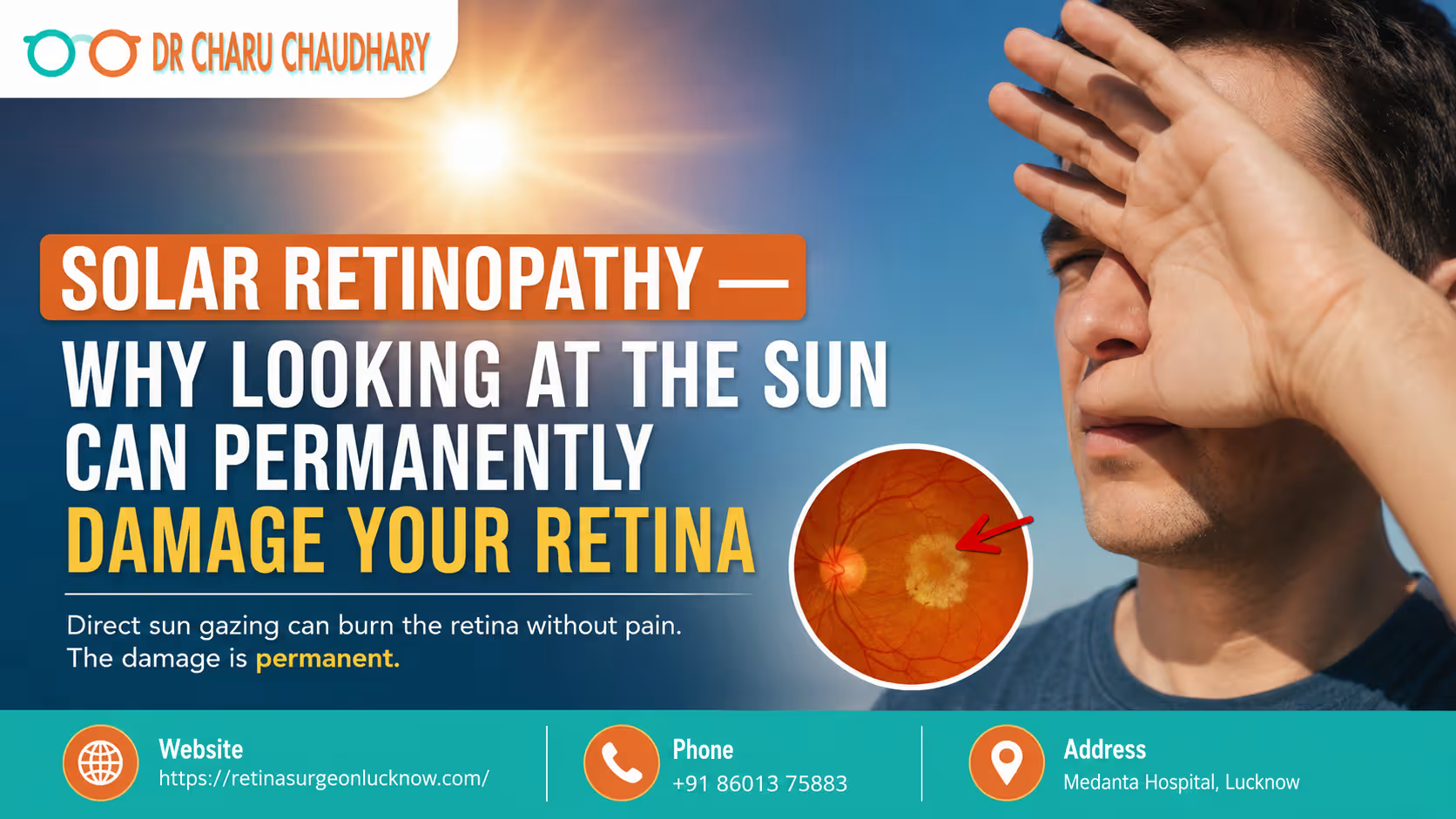
The human eye is a marvel of biological engineering, capable of processing millions of pieces of information every second. However, despite its complexity, it is incredibly fragile. One of the most significant yet preventable threats to our vision comes from an object we see every day: the sun. While sunlight is essential for life, directing your gaze toward it – even for a short period—can lead to a serious condition known as Solar Retinopathy. Solar Retinopathy occurs when intense sunlight damages the retina, particularly the macula. Even a few seconds of direct looking at the sun can cause blurred vision, blind spots, distorted vision, and sometimes permanent retinal damage. In this comprehensive guide, we will explore the mechanisms of solar eye damage, why the macula is so vulnerable, and what steps you should take if you suspect your vision has been compromised. According to Dr Charu Chaudhary, a leading Retina Surgeon in Lucknow, awareness is the first line of defense against this potentially sight-threatening condition. What Is Solar Retinopathy? Solar retinopathy is a clinical condition characterized by damage to the retinal tissues, specifically the fovea, resulting from exposure to solar radiation. It is most commonly associated with watching a solar eclipse without proper eye protection, but it can also occur from “sun gazing” during religious rituals, meditation, or accidental direct exposure. Why Looking at the Sun Is More Dangerous Than Most People Realize Many people assume that the eye’s natural “blink reflex” or the discomfort caused by bright light is enough to protect them. However, the sun’s rays are powerful enough to bypass these defenses. When you stare at the sun, your eye acts like a magnifying glass, focusing the intense light onto a tiny spot on your retina. This concentration of energy can literally “cook” the delicate light-sensing cells. Can Just a Few Seconds of Sun Gazing Cause Permanent Damage? The short answer is yes. The intensity of solar radiation is such that photochemical damage can begin in as little as a few seconds. Because the retina lacks pain receptors, you will not feel the damage occurring. You might only realize the extent of the injury hours later when your vision begins to blur, or a dark spot appears in your central field of view. Why Awareness Is Important Education is critical because solar retinopathy is entirely preventable. Dr Charu Chaudhary emphasizes that many patients who visit a Retina Specialist in Lucknow after a solar eclipse or sun-gazing activity were unaware of the risks. Understanding how the eye processes light and where the damage occurs is essential for lifelong eye health. Understanding the Retina and How Vision Works To understand solar retinopathy, one must first understand the anatomy of the eye. What Is the Retina? The retina is the thin layer of light-sensitive tissue lining the back of the eye. Think of it as the “film” in a traditional camera or the digital sensor in a smartphone. Its job is to receive light that the lens has focused, convert that light into neural signals, and send these signals to the brain for visual recognition. What Is the Macula? At the very center of the retina lies the macula. This small area is responsible for our central, high-resolution vision. It allows us to read, drive, recognize faces, and see fine details. Within the macula is the fovea, the point of sharpest vision. This is the area most frequently damaged in solar retinopathy. Why the Retina Is Extremely Sensitive to Light The retina contains millions of specialized cells called photoreceptors (rods and cones). These cells are packed with light-sensitive pigments. While they are designed to detect light, they are also highly susceptible to “oxidative stress” when overwhelmed by high-intensity radiation. How the Retina Converts Light Into Vision When light hits the photoreceptors, it triggers a chemical reaction that generates an electrical impulse. These impulses travel through the optic nerve to the visual cortex of the brain. When intense solar energy hits these cells, the chemical reaction becomes hyper-activated, leading to the production of toxic free radicals that destroy the cell structure. How Sunlight Damages Your Retina Solar retinopathy isn’t just a simple “burn.” It involves complex biological processes. Thermal Injury vs. Photochemical Injury What Happens Inside the Eye During Sun Exposure When you look at the sun, the lens of your eye focuses the sun’s rays into a tiny point on the fovea. The energy density at this point is thousands of times higher than the ambient light. This causes an immediate disruption of the outer segments of the photoreceptors. Why UV and Visible Light Can Harm Retinal Cells While the cornea and lens filter out most UV-B and UV-C rays, UV-A and high-energy visible (HEV) blue light reach the retina. These wavelengths carry enough energy to break molecular bonds within the retinal cells. Can Damage Occur Without Pain? This is the most dangerous aspect of solar retinopathy. The retina has no nerves that transmit pain. Therefore, a person can stare at the sun long enough to cause permanent blindness without feeling any physical discomfort until the visual symptoms manifest later. The Mechanism of Solar Retinal Damage (Step-by-Step) Step Process Action in the Eye 1 Direct Exposure Intense solar radiation enters the pupil. 2 Focusing The cornea and lens concentrate the light onto the macula/fovea. 3 Absorption Retinal pigments (melanin and lipofuscin) absorb the energy. 4 Chemical Stress Formation of free radicals and reactive oxygen species. 5 Cellular Damage Destruction of the photoreceptor outer segments and RPE. 6 Inflammation The body’s immune response causes localized swelling and fluid. Common Causes of Solar Retinopathy While the sun is the source, the context of exposure varies. Symptoms of Solar Retinopathy Symptoms usually do not appear immediately. They typically manifest 4 to 12 hours after exposure. Symptom Severity Chart Severity Level Visual Impact Potential Outcome Mild Slight blurring, mild light sensitivity. High chance of full recovery in 1–3 months. Moderate Noticeable central gray spot, distorted lines. Partial recovery likely; some permanent blurring. Severe Dense black spot in central vision, significant vision