
 No Comments
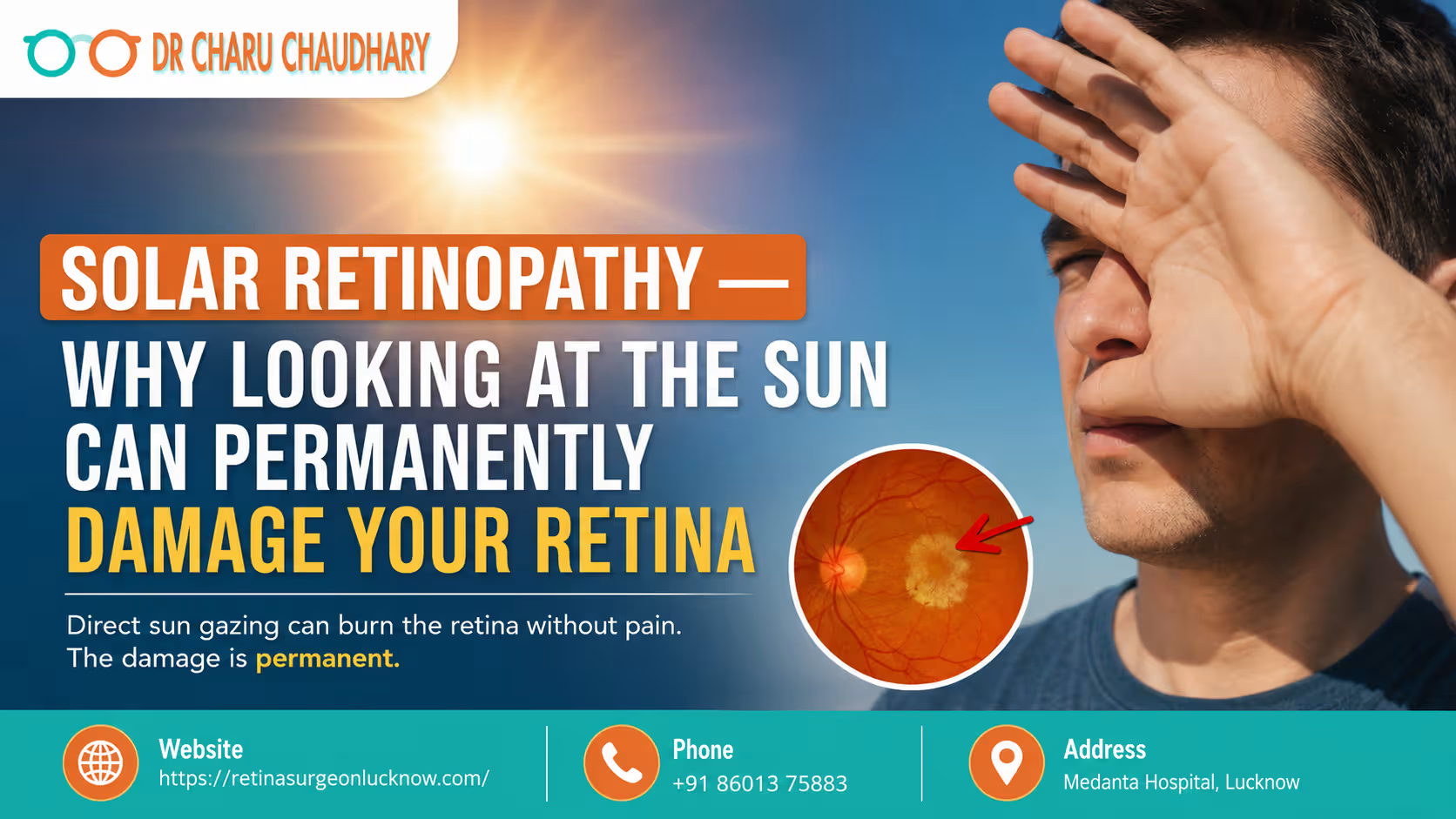
The human eye is a marvel of biological engineering, capable of processing millions of pieces of information every second. However, despite its complexity, it is incredibly fragile. One of the most significant yet preventable threats to our vision comes from an object we see every day: the sun. While sunlight is essential for life, directing your gaze toward it – even for a short period—can lead to a serious condition known as Solar Retinopathy.
Solar Retinopathy occurs when intense sunlight damages the retina, particularly the macula. Even a few seconds of direct looking at the sun can cause blurred vision, blind spots, distorted vision, and sometimes permanent retinal damage.
In this comprehensive guide, we will explore the mechanisms of solar eye damage, why the macula is so vulnerable, and what steps you should take if you suspect your vision has been compromised. According to Dr Charu Chaudhary, a leading Retina Surgeon in Lucknow, awareness is the first line of defense against this potentially sight-threatening condition.
What Is Solar Retinopathy?
Solar retinopathy is a clinical condition characterized by damage to the retinal tissues, specifically the fovea, resulting from exposure to solar radiation. It is most commonly associated with watching a solar eclipse without proper eye protection, but it can also occur from “sun gazing” during religious rituals, meditation, or accidental direct exposure.
Why Looking at the Sun Is More Dangerous Than Most People Realize
Many people assume that the eye’s natural “blink reflex” or the discomfort caused by bright light is enough to protect them. However, the sun’s rays are powerful enough to bypass these defenses. When you stare at the sun, your eye acts like a magnifying glass, focusing the intense light onto a tiny spot on your retina. This concentration of energy can literally “cook” the delicate light-sensing cells.
Can Just a Few Seconds of Sun Gazing Cause Permanent Damage?
The short answer is yes. The intensity of solar radiation is such that photochemical damage can begin in as little as a few seconds. Because the retina lacks pain receptors, you will not feel the damage occurring. You might only realize the extent of the injury hours later when your vision begins to blur, or a dark spot appears in your central field of view.
Why Awareness Is Important
Education is critical because solar retinopathy is entirely preventable. Dr Charu Chaudhary emphasizes that many patients who visit a Retina Specialist in Lucknow after a solar eclipse or sun-gazing activity were unaware of the risks. Understanding how the eye processes light and where the damage occurs is essential for lifelong eye health.
Understanding the Retina and How Vision Works
To understand solar retinopathy, one must first understand the anatomy of the eye.
What Is the Retina?
The retina is the thin layer of light-sensitive tissue lining the back of the eye. Think of it as the “film” in a traditional camera or the digital sensor in a smartphone. Its job is to receive light that the lens has focused, convert that light into neural signals, and send these signals to the brain for visual recognition.
What Is the Macula?
At the very center of the retina lies the macula. This small area is responsible for our central, high-resolution vision. It allows us to read, drive, recognize faces, and see fine details. Within the macula is the fovea, the point of sharpest vision. This is the area most frequently damaged in solar retinopathy.
Why the Retina Is Extremely Sensitive to Light
The retina contains millions of specialized cells called photoreceptors (rods and cones). These cells are packed with light-sensitive pigments. While they are designed to detect light, they are also highly susceptible to “oxidative stress” when overwhelmed by high-intensity radiation.
How the Retina Converts Light Into Vision
When light hits the photoreceptors, it triggers a chemical reaction that generates an electrical impulse. These impulses travel through the optic nerve to the visual cortex of the brain. When intense solar energy hits these cells, the chemical reaction becomes hyper-activated, leading to the production of toxic free radicals that destroy the cell structure.
How Sunlight Damages Your Retina
Solar retinopathy isn’t just a simple “burn.” It involves complex biological processes.
Thermal Injury vs. Photochemical Injury
- Thermal Injury (Photocoagulation): This occurs when the temperature of the retinal tissue rises significantly (usually by 10°C or more), essentially burning the tissue. This usually requires very intense, focused light.
- Photochemical Injury: This is the more common cause of solar retinopathy. Even without a significant temperature rise, shorter wavelengths of light (blue light and UV rays) trigger a chemical reaction that creates “reactive oxygen species.” These molecules damage the Retinal Pigment Epithelium (RPE) and the photoreceptors.
What Happens Inside the Eye During Sun Exposure
When you look at the sun, the lens of your eye focuses the sun’s rays into a tiny point on the fovea. The energy density at this point is thousands of times higher than the ambient light. This causes an immediate disruption of the outer segments of the photoreceptors.
Why UV and Visible Light Can Harm Retinal Cells
While the cornea and lens filter out most UV-B and UV-C rays, UV-A and high-energy visible (HEV) blue light reach the retina. These wavelengths carry enough energy to break molecular bonds within the retinal cells.
Can Damage Occur Without Pain?
This is the most dangerous aspect of solar retinopathy. The retina has no nerves that transmit pain. Therefore, a person can stare at the sun long enough to cause permanent blindness without feeling any physical discomfort until the visual symptoms manifest later.
The Mechanism of Solar Retinal Damage (Step-by-Step)
| Step | Process | Action in the Eye |
| 1 | Direct Exposure | Intense solar radiation enters the pupil. |
| 2 | Focusing | The cornea and lens concentrate the light onto the macula/fovea. |
| 3 | Absorption | Retinal pigments (melanin and lipofuscin) absorb the energy. |
| 4 | Chemical Stress | Formation of free radicals and reactive oxygen species. |
| 5 | Cellular Damage | Destruction of the photoreceptor outer segments and RPE. |
| 6 | Inflammation | The body’s immune response causes localized swelling and fluid. |
Common Causes of Solar Retinopathy
While the sun is the source, the context of exposure varies.
- Watching a Solar Eclipse Without Protection: This is the leading cause. During a partial eclipse, the sky darkens, which causes the pupil to dilate (open wider). However, the remaining visible sliver of the sun is still intense enough to cause retinal damage.
- Religious or Meditation Sun Gazing: Some practices involve staring at the sun during sunrise or sunset, falsely believing it has healing properties. Dr Charu Chaudhary warns that there is no “safe” time to look directly at the sun.
- Photography and Telescope Viewing: Looking through a camera viewfinder or a telescope/binoculars that do not have professional-grade solar filters can magnify the damage exponentially.
- Occupational Exposure: Pilots, sailors, or outdoor researchers may be at higher risk if they do not use appropriate high-grade protective eyewear.
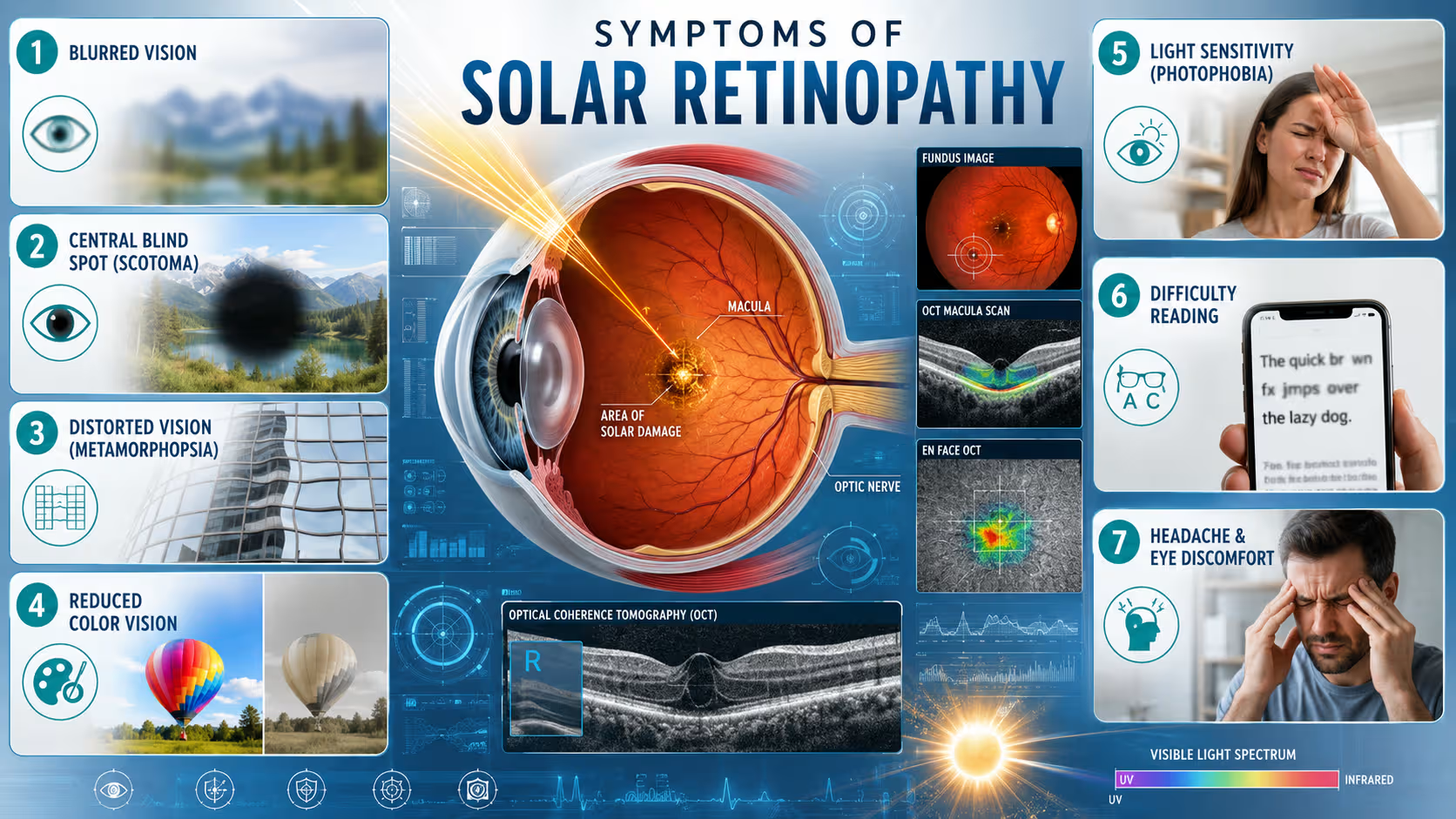
Symptoms of Solar Retinopathy
Symptoms usually do not appear immediately. They typically manifest 4 to 12 hours after exposure.
- Blurred Vision: A general haziness in one or both eyes.
- Central Blind Spot (Scotoma): A dark or “missing” spot in the very center of your vision.
- Distorted Vision (Metamorphopsia): Straight lines (like door frames or rows of text) may appear wavy or bent.
- Reduced Color Vision (Chromatopsia): Colors may seem faded, washed out, or tinted.
- Increased Light Sensitivity (Photophobia): Difficulty looking at even normal indoor lights.
- Difficulty Reading: Because the macula is damaged, fine tasks become nearly impossible.
- Headache and Eye Discomfort: While the retina doesn’t feel pain, the strain on the eye can lead to dull aches.
Symptom Severity Chart
| Severity Level | Visual Impact | Potential Outcome |
| Mild | Slight blurring, mild light sensitivity. | High chance of full recovery in 1–3 months. |
| Moderate | Noticeable central gray spot, distorted lines. | Partial recovery likely; some permanent blurring. |
| Severe | Dense black spot in central vision, significant vision loss. | Likely permanent central vision deficit (scotoma). |
How Quickly Do Symptoms Appear?
- Within Hours: You may notice a slight “after-image” that doesn’t go away, followed by a dull headache or eye strain.
- First Few Days: The central blurriness becomes more defined. If you try to read, letters might seem to disappear.
- When Vision Loss Becomes Noticeable: Most patients realize something is wrong the next morning when they wake up and find their central vision is “cloudy.”
Can Symptoms Worsen Over Time?
Usually, the damage stabilizes within a week. While symptoms may appear to get worse as the initial inflammation peaks, the actual structural damage is done during the exposure. However, if not monitored by a Retina Specialist in Lucknow, secondary complications could arise.
Who Is at Higher Risk of Solar Retinopathy?
- Children and Teenagers: Their lenses are clearer than adults’, allowing more UV and light to reach the retina. Furthermore, they are often more curious during solar eclipses.
- Solar Eclipse Viewers: Those using improper filters like smoked glass, CDs, or regular sunglasses.
- People with “Aphakia”: Individuals who have had cataract surgery without the implantation of a UV-blocking intraocular lens (though most modern lenses do block UV).
- Individuals on Certain Medications: Some drugs (like tetracycline or psoralens) make the retina more sensitive to light (photosensitizers).
How Doctors Diagnose Solar Retinopathy
If you have looked at the sun and noticed vision changes, an immediate evaluation is necessary. A Retina Specialist in Lucknow will perform several tests to assess the damage.
Detailed Eye Examination
The doctor will start with a visual acuity test to see how much of your “20/20” vision has been lost.
Fundus Examination
Using a special lens and a slit lamp, the specialist looks at the back of the eye. In solar retinopathy, a characteristic small yellow or white spot is often visible at the fovea.
Optical Coherence Tomography (OCT)
This is the gold standard for diagnosis. OCT is a non-invasive imaging test that uses light waves to take cross-sectional pictures of your retina. It allows Dr Charu Chaudhary to see exactly which layers of the retina have been disrupted. In solar retinopathy, OCT typically shows a “hole” or “break” in the outer retinal layers.
Amsler Grid Testing
Patients are asked to look at a grid of straight lines. If the lines appear wavy or if parts of the grid are missing, it confirms macular damage.
Fundus Photography
High-resolution photos are taken to document the injury and monitor the healing process over several months.
Can Solar Retinopathy Cause Permanent Vision Loss?
One of the most frequent questions asked of Dr Charu Chaudhary is whether the vision will ever return to normal.
Temporary vs. Permanent Damage
In mild cases, the photoreceptor cells are “stunned” but not destroyed. These patients often see a significant improvement in vision over 3 to 6 months. However, in severe cases where the RPE and the photoreceptor cells have been killed, the damage is permanent.
Factors That Influence Recovery
- The duration of sun exposure.
- The time of day (noon sun is more dangerous).
- Whether any magnification (telescope/binoculars) was used.
- The patient’s age and pre-existing eye health.
Long-Term Visual Consequences
Even if a patient recovers “20/20” vision on a chart, they may still suffer from “subclinical” issues like reduced contrast sensitivity or a tiny “phantom” spot in their vision that makes reading uncomfortable.
Prognosis Chart
| Condition Grade | 1 Month Outlook | 6 Month Outlook | Permanent Deficit? |
| Mild Injury | 20/40 vision | 20/20 vision | Unlikely |
| Moderate Injury | 20/70 vision | 20/30 vision | Possible (mild distortion) |
| Severe Injury | 20/200 vision | 20/50 – 20/80 vision | Highly Likely (central scotoma) |
Treatment Options for Solar Retinopathy
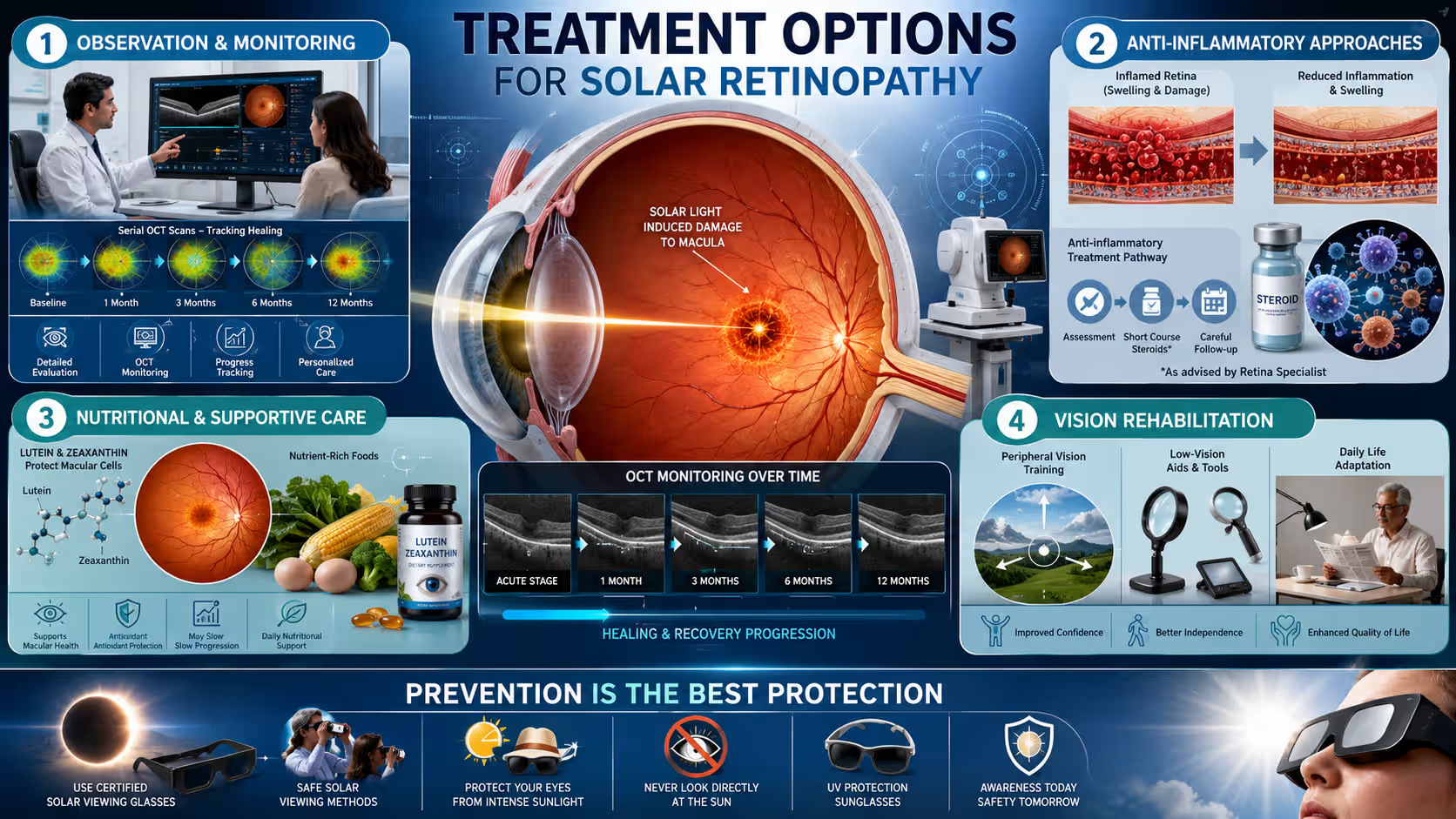
Currently, there is no medical or surgical “cure” to instantly fix solar retinopathy. The primary approach is observation and monitoring.
- Observation: The retina has some capacity to heal its outer segments. A Retina Specialist in Lucknow will monitor the OCT scans over several months to track this healing.
- Anti-Inflammatory Approaches: In some acute cases, doctors may consider a short course of steroids to reduce retinal swelling, though the effectiveness of this is still debated in medical literature.
- Nutritional and Supportive Care: Supplements containing Lutein and Zeaxanthin (macular pigments) may be recommended to support the health of the remaining retinal cells.
- Vision Rehabilitation: For those with permanent central blind spots, low-vision specialists can help patients learn to use their peripheral vision more effectively.
Dr Charu Chaudhary stresses that because there is no guaranteed treatment, prevention is the only absolute cure.
Recovery Timeline: What Patients Can Expect
Healing from a solar injury is a slow process.
- First Week: Vision is at its worst. Swelling is present.
- First Month: The initial “shock” to the retina fades. Some patients notice a gradual clearing of the central blur.
- Three Months: This is the window where the most significant recovery occurs.
- Six Months: By this point, the vision usually stabilizes. Whatever vision you have at six months is likely what you will have permanently.
- One Year and Beyond: Long-term monitoring is required to ensure no secondary degenerative changes occur in the macula.
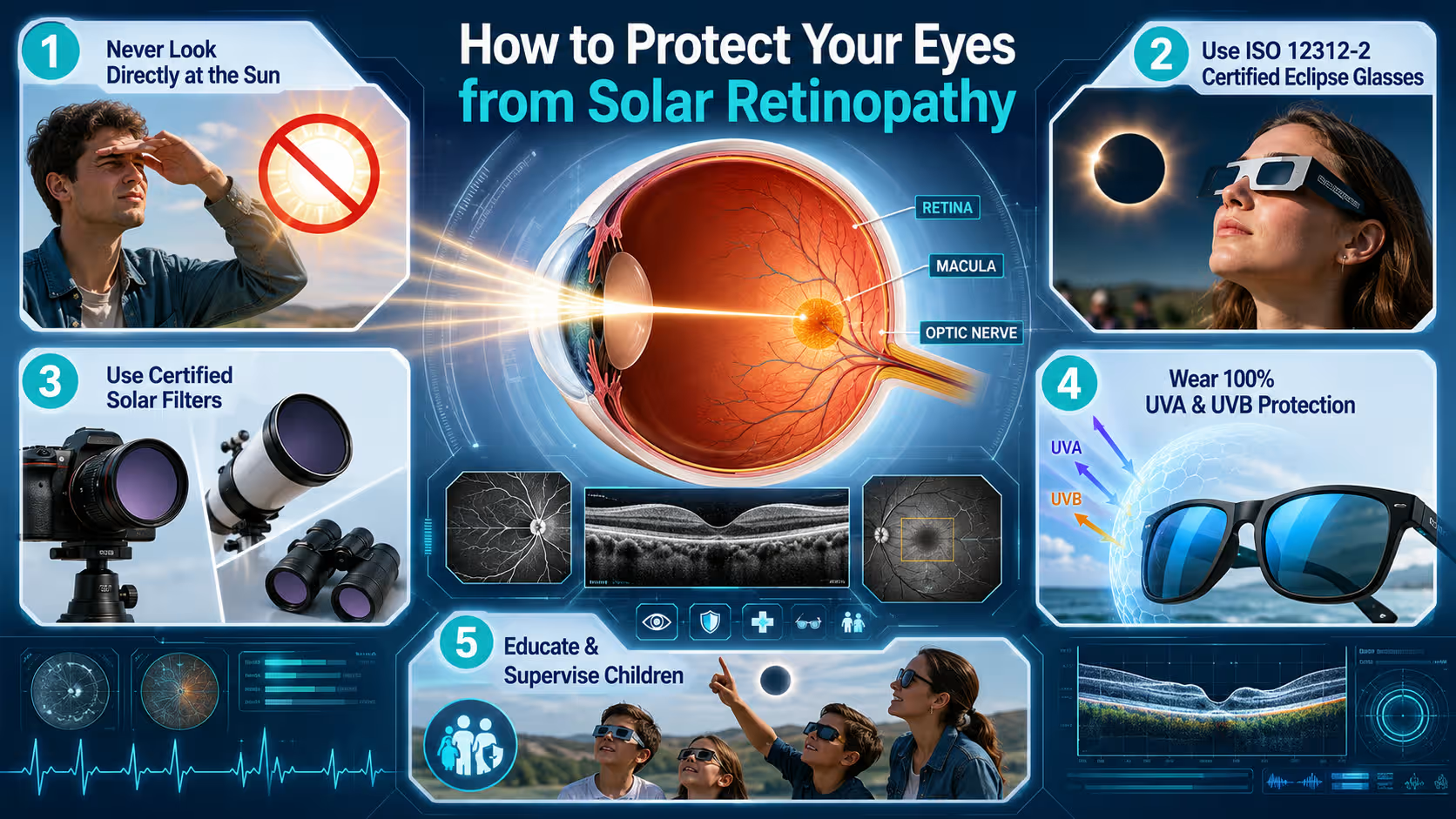
How to Protect Your Eyes from Solar Retinopathy
Protecting your eyes is simple but requires discipline.
- Never Look Directly at the Sun: This applies to all times of the day, including sunset.
- Safe Solar Eclipse Viewing: Only use “ISO 12312-2” certified solar eclipse glasses. Regular sunglasses, even very dark ones, are not safe.
- Use Certified Solar Filters: If you are using a camera, telescope, or binoculars, you must use a professional solar filter on the front of the lens.
- Wear UV-Protective Sunglasses: For daily life, wear sunglasses that block 100% of UVA and UVB rays. This reduces cumulative light damage over a lifetime.
- Educate Children: Children are most at risk because they don’t understand the dangers. Supervise them closely during any astronomical event.
Solar Retinopathy Awareness in India
In India, solar retinopathy cases often spike during major astronomical events. There is also a cultural aspect, where certain traditional practices involve looking at the sun (Surya Namaskar or Sun Gazing) as a form of spiritual healing.
Dr Charu Chaudhary notes that while these traditions are culturally significant, they must be practiced safely. One should never look directly at the solar disc. Focusing on the sun’s general direction with eyes closed or during very early dawn when the sun is not yet visible is a safer alternative, though any direct gaze is discouraged by ophthalmologists.
Public awareness in cities like Lucknow is growing, but there is still a lack of education regarding the use of proper filters. If you are in Uttar Pradesh and experience any visual disturbances after an eclipse or a day at the beach, visiting a Retina Specialist in Lucknow is vital for an accurate diagnosis.
When Should You Visit a Retina Specialist Immediately?
Time is of the essence when dealing with retinal injuries. You should seek an appointment with Dr Charu Chaudhary if you experience:
- Sudden blurred vision after sun exposure.
- A “spot” in your vision that moves when your eye moves.
- Difficulty recognizing faces or reading signs.
- Colors appearing “wrong” or significantly different in one eye.
- Straight lines appearing wavy (e.g., the edge of a television or a window frame).
Early diagnosis by a Retina Specialist in Lucknow allows for a clear understanding of the damage and helps set realistic expectations for recovery.
Conclusion
Solar Retinopathy is a sobering reminder of how powerful the sun truly is. It is a condition where a few moments of curiosity or a lack of awareness can lead to a lifetime of visual impairment. The retina—specifically the macula—is the most vital part of our visual system, and once its cells are destroyed by photochemical or thermal energy, they do not easily regenerate.
The good news is that solar retinopathy is 100% preventable. By using proper ISO-certified filters during eclipses, wearing UV-protective eyewear, and avoiding the dangerous practice of sun gazing, you can protect your sight.
If you or a loved one has accidentally looked at the sun and is now experiencing blurred or distorted vision, do not wait for it to “clear up” on its own. Dr Charu Chaudhary, a dedicated Retina Specialist in Lucknow, provides advanced diagnostic imaging and expert guidance to help manage retinal injuries and protect your future vision.
Frequently Asked Questions
1. What is Solar Retinopathy?
Solar retinopathy is damage to the eye’s retina, specifically the macula, caused by exposure to intense solar radiation or other bright light sources.
2. Can looking at the sun permanently damage your eyes?
Yes. Direct sun exposure can cause permanent scarring of the retina, resulting in a blind spot at the center of your vision.
3. How long does Solar Retinopathy last?
The initial symptoms can last for several months. While some patients recover their vision within 3–6 months, many are left with permanent visual distortions or central blind spots.
4. Can Solar Retinopathy heal on its own?
Mild cases may see significant improvement as the body reduces inflammation and the photoreceptors partially recover. However, severe cell death cannot be reversed.
5. What are the first symptoms of Solar Retinopathy?
The first symptoms are usually blurred vision, a central blind spot, and distortion of straight lines, usually appearing several hours after the sun exposure.
6. Can sunglasses prevent Solar Retinopathy?
No. Standard sunglasses are not powerful enough to filter the intense radiation of a direct gaze at the sun. Only ISO-certified solar filters are safe for direct viewing.
Call to Action (CTA)
Vision loss caused by solar retinal injury can be difficult to reverse, which is why prevention and early diagnosis are essential. Any sudden change in vision after sun exposure should never be ignored.
If you experience blurred vision, blind spots, or visual distortion after looking at the sun, consult Dr Charu Chaudhary, an experienced Retina Specialist in Lucknow, for a detailed retinal examination and timely guidance. Your vision is irreplaceable—protect it with expert care.

Leave A Comment