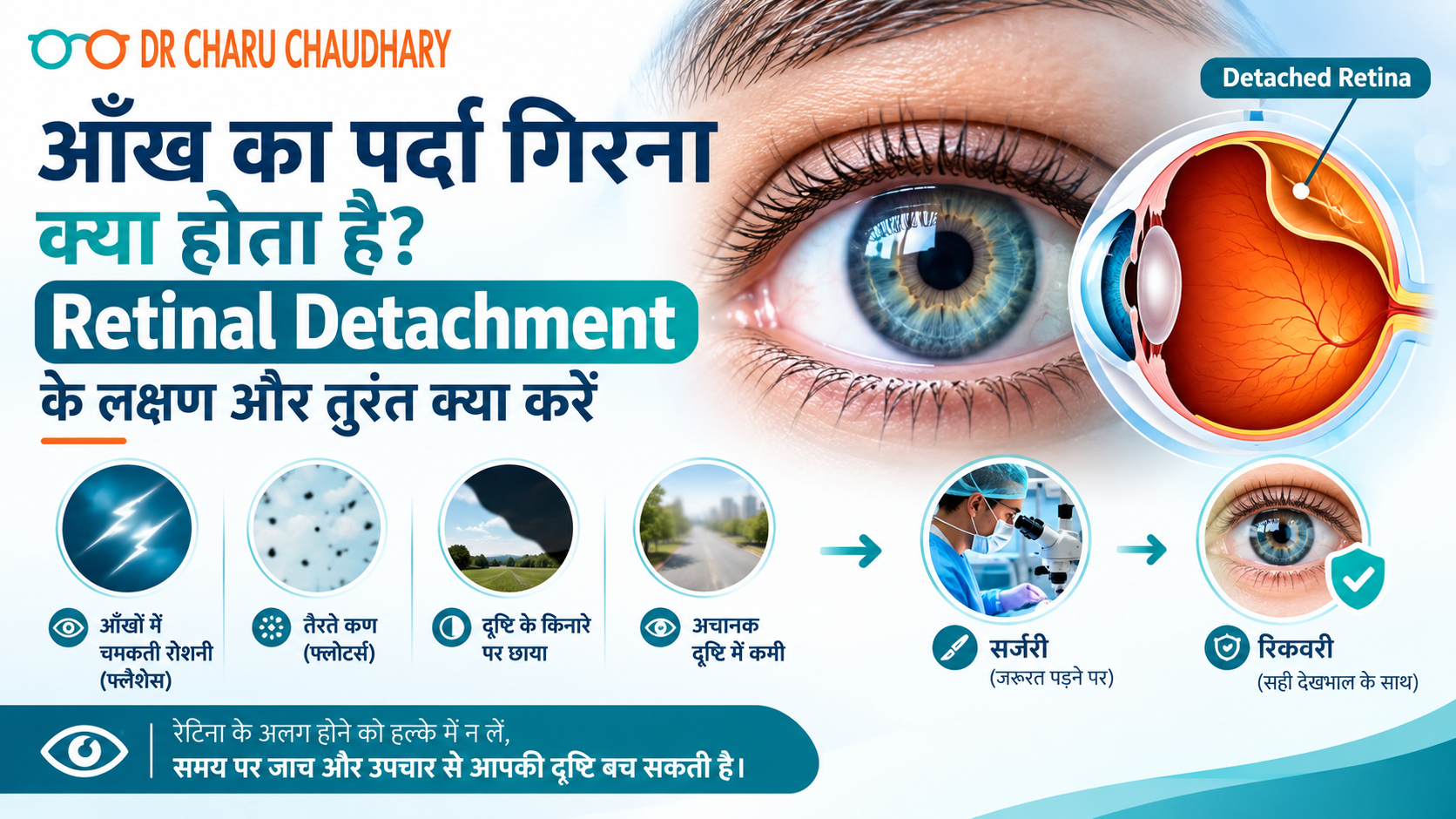
कल्पना कीजिए – आप सुबह उठते हैं और अचानक महसूस होता है कि एक आँख के सामने काला पर्दा गिर रहा है। या शायद रात में आपको बिजली जैसी चमक दिखी और सोचा “थकान होगी।” अगले दिन उसी आँख से धुंधला दिखने लगा। अधिकतर लोग इसे नज़रअंदाज़ कर देते हैं। यही सबसे बड़ी गलती है। जो आप महसूस कर रहे थे, वह Retinal Detachment – यानी आँख का पर्दा गिरना – के शुरुआती संकेत थे। और यह एक ऐसी medical emergency है जिसमें हर घंटा महत्वपूर्ण होता है। मैं Dr. Charu Chaudhary हूँ, Lucknow के Medanta Hospital में Vitreoretinal Surgeon। अपने वर्षों के अनुभव में मैंने देखा है कि जो मरीज़ 24–48 घंटे के भीतर आते हैं, उनकी रोशनी बचाई जा सकती है। जो देर करते हैं – उनके लिए रास्ता बहुत मुश्किल हो जाता है। इस blog में मैं आपको सरल भाषा में बताऊँगी कि आँख का पर्दा गिरना क्या होता है, इसके लक्षण क्या हैं, और सबसे ज़रूरी – इस स्थिति में आपको तुरंत क्या करना चाहिए। रेटिना क्या होती है और वह इतनी ज़रूरी क्यों है? आँख को एक camera की तरह समझिए। जिस तरह camera में film होती है जो तस्वीर कैद करती है – उसी तरह आँख में retina होती है। यह एक पतली, नाज़ुक परत होती है जो आँख के पिछले हिस्से में होती है। जब भी कोई रोशनी आँख में आती है, रेटिना उसे electrical signals में बदलता है और इन signals को Optic Nerve के ज़रिए दिमाग तक पहुँचाता है। दिमाग इन्हें image के रूप में पहचानता है – और आपको दिखता है। अगर यही रेटिना अपनी जगह से हट जाए – तो signal टूट जाता है। दृष्टि धुंधली हो जाती है, गायब हो सकती है, और बिना इलाज के हमेशा के लिए जा सकती है। आँख का पर्दा गिरता क्यों है – मुख्य कारण Retinal Detachment अचानक होता है, लेकिन इसके पीछे कुछ जोखिम कारण होते हैं जिनके बारे में आपको पहले से जानकारी होनी चाहिए: चोट या Trauma: आँख पर तेज़ चोट लगने से, पटाखे फूटने से, या खेल के दौरान चोट लगने से रेटिना खिंच सकती है और अपनी जगह से हट सकती है। High Myopia (तेज़ चश्मा): जिन लोगों का नंबर -6 या उससे अधिक है, उनकी आँख का आकार सामान्य से बड़ा होता है। इससे रेटिना पर खिंचाव रहता है और detachment का खतरा बढ़ जाता है। Diabetes: लम्बे समय से बेकाबू शुगर रेटिना की नसों को कमज़ोर करती है। इसे Diabetic Retinopathy कहते हैं – और यह Retinal Detachment का एक बड़ा कारण बन सकती है। बढ़ती उम्र: उम्र के साथ आँख के अंदर का gel (Vitreous) सिकुड़ता है और रेटिना को खींच सकता है। 50 वर्ष से अधिक उम्र के लोगों में यह ज़्यादा देखा जाता है। पहले का Retinal Detachment: एक आँख में हो चुका है तो दूसरी आँख में भी जोखिम बढ़ जाता है। पारिवारिक इतिहास: परिवार में किसी को हो चुका है तो आपको नियमित जाँच करानी चाहिए। आँख का पर्दा गिरने के लक्षण – जिन्हें कभी नज़रअंदाज़ न करें यह वह हिस्सा है जिसे मैं सबसे ज़्यादा ज़ोर देकर बताना चाहती हूँ। Retinal Detachment में दर्द नहीं होता—यही इसे इतना खतरनाक बनाता है। लोग सोचते हैं “दर्द नहीं तो गंभीर नहीं होगा।” यह सोच गलत है। इन लक्षणों में से कोई भी दिखे – तुरंत doctor के पास जाएँ: अचानक बहुत सारे काले धब्बे या जाले दिखना (Floaters) हाँ, कुछ floaters सामान्य हो सकते हैं। लेकिन अगर अचानक बहुत सारे नए floaters एक साथ दिखें – जैसे मकड़ी का जाला या काली बिंदियाँ तैर रही हों – तो यह रेटिना में खिंचाव या टूटन का संकेत है। बिजली जैसी चमक दिखना (Flashes of Light) आँखें बंद करने पर या अंधेरे में भी चमक दिखे – जैसे camera flash हो। यह इस बात का संकेत है कि Vitreous रेटिना को खींच रहा है। आँख के सामने काला पर्दा या छाया आना ऐसा महसूस हो जैसे किसी ने एक तरफ से curtain खींच दिया हो। पहले side vision जाती है, फिर धीरे-धीरे बीच का हिस्सा भी ढकने लगता है। यह सबसे serious लक्षण है। इस स्थिति में हर मिनट मायने रखता है। अचानक धुंधला दिखना, सिर्फ एक आँख से अचानक एक आँख से कम या धुंधला दिखना – और यह चश्मा लगाने पर भी ठीक न हो। यह इतनी बड़ी Emergency क्यों है? रेटिना एक जीवित tissue है। जब यह अपनी जगह से हट जाती है, तो उसे blood supply मिलनी बंद हो जाती है। जिस तरह खून न मिलने पर कोई भी अंग मरने लगता है – उसी तरह रेटिना की कोशिकाएँ भी मरने लगती हैं। पहले 24 घंटे: अगर पर्दा centre (Macula) तक नहीं पहुँचा, तो surgery के बाद अच्छी रोशनी वापस आने की संभावना बहुत अधिक है। 24–72 घंटे: Macula तक पहुँचने के बाद रोशनी वापस आना मुश्किल होने लगता है। 72 घंटे से अधिक: रेटिना की कोशिकाएँ स्थायी रूप से मर सकती हैं। रोशनी का नुकसान permanent हो सकता है। इसीलिए Retinal Detachment को हम “Golden Hour Emergency” कहते हैं। तुरंत क्या करें – Step by Step अगर आपको या आपके किसी परिवार वाले को ऊपर दिए गए लक्षण दिखें: Step 1: आँख को मलें नहीं, दबाएँ नहीं। Step 2: दोनों आँखें बंद करके शांत रहें – ज़्यादा eye movement से रेटिना खिंच सकता है। Step 3: कोई भी घरेलू उपाय, eye drop, या “देखते हैं कल” – यह सब बंद करें। Step 4: तुरंत किसी Vitreoretinal Specialist से मिलें। General physician या chemist के पास जाने का वक्त नहीं है। Lucknow में हैं तो अभी appointment book करें – हम emergency cases को उसी दिन देखते हैं। Diagnosis कैसे होती है? जब आप clinic आते हैं, तो हम कुछ ज़रूरी जाँचें करते हैं: Dilated Fundus Examination: आँख की पुतली को drops से बड़ा करके रेटिना को सीधे देखा जाता है। B-Scan Ultrasound: अगर आँख के अंदर खून है या साफ नहीं दिख रहा, तो Ultrasound से रेटिना की स्थिति देखी जाती है। OCT (Optical Coherence Tomography): रेटिना की परतों की detailed imaging – यह बताता है कि कितना नुकसान हुआ है। ये सब जाँचें दर्द रहित हैं
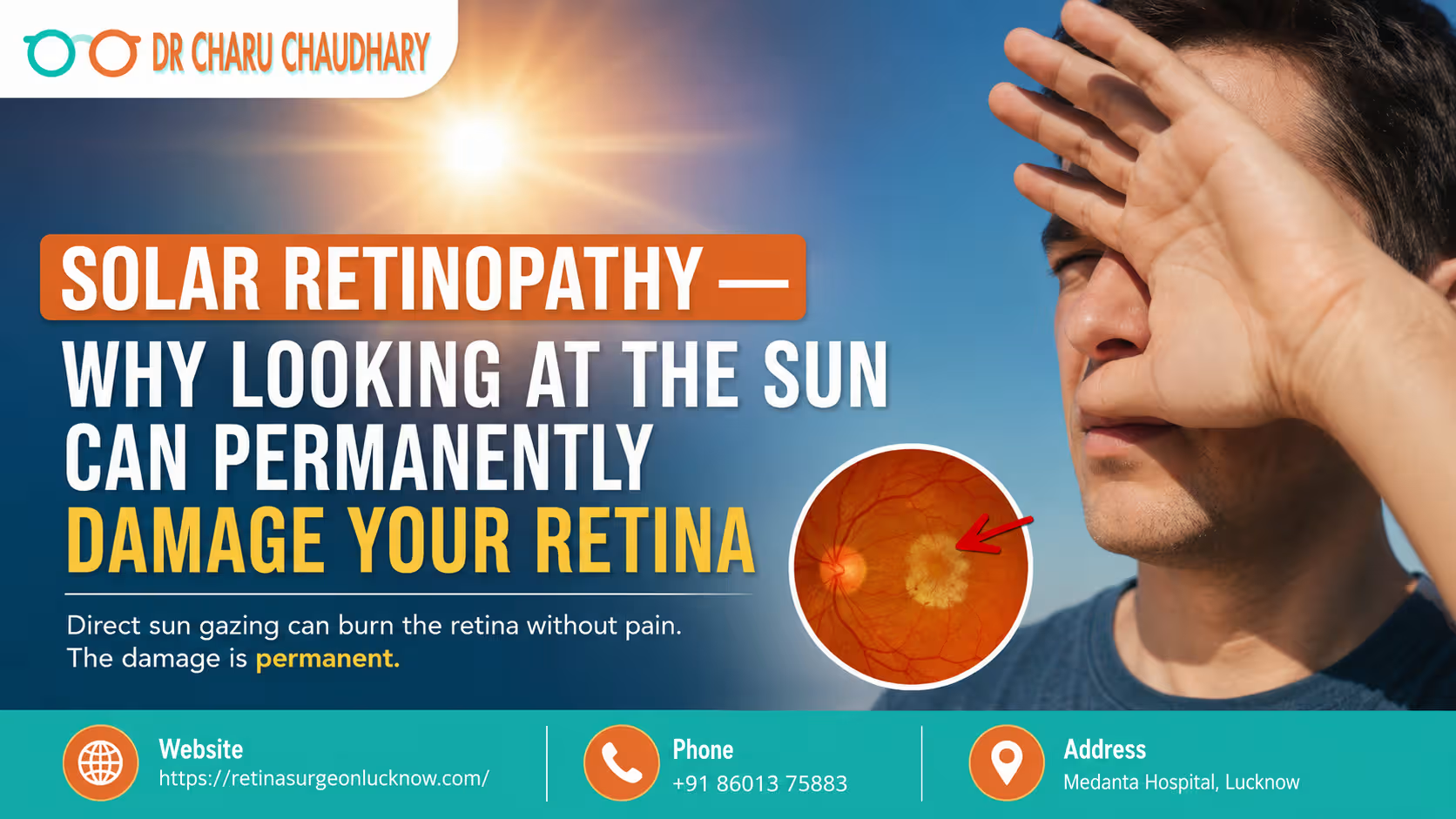
The human eye is a marvel of biological engineering, capable of processing millions of pieces of information every second. However, despite its complexity, it is incredibly fragile. One of the most significant yet preventable threats to our vision comes from an object we see every day: the sun. While sunlight is essential for life, directing your gaze toward it – even for a short period—can lead to a serious condition known as Solar Retinopathy. Solar Retinopathy occurs when intense sunlight damages the retina, particularly the macula. Even a few seconds of direct looking at the sun can cause blurred vision, blind spots, distorted vision, and sometimes permanent retinal damage. In this comprehensive guide, we will explore the mechanisms of solar eye damage, why the macula is so vulnerable, and what steps you should take if you suspect your vision has been compromised. According to Dr Charu Chaudhary, a leading Retina Surgeon in Lucknow, awareness is the first line of defense against this potentially sight-threatening condition. What Is Solar Retinopathy? Solar retinopathy is a clinical condition characterized by damage to the retinal tissues, specifically the fovea, resulting from exposure to solar radiation. It is most commonly associated with watching a solar eclipse without proper eye protection, but it can also occur from “sun gazing” during religious rituals, meditation, or accidental direct exposure. Why Looking at the Sun Is More Dangerous Than Most People Realize Many people assume that the eye’s natural “blink reflex” or the discomfort caused by bright light is enough to protect them. However, the sun’s rays are powerful enough to bypass these defenses. When you stare at the sun, your eye acts like a magnifying glass, focusing the intense light onto a tiny spot on your retina. This concentration of energy can literally “cook” the delicate light-sensing cells. Can Just a Few Seconds of Sun Gazing Cause Permanent Damage? The short answer is yes. The intensity of solar radiation is such that photochemical damage can begin in as little as a few seconds. Because the retina lacks pain receptors, you will not feel the damage occurring. You might only realize the extent of the injury hours later when your vision begins to blur, or a dark spot appears in your central field of view. Why Awareness Is Important Education is critical because solar retinopathy is entirely preventable. Dr Charu Chaudhary emphasizes that many patients who visit a Retina Specialist in Lucknow after a solar eclipse or sun-gazing activity were unaware of the risks. Understanding how the eye processes light and where the damage occurs is essential for lifelong eye health. Understanding the Retina and How Vision Works To understand solar retinopathy, one must first understand the anatomy of the eye. What Is the Retina? The retina is the thin layer of light-sensitive tissue lining the back of the eye. Think of it as the “film” in a traditional camera or the digital sensor in a smartphone. Its job is to receive light that the lens has focused, convert that light into neural signals, and send these signals to the brain for visual recognition. What Is the Macula? At the very center of the retina lies the macula. This small area is responsible for our central, high-resolution vision. It allows us to read, drive, recognize faces, and see fine details. Within the macula is the fovea, the point of sharpest vision. This is the area most frequently damaged in solar retinopathy. Why the Retina Is Extremely Sensitive to Light The retina contains millions of specialized cells called photoreceptors (rods and cones). These cells are packed with light-sensitive pigments. While they are designed to detect light, they are also highly susceptible to “oxidative stress” when overwhelmed by high-intensity radiation. How the Retina Converts Light Into Vision When light hits the photoreceptors, it triggers a chemical reaction that generates an electrical impulse. These impulses travel through the optic nerve to the visual cortex of the brain. When intense solar energy hits these cells, the chemical reaction becomes hyper-activated, leading to the production of toxic free radicals that destroy the cell structure. How Sunlight Damages Your Retina Solar retinopathy isn’t just a simple “burn.” It involves complex biological processes. Thermal Injury vs. Photochemical Injury What Happens Inside the Eye During Sun Exposure When you look at the sun, the lens of your eye focuses the sun’s rays into a tiny point on the fovea. The energy density at this point is thousands of times higher than the ambient light. This causes an immediate disruption of the outer segments of the photoreceptors. Why UV and Visible Light Can Harm Retinal Cells While the cornea and lens filter out most UV-B and UV-C rays, UV-A and high-energy visible (HEV) blue light reach the retina. These wavelengths carry enough energy to break molecular bonds within the retinal cells. Can Damage Occur Without Pain? This is the most dangerous aspect of solar retinopathy. The retina has no nerves that transmit pain. Therefore, a person can stare at the sun long enough to cause permanent blindness without feeling any physical discomfort until the visual symptoms manifest later. The Mechanism of Solar Retinal Damage (Step-by-Step) Step Process Action in the Eye 1 Direct Exposure Intense solar radiation enters the pupil. 2 Focusing The cornea and lens concentrate the light onto the macula/fovea. 3 Absorption Retinal pigments (melanin and lipofuscin) absorb the energy. 4 Chemical Stress Formation of free radicals and reactive oxygen species. 5 Cellular Damage Destruction of the photoreceptor outer segments and RPE. 6 Inflammation The body’s immune response causes localized swelling and fluid. Common Causes of Solar Retinopathy While the sun is the source, the context of exposure varies. Symptoms of Solar Retinopathy Symptoms usually do not appear immediately. They typically manifest 4 to 12 hours after exposure. Symptom Severity Chart Severity Level Visual Impact Potential Outcome Mild Slight blurring, mild light sensitivity. High chance of full recovery in 1–3 months. Moderate Noticeable central gray spot, distorted lines. Partial recovery likely; some permanent blurring. Severe Dense black spot in central vision, significant vision
In recent years, the prevalence of retinal diseases has seen a significant surge across India, with Lucknow being no exception. As a major healthcare hub in Uttar Pradesh, Lucknow witnesses thousands of patients daily seeking specialized care for vision-threatening conditions. The retina, a thin layer of light-sensitive tissue at the back of the eye, acts much like the film in a traditional camera. When it becomes damaged due to age, diabetes, or trauma, the consequences can be devastating, often leading to irreversible vision loss if left untreated. One of the primary concerns for patients and their families when facing a retinal diagnosis is the financial aspect. “How much will the treatment cost?” is usually the first question asked after a diagnosis is confirmed. Understanding the Retina Treatment Cost is essential for making informed decisions, planning finances, and ensuring that quality care is not delayed. Early intervention is not just a clinical necessity; it is a financial strategy. Detecting a retinal tear early might cost a few thousand rupees for a laser procedure, whereas ignoring it could lead to a retinal detachment requiring surgery costing tens of thousands. Retina Treatment Cost in Lucknow varies depending on the retinal condition, diagnostic tests, treatment method, and whether surgery is required. Early diagnosis often reduces complications, treatment complexity, and overall healthcare expenses, ensuring better visual outcomes at a lower cost. Quick Facts: Retina Treatment at a Glance Service/Treatment Approximate Cost Range (INR) Recovery Timeline Consultation (Retina Specialist) ₹500 – ₹1,500 Immediate OCT Scan (Optical Coherence Tomography) ₹1,500 – ₹3,500 Immediate Fundus Photography/Angiography ₹2,000 – ₹5,000 1 – 2 Hours Retina Laser Treatment (per session) ₹5,000 – ₹15,000 1 – 2 Days Anti-VEGF Injection (per dose) ₹7,000 – ₹60,000 1 – 3 Days Retinal Detachment Surgery ₹40,000 – ₹1,20,000 2 – 6 Weeks Vitrectomy Surgery ₹50,000 – ₹1,50,000 3 – 8 Weeks What Is the Retina and Why Is It Important? Understanding the Role of the Retina The retina is arguably the most vital part of the eye’s anatomy. It is a complex, multi-layered structure that captures light entering the eye and converts it into electrical signals. These signals are then transmitted via the optic nerve to the brain, which interprets them as images. Without a functioning retina, the eye may be structurally intact, but the “vision” process cannot occur. How the Retina Helps You See Think of the retina as the “sensor” of your eye. The central part of the retina, known as the macula, is responsible for sharp, detailed, central vision. This allows you to read, drive, and recognize faces. The peripheral retina provides you with side vision, helping you navigate your surroundings. What Happens When the Retina Is Damaged? Unlike some other tissues in the body, the retina has a very limited capacity to regenerate. Damage caused by high blood sugar (diabetes), high blood pressure, or physical trauma can lead to scarring, bleeding, or detachment. When the retina is damaged, images become blurred, distorted, or vanish entirely. Because the retina is directly connected to the brain’s visual cortex, any delay in treatment can lead to permanent atrophy of the nerve fibers. Common Retina Conditions That Require Treatment Understanding the specific condition you have is the first step in estimating the retinal disease treatment cost. Different pathologies require vastly different approaches. 1. Diabetic Retinopathy This is the leading cause of blindness among working-age adults. Chronic high blood sugar damages the tiny blood vessels inside the retina. 2. Retinal Detachment A medical emergency where the retina pulls away from its underlying layer of support tissue. 3. Age-Related Macular Degeneration (AMD) Common in individuals over 50, AMD affects the macula. 4. Retinal Vein Occlusion (RVO) A blockage of the small veins that carry blood away from the retina. This often causes sudden, painless vision loss in one eye and requires injections or laser treatment to manage swelling (edema). 5. Macular Edema This refers to the swelling of the macula, often a complication of diabetes or RVO. The eye retina treatment for this usually involves a series of injections. 6. Retinal Tears and Holes Small breaks in the retina can lead to detachment. These are often treated quickly with “green laser” therapy to seal the edges of the tear. Retina Treatment Cost in Lucknow: Overview Lucknow offers a wide spectrum of eye care, ranging from government-run charitable hospitals to ultra-modern private eye centers. The Retina treatment price in Lucknow is generally more affordable than in Delhi or Mumbai, but the quality of technology and surgical expertise remains world-class. Average Cost Range A patient can expect to spend anywhere from ₹5,000 for a minor laser procedure to ₹1,50,000 for a complex vitreoretinal surgery involving imported silicon oil or gases. Why Treatment Costs Vary It is difficult to provide a single “price tag” for retina care because no two eyes are the same. A Retina specialist in Lucknow will determine the price based on: Diagnostic Investigation Costs Accurate diagnosis is the foundation of successful treatment. Before any procedure, a Retina Specialist in Lucknow will perform several tests to map the extent of the damage. Diagnostic Test Purpose Estimated Cost (INR) Consultation Fee Expert evaluation of the eye ₹500 – ₹1,500 OCT Scan Cross-sectional imaging of the retina ₹1,500 – ₹3,500 Fundus Fluorescein Angiography (FFA) Mapping blood flow with dye ₹2,500 – ₹4,500 B-Scan Ultrasound Seeing the retina when cataracts are present ₹800 – ₹1,500 Indocyanine Green Angiography (ICG) Visualizing deeper choroidal vessels ₹5,000 – ₹8,000 Optical Coherence Tomography Angiography (OCTA) Non-invasive blood flow mapping ₹3,000 – ₹6,000 The retina checkup cost usually includes a dilated eye exam and at least one imaging test, like an OCT. Factors That Affect Retina Treatment Cost When budgeting for your care, consider these influencing factors: Anti-VEGF Injection Cost in Lucknow Anti-VEGF (Vascular Endothelial Growth Factor) injections have revolutionized retina care. They “dry up” leaking vessels and are the gold standard for Wet AMD and Diabetic Macular Edema. What Are Anti-VEGF Injections? These are medications injected directly into the vitreous (the gel-like substance in the eye). The procedure is done under local anesthesia and takes less than

You should see a doctor immediately if red eyes are accompanied by sharp pain, sudden vision changes, extreme light sensitivity, or thick discharge. While mild redness from tiredness or allergies often fades, persistent redness in one eye or redness following an injury requires an urgent check-up to prevent permanent vision loss. As an eye specialist, I often see patients who walk into my clinic with “bloodshot eyes.” Some are worried, while others have ignored the redness for weeks, thinking it would go away on its own. My name is Dr Charu Chaudhary, and my goal is to ensure that your vision remains clear and your eyes stay healthy. In my years of providing eye treatment in Lucknow, I have realized that many people don’t know the difference between a simple eye strain and a serious medical emergency. This guide will help you understand when you can rest your eyes at home and when you need to visit the best eye specialist in Lucknow for professional care. Why Are My Eyes Red? Causes, Treatment, and Action Plan Redness occurs when the tiny blood vessels on the surface of your eye (the white part called the sclera) become swollen or irritated. This makes the eye look pink or red. Common Causes of Red Eyes Basic Home Care (Action Plan) If your eyes are slightly red but you have no pain or vision loss, you can try: If these don’t work within 24–48 hours, it’s time to seek expert eye treatment in Lucknow. Red Eyes: When Is It Harmless vs. When to Get Checked? Distinguishing between a harmless red eye and a serious one is vital. Harmless (Usually):Imagine you stayed up late finishing a project. In the morning, your eyes look bloodshot. However, they don’t hurt, and you can see perfectly fine. After a good nap or some hydrating drops, the redness fades. This is generally harmless. Serious (Action Required):Now, imagine you wake up and only one eye is deep red. It feels like there is sand in it, and the light from your window hurts. This is not just “tiredness.” This could be an infection or inflammation inside the eye. As a retina specialist in Lucknow, I often tell my patients, “If only one eye is red and it feels uncomfortable, don’t wait. One-sided redness is often a sign of a localized problem that needs a doctor’s diagnosis.” 8 Signs That Red, Bloodshot Eyes Need Medical Attention If you notice any of the following eight symptoms, please book an appointment with a specialist immediately: What Causes Redness in One Eye? Should You Worry? When both eyes are red, it’s often allergies or tiredness. But redness in one eye is something I take very seriously at my clinic. Why just one eye? What causes one red eye and headache? If you have a very red eye accompanied by a severe headache on the same side, it could be a sign of Acute Angle-Closure Glaucoma. This is a medical emergency where the pressure inside the eye rises suddenly. It can lead to blindness within hours if not treated. Another cause could be cluster headaches, but always rule out eye pressure issues first. Painful vs. Painless Red Eye – What’s the Difference? Understanding the “pain factor” helps us categorize the urgency of your eye treatment in Lucknow. Painful Red Eye Conditions like corneal ulcers (a sore on the eye), iritis (inflammation), or acute glaucoma cause significant pain. These are “sight-threatening” conditions. If your eye hurts, it is your body’s way of screaming for help. Painless Red Eye If you have redness in one eye without pain, it might be a “Subconjunctival Hemorrhage.” This happens when you sneeze, cough, or lift something heavy, causing a tiny blood vessel to pop. While it looks dramatic (like a pool of blood), it usually doesn’t hurt and clears up in 10 days. However, you should still see a doctor to ensure your eye pressure is normal. How Long Is Too Long for Red Eyes? A common question I get is, “How long should I wait before calling you, Dr. Chaudhary?” The general rule is the 48-hour window. Most minor irritations from wind, dust, or lack of sleep will improve significantly within two days. If your eye remains “fire-engine red” after 48 hours, or if the symptoms are getting worse instead of better, you must consult an expert. How to Cure Red Eyes Quickly (Safe Tips) Everyone wants to know how to cure red eyes immediately. While I understand the rush, your eye health is more important than a quick fix. What NOT to do: Do not use “redness relief” drops (the ones that promise to make eyes white in minutes) frequently. These work by shrinking blood vessels. When the medicine wears off, the vessels often swell up even larger than before. This is called “rebound redness.” Safe ways to clear eyes: When You Need an Ophthalmologist for Red Eyes While a general doctor can treat basic pink eye, an ophthalmologist (a medical eye doctor) is needed for anything complex. As an ophthalmologist in Lucknow, I use advanced tools like a slit-lamp microscope to look inside your eye. We check the pressure, the health of your cornea, and the back of your eye (the retina). A Real-Life Example from My Clinic I once had a patient named Mr. Sharma. He had a red eye for three days. He thought it was just “dust” and kept washing it with tap water. By the time he came to see me, he had developed a severe corneal ulcer (an infection). Because he waited, he now has a small permanent scar on his eye that affects his vision. If he had sought eye treatment in Lucknow on day one, we could have cleared the infection with simple drops without any scarring. Best Treatment Options for Red Eye in Lucknow When you visit Dr Charu Chaudhary, your treatment is personalized. We don’t just give “red eye drops”; we find the root cause. Finding the best eye specialist in Lucknow ensures that you aren’t just treating the symptom, but protecting your future sight. FAQ: Frequently Asked Questions 1. When should
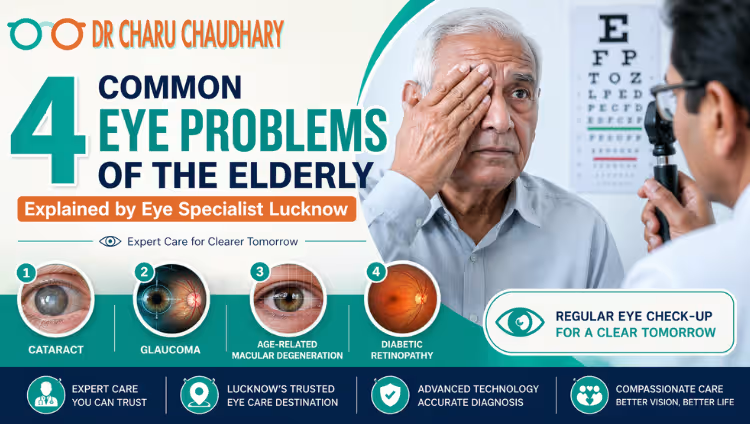
The most common eye problems in elderly people include cataracts, glaucoma, age-related macular degeneration (AMD), and diabetic retinopathy. You should see an eye doctor immediately if you experience sudden blurred vision, eye pain, “flashes” of light, or a sudden increase in floaters, as these can signal serious conditions requiring urgent care. As we grow older, our bodies undergo many changes. We might notice our hair turning grey or our joints becoming a bit stiffer. Just like the rest of our body, our eyes also age. While some changes are a normal part of getting older, others can lead to serious vision loss if not treated in time. As an experienced eye specialist in Lucknow, Dr Charu Chaudhary, I have spent years helping seniors regain their sight and maintain their independence. I believe that understanding your eyes is the first step toward protecting them. In this guide, I will explain the four most common eye problems seen in the elderly and how we can manage them together. Why Eye Problems Increase With Age Our eyes are like high-precision cameras. Over time, the “lens” can get cloudy, the “film” (the retina) can wear out, and the “cables” (the optic nerve) can get damaged. Natural Aging of the Eye Starting in our 40s and 50s, the lens inside the eye becomes less flexible. This is why most people start needing reading glasses—a condition called presbyopia. However, as we enter our 60s and 70s, the changes become more significant. The muscles that control our pupils weaken, making our eyes less responsive to light. This is why many seniors feel they need “brighter lights” to read or perform tasks. Reduced Vision Clarity You might notice that colors look a bit duller or that it is harder to tell the difference between similar colors (like dark blue and black). Night vision also tends to decline. While these can be normal, they can also be early warning signs of the conditions we are about to discuss. A Real-Life Example: I remember a patient, Mr. Kapoor, a retired teacher in Lucknow. He stopped driving at night because the “glare” from oncoming headlights was too much. He thought it was just “old age” and waited two years to see me. When he finally visited, we found he had advanced cataracts. After a simple procedure, he told me, “Doctor, I didn’t realize the world was this bright!” Delaying treatment only made his life harder than it needed to be. Common Eye Problem #1 – Cataract A cataract is perhaps the most well-known age-related eye issue. It is the leading cause of vision loss worldwide, but the good news is that it is completely treatable. What is it? Inside your eye is a clear lens that focuses light. As we age, the proteins in this lens begin to clump together. Think of it like a clear window slowly becoming “foggy” or “frosted.” Eventually, it becomes difficult for light to pass through. Symptoms Treatment Options There are no eye drops or medicines that can “clear” a cataract. The only effective treatment is a small surgery where the cloudy lens is replaced with a clear artificial lens. Modern technology has made this a very safe, 10–15 minute procedure. As a leading eye surgeon in Lucknow, Dr Charu Chaudhary, I use advanced techniques that allow patients to return home the same day and recover very quickly. Common Eye Problem #2 – Glaucoma Glaucoma is often called the “Silent Thief of Sight.” This is because it usually has no symptoms in the early stages, but if left untreated, it can cause permanent blindness. Silent Vision Loss Glaucoma happens when the fluid pressure inside the eye rises too high. This pressure damages the optic nerve, which is the “cable” that sends images from your eye to your brain. Because the damage starts with your side (peripheral) vision, you might not notice anything is wrong until most of your sight is gone. The Importance of Early Detection You cannot “feel” the pressure in your eye. The only way to find glaucoma is through a comprehensive eye exam. If we catch it early, we can usually manage it with simple daily eye drops. Who is at risk? If you haven’t had your eye pressure checked recently, you should visit the best eye specialist in Lucknow for a screening. Common Eye Problem #3 – Age-Related Macular Degeneration (AMD) While cataracts affect the “lens” of the eye, AMD affects the “film”—the retina. Specifically, it affects a tiny spot in the center of the retina called the macula. Central Vision Loss The macula is responsible for your “straight-ahead” vision. It is what allows you to read, sew, drive, and recognize faces. When someone has AMD, they might see a dark spot or a “blur” in the very center of their vision, while their side vision remains clear. Difficulty Recognizing Faces One of the most heartbreaking parts of AMD is that patients find it hard to see the faces of their grandchildren or friends. Straight lines might also look wavy or crooked. Risk Factors For advanced cases of AMD, you should consult a retina specialist in Lucknow for advanced care. There are now injections and laser treatments that can help slow down the disease and save your remaining vision. Common Eye Problem #4 – Diabetic Retinopathy India is often called the “diabetes capital of the world,” and Lucknow is no exception. If you have diabetes, your eyes are at high risk. Impact of Diabetes on Eyes High blood sugar levels damage the tiny blood vessels inside the retina. These vessels can swell and leak fluid, or they can even close off entirely. In response, the eye tries to grow new, weak blood vessels that bleed easily, causing severe vision damage. The Need for Regular Checkups In the early stages, diabetic retinopathy may cause no symptoms or only mild vision problems. However, it can lead to total blindness. If you have diabetes, you must have a “dilated eye exam” at least once a year. Early diagnosis by a retina