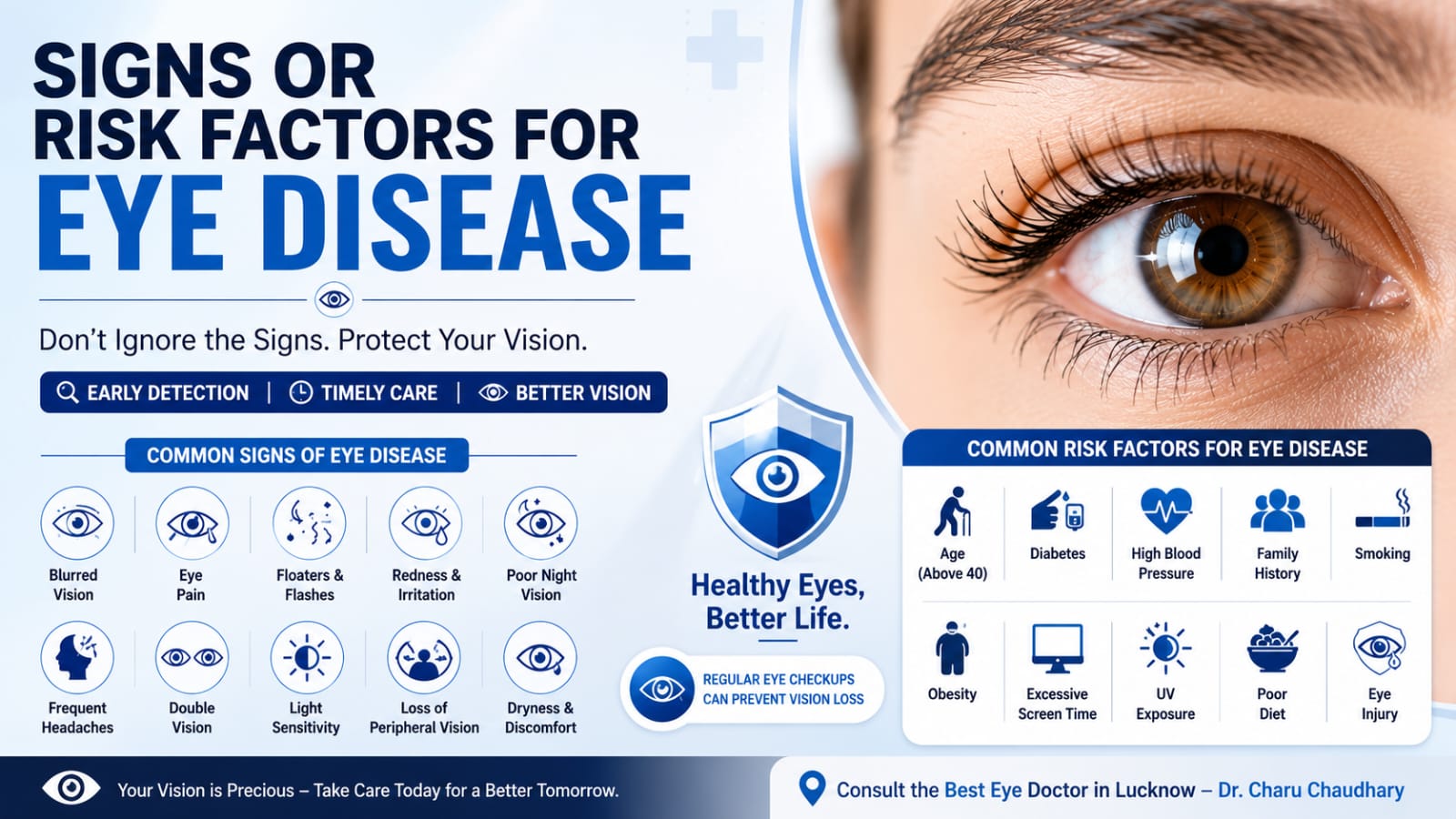
Signs and Risk Factors for Eye Disease Our eyes help us experience the world every day, yet many people ignore early symptoms of eye disease until the condition becomes serious. The truth is that many eye diseases develop slowly and may not cause pain in the beginning. Detecting them early can help protect your vision and prevent permanent damage. Whether you are young or old, understanding the warning signs and risk factors can help you take better care of your eyesight. If you notice any unusual changes in your vision, consulting Dr. Charu Chaudhary, widely regarded as the best eye specialist in Lucknow, can help identify problems before they become severe. Why Early Detection of Eye Disease Matters Many eye diseases do not show noticeable symptoms in their early stages. Conditions like glaucoma, diabetic retinopathy, and age-related macular degeneration can silently damage vision over time. Early diagnosis allows: Regular eye examinations remain the best way to detect these diseases before symptoms become severe. Common Signs of Eye Disease Recognizing the warning signs can save your eyesight. 1. Blurred Vision Blurred vision that does not improve with blinking may indicate: 2. Sudden Vision Loss Any sudden decrease in vision is a medical emergency and requires immediate attention. Possible causes include: 3. Eye Pain Pain inside or around the eye should never be ignored. It may indicate: 4. Frequent Headaches Persistent headaches accompanied by eye strain may result from: 5. Double Vision Seeing two images instead of one may indicate neurological or eye muscle disorders. 6. Floaters and Flashes Occasional floaters are common with age, but a sudden increase in floaters or flashes of light can signal retinal tears. 7. Red Eyes Redness lasting more than a day could indicate: 8. Difficulty Seeing at Night Poor night vision may be caused by: 9. Light Sensitivity Excessive sensitivity to light may indicate: 10. Loss of Peripheral Vision This is often one of the earliest signs of glaucoma. Common Risk Factors for Eye Disease Several factors increase your chances of developing eye disorders. Risk Factor Why It Increases Risk Age above 40 Higher risk of cataracts and glaucoma Diabetes Can damage retinal blood vessels High Blood Pressure Affects blood supply to the eyes Family History Many eye diseases are hereditary Smoking Increases cataract and macular degeneration risk Obesity Raises risk of diabetic eye disease Excessive Screen Time Causes eye strain and dry eyes UV Exposure Damages the lens and retina Poor Diet Lack of vitamins affects eye health Eye Injury Can lead to long-term complications Eye Diseases and Their Early Symptoms Eye Disease Early Symptoms Cataract Blurred vision, glare, poor night vision Glaucoma Peripheral vision loss, eye pressure Diabetic Retinopathy Blurred vision, floaters Dry Eye Syndrome Burning, irritation, redness Macular Degeneration Distorted central vision Retinal Detachment Flashes, floaters, sudden vision loss Conjunctivitis Redness, discharge, itching Who Should Get Regular Eye Checkups? You should schedule regular eye examinations if you: Routine checkups help detect hidden eye diseases before symptoms appear. How to Reduce Your Risk of Eye Disease Eat an Eye-Healthy Diet Include foods rich in: Good choices include carrots, spinach, kale, fish, eggs, citrus fruits, almonds, and sweet potatoes. Protect Your Eyes from UV Rays Wear sunglasses that block 100% UVA and UVB rays whenever outdoors. Control Diabetes and Blood Pressure Keeping blood sugar and blood pressure under control significantly reduces the risk of diabetic eye disease. Follow the 20-20-20 Rule If you use digital devices frequently: Every 20 minutes, Look 20 feet away, For at least 20 seconds. This helps reduce digital eye strain. Quit Smoking Smoking damages blood vessels in the eyes and increases the risk of cataracts and macular degeneration. Exercise Regularly Regular physical activity improves blood circulation and lowers the risk of chronic diseases that affect vision. When Should You Visit an Eye Doctor? Seek immediate medical attention if you experience: Ignoring these symptoms may result in permanent vision damage. Why Choose Dr. Charu Chaudhary for Eye Care? Choosing the right eye specialist plays an important role in protecting your vision. Dr. Charu Chaudhary is known for providing comprehensive eye care with advanced diagnostic techniques and personalized treatment plans. Whether you need a routine eye examination, cataract consultation, glaucoma screening, diabetic eye evaluation, or treatment for other eye conditions, patients trust her expertise and compassionate care. If you are searching for the best eye doctor in Lucknow, Dr. Charu Chaudhary offers modern eye care focused on early diagnosis, accurate treatment, and long-term vision protection. Frequently Asked Questions (FAQs) What are the first signs of eye disease? Blurred vision, eye pain, flashes of light, floaters, redness, and loss of peripheral vision are among the earliest warning signs. Can eye diseases be prevented? Many eye diseases cannot be completely prevented, but regular eye exams, a healthy lifestyle, and early treatment can significantly reduce the risk of vision loss. How often should adults have an eye examination? Adults should have a comprehensive eye examination every one to two years. People with diabetes, glaucoma risk, or existing eye problems may require more frequent checkups. Does screen time permanently damage eyesight? Screen time generally does not cause permanent vision damage but can lead to digital eye strain, dry eyes, headaches, and temporary blurred vision. Why should diabetic patients have regular eye checkups? Diabetes can silently damage the retina without early symptoms. Regular eye exams help detect diabetic retinopathy before permanent vision loss occurs. Conclusion Your eyesight is one of your most valuable assets. Many eye diseases begin silently, making regular eye examinations essential for early diagnosis and effective treatment. Recognizing warning signs such as blurred vision, eye pain, floaters, flashes of light, or persistent redness can help prevent serious complications. If you notice any of these symptoms or have risk factors like diabetes, high blood pressure, or a family history of eye disease, don’t delay seeking professional care. Dr. Charu Chaudhary, recognized by many patients as the best eye doctor in Lucknow, provides comprehensive eye care to help protect your vision and maintain lifelong
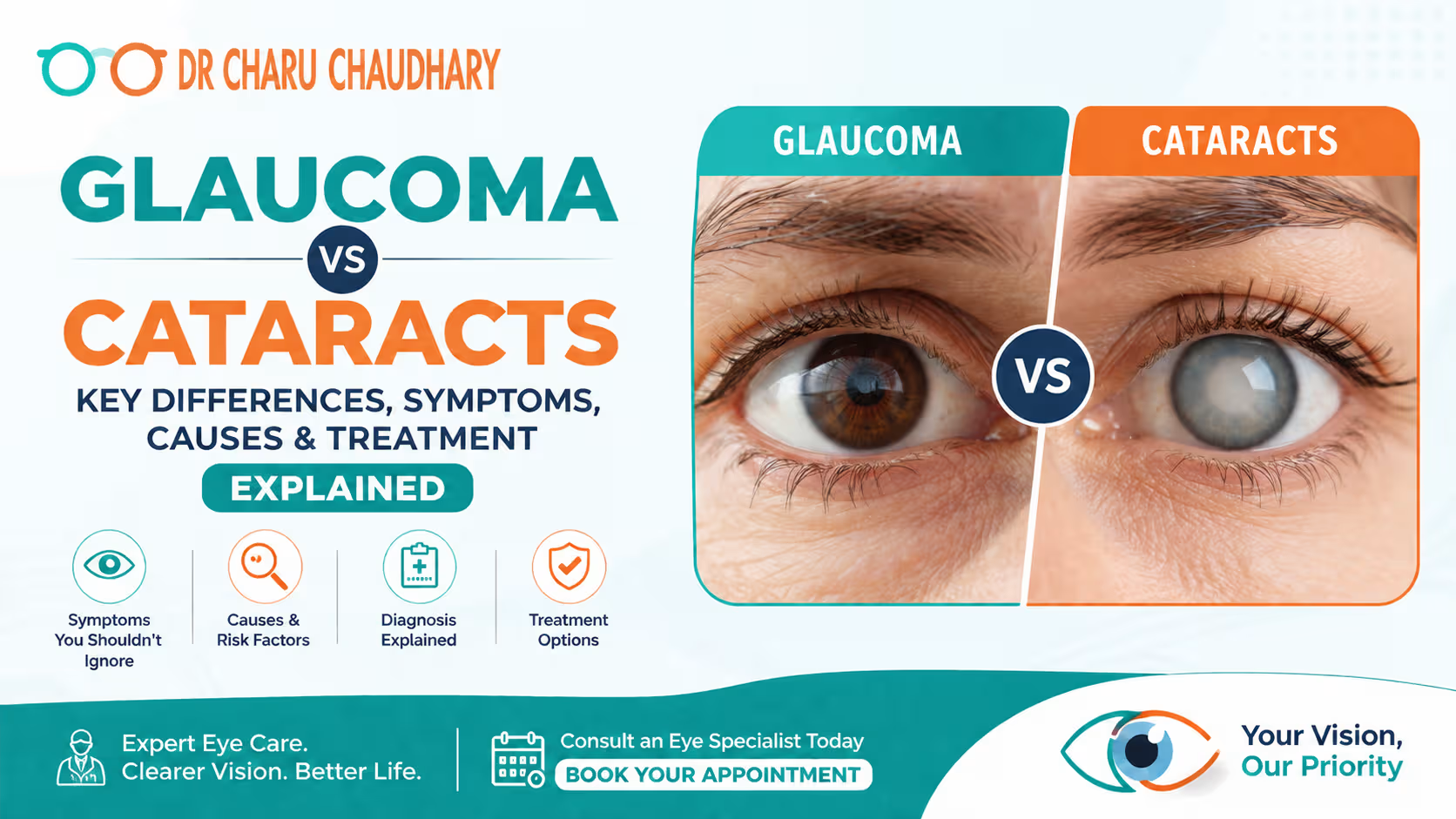
Cataracts cause cloudy vision because the eye’s natural lens becomes opaque, blocking light from reaching the retina. Conversely, glaucoma damages the optic nerve, often due to increased eye pressure. While cataract surgery usually restores vision successfully, glaucoma-related vision loss is irreversible. Therefore, early diagnosis is essential to prevent permanent blindness. Introduction How Can You Tell Whether It’s Glaucoma or Cataracts? Distinguishing between different eye conditions is often difficult for the average person. You might notice your vision becoming blurry or find it hard to drive at night. However, these symptoms could point toward two very different diseases. Glaucoma and cataracts are the leading causes of vision impairment globally. While they share some similarities, their impact on your eye health varies significantly. Identifying the specific cause of your visual decline is the first step toward effective recovery. Why Do People Often Confuse These Two Eye Conditions? Confusion often arises because both conditions commonly affect older adults. Furthermore, both diseases can cause a gradual decline in visual clarity. Patients frequently assume that any blurring of vision is simply a sign of “getting older.” Unfortunately, this misconception can lead to delayed treatment. While one condition is often fixable, the other can lead to permanent darkness if ignored. Understanding the biological differences between them is crucial for every patient. Why Early Eye Examination Can Protect Your Vision Regular screenings are the only definitive way to distinguish between these two conditions. An experienced Eye doctor in Lucknow can perform a comprehensive evaluation to assess your ocular health. Early detection allows for a wider range of treatment options. Most importantly, it helps prevent the silent progression of diseases that could steal your sight. By scheduling an exam, you take a proactive step in preserving your quality of life. What Is Glaucoma and How Does It Affect Vision? Glaucoma is not a single disease but a group of eye conditions. These conditions primarily damage the optic nerve, which is vital for good vision. This damage is often caused by abnormally high pressure inside your eye. Over time, this pressure erodes the nerve fibers, leading to blind spots in your visual field. What Happens to the Optic Nerve? The optic nerve acts like a communication cable between your eye and your brain. It carries thousands of electrical impulses that the brain interprets as images. When intraocular pressure rises, it compresses these delicate nerve fibers. Consequently, the fibers begin to die, and the “cable” loses its ability to transmit information. This process usually starts with your side vision and slowly moves inward. Why Is Glaucoma Called the “Silent Thief of Sight”? Many forms of glaucoma have no warning signs. For example, open-angle glaucoma progresses so slowly that you may not notice a change until the late stages. The brain often compensates for small blind spots, making the disease nearly invisible to the patient. By the time vision loss becomes obvious, significant and permanent damage has already occurred. This is why medical professionals emphasize the importance of preventative screenings. What Are Cataracts and Why Do They Develop? A cataract is a clouding of the normally clear lens of your eye. For people who have cataracts, seeing through cloudy lenses is a bit like looking through a frosty window. This clouding makes it more difficult to read or drive a car, especially at night. Most cataracts develop slowly and don’t disturb your eyesight early on. How Does the Eye Lens Become Cloudy? The lens is positioned behind the colored part of your eye (the iris). It focuses light that passes into your eye, producing clear, sharp images on the retina. As you age, the proteins within the lens begin to break down and clump together. These clumps create a cloudy area that scatters light instead of focusing it clearly. As a result, the image reaching your retina becomes blurred or distorted. Who Is Most Likely to Develop Cataracts? Aging is the most significant risk factor for cataract development. Most people begin to develop some degree of lens clouding after the age of 40. However, other factors can accelerate this process significantly. These include prolonged exposure to ultraviolet (UV) light, smoking, and certain medications like steroids. Additionally, individuals with systemic health issues may see symptoms appear much earlier in life. What Is the Difference Between Glaucoma and Cataracts? While both conditions affect your ability to see, they involve different parts of the eye. Cataracts are a problem with the “lens,” which is the front window of the eye. Glaucoma is a problem with the “nerve,” which is the connection to the brain. Understanding this fundamental difference helps patients appreciate why the treatments differ so vastly. How Do Their Causes Differ? The causes of these two diseases are entirely unrelated. Cataracts are primarily a result of protein degradation and oxidative stress within the lens. In contrast, glaucoma usually stems from a failure in the eye’s fluid drainage system. When the aqueous humor (eye fluid) cannot drain properly, pressure builds up against the retina and optic nerve. Therefore, one is a structural change in a tissue, while the other is often a hydraulic issue. How Do Symptoms Compare? Cataract symptoms usually involve a change in how you perceive light and color. You might see “halos” around streetlights or find that colors look faded. Glaucoma symptoms are often non-existent in the early stages. However, advanced glaucoma leads to “tunnel vision,” where your peripheral sight disappears. While cataracts make the world look “fuzzy,” glaucoma makes the world look “smaller.” Which Condition Progresses Faster? Progression rates vary greatly between individuals and the specific type of the disease. Cataracts generally progress very slowly over several years. Many patients live with mild cataracts for a long time without needing surgery. Some forms of glaucoma, such as acute angle-closure glaucoma, can cause vision loss within hours. Chronic glaucoma, however, also moves slowly but leaves permanent damage in its wake. Glaucoma vs. Cataract Comparison Table Feature Glaucoma Cataracts Primary Site Optic Nerve Crystalline Lens Main Cause High Intraocular Pressure Protein Clumping/Aging
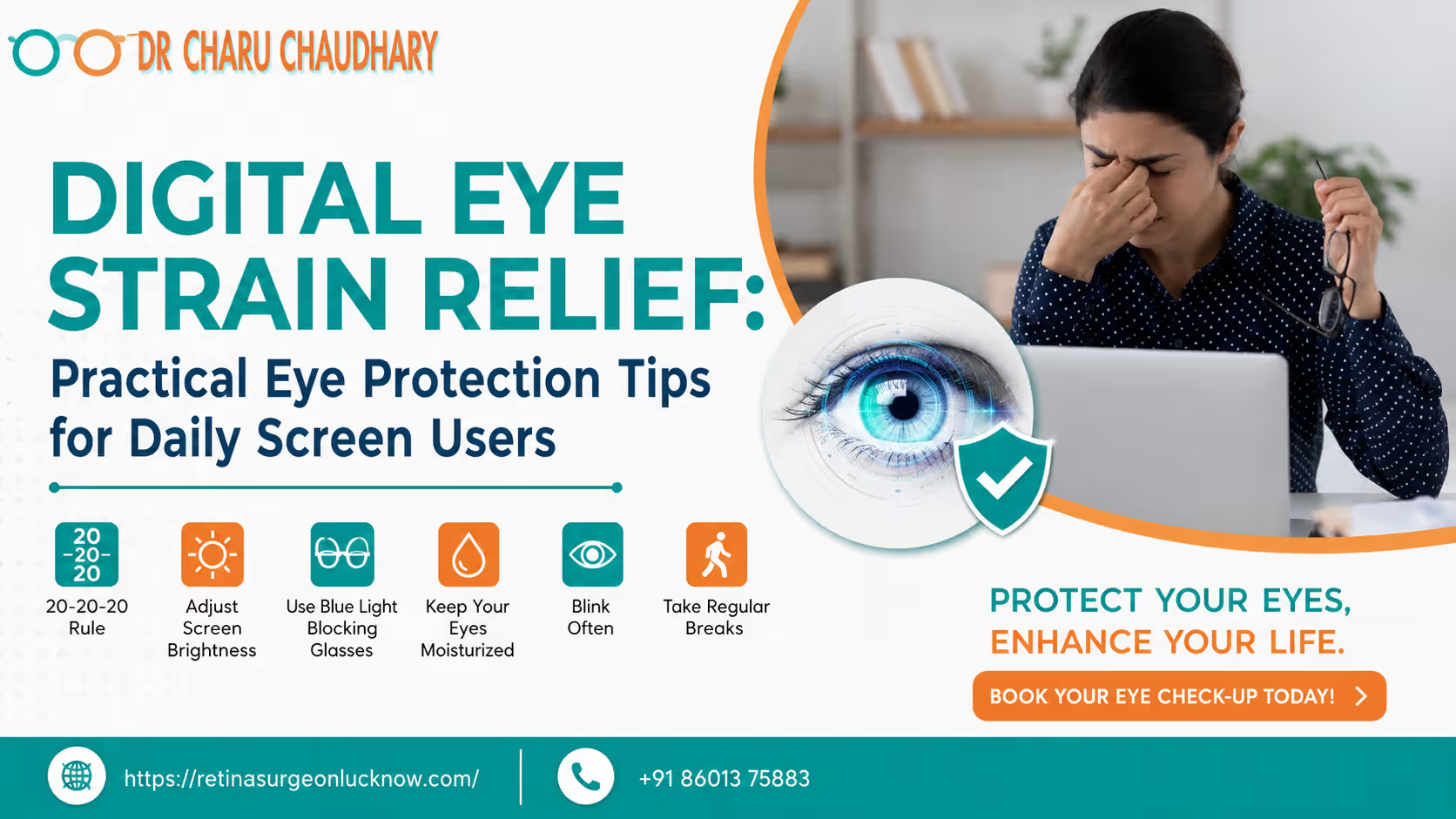
In the modern era, our lives are intrinsically linked to digital displays. From the moment we wake up to the minute we go to bed, we move from smartphones to laptop screens, tablets, and televisions. While this digital revolution has brought immense convenience and connectivity, it has also introduced a significant challenge for our ocular health: eye strain from screens. Whether you are a software professional in Lucknow, a student attending online classes, or someone who enjoys late-night scrolling, your eyes are likely working harder than they ever have before. At the clinic of Dr. Charu Chaudhary, a trusted eye specialist in Lucknow, we have seen a dramatic rise in patients complaining of “tired eyes,” persistent headaches, and dry sensations. These aren’t just minor inconveniences; they are signs that your visual system is being pushed beyond its natural limits. Understanding how to manage this digital fatigue is essential for maintaining long-term vision health and daily productivity. Eye strain from screens can cause dry eyes, headaches, blurry vision, and fatigue due to prolonged digital exposure. Healthy screen habits, regular breaks, proper lighting, and eye care practices may help reduce digital eye strain symptoms. What Is Digital Eye Strain? Digital Eye Strain (DES), often referred to medically as Computer Vision Syndrome (CVS), is a group of eye and vision-related problems that result from prolonged computer, tablet, e-reader, and smartphone use. Unlike reading a printed page, digital screens emit light, flicker slightly, and often have glare. This requires our eye muscles to constantly adjust and refocus, leading to exhaustion. When you look at a screen, your eyes must maintain a specific level of tension to keep the image sharp. This is much like holding a heavy weight at arm’s length; eventually, the muscle begins to ache. Because digital characters are made of pixels rather than solid ink, they have less contrast and “softer” edges, making it even harder for the brain to process the image, further increasing the demand on the visual system. Common Symptoms of Eye Strain from Screens Many people experience symptoms of digital eye strain without realizing the root cause. If you spend more than two hours a day on a device, you may notice: Why Screens Affect Eye Health To protect your vision, it is vital to understand the “why” behind the strain. Several factors contribute to the discomfort we feel after hours of digital usage. 1. The Blinking Problem Under normal circumstances, humans blink about 15–20 times per minute. Blinking spreads a fresh layer of tears across the cornea, keeping it moist and clear. However, when we concentrate on a digital screen, our blink rate drops significantly. This leads to “tear film instability,” where the moisture on the eye evaporates faster than it can be replaced. 2. Blue Light Exposure Digital devices emit High-Energy Visible (HEV) light, commonly known as blue light. While the sun is the largest source of blue light, the proximity of our screens and the duration of exposure are what concern eye specialists. Blue light can scatter more easily, reducing contrast and forcing the eyes to strain to see clearly. Furthermore, exposure to blue light in the evening suppresses melatonin, the hormone responsible for sleep. 3. Glare and Reflections Light reflecting off your screen from overhead lamps or windows creates glare. This forces your eyes to work harder to distinguish the text from the background reflections. 4. Poor Ergonomics The distance and angle at which we hold our devices matter. Laptops are often placed too low, and smartphones are held too close, forcing the eyes into an unnatural inward-turning position (convergence) for long periods. 📊 Digital Eye Strain Symptoms vs. Healthy Eye Habits Understanding the relationship between your habits and your symptoms is the first step toward relief. Use the following chart to identify changes you can make today. Common Problem Possible Cause Healthy Habit Dry Eyes Reduced blinking during screen use Blink consciously and use artificial tears Headache Screen glare and high brightness Adjust brightness and use anti-glare filters Blurry Vision Long focus time at a fixed distance Follow the 20-20-20 rule Eye Fatigue Excessive screen time without rest Take regular 5–10 minute breaks Neck Pain Poor posture (slouching) Use ergonomic seating and monitor stands Note: While these habits significantly reduce discomfort, persistent issues should always be evaluated by a professional like Dr. Charu Chaudhary to rule out underlying refractive errors. Step-by-Step: How to Reduce Eye Strain from Screens Protecting your eyes doesn’t require expensive equipment; it requires consistency. Here is a practical guide to creating a vision-friendly digital environment. Step 1: Follow the 20-20-20 Rule This is the “gold standard” of digital eye care. Every 20 minutes, look at something 20 feet away for at least 20 seconds. This allows the ciliary muscles inside your eye—which are responsible for focusing—to relax. Looking into the distance is like stretching your legs after a long flight; it releases the built-up tension. Step 2: Adjust Screen Brightness and Contrast Your screen should not be a light source that competes with the room. If your screen looks like a glowing light bulb in a dark room, it’s too bright. If it looks dull or grey, it’s too dark. Aim to match the screen’s brightness to the surrounding ambient light. Also, ensure the contrast is high (black text on a white/off-white background is usually best for the eyes). Step 3: Increase Blinking Frequency Post a “Blink!” sticky note on your monitor. Whenever you see it, take three slow, full blinks. This simple act re-lubricates the eye and prevents the burning sensation associated with eye strain from screens. Step 4: Maintain Proper Viewing Distance For desktop and laptop users, the screen should be about an arm’s length (20–28 inches) away from your face. The center of the screen should be about 10–15 degrees below eye level. This positioning reduces the amount of the eyeball exposed to the air, which helps minimize evaporation of the tear film. Step 5: Use Artificial Tears if Recommended If you live in a dry climate (like parts of Uttar Pradesh during summer)