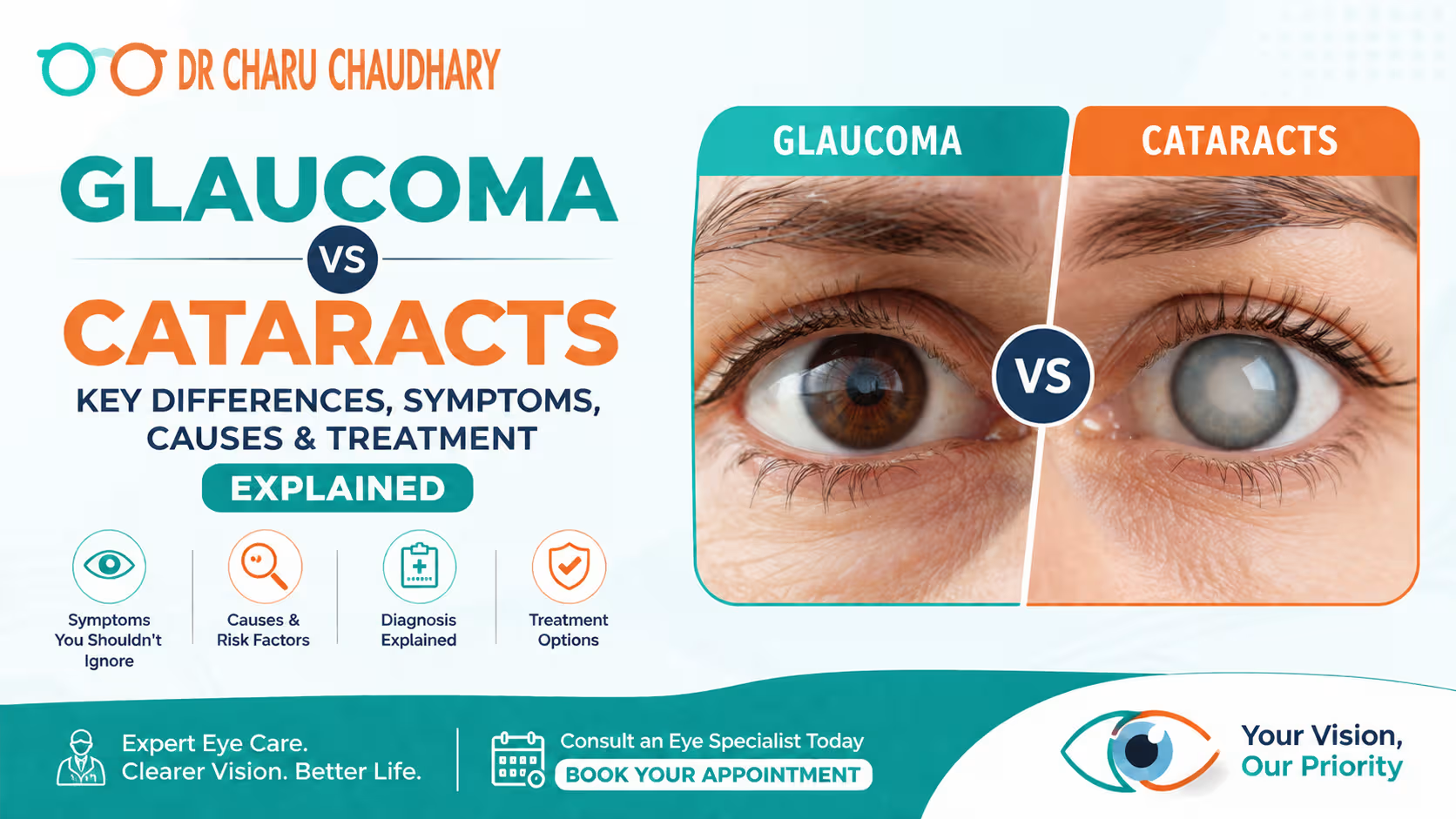
Cataracts cause cloudy vision because the eye’s natural lens becomes opaque, blocking light from reaching the retina. Conversely, glaucoma damages the optic nerve, often due to increased eye pressure. While cataract surgery usually restores vision successfully, glaucoma-related vision loss is irreversible. Therefore, early diagnosis is essential to prevent permanent blindness. Introduction How Can You Tell Whether It’s Glaucoma or Cataracts? Distinguishing between different eye conditions is often difficult for the average person. You might notice your vision becoming blurry or find it hard to drive at night. However, these symptoms could point toward two very different diseases. Glaucoma and cataracts are the leading causes of vision impairment globally. While they share some similarities, their impact on your eye health varies significantly. Identifying the specific cause of your visual decline is the first step toward effective recovery. Why Do People Often Confuse These Two Eye Conditions? Confusion often arises because both conditions commonly affect older adults. Furthermore, both diseases can cause a gradual decline in visual clarity. Patients frequently assume that any blurring of vision is simply a sign of “getting older.” Unfortunately, this misconception can lead to delayed treatment. While one condition is often fixable, the other can lead to permanent darkness if ignored. Understanding the biological differences between them is crucial for every patient. Why Early Eye Examination Can Protect Your Vision Regular screenings are the only definitive way to distinguish between these two conditions. An experienced Eye doctor in Lucknow can perform a comprehensive evaluation to assess your ocular health. Early detection allows for a wider range of treatment options. Most importantly, it helps prevent the silent progression of diseases that could steal your sight. By scheduling an exam, you take a proactive step in preserving your quality of life. What Is Glaucoma and How Does It Affect Vision? Glaucoma is not a single disease but a group of eye conditions. These conditions primarily damage the optic nerve, which is vital for good vision. This damage is often caused by abnormally high pressure inside your eye. Over time, this pressure erodes the nerve fibers, leading to blind spots in your visual field. What Happens to the Optic Nerve? The optic nerve acts like a communication cable between your eye and your brain. It carries thousands of electrical impulses that the brain interprets as images. When intraocular pressure rises, it compresses these delicate nerve fibers. Consequently, the fibers begin to die, and the “cable” loses its ability to transmit information. This process usually starts with your side vision and slowly moves inward. Why Is Glaucoma Called the “Silent Thief of Sight”? Many forms of glaucoma have no warning signs. For example, open-angle glaucoma progresses so slowly that you may not notice a change until the late stages. The brain often compensates for small blind spots, making the disease nearly invisible to the patient. By the time vision loss becomes obvious, significant and permanent damage has already occurred. This is why medical professionals emphasize the importance of preventative screenings. What Are Cataracts and Why Do They Develop? A cataract is a clouding of the normally clear lens of your eye. For people who have cataracts, seeing through cloudy lenses is a bit like looking through a frosty window. This clouding makes it more difficult to read or drive a car, especially at night. Most cataracts develop slowly and don’t disturb your eyesight early on. How Does the Eye Lens Become Cloudy? The lens is positioned behind the colored part of your eye (the iris). It focuses light that passes into your eye, producing clear, sharp images on the retina. As you age, the proteins within the lens begin to break down and clump together. These clumps create a cloudy area that scatters light instead of focusing it clearly. As a result, the image reaching your retina becomes blurred or distorted. Who Is Most Likely to Develop Cataracts? Aging is the most significant risk factor for cataract development. Most people begin to develop some degree of lens clouding after the age of 40. However, other factors can accelerate this process significantly. These include prolonged exposure to ultraviolet (UV) light, smoking, and certain medications like steroids. Additionally, individuals with systemic health issues may see symptoms appear much earlier in life. What Is the Difference Between Glaucoma and Cataracts? While both conditions affect your ability to see, they involve different parts of the eye. Cataracts are a problem with the “lens,” which is the front window of the eye. Glaucoma is a problem with the “nerve,” which is the connection to the brain. Understanding this fundamental difference helps patients appreciate why the treatments differ so vastly. How Do Their Causes Differ? The causes of these two diseases are entirely unrelated. Cataracts are primarily a result of protein degradation and oxidative stress within the lens. In contrast, glaucoma usually stems from a failure in the eye’s fluid drainage system. When the aqueous humor (eye fluid) cannot drain properly, pressure builds up against the retina and optic nerve. Therefore, one is a structural change in a tissue, while the other is often a hydraulic issue. How Do Symptoms Compare? Cataract symptoms usually involve a change in how you perceive light and color. You might see “halos” around streetlights or find that colors look faded. Glaucoma symptoms are often non-existent in the early stages. However, advanced glaucoma leads to “tunnel vision,” where your peripheral sight disappears. While cataracts make the world look “fuzzy,” glaucoma makes the world look “smaller.” Which Condition Progresses Faster? Progression rates vary greatly between individuals and the specific type of the disease. Cataracts generally progress very slowly over several years. Many patients live with mild cataracts for a long time without needing surgery. Some forms of glaucoma, such as acute angle-closure glaucoma, can cause vision loss within hours. Chronic glaucoma, however, also moves slowly but leaves permanent damage in its wake. Glaucoma vs. Cataract Comparison Table Feature Glaucoma Cataracts Primary Site Optic Nerve Crystalline Lens Main Cause High Intraocular Pressure Protein Clumping/Aging