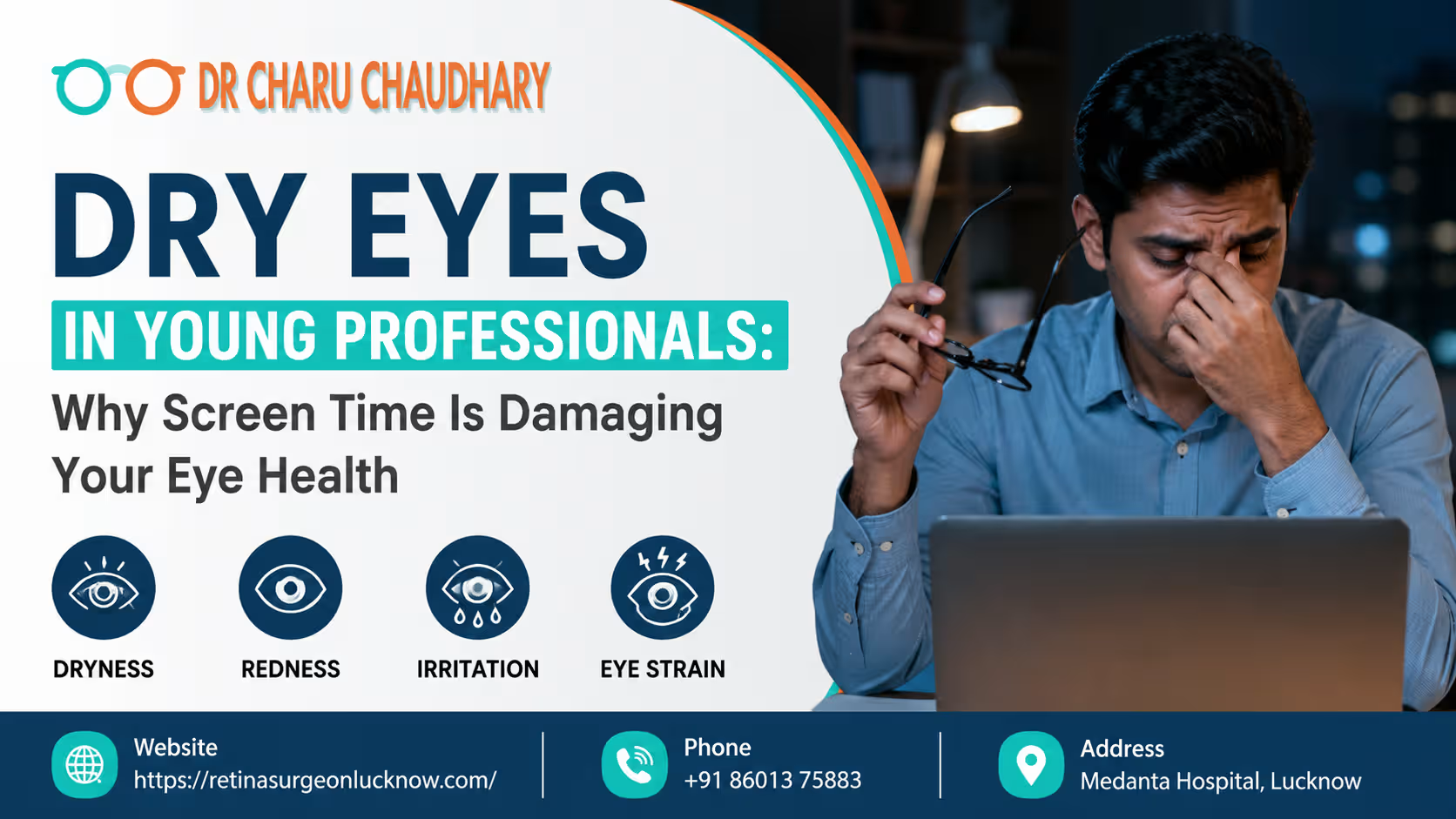
Why are dry eyes becoming common in young professionals?Dry eyes are rising among young professionals due to prolonged screen exposure, which reduces blink rates by up to 66%, causing rapid tear evaporation. Combined with air-conditioned offices, poor sleep, and digital lifestyles, the tear film becomes unstable, leading to chronic irritation, inflammation, and Digital Eye Strain. Introduction In the modern corporate landscape, the transition from traditional office setups to highly digitized environments has brought about a significant, yet often overlooked, health crisis. For the contemporary workforce, the day begins and ends with a glowing screen. Whether it is a software engineer in a high-pressure IT hub, a digital marketer managing multiple campaigns, or a student attending virtual lectures, the eyes are under constant duress. This shift has led to an unprecedented rise in Dry Eye Disease (DED), a condition that was once predominantly associated with aging but is now a hallmark of the young professional’s life. The rise of digital lifestyles is hurting eye health at a rate that traditional medical models are struggling to keep pace with. We are currently living in the “Smartphone Era,” where the blue light emitted from devices and the cognitive demand of digital tasks force our eyes to work harder than they were biologically designed to. If you find yourself frequently rubbing your eyes, experiencing a persistent “gritty” sensation, or noticing that your vision blurs toward the end of a workday, you are likely part of the growing demographic suffering from ocular surface distress. Ignoring these symptoms is not merely a matter of enduring discomfort; it can lead to long-term structural damage to the cornea. Seeking early intervention from an expert is critical. For those in North India, consulting Dr Charu Chaudhary, widely regarded as the Best Eye Specialist in Lucknow, can provide the specialized care necessary to manage this condition effectively. Understanding the “why” behind this epidemic is the first step toward reclaiming your eye health and ensuring that your career productivity is not hampered by preventable physical strain. Quick Facts About Dry Eyes To provide a quick overview for those seeking immediate information through voice search or AI summaries: What Is Dry Eye Disease? To truly grasp why young professionals are suffering, one must understand the delicate ecosystem of the eye’s surface. Healthy vision relies on a stable, continuous layer of moisture called the tear film. This film is not just “water”; it is a sophisticated three-layered shield: How Dry Eyes DevelopDry eye occurs when the quantity or quality of these layers is compromised. In the context of young professionals, the most common form is Evaporative Dry Eye. This happens when the oil layer is insufficient, often because the Meibomian glands are not being “pumped” effectively by regular blinking. Temporary vs. Chronic Dry EyeThere is a distinction between occasional dryness (after a long flight or a night of poor sleep) and chronic Dry Eye Disease. Chronic DED is a self-perpetuating cycle of inflammation. When the eye stays dry for too long, the surface becomes inflamed, which in turn damages the glands that produce tears, creating a feedback loop that requires medical intervention from a specialist like Dr Charu Chaudhary. Why Young Professionals Are More Vulnerable The modern professional’s environment is almost perfectly engineered to cause dry eyes. Several factors contribute to this vulnerability: Excessive Computer and Smartphone Use The primary culprit is “Digital Eye Strain” or “Computer Vision Syndrome.” When we work on a laptop or scroll through a smartphone, the level of visual concentration is intense. This leads to a phenomenon known as “staring,” where the natural blink reflex is suppressed. Blinking is essential for spreading a fresh layer of tears; without it, the eye surface becomes exposed and parched. Air-Conditioned Workspaces Most corporate offices and co-working spaces in cities like Lucknow rely on centralized air conditioning. These systems function by removing moisture from the air. In a low-humidity environment, the tears on your eyes evaporate significantly faster. For an IT professional sitting under an AC vent for 9 hours, the eyes are essentially being “freeze-dried” throughout the day. The Rise of Remote and Hybrid Work Remote work has removed the natural “micro-breaks” of the office—walking to a colleague’s desk, moving to a meeting room, or the commute. Home offices are also often poorly optimized. Screens may be at the wrong height, causing the eyes to open wider and expose more surface area to evaporation. Lack of Sleep and Recovery Young professionals often prioritize “hustle” over sleep. During sleep, the eyes are bathed in continuous moisture, and the corneal cells undergo repair. Chronic sleep deprivation prevents this essential recovery, making the eyes more susceptible to irritation the following day. How Screen Time Causes Dry Eyes: The Mechanics The relationship between screen time and dry eyes is mechanical. Under normal circumstances, humans blink about 15 to 20 times per minute. However, when focusing on a digital task, this rate drops to about 5 to 7 blinks per minute. Reduced Blinking and Increased EvaporationNot only do we blink less, but the quality of the blink also suffers. Research shows that screen users often perform “incomplete blinks,” where the upper eyelid does not fully meet the lower eyelid. This failure means the Meibomian glands aren’t squeezed, and the protective oil layer is never replenished. Blue Light Exposure and Eye FatigueWhile blue light is not the direct cause of dryness, it contributes to overall eye fatigue. The high-energy visible (HEV) light scatters more easily than other light, making it harder for the eye to focus. This increased focusing effort strains the ciliary muscles, making the symptoms of dryness feel more painful and exhausting. Screen Time Impact Chart Factor Mechanism of Action Clinical Impact Blink Rate Suppression 60-70% reduction in blinks Rapid tear film breakup Incomplete Blinks Oil glands are not compressed Meibomian Gland Dysfunction (MGD) Airflow (AC/Fans) Increased air velocity over the eye Accelerated evaporation of aqueous layer High Screen Brightness Pupil constriction and light scatter Photophobia (light sensitivity) Viewing Angle Looking straight ahead/upwards Increased ocular surface exposure Common
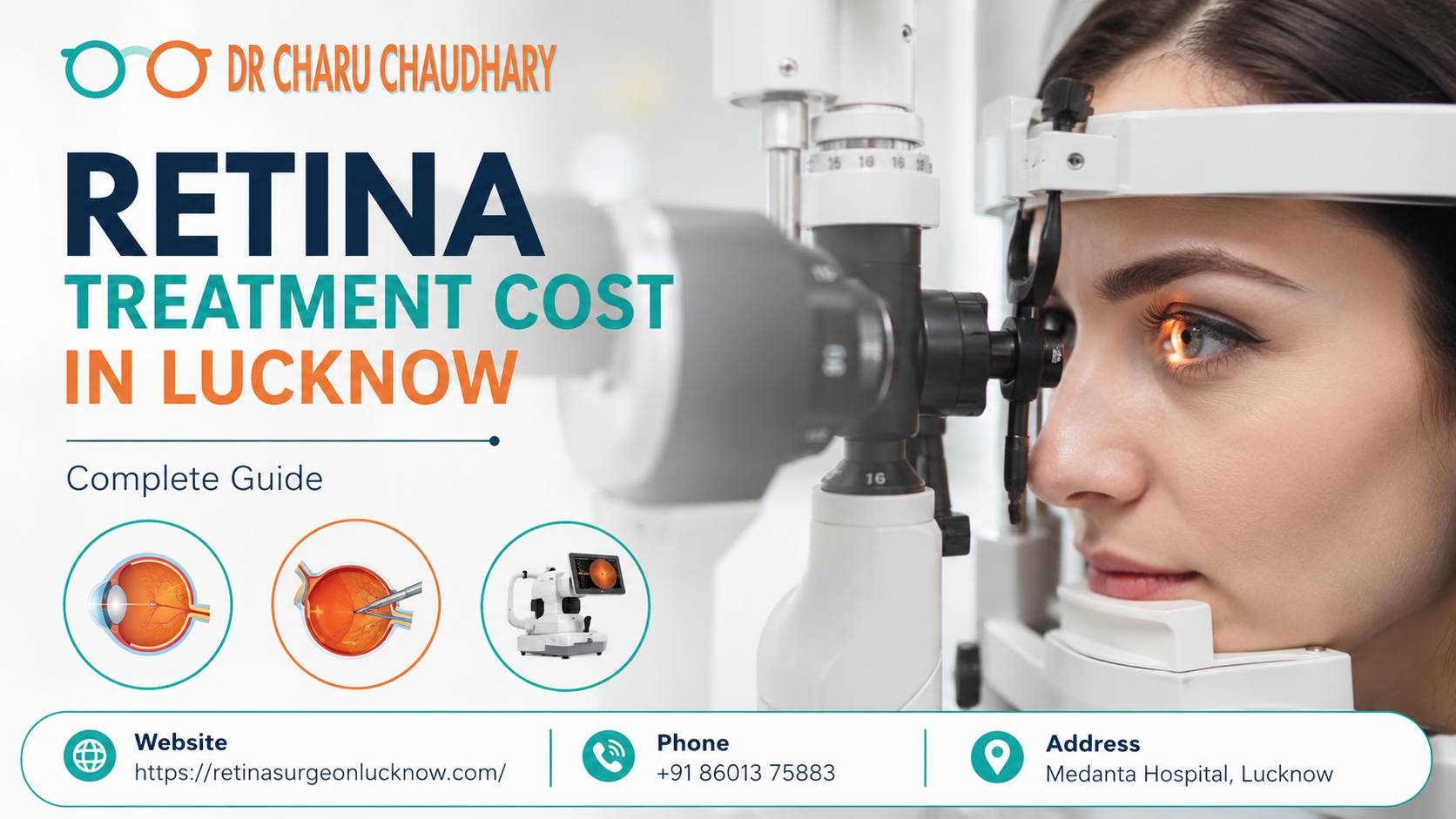
In recent years, the prevalence of retinal diseases has seen a significant surge across India, with Lucknow being no exception. As a major healthcare hub in Uttar Pradesh, Lucknow witnesses thousands of patients daily seeking specialized care for vision-threatening conditions. The retina, a thin layer of light-sensitive tissue at the back of the eye, acts much like the film in a traditional camera. When it becomes damaged due to age, diabetes, or trauma, the consequences can be devastating, often leading to irreversible vision loss if left untreated. One of the primary concerns for patients and their families when facing a retinal diagnosis is the financial aspect. “How much will the treatment cost?” is usually the first question asked after a diagnosis is confirmed. Understanding the Retina Treatment Cost is essential for making informed decisions, planning finances, and ensuring that quality care is not delayed. Early intervention is not just a clinical necessity; it is a financial strategy. Detecting a retinal tear early might cost a few thousand rupees for a laser procedure, whereas ignoring it could lead to a retinal detachment requiring surgery costing tens of thousands. Retina Treatment Cost in Lucknow varies depending on the retinal condition, diagnostic tests, treatment method, and whether surgery is required. Early diagnosis often reduces complications, treatment complexity, and overall healthcare expenses, ensuring better visual outcomes at a lower cost. Quick Facts: Retina Treatment at a Glance Service/Treatment Approximate Cost Range (INR) Recovery Timeline Consultation (Retina Specialist) ₹500 – ₹1,500 Immediate OCT Scan (Optical Coherence Tomography) ₹1,500 – ₹3,500 Immediate Fundus Photography/Angiography ₹2,000 – ₹5,000 1 – 2 Hours Retina Laser Treatment (per session) ₹5,000 – ₹15,000 1 – 2 Days Anti-VEGF Injection (per dose) ₹7,000 – ₹60,000 1 – 3 Days Retinal Detachment Surgery ₹40,000 – ₹1,20,000 2 – 6 Weeks Vitrectomy Surgery ₹50,000 – ₹1,50,000 3 – 8 Weeks What Is the Retina and Why Is It Important? Understanding the Role of the Retina The retina is arguably the most vital part of the eye’s anatomy. It is a complex, multi-layered structure that captures light entering the eye and converts it into electrical signals. These signals are then transmitted via the optic nerve to the brain, which interprets them as images. Without a functioning retina, the eye may be structurally intact, but the “vision” process cannot occur. How the Retina Helps You See Think of the retina as the “sensor” of your eye. The central part of the retina, known as the macula, is responsible for sharp, detailed, central vision. This allows you to read, drive, and recognize faces. The peripheral retina provides you with side vision, helping you navigate your surroundings. What Happens When the Retina Is Damaged? Unlike some other tissues in the body, the retina has a very limited capacity to regenerate. Damage caused by high blood sugar (diabetes), high blood pressure, or physical trauma can lead to scarring, bleeding, or detachment. When the retina is damaged, images become blurred, distorted, or vanish entirely. Because the retina is directly connected to the brain’s visual cortex, any delay in treatment can lead to permanent atrophy of the nerve fibers. Common Retina Conditions That Require Treatment Understanding the specific condition you have is the first step in estimating the retinal disease treatment cost. Different pathologies require vastly different approaches. 1. Diabetic Retinopathy This is the leading cause of blindness among working-age adults. Chronic high blood sugar damages the tiny blood vessels inside the retina. 2. Retinal Detachment A medical emergency where the retina pulls away from its underlying layer of support tissue. 3. Age-Related Macular Degeneration (AMD) Common in individuals over 50, AMD affects the macula. 4. Retinal Vein Occlusion (RVO) A blockage of the small veins that carry blood away from the retina. This often causes sudden, painless vision loss in one eye and requires injections or laser treatment to manage swelling (edema). 5. Macular Edema This refers to the swelling of the macula, often a complication of diabetes or RVO. The eye retina treatment for this usually involves a series of injections. 6. Retinal Tears and Holes Small breaks in the retina can lead to detachment. These are often treated quickly with “green laser” therapy to seal the edges of the tear. Retina Treatment Cost in Lucknow: Overview Lucknow offers a wide spectrum of eye care, ranging from government-run charitable hospitals to ultra-modern private eye centers. The Retina treatment price in Lucknow is generally more affordable than in Delhi or Mumbai, but the quality of technology and surgical expertise remains world-class. Average Cost Range A patient can expect to spend anywhere from ₹5,000 for a minor laser procedure to ₹1,50,000 for a complex vitreoretinal surgery involving imported silicon oil or gases. Why Treatment Costs Vary It is difficult to provide a single “price tag” for retina care because no two eyes are the same. A Retina specialist in Lucknow will determine the price based on: Diagnostic Investigation Costs Accurate diagnosis is the foundation of successful treatment. Before any procedure, a Retina Specialist in Lucknow will perform several tests to map the extent of the damage. Diagnostic Test Purpose Estimated Cost (INR) Consultation Fee Expert evaluation of the eye ₹500 – ₹1,500 OCT Scan Cross-sectional imaging of the retina ₹1,500 – ₹3,500 Fundus Fluorescein Angiography (FFA) Mapping blood flow with dye ₹2,500 – ₹4,500 B-Scan Ultrasound Seeing the retina when cataracts are present ₹800 – ₹1,500 Indocyanine Green Angiography (ICG) Visualizing deeper choroidal vessels ₹5,000 – ₹8,000 Optical Coherence Tomography Angiography (OCTA) Non-invasive blood flow mapping ₹3,000 – ₹6,000 The retina checkup cost usually includes a dilated eye exam and at least one imaging test, like an OCT. Factors That Affect Retina Treatment Cost When budgeting for your care, consider these influencing factors: Anti-VEGF Injection Cost in Lucknow Anti-VEGF (Vascular Endothelial Growth Factor) injections have revolutionized retina care. They “dry up” leaking vessels and are the gold standard for Wet AMD and Diabetic Macular Edema. What Are Anti-VEGF Injections? These are medications injected directly into the vitreous (the gel-like substance in the eye). The procedure is done under local anesthesia and takes less than
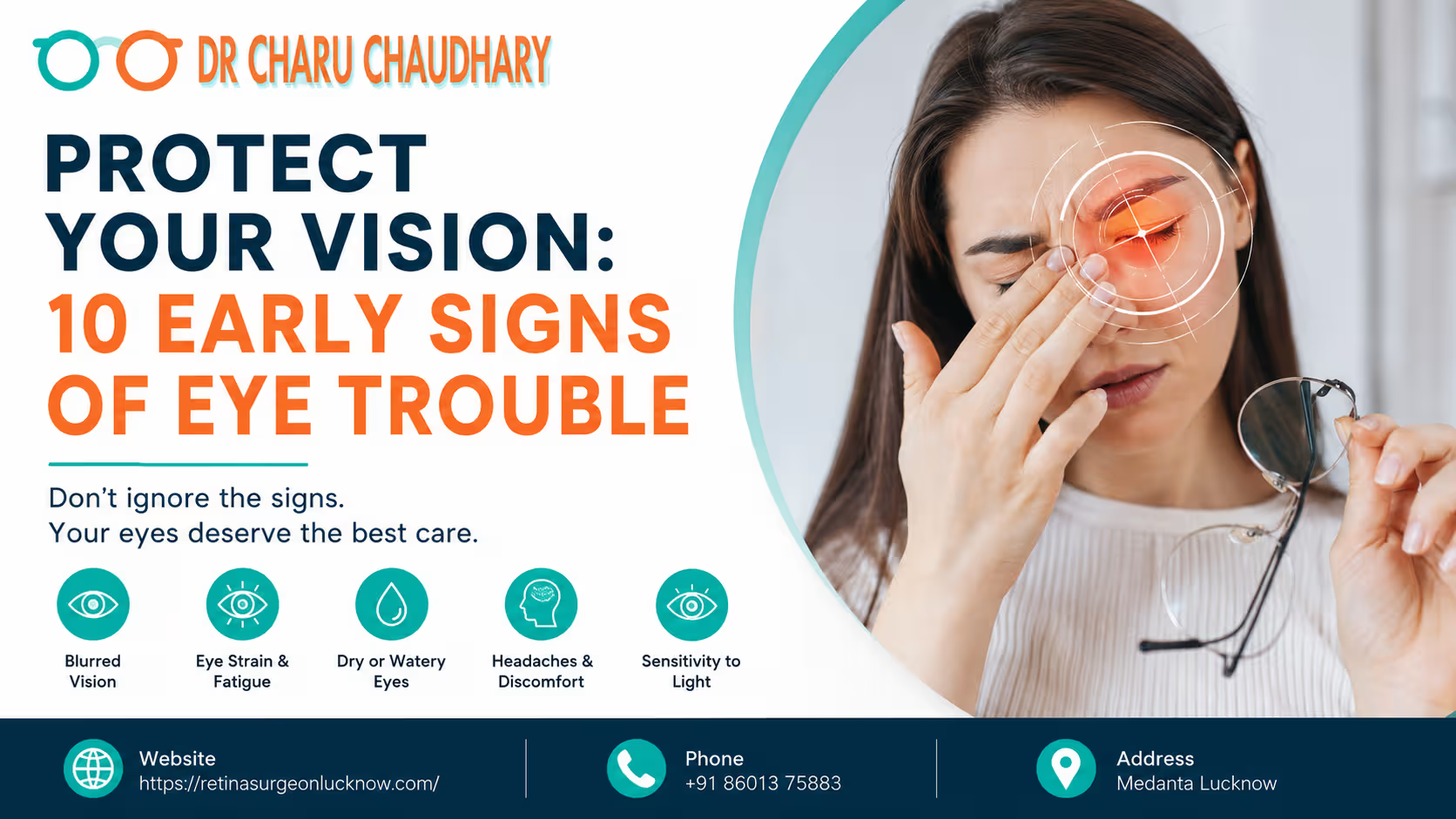
In the busy rhythm of our daily lives, we often take our senses for granted—especially our sight. Our eyes are arguably our most precious sensory organs, processing over 80% of the information we receive from the world around us. However, many of us ignore the subtle “whispers” our eyes send when something is wrong. From a slight blur while reading to a nagging headache after a day at the computer, these early signs of eye problems are often dismissed as mere tiredness or aging. Early signs of eye trouble may include blurry vision, eye pain, redness, floaters, headaches, sensitivity to light, or sudden vision changes. Timely diagnosis and regular eye checkups may help prevent serious vision complications. The reality is that many serious eye conditions, such as glaucoma or macular degeneration, develop silently. They often don’t cause significant pain in their early stages, making it easy to overlook them until permanent damage has occurred. This is why preventive eye care is not just a medical recommendation; it is a necessity for maintaining your quality of life. By understanding the early warning signs and seeking help from an experienced professional, such as Dr. Charu Chaudhary, you can protect your vision for years to come. Recognizing these symptoms early allows for more effective treatments and better long-term outcomes. Why Early Detection of Eye Problems Matters The old saying “prevention is better than cure” holds profound truth in ophthalmology. Early detection is often the only way to halt the progression of diseases that could otherwise lead to irreversible vision loss. Unlike a broken bone that heals or a skin scrape that regenerates, many parts of the eye—such as the optic nerve and the retina—do not have the capacity to repair themselves once they are severely damaged. Regular eye exams serve two primary purposes. First, they ensure that your current vision is as clear as possible, often through corrective lenses. Second, and more importantly, they allow a specialist to look inside the eye to check for signs of systemic health issues. Did you know that an eye exam can sometimes be the first way a doctor detects high blood pressure, diabetes, or even certain types of autoimmune diseases? When you consult the Best Eye specialist in Lucknow, you aren’t just getting a prescription for glasses; you are receiving a comprehensive health screening. Timely intervention can mean the difference between a simple eye drop regimen and a complex surgical procedure later in life. Sign #1 — Blurry Vision Blurry vision is perhaps the most common early sign of eye trouble, but its causes can range from the mundane to the critical. If you find yourself squinting to read street signs or holding your smartphone further away than usual, your eyes are telling you something. Temporary vs. Persistent Blurriness Temporary blurriness can occur due to eye fatigue, excessive screen time, or even dehydration. However, persistent blurriness—where things remain out of focus despite resting—requires professional evaluation. Common Causes If blurriness comes on suddenly in one eye, it should be treated as a medical emergency, as it could indicate a stroke or a retinal detachment. Sign #2 — Persistent Eye Redness We’ve all had bloodshot eyes after a late night or an early morning flight. However, when redness persists or is accompanied by other symptoms, it’s a sign of inflammation or infection. When Redness is a Concern Redness occurs when the tiny blood vessels on the surface of the eye become swollen or inflamed. This can be caused by: If your eyes are red and you also experience discharge, crusting of the eyelids, or a “gritty” feeling as if sand is in your eye, it is time to schedule a consultation. Sign #3 — Eye Pain or Pressure Eye pain is never “normal.” While it can sometimes feel like a dull ache or a sharp poke, it is a significant warning sign that something is amiss. Types of Eye Pain The Pressure Sensation Sometimes, you don’t feel “pain” so much as a feeling of “fullness” or pressure behind the eye. This can be linked to ocular hypertension. If left unchecked, high internal eye pressure can damage the optic nerve. Many patients describe this sensation as a “heaviness” that often correlates with headaches. Persistent pain, especially when moving the eyes, should never be ignored and warrants a visit to a specialist like Dr. Charu Chaudhary. Sign #4 — Sudden Floaters or Flashes Floaters are those specks, dots, or “cobwebs” that seem to drift across your field of vision. Most people have a few, and they are usually harmless remnants of the vitreous (the gel-like substance inside the eye). The Danger Zone While a few floaters are normal, a sudden increase in the number of floaters is a major red flag. If these floaters are accompanied by flashes of light (like lightning streaks or camera flashes) or a “curtain” falling over your vision, you may be experiencing a retinal tear or detachment. This is a critical situation. A detached retina is a medical emergency that can lead to permanent blindness if not treated within hours. If you experience these symptoms, seek the Best Eye specialist in Lucknow immediately. Early diagnosis through a dilated eye exam can save your sight. Common Eye Symptoms vs. Possible Causes To help you understand when to act, refer to the chart below summarizing common symptoms and their potential implications. Symptom Possible Causes When to Seek Help Blurry Vision Immediately if a sudden increase If symptoms are persistent or sudden Redness Allergy, infection, dry eye If accompanied by pain or discharge Floaters/Flashes Vitreous changes, retinal tear Immediately if sudden increase Eye Pain Infection, glaucoma, injury If pain is severe or recurring Dry Eyes Screen strain, aging, environment If lifestyle changes don’t help Light Sensitivity Migraine, inflammation, infection If it interferes with daily activities Note: This chart is for educational purposes. A professional diagnosis from an eye specialist is always required for accurate assessment. Sign #5 — Difficulty Seeing at Night Night blindness (nyctalopia) doesn’t mean you are completely blind at night; rather, it means your vision
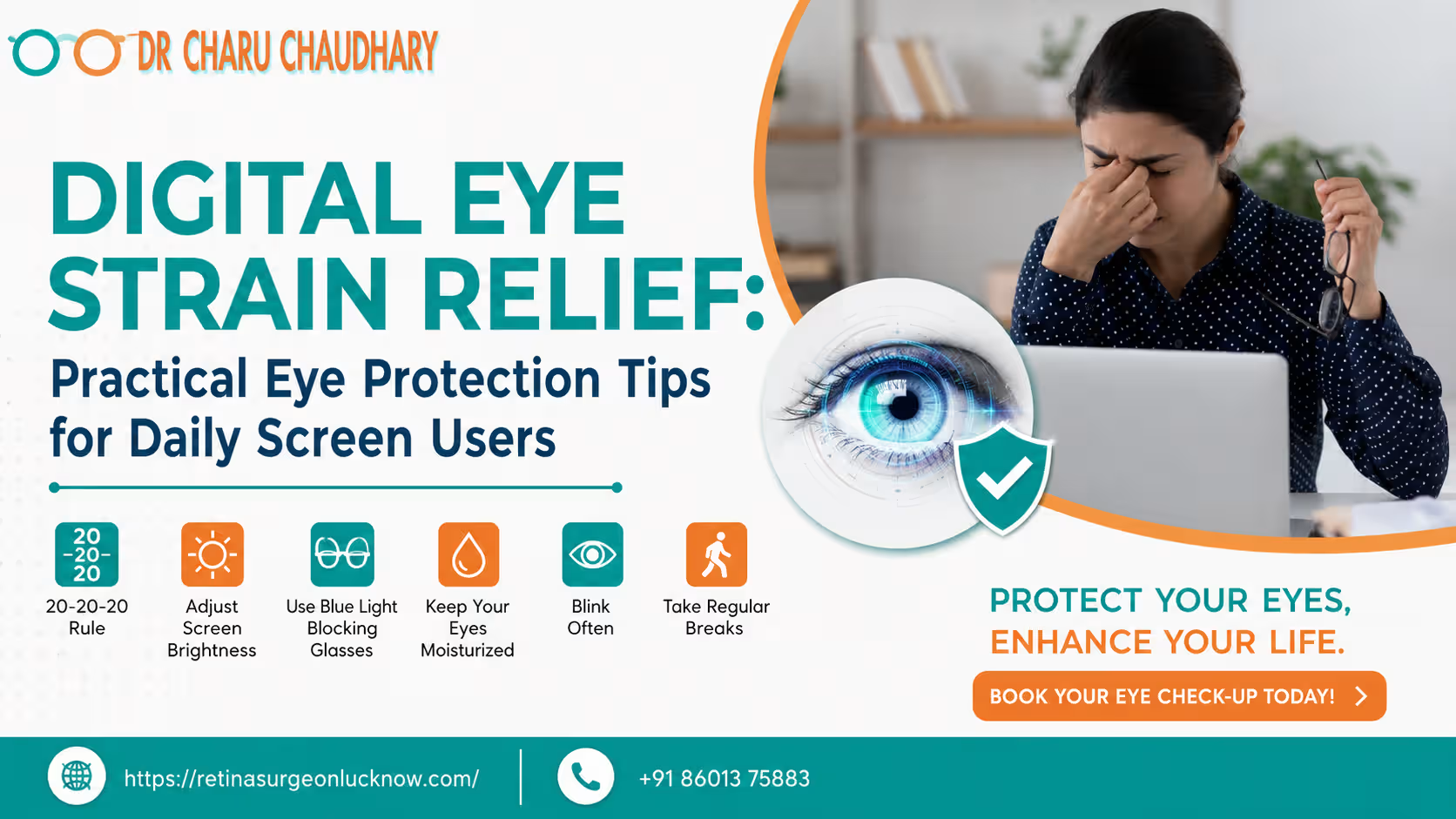
In the modern era, our lives are intrinsically linked to digital displays. From the moment we wake up to the minute we go to bed, we move from smartphones to laptop screens, tablets, and televisions. While this digital revolution has brought immense convenience and connectivity, it has also introduced a significant challenge for our ocular health: eye strain from screens. Whether you are a software professional in Lucknow, a student attending online classes, or someone who enjoys late-night scrolling, your eyes are likely working harder than they ever have before. At the clinic of Dr. Charu Chaudhary, a trusted eye specialist in Lucknow, we have seen a dramatic rise in patients complaining of “tired eyes,” persistent headaches, and dry sensations. These aren’t just minor inconveniences; they are signs that your visual system is being pushed beyond its natural limits. Understanding how to manage this digital fatigue is essential for maintaining long-term vision health and daily productivity. Eye strain from screens can cause dry eyes, headaches, blurry vision, and fatigue due to prolonged digital exposure. Healthy screen habits, regular breaks, proper lighting, and eye care practices may help reduce digital eye strain symptoms. What Is Digital Eye Strain? Digital Eye Strain (DES), often referred to medically as Computer Vision Syndrome (CVS), is a group of eye and vision-related problems that result from prolonged computer, tablet, e-reader, and smartphone use. Unlike reading a printed page, digital screens emit light, flicker slightly, and often have glare. This requires our eye muscles to constantly adjust and refocus, leading to exhaustion. When you look at a screen, your eyes must maintain a specific level of tension to keep the image sharp. This is much like holding a heavy weight at arm’s length; eventually, the muscle begins to ache. Because digital characters are made of pixels rather than solid ink, they have less contrast and “softer” edges, making it even harder for the brain to process the image, further increasing the demand on the visual system. Common Symptoms of Eye Strain from Screens Many people experience symptoms of digital eye strain without realizing the root cause. If you spend more than two hours a day on a device, you may notice: Why Screens Affect Eye Health To protect your vision, it is vital to understand the “why” behind the strain. Several factors contribute to the discomfort we feel after hours of digital usage. 1. The Blinking Problem Under normal circumstances, humans blink about 15–20 times per minute. Blinking spreads a fresh layer of tears across the cornea, keeping it moist and clear. However, when we concentrate on a digital screen, our blink rate drops significantly. This leads to “tear film instability,” where the moisture on the eye evaporates faster than it can be replaced. 2. Blue Light Exposure Digital devices emit High-Energy Visible (HEV) light, commonly known as blue light. While the sun is the largest source of blue light, the proximity of our screens and the duration of exposure are what concern eye specialists. Blue light can scatter more easily, reducing contrast and forcing the eyes to strain to see clearly. Furthermore, exposure to blue light in the evening suppresses melatonin, the hormone responsible for sleep. 3. Glare and Reflections Light reflecting off your screen from overhead lamps or windows creates glare. This forces your eyes to work harder to distinguish the text from the background reflections. 4. Poor Ergonomics The distance and angle at which we hold our devices matter. Laptops are often placed too low, and smartphones are held too close, forcing the eyes into an unnatural inward-turning position (convergence) for long periods. 📊 Digital Eye Strain Symptoms vs. Healthy Eye Habits Understanding the relationship between your habits and your symptoms is the first step toward relief. Use the following chart to identify changes you can make today. Common Problem Possible Cause Healthy Habit Dry Eyes Reduced blinking during screen use Blink consciously and use artificial tears Headache Screen glare and high brightness Adjust brightness and use anti-glare filters Blurry Vision Long focus time at a fixed distance Follow the 20-20-20 rule Eye Fatigue Excessive screen time without rest Take regular 5–10 minute breaks Neck Pain Poor posture (slouching) Use ergonomic seating and monitor stands Note: While these habits significantly reduce discomfort, persistent issues should always be evaluated by a professional like Dr. Charu Chaudhary to rule out underlying refractive errors. Step-by-Step: How to Reduce Eye Strain from Screens Protecting your eyes doesn’t require expensive equipment; it requires consistency. Here is a practical guide to creating a vision-friendly digital environment. Step 1: Follow the 20-20-20 Rule This is the “gold standard” of digital eye care. Every 20 minutes, look at something 20 feet away for at least 20 seconds. This allows the ciliary muscles inside your eye—which are responsible for focusing—to relax. Looking into the distance is like stretching your legs after a long flight; it releases the built-up tension. Step 2: Adjust Screen Brightness and Contrast Your screen should not be a light source that competes with the room. If your screen looks like a glowing light bulb in a dark room, it’s too bright. If it looks dull or grey, it’s too dark. Aim to match the screen’s brightness to the surrounding ambient light. Also, ensure the contrast is high (black text on a white/off-white background is usually best for the eyes). Step 3: Increase Blinking Frequency Post a “Blink!” sticky note on your monitor. Whenever you see it, take three slow, full blinks. This simple act re-lubricates the eye and prevents the burning sensation associated with eye strain from screens. Step 4: Maintain Proper Viewing Distance For desktop and laptop users, the screen should be about an arm’s length (20–28 inches) away from your face. The center of the screen should be about 10–15 degrees below eye level. This positioning reduces the amount of the eyeball exposed to the air, which helps minimize evaporation of the tear film. Step 5: Use Artificial Tears if Recommended If you live in a dry climate (like parts of Uttar Pradesh during summer)

आंखों में धुंधलापन (Blurry Vision) कई कारणों से हो सकता है, जैसे चश्मे का नंबर बदलना, आंखों की कमजोरी, सूखापन (Dry Eyes), मोतियाबिंद या रेटिना की समस्या। अगर आपको अचानक धुंधला दिखने लगे, केवल एक आंख से धुंधला दिखे या आंखों में दर्द और सिरदर्द महसूस हो, तो तुरंत एक विशेषज्ञ से जांच करानी चाहिए। समय पर पहचान और सही इलाज आपकी आंखों की रोशनी को सुरक्षित रख सकता है। नमस्ते! मैं Dr Charu Chaudhary हूं। एक नेत्र विशेषज्ञ के रूप में, मेरा उद्देश्य न केवल आपकी आंखों का इलाज करना है, बल्कि आपको उनके स्वास्थ्य के प्रति जागरूक करना भी है। अक्सर मरीज मेरे पास आते हैं और कहते हैं, “डॉक्टर साहब, पहले तो सब साफ दिखता था, पर अब अचानक धुंधलापन आ गया है।” क्या आपके साथ भी ऐसा हो रहा है? आंखों में धुंधलापन आना एक बहुत ही सामान्य समस्या है, लेकिन इसके पीछे के कारण बहुत सरल भी हो सकते हैं और बहुत गंभीर भी। इस ब्लॉग में, हम बहुत ही आसान भाषा में समझेंगे कि आखिर आंखों में धुंधलापन क्यों आता है और आपको कब सतर्क हो जाना चाहिए। 1. आंखों में धुंधलापन क्या होता है? (What is Blurry Vision?) आंखों से धुंधला दिखाई देना, जिसे English में Blurry Vision कहा जाता है, एक ऐसी स्थिति है जिसमें आपको चीजें साफ नजर नहीं आतीं। आपको ऐसा महसूस हो सकता है जैसे आपकी आंखों के सामने कोई धुंध या महीन पर्दा आ गया हो। धुंधलापन दो तरह का हो सकता है: अगर आपको धुंधलेपन के साथ आंखों में पानी आना, लालपन या सिरदर्द जैसे लक्षण महसूस हो रहे हैं, तो यह आंखों की किसी अंदरूनी समस्या का संकेत हो सकता है। 2. आंखों में धुंधलापन आने के सामान्य कारण (Common Causes of Blurry Vision) Aankhon mein dhundhlapan kyon aata hai? इसके कई कारण हो सकते हैं। आइए इन्हें विस्तार से समझते हैं: चश्मे का नंबर बदलना (Refractive Errors) यह धुंधलेपन का सबसे प्रमुख कारण है। अगर आपको दूर की चीजें साफ नहीं दिख रहीं (Myopia) या पास की चीजें धुंधली हैं (Hyperopia), तो इसका मतलब है कि आपको चश्मे की जरूरत है। उम्र बढ़ने के साथ 40 की उम्र के बाद पास का धुंधला दिखना (Presbyopia) भी बहुत सामान्य है। आंखों का सूखापन (Dry Eyes) आजकल हम घंटों मोबाइल और लैपटॉप पर बिताते हैं। इससे आंखों के आँसू जल्दी सूख जाते हैं, जिससे नज़र धुंधली होने लगती है। आँखें झपकाने या आई ड्रॉप डालने से यह थोड़ी देर के लिए ठीक हो जाती है। डिजिटल आई स्ट्रेन (Digital Eye Strain) ज्यादा देर तक स्क्रीन देखने से आंखों की मांसपेशियां थक जाती हैं, जिसे हम कंप्यूटर विजन सिंड्रोम भी कहते हैं। इससे धुंधलापन और भारीपन महसूस होता है। मोतियाबिंद (Cataract) बढ़ती उम्र के साथ आंखों का नेचुरल लेंस धुंधला होने लगता है। इसे ‘सफेद मोतिया’ भी कहते हैं। इसमें आपको ऐसा लगता है जैसे आप किसी गंदे शीशे या कोहरे के पीछे से देख रहे हों। डायबिटीज (Diabetic Retinopathy) अगर आपको शुगर है, तो यह आपकी आंखों के पर्दे (Retina) को नुकसान पहुंचा सकती है। शुगर लेवल बढ़ने या घटने से भी नज़र में अचानक धुंधलापन आ सकता है। इंफेक्शन या सूजन (Infection or Inflammation) आंखों में कोई बैक्टीरियल इंफेक्शन या अंदरूनी सूजन (Uveitis) होने पर भी रोशनी कम हो सकती है और दर्द महसूस हो सकता है। 3. अचानक धुंधला दिखना कब खतरनाक हो सकता है? (When Sudden Blur is Dangerous) Achanak dhundhla dikhna कभी भी सामान्य नहीं माना जाना चाहिए। अगर रोशनी मिनटों या घंटों के भीतर कम हो जाए, तो यह एक मेडिकल इमरजेंसी हो सकती है। निम्नलिखित स्थितियों में तुरंत डॉक्टर के पास जाएं: 4. धुंधली नजर के कारण और चेतावनी संकेत (Quick Symptom Chart) नीचे दिए गए चार्ट की मदद से आप समझ सकते हैं कि आपके लक्षण किस समस्या की ओर इशारा कर रहे हैं: लक्षण संभावित कारण गंभीरता दोनों आंखों से धीरे-धीरे धुंधला दिखना चश्मे का नंबर या मोतियाबिंद सामान्य (जांच जरूरी) एक आंख से अचानक blur दिखना Retina या Nerve की समस्या गंभीर (Emergency) रात में गाड़ी चलाते समय धुंधलापन मोतियाबिंद या विटामिन ए की कमी मध्यम आंखों में जलन, लाली और धुंधलापन Dry eyes या संक्रमण (Infection) सामान्य धुंधलेपन के साथ सिर में तेज दर्द माइग्रेन या ग्लूकोमा मध्यम से गंभीर नोट: यह चार्ट केवल आपकी जानकारी के लिए है। सही डायग्नोसिस (Diagnosis) के लिए डॉक्टर से मिलना अनिवार्य है। 5. एक आंख से धुंधला दिखना — क्या यह गंभीर संकेत है? अक्सर लोग इसे नजरअंदाज कर देते हैं क्योंकि उन्हें दूसरी आंख से साफ दिख रहा होता है। लेकिन Ek aankh se blur dikhna या विशेष रूप से Left eye se dhundhla dikhna किसी गंभीर बीमारी का शुरुआती लक्षण हो सकता है। यह निम्नलिखित कारणों से हो सकता है: अगर आप ऐसी किसी भी समस्या का सामना कर रहे हैं, तो Dr Charu Chaudhary, जो कि best eye specialist in Lucknow के रूप में जानी जाती हैं, से परामर्श करना आपके लिए फायदेमंद हो सकता है। 6. मोबाइल और स्क्रीन टाइम का आंखों पर असर आज के डिजिटल युग में, बच्चों से लेकर बुजुर्गों तक, हर कोई स्क्रीन से चिपका है। उपाय: हर 20 मिनट में 20 फीट दूर देखें और कम से कम 20 बार पलकें झपकाएं। इसे ’20-20-20 Rule’ कहते हैं। 7. आंखों का धुंधलापन दूर करने के घरेलू उपाय (Home Care Tips) हालांकि गंभीर समस्याओं के लिए डॉक्टर जरूरी हैं, लेकिन आंखों की सेहत बनाए रखने के लिए आप ये उपाय अपना सकते हैं: 8. आंखों के लिए क्या खाना चाहिए? (Diet for Healthy Eyes) आंखों का धुंधलापन दूर करने के लिए क्या खाएं? आपकी डाइट आपकी रोशनी का आधार है। अपनी थाली में ये चीजें जरूर शामिल करें: 9. कब Eye Specialist से तुरंत मिलना चाहिए? अगर आपको धुंधलेपन के साथ इनमें से कोई भी लक्षण दिखे, तो देर न करें: लखनऊ में रहने वाले लोग अपनी आंखों की बेहतर देखभाल के लिए Dr Charu Chaudhary से संपर्क कर सकते हैं। उन्हें लखनऊ की best eye specialist में से एक माना जाता है, जो अपनी मरीजों के प्रति संवेदनशीलता और सटीक इलाज के लिए प्रसिद्ध हैं। 10. आंखों की नियमित जांच क्यों जरूरी है? हमारी आंखें बहुत ही नाजुक अंग हैं। कई बीमारियां जैसे कि ‘काला मोतिया’ (Glaucoma) जिसे ‘साइलेंट किलर’ भी कहा
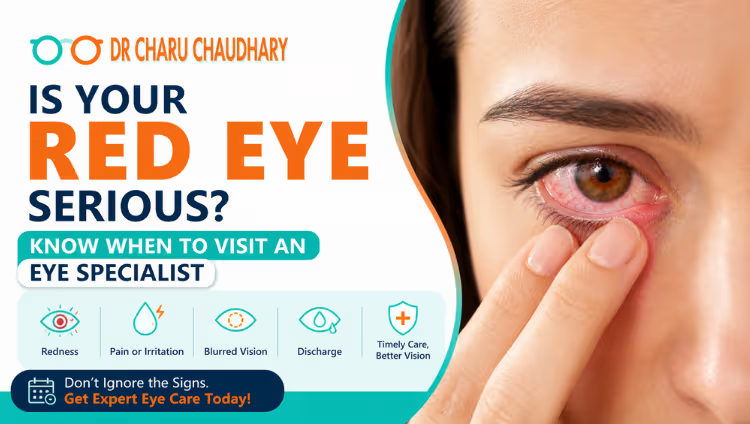
Red eyes are often caused by allergies, dryness, or lack of sleep, but severe pain, blurry vision, light sensitivity, or sudden redness may indicate a serious eye condition. If redness lasts more than a few days or affects only one eye, you should visit an eye specialist for proper evaluation and treatment. We have all looked in the mirror at some point and seen a “bloodshot” eye staring back. Most of the time, a red eye is just your body’s way of saying you are tired or that the pollen in the air is acting up. It usually goes away with a little rest or a few cooling drops. However, as an experienced eye specialist, I often see patients who wait too long to seek help. They thought it was “just a red eye,” only to find out it was something that needed urgent medical care. What Causes Red Eyes? When the tiny blood vessels on the surface of your eye expand or become inflamed, your eye looks red. There are many reasons why this happens. Some are simple lifestyle issues, while others are medical conditions. 1. Allergies Allergies are perhaps the most common cause of redness. Dust, pet dander, or seasonal pollen can make your eyes react. Along with redness, you will usually feel a lot of itching and see some watery discharge. 2. Eye Strain In today’s digital world, we spend hours looking at phones and laptops. This “digital eye strain” makes our eyes work too hard. The muscles get tired, and the surface of the eye becomes dry and red. 3. Dry Eyes Your eyes need tears to stay healthy and clear. If your tear glands don’t produce enough tears, or if the quality of the tears is poor, your eyes become “dry.” This leads to a constant stinging feeling and a red appearance. 4. Infection (Pink Eye) Conjunctivitis, commonly known as “pink eye,” is an infection of the thin layer covering the white of your eye. It can be caused by bacteria or a virus. It is very contagious and often comes with a sticky discharge. 5. Lack of Sleep If you aren’t sleeping well, your eyes aren’t getting the rest they need. This reduces the amount of oxygen reaching your eyes, causing the blood vessels to swell up. 6. Contact Lenses If you wear contact lenses for too long or don’t clean them properly, they can irritate the eye. Sometimes, a red eye is a sign of a corneal ulcer caused by sleeping in your contact lenses. When Is a Red Eye Harmless and Temporary? Not every red eye requires a trip to the clinic. If your eye is slightly red but you feel mostly okay, it might be a temporary issue. Mild irritation often happens if you get a bit of soap in your eye or if you’ve been in a smoky room. In these cases, the redness usually fades within a few hours. Seasonal allergies can make your eyes red for a few days, but if you take your usual allergy medicine or use over-the-counter lubricating drops, the redness should improve. Tiredness is another harmless cause. If you stayed up late finishing a project, your eyes might look bloodshot the next morning. A good night’s sleep and a cold compress usually fix this. Home Care Tip: If your eye is red but there is no pain and your vision is clear, try resting your eyes and using “artificial tears” (lubricating drops). If it gets better in 24 to 48 hours, you likely don’t have a serious problem. Warning Signs That Your Red Eye Could Be Serious This is where we need to be careful. As the best eye surgeon in Lucknow, I tell my patients to watch out for “Red Flags.” If you experience any of the following, please do not wait. Severe Pain A “gritty” or “scratchy” feeling is common with dry eyes. But deep, throbbing pain inside the eye is not normal. It could be a sign of high pressure inside the eye (Glaucoma) or deep inflammation (Uveitis). Blurry Vision If your vision suddenly becomes cloudy or you see “halos” around lights, your eye is in trouble. This is a sign that the deeper structures of the eye are affected. Light Sensitivity Does looking at your phone or a bright window hurt your eyes? Intense light sensitivity is a classic sign of a corneal injury or an internal infection. Swelling If your eyelids are swollen or if the white of your eye looks like it is bulging, you need an eye specialist immediately. This could be a sign of a deep tissue infection. Sudden Redness If your eye turns deep red (like a pool of blood) in just a few seconds, it might be a burst blood vessel. While often harmless, if it happens along with pain, it is an emergency. Thick Discharge Watery eyes are okay. But if you see yellow, green, or thick white discharge that sticks your eyelashes together in the morning, you have an infection that needs prescription drops. Mild vs Serious Red Eye Symptoms (Quick Comparison Chart) Use this table to quickly check your symptoms: Mild Red Eye Symptoms Serious Red Eye Symptoms Mild irritation or itchiness Severe, deep, or throbbing pain Redness in both eyes Vision changes or sudden blurriness Improves with rest or drops Persistent redness (more than 2 days) Watery or no discharge Thick yellow or green discharge Feeling of “sand” in the eye Sensitivity to light Usually caused by tiredness/allergies May involve headache or nausea One Red Eye Only – Should You Be Worried? When only one eye is red, it is often more concerning than when both eyes are red. Burst Blood Vessel: Sometimes, a tiny blood vessel breaks due to a sneeze or heavy lifting. It looks scary—like a bright red patch on the white of your eye—but it usually doesn’t hurt. This is called a subconjunctival hemorrhage. Infection or Injury: If only one eye is red, painful, and watery, you might have a scratched cornea or a foreign
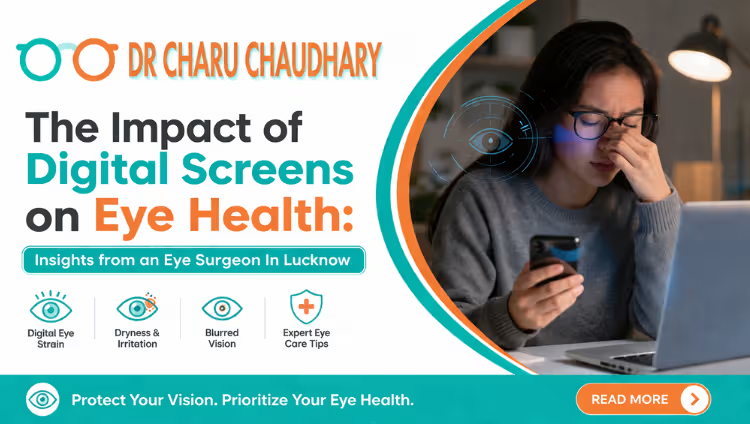
Digital Screen & Eye Health: Impacts, Treatment & Prevention In today’s world, it is almost impossible to imagine a day without screens. Whether it is the smartphone you check first thing in the morning, the laptop you use for work, or the LED TV you watch in the evening, digital devices are everywhere. While these tools make our lives easier, they come with a hidden cost to our most precious sense: our vision. As an eye surgeon, I have seen a massive rise in patients coming to my clinic with complaints of tired eyes, stinging sensations, and frequent headaches. Many people worry that they are losing their sight when, in fact, they are suffering from the modern-day epidemic of screen-related fatigue. My name is Dr Charu Chaudhary, and as a Best eye specialist in Lucknow, my goal is to help you understand how these devices impact your eyes and what you can do to protect your vision in a digital-first world. How Digital Screens Affect Your Eyes To understand why screens are hard on the eyes, we need to look at how our eyes function. Unlike a printed page, which has sharp edges and high contrast, images on a screen are made of thousands of tiny pixels. This makes it harder for our eyes to maintain focus. Blue Light Exposure Digital screens emit high-energy visible (HEV) light, commonly known as blue light. While blue light is naturally present in sunlight, our eyes are not designed to stare at a concentrated source of it for hours at a close distance. Excessive exposure to blue light can disrupt our sleep cycles (circadian rhythm) and may contribute to retinal strain over long periods. Reduced Blinking Did you know that we normally blink about 15 to 20 times per minute? Blinking is essential because it spreads a fresh layer of tears over the surface of the eye, keeping it moist and clear. However, research shows that when we look at screens, our blink rate drops by more than 50%. This “staring” effect causes the tear film to evaporate quickly, leading to dryness and irritation. Eye Muscle Strain Our eyes have tiny muscles that help us focus on objects up close. When you spend hours looking at a phone or computer, these muscles remain in a state of constant contraction. Just like your legs would ache after a long run, your eye muscles become exhausted, leading to what we call “accommodative fatigue.” What Is Digital Eye Strain? If you spend more than two hours a day on a digital device, you are at a high risk of developing digital eye strain. This condition is a group of eye and vision-related problems that result from prolonged computer, tablet, e-reader, and cell phone use. In the medical community, we often refer to this as Computer Vision Syndrome. It is not a single disease but a collection of symptoms caused by the physical stress of digital interaction. As a Best eye specialist in Lucknow, I often explain to my patients that computer vision syndrome occurs because the demands placed on the eyes by the screen exceed the eyes’ ability to comfortably perform the task. Common Symptoms You Should Never Ignore Many people dismiss eye discomfort as a normal part of working hard. However, ignoring these signs can lead to chronic issues. If you experience the following, your eyes are crying out for help: Does digital eye strain cause blurry vision? Yes, it certainly does. When your eye muscles are overworked from staring at a close-up screen, they can “lock” into that position. When you look up at a wall or out the window, your eyes struggle to relax and refocus, making things look fuzzy. This is usually temporary, but it is a clear sign of strain. Can Looking at Screens Damage Eyes Permanently? This is the most common question I get at my practice in Lucknow. Patients ask, “Does looking at screens affect eyesight permanently?” The good news is that for most adults, digital eye strain does not cause permanent vision loss or eye diseases like glaucoma or cataracts. The discomfort is usually temporary and improves once you rest your eyes. However, the answer is slightly different for children. Is digital eye strain dangerous? For kids, excessive screen time is linked to the development of myopia (nearsightedness). Because a child’s eye is still growing, spending too much time on close-up work and not enough time outdoors can cause the eyeball to lengthen, leading to a permanent need for glasses. For adults, while the damage isn’t usually “permanent” in terms of blindness, chronic strain can lead to severe dry eye disease, which requires long-term medical management. How Much Screen Time Is Safe for Your Eyes? In a perfect world, we would all limit our screen time to a few hours. But in reality, many of us work 8-hour shifts on computers. So, how much screen time is healthy for the eyes in a day? The “safety” of screen time depends more on how you use it than on total hours. Frequent breaks are more important than the total duration. Best Ways to Prevent and Treat Digital Eye Strain Prevention is always better than a cure. If you must use screens, follow these expert tips for digital eye strain treatment and prevention: When Should You Visit an Eye Specialist in Lucknow? If you have tried the 20-20-20 rule and adjusted your lighting, but your eyes still hurt, it is time for a professional check-up. Persistent symptoms like double vision, severe redness, or localized pain should never be ignored. When symptoms become chronic, I recommend you consult Dr Charu Chaudhary. As a Best eye specialist in Lucknow, I perform comprehensive eye exams to rule out underlying issues like uncorrected refractive errors or tear duct problems. Sometimes, a simple pair of “computer glasses” with a specific tint or anti-reflective coating can make a world of difference. What Recent Research Says About Digital Eye Strain In any recent digital eye strain research paper, the statistics are alarming. Studies show that since 2020, the average person’s screen time has increased by

You should see a doctor immediately if red eyes are accompanied by sharp pain, sudden vision changes, extreme light sensitivity, or thick discharge. While mild redness from tiredness or allergies often fades, persistent redness in one eye or redness following an injury requires an urgent check-up to prevent permanent vision loss. As an eye specialist, I often see patients who walk into my clinic with “bloodshot eyes.” Some are worried, while others have ignored the redness for weeks, thinking it would go away on its own. My name is Dr Charu Chaudhary, and my goal is to ensure that your vision remains clear and your eyes stay healthy. In my years of providing eye treatment in Lucknow, I have realized that many people don’t know the difference between a simple eye strain and a serious medical emergency. This guide will help you understand when you can rest your eyes at home and when you need to visit the best eye specialist in Lucknow for professional care. Why Are My Eyes Red? Causes, Treatment, and Action Plan Redness occurs when the tiny blood vessels on the surface of your eye (the white part called the sclera) become swollen or irritated. This makes the eye look pink or red. Common Causes of Red Eyes Basic Home Care (Action Plan) If your eyes are slightly red but you have no pain or vision loss, you can try: If these don’t work within 24–48 hours, it’s time to seek expert eye treatment in Lucknow. Red Eyes: When Is It Harmless vs. When to Get Checked? Distinguishing between a harmless red eye and a serious one is vital. Harmless (Usually):Imagine you stayed up late finishing a project. In the morning, your eyes look bloodshot. However, they don’t hurt, and you can see perfectly fine. After a good nap or some hydrating drops, the redness fades. This is generally harmless. Serious (Action Required):Now, imagine you wake up and only one eye is deep red. It feels like there is sand in it, and the light from your window hurts. This is not just “tiredness.” This could be an infection or inflammation inside the eye. As a retina specialist in Lucknow, I often tell my patients, “If only one eye is red and it feels uncomfortable, don’t wait. One-sided redness is often a sign of a localized problem that needs a doctor’s diagnosis.” 8 Signs That Red, Bloodshot Eyes Need Medical Attention If you notice any of the following eight symptoms, please book an appointment with a specialist immediately: What Causes Redness in One Eye? Should You Worry? When both eyes are red, it’s often allergies or tiredness. But redness in one eye is something I take very seriously at my clinic. Why just one eye? What causes one red eye and headache? If you have a very red eye accompanied by a severe headache on the same side, it could be a sign of Acute Angle-Closure Glaucoma. This is a medical emergency where the pressure inside the eye rises suddenly. It can lead to blindness within hours if not treated. Another cause could be cluster headaches, but always rule out eye pressure issues first. Painful vs. Painless Red Eye – What’s the Difference? Understanding the “pain factor” helps us categorize the urgency of your eye treatment in Lucknow. Painful Red Eye Conditions like corneal ulcers (a sore on the eye), iritis (inflammation), or acute glaucoma cause significant pain. These are “sight-threatening” conditions. If your eye hurts, it is your body’s way of screaming for help. Painless Red Eye If you have redness in one eye without pain, it might be a “Subconjunctival Hemorrhage.” This happens when you sneeze, cough, or lift something heavy, causing a tiny blood vessel to pop. While it looks dramatic (like a pool of blood), it usually doesn’t hurt and clears up in 10 days. However, you should still see a doctor to ensure your eye pressure is normal. How Long Is Too Long for Red Eyes? A common question I get is, “How long should I wait before calling you, Dr. Chaudhary?” The general rule is the 48-hour window. Most minor irritations from wind, dust, or lack of sleep will improve significantly within two days. If your eye remains “fire-engine red” after 48 hours, or if the symptoms are getting worse instead of better, you must consult an expert. How to Cure Red Eyes Quickly (Safe Tips) Everyone wants to know how to cure red eyes immediately. While I understand the rush, your eye health is more important than a quick fix. What NOT to do: Do not use “redness relief” drops (the ones that promise to make eyes white in minutes) frequently. These work by shrinking blood vessels. When the medicine wears off, the vessels often swell up even larger than before. This is called “rebound redness.” Safe ways to clear eyes: When You Need an Ophthalmologist for Red Eyes While a general doctor can treat basic pink eye, an ophthalmologist (a medical eye doctor) is needed for anything complex. As an ophthalmologist in Lucknow, I use advanced tools like a slit-lamp microscope to look inside your eye. We check the pressure, the health of your cornea, and the back of your eye (the retina). A Real-Life Example from My Clinic I once had a patient named Mr. Sharma. He had a red eye for three days. He thought it was just “dust” and kept washing it with tap water. By the time he came to see me, he had developed a severe corneal ulcer (an infection). Because he waited, he now has a small permanent scar on his eye that affects his vision. If he had sought eye treatment in Lucknow on day one, we could have cleared the infection with simple drops without any scarring. Best Treatment Options for Red Eye in Lucknow When you visit Dr Charu Chaudhary, your treatment is personalized. We don’t just give “red eye drops”; we find the root cause. Finding the best eye specialist in Lucknow ensures that you aren’t just treating the symptom, but protecting your future sight. FAQ: Frequently Asked Questions 1. When should
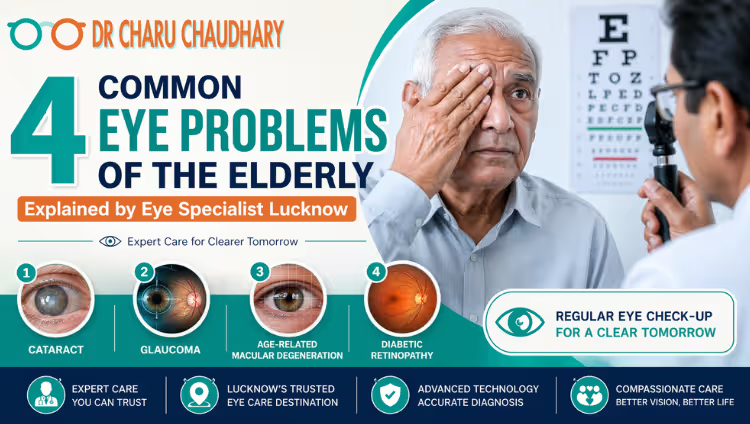
The most common eye problems in elderly people include cataracts, glaucoma, age-related macular degeneration (AMD), and diabetic retinopathy. You should see an eye doctor immediately if you experience sudden blurred vision, eye pain, “flashes” of light, or a sudden increase in floaters, as these can signal serious conditions requiring urgent care. As we grow older, our bodies undergo many changes. We might notice our hair turning grey or our joints becoming a bit stiffer. Just like the rest of our body, our eyes also age. While some changes are a normal part of getting older, others can lead to serious vision loss if not treated in time. As an experienced eye specialist in Lucknow, Dr Charu Chaudhary, I have spent years helping seniors regain their sight and maintain their independence. I believe that understanding your eyes is the first step toward protecting them. In this guide, I will explain the four most common eye problems seen in the elderly and how we can manage them together. Why Eye Problems Increase With Age Our eyes are like high-precision cameras. Over time, the “lens” can get cloudy, the “film” (the retina) can wear out, and the “cables” (the optic nerve) can get damaged. Natural Aging of the Eye Starting in our 40s and 50s, the lens inside the eye becomes less flexible. This is why most people start needing reading glasses—a condition called presbyopia. However, as we enter our 60s and 70s, the changes become more significant. The muscles that control our pupils weaken, making our eyes less responsive to light. This is why many seniors feel they need “brighter lights” to read or perform tasks. Reduced Vision Clarity You might notice that colors look a bit duller or that it is harder to tell the difference between similar colors (like dark blue and black). Night vision also tends to decline. While these can be normal, they can also be early warning signs of the conditions we are about to discuss. A Real-Life Example: I remember a patient, Mr. Kapoor, a retired teacher in Lucknow. He stopped driving at night because the “glare” from oncoming headlights was too much. He thought it was just “old age” and waited two years to see me. When he finally visited, we found he had advanced cataracts. After a simple procedure, he told me, “Doctor, I didn’t realize the world was this bright!” Delaying treatment only made his life harder than it needed to be. Common Eye Problem #1 – Cataract A cataract is perhaps the most well-known age-related eye issue. It is the leading cause of vision loss worldwide, but the good news is that it is completely treatable. What is it? Inside your eye is a clear lens that focuses light. As we age, the proteins in this lens begin to clump together. Think of it like a clear window slowly becoming “foggy” or “frosted.” Eventually, it becomes difficult for light to pass through. Symptoms Treatment Options There are no eye drops or medicines that can “clear” a cataract. The only effective treatment is a small surgery where the cloudy lens is replaced with a clear artificial lens. Modern technology has made this a very safe, 10–15 minute procedure. As a leading eye surgeon in Lucknow, Dr Charu Chaudhary, I use advanced techniques that allow patients to return home the same day and recover very quickly. Common Eye Problem #2 – Glaucoma Glaucoma is often called the “Silent Thief of Sight.” This is because it usually has no symptoms in the early stages, but if left untreated, it can cause permanent blindness. Silent Vision Loss Glaucoma happens when the fluid pressure inside the eye rises too high. This pressure damages the optic nerve, which is the “cable” that sends images from your eye to your brain. Because the damage starts with your side (peripheral) vision, you might not notice anything is wrong until most of your sight is gone. The Importance of Early Detection You cannot “feel” the pressure in your eye. The only way to find glaucoma is through a comprehensive eye exam. If we catch it early, we can usually manage it with simple daily eye drops. Who is at risk? If you haven’t had your eye pressure checked recently, you should visit the best eye specialist in Lucknow for a screening. Common Eye Problem #3 – Age-Related Macular Degeneration (AMD) While cataracts affect the “lens” of the eye, AMD affects the “film”—the retina. Specifically, it affects a tiny spot in the center of the retina called the macula. Central Vision Loss The macula is responsible for your “straight-ahead” vision. It is what allows you to read, sew, drive, and recognize faces. When someone has AMD, they might see a dark spot or a “blur” in the very center of their vision, while their side vision remains clear. Difficulty Recognizing Faces One of the most heartbreaking parts of AMD is that patients find it hard to see the faces of their grandchildren or friends. Straight lines might also look wavy or crooked. Risk Factors For advanced cases of AMD, you should consult a retina specialist in Lucknow for advanced care. There are now injections and laser treatments that can help slow down the disease and save your remaining vision. Common Eye Problem #4 – Diabetic Retinopathy India is often called the “diabetes capital of the world,” and Lucknow is no exception. If you have diabetes, your eyes are at high risk. Impact of Diabetes on Eyes High blood sugar levels damage the tiny blood vessels inside the retina. These vessels can swell and leak fluid, or they can even close off entirely. In response, the eye tries to grow new, weak blood vessels that bleed easily, causing severe vision damage. The Need for Regular Checkups In the early stages, diabetic retinopathy may cause no symptoms or only mild vision problems. However, it can lead to total blindness. If you have diabetes, you must have a “dilated eye exam” at least once a year. Early diagnosis by a retina
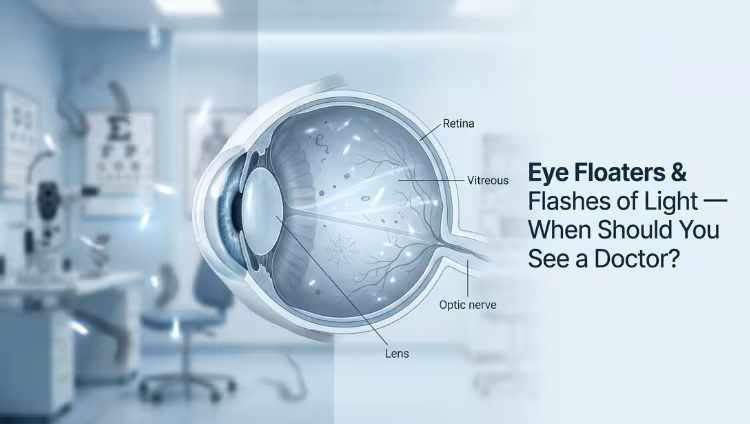
Eye Floaters & Flashes of Light You should see an eye doctor immediately if you notice a sudden increase in floaters, frequent flashes of light, or a dark shadow covering part of your vision. These can be signs of a retinal tear. Getting an eye checkup in Lucknow early can prevent permanent vision loss. Have you ever looked at a clear blue sky or a white wall and noticed specks or cobweb-like shapes drifting across your vision? You try to look directly at them, but they zip away. These are called eye floaters. At other times, you might see quick “lightning bolts” or “camera flashes,” even in a dark room. These are known as flashes. As an ophthalmologist, I often meet patients who are worried about these symptoms. My name is Dr. Charu Chaudhary, and I have spent years helping people protect their sight. If you are looking for the best eye surgeon in Lucknow, her team is here to guide you through these changes with care and expertise. In this guide, we will talk about what floaters and flashes are, why they happen, and—most importantly—when they mean you need to see a specialist for the best retina treatment in Lucknow. Eye Floaters: What They Are, Causes & Treatment Most eye floaters are a normal part of getting older. To understand them, imagine your eye is like a small ball filled with a clear, jelly-like substance called the “vitreous.” When we are young, this jelly is thick and firm. But as we age, the jelly starts to liquefy and shrink. When it shrinks, tiny clumps of protein or collagen form inside the eye. These clumps cast shadows on your retina (the light-sensitive layer at the back of the eye). What you “see” aren’t actually bugs or dust—they are the shadows of these tiny clumps. Are They Dangerous? In most cases, floaters are harmless. They are like gray hairs for the eyes—a sign of time passing. Most people get used to them, and the brain eventually learns to ignore them. However, they never truly “go away” on their own; they just settle at the bottom of the eye. When is Treatment Needed? Treatment is rarely needed for standard floaters. However, if they become so thick that they block your vision, a procedure might be considered. But before any treatment, a comprehensive eye checkup in Lucknow is necessary to ensure the rest of your eye is healthy. Are Eye Flashes Dangerous? When Should You Worry Flashes of light (medically called photopsia) feel like a flicker of lightning or a “spark” in the corner of your eye. Why Do Flashes Happen? Flashes occur when the vitreous jelly pulls or rubs against the retina. Think of the retina like a touch-sensitive screen. If the jelly tugs on it, the retina sends a signal to the brain, which the brain interprets as a flash of light. When to Worry While occasional flashes can happen as the jelly shifts with age, frequent or constant flashes are a red flag. If the jelly pulls too hard, it can tear the retina. This is a serious condition that requires immediate attention from an expert to receive retina treatment in Lucknow. Types of Eye Floaters and What They Mean Not all floaters look the same. Patients often describe them in different ways: Causes of Eye Floaters and Flashes Understanding the “why” can help ease your mind. Here are the most common causes: When Should You See a Doctor? (Critical Section) This is the most important part of this guide. While floaters are often normal, they can sometimes be a warning sign of a retinal detachment—a condition where the retina pulls away from the back of the eye. If not treated quickly, this can lead to permanent blindness. 👉 See a doctor immediately if you notice: If you experience any of these, do not wait. Seeking an immediate eye checkup in Lucknow can save your sight. Early diagnosis is the key to successful treatment. Diagnosis and Treatment Options When you visit a clinic for these symptoms, what should you expect? As the best eye surgeon in Lucknow, he ensures every patient undergoes a thorough, painless examination. 1. Dilated Eye Exam We use special eye drops to widen (dilate) your pupils. This allows us to look deep into the back of your eye to check the health of your retina and the vitreous jelly. 2. Laser Treatment If we find a small “retinal tear,” we can often fix it right in the clinic using a laser. This “welds” the tear shut and prevents it from turning into a full detachment. This is part of providing the Laser treatment in Lucknow. 3. Surgery (Vitrectomy) In severe cases where the retina has detached or there is a lot of blood in the eye, surgery may be needed to remove the jelly and repair the retina. Can Eye Floaters Be Prevented? While you cannot stop the natural aging of your eyes, you can take steps to keep your eyes strong and catch problems early: Tips to Protect Your Eye Health Daily Caring for your eyes is a daily habit. Here are some simple tips I share with all my patients: FAQs Section 1. Can eye floaters go away on their own? Floaters don’t actually disappear, but they often settle below your line of vision. Also, your brain is very smart—it eventually learns to ignore them, making them much less noticeable over time. 2. When should I worry about eye floaters and flashes? You should worry if the symptoms are sudden. One or two old floaters are fine, but a “burst” of new floaters combined with flashes of light is an emergency. 3. What type of doctor should I see for floaters and flashes? You should see an ophthalmologist or a retina specialist. Someone recognized as the best eye surgeon in Lucknow – Dr. Charu Chaudhary can provide the advanced diagnostic tools needed for an accurate checkup. 4. How long do floaters and flashes last? Floaters are usually permanent but become less annoying over weeks or months. Flashes caused by the