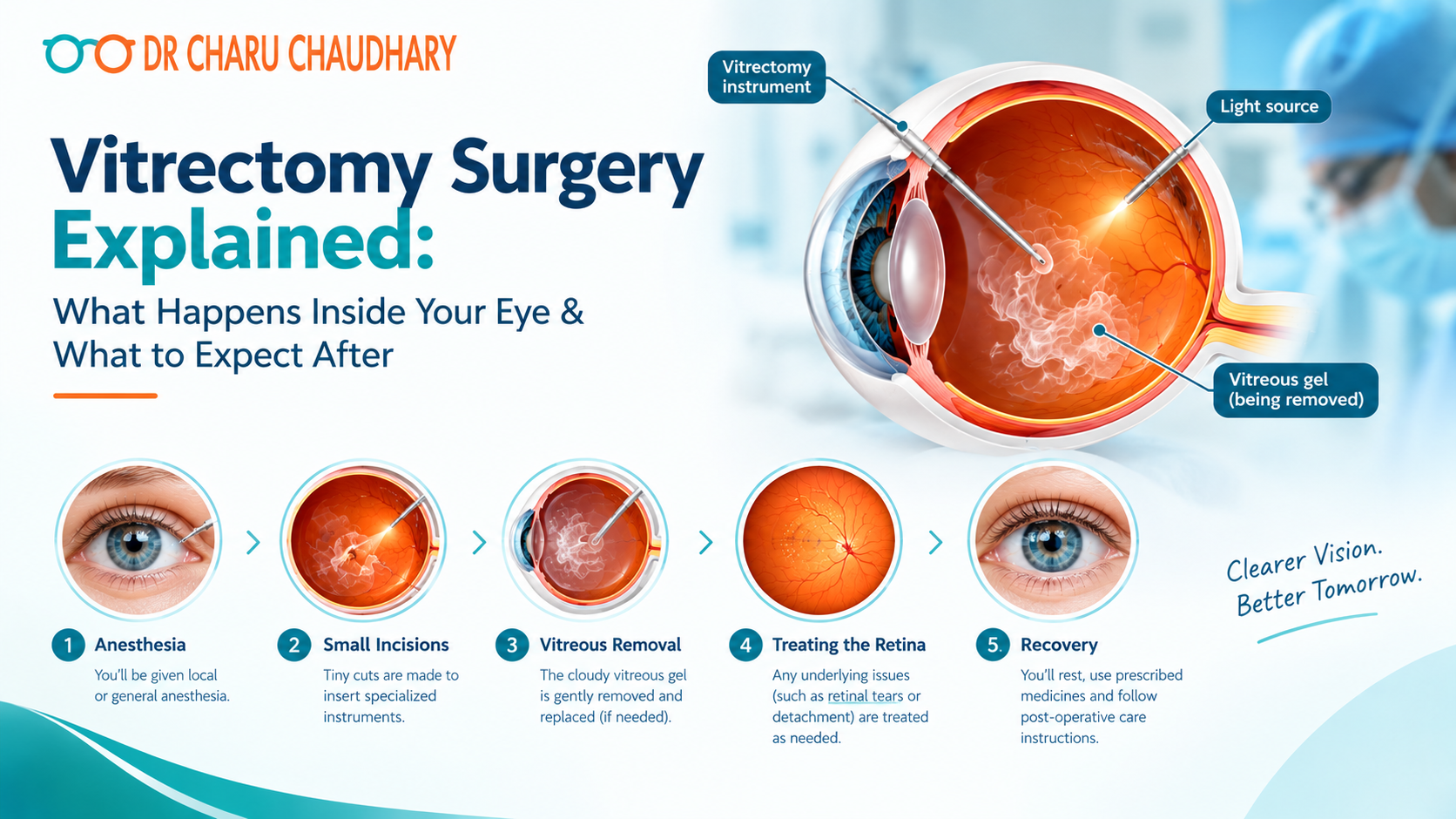
When your retina specialist tells you that you need a vitrectomy, the first reaction most patients have is fear – not because the word sounds serious (though it does), but because nobody has explained what it actually means. What is being removed? Will it hurt? Will you be awake? Will your vision come back? These are the questions I hear every week in my clinic at Medanta Lucknow. And they deserve honest, detailed answers – not medical jargon that leaves you more confused than when you walked in. In this post, I want to explain vitrectomy surgery from the ground up: what it is, why it is done, exactly what happens during the procedure, and what your recovery will realistically look like. If you or someone you love has been advised to have this surgery, read this first. What Is Vitrectomy Surgery? The word “vitrectomy” comes from vitreous – the clear, gel-like substance that fills the inside of your eye – and ectomy, meaning surgical removal. So at its most basic level, a vitrectomy is a procedure in which the vitreous gel inside your eye is carefully removed and replaced. But why would anyone need to remove something that is supposed to be there? The vitreous humor is mostly water and collagen. In a healthy young eye, it sits firmly against the retina. As we age – or due to disease, injury, or diabetes – this gel can bleed into itself, develop scar tissue, pull on the retina, or cloud over. When that happens, it stops being helpful and starts causing damage. Removing it gives the surgeon direct access to the retina to repair whatever is wrong, and the eye adapts remarkably well to its absence. When Is Vitrectomy Needed? – Conditions That Require This Surgery Vitrectomy is not a single-purpose procedure. It is used to treat a range of serious retinal and vitreous conditions, including: Retinal Detachment: When the retina peels away from the back of the eye, a vitrectomy allows the surgeon to gently peel scar tissue, flatten the retina, and seal it back in place. Vitreous Hemorrhage: Bleeding inside the eye – most commonly from diabetic retinopathy – clouds the vitreous with blood, blocking vision. Vitrectomy removes the blood-filled gel and restores clarity. Diabetic Tractional Retinal Detachment: In advanced diabetic eye disease, scar tissue contracts and pulls the retina. Vitrectomy removes this scar tissue before permanent damage occurs. Macular Hole: A hole that develops in the central retina (macula) – affecting reading and fine detail vision – can be closed with vitrectomy combined with a gas bubble. Epiretinal Membrane (Macular Pucker): A thin layer of scar tissue grows over the macula, wrinkling it and distorting vision. Vitrectomy allows the membrane to be peeled away with fine forceps. Endophthalmitis: Severe infection inside the eye requires vitrectomy to remove infected material and deliver antibiotics directly. Foreign Body Removal: Objects that have entered the eye through trauma can be safely removed via vitrectomy. In each of these cases, no other approach gives the surgeon the access, visibility, and control that vitrectomy provides. Step by Step: What Actually Happens During Vitrectomy Surgery This is the part most patients are most anxious about. Let me walk you through it exactly as it happens. Before Surgery You will be asked to fast for a few hours before the procedure. Dilating eye drops will be applied to widen your pupil so the surgeon can see clearly. The area around your eye will be cleaned and sterile drapes placed. Most vitrectomies are performed under local anaesthesia with sedation – meaning your eye is completely numb, you are relaxed and comfortable, but you are not under general anaesthesia. You may be aware of light and some movement but you will feel nothing. The Procedure – Three Small Incisions Modern vitrectomy is performed through three tiny incisions (called ports) made in the white of the eye (sclera), each less than 1mm in size. Through these three ports, the surgeon introduces: A light pipe to illuminate the inside of the eye An infusion cannula to maintain eye pressure throughout surgery The vitrectomy cutter – a microsurgical instrument that simultaneously cuts and suctions the vitreous gel out of the eye at up to 10,000 cuts per minute Working under a high-powered microscope, the surgeon removes the vitreous gel, then addresses the underlying condition – peeling membranes, sealing retinal tears with laser, flattening a detached retina, or removing scar tissue. Tamponade – Holding the Retina in Place Once the repair is done, the space left by the removed vitreous needs to be filled with something that holds the retina flat while it heals. The choice depends on the condition being treated: Gas bubble (SF6 or C3F8): Absorbs naturally over 2–8 weeks. During this time, patients must maintain a specific head position so the bubble stays against the repaired area. Silicone oil: Used in complex or high-risk cases. More durable than gas, but requires a second minor procedure to remove it once healing is complete, typically after 3–6 months. Balanced salt solution: Used in simpler cases where no tamponade is required. The three tiny ports are then closed – often without stitches in modern small-gauge surgery – and a patch is placed over the eye. Total surgical time: typically 1 to 3 hours, depending on the complexity of the underlying condition. Will It Hurt? During the surgery, no – the eye is fully anaesthetised. You may feel some pressure or movement, but pain is not expected. After surgery, mild aching or a gritty sensation is common for the first 24–48 hours and is managed with prescribed pain relief and anti-inflammatory drops. Vitrectomy Recovery: A Realistic Week-by-Week Guide Recovery from vitrectomy is where patient commitment matters most. What you do in the weeks after surgery significantly affects your outcome. Day 1–3: Your eye will be red, swollen, and your vision will be very blurry – particularly if a gas bubble was used. The bubble creates a dark, watery shadow in your ...
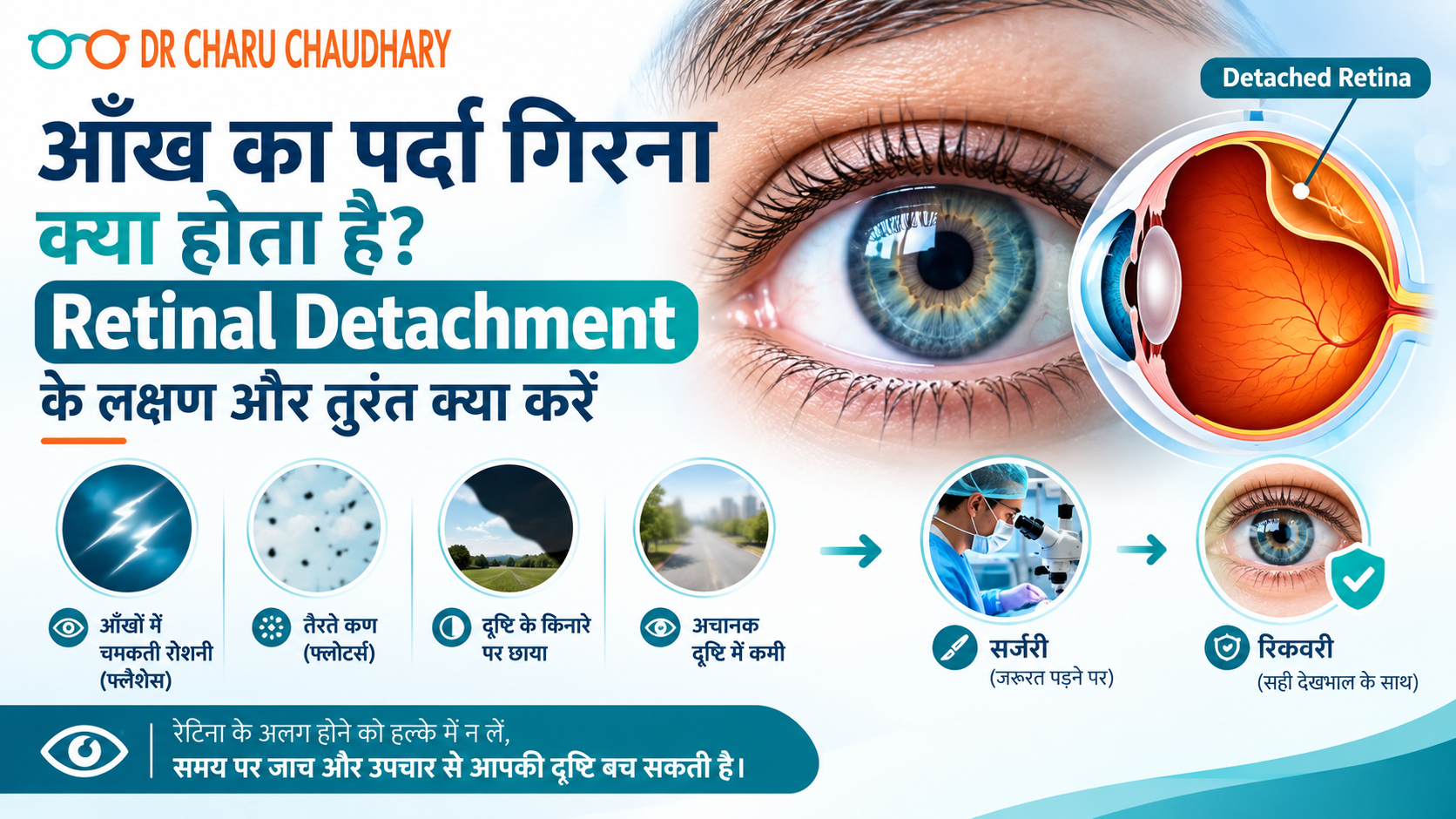
कल्पना कीजिए – आप सुबह उठते हैं और अचानक महसूस होता है कि एक आँख के सामने काला पर्दा गिर रहा है। या शायद रात में आपको बिजली जैसी चमक दिखी और सोचा “थकान होगी।” अगले दिन उसी आँख से धुंधला दिखने लगा। अधिकतर लोग इसे नज़रअंदाज़ कर देते हैं। यही सबसे बड़ी गलती है। जो आप महसूस कर रहे थे, वह Retinal Detachment – यानी आँख का पर्दा गिरना – के शुरुआती संकेत थे। और यह एक ऐसी medical emergency है जिसमें हर घंटा महत्वपूर्ण होता है। मैं Dr. Charu Chaudhary हूँ, Lucknow के Medanta Hospital में Vitreoretinal Surgeon। अपने वर्षों के अनुभव में मैंने देखा है कि जो मरीज़ 24–48 घंटे के भीतर आते हैं, उनकी रोशनी बचाई जा सकती है। जो देर करते हैं – उनके लिए रास्ता बहुत मुश्किल हो जाता है। इस blog में मैं आपको सरल भाषा में बताऊँगी कि आँख का पर्दा गिरना क्या होता है, इसके लक्षण क्या हैं, और सबसे ज़रूरी – इस स्थिति में आपको तुरंत क्या करना चाहिए। रेटिना क्या होती है और वह इतनी ज़रूरी क्यों है? आँख को एक camera की तरह समझिए। जिस तरह camera में film होती है जो तस्वीर कैद करती है – उसी तरह आँख में retina होती है। यह एक पतली, नाज़ुक परत होती है जो आँख के पिछले हिस्से में होती है। जब भी कोई रोशनी आँख में आती है, रेटिना उसे electrical signals में बदलता है और इन signals को Optic Nerve के ज़रिए दिमाग तक पहुँचाता है। दिमाग इन्हें image के रूप में पहचानता है – और आपको दिखता है। अगर यही रेटिना अपनी जगह से हट जाए – तो signal टूट जाता है। दृष्टि धुंधली हो जाती है, गायब हो सकती है, और बिना इलाज के हमेशा के लिए जा सकती है। आँख का पर्दा गिरता क्यों है – मुख्य कारण Retinal Detachment अचानक होता है, लेकिन इसके पीछे कुछ जोखिम कारण होते हैं जिनके बारे में आपको पहले से जानकारी होनी चाहिए: चोट या Trauma: आँख पर तेज़ चोट लगने से, पटाखे फूटने से, या खेल के दौरान चोट लगने से रेटिना खिंच सकती है और अपनी जगह से हट सकती है। High Myopia (तेज़ चश्मा): जिन लोगों का नंबर -6 या उससे अधिक है, उनकी आँख का आकार सामान्य से बड़ा होता है। इससे रेटिना पर खिंचाव रहता है और detachment का खतरा बढ़ जाता है। Diabetes: लम्बे समय से बेकाबू शुगर रेटिना की नसों को कमज़ोर करती है। इसे Diabetic Retinopathy कहते हैं – और यह Retinal Detachment का एक बड़ा कारण बन सकती है। बढ़ती उम्र: उम्र के साथ आँख के अंदर का gel (Vitreous) सिकुड़ता है और रेटिना को खींच सकता है। 50 वर्ष से अधिक उम्र के लोगों में यह ज़्यादा देखा जाता है। पहले का Retinal Detachment: एक आँख में हो चुका है तो दूसरी आँख में भी जोखिम बढ़ जाता है। पारिवारिक इतिहास: परिवार में किसी को हो चुका है तो आपको नियमित जाँच करानी चाहिए। आँख का पर्दा गिरने के लक्षण – जिन्हें कभी नज़रअंदाज़ न करें यह वह हिस्सा है जिसे मैं सबसे ज़्यादा ज़ोर देकर बताना चाहती हूँ। Retinal Detachment में दर्द नहीं होता—यही इसे इतना खतरनाक बनाता है। लोग सोचते हैं “दर्द नहीं तो गंभीर नहीं होगा।” यह सोच गलत है। इन लक्षणों में से कोई भी दिखे – तुरंत doctor के पास जाएँ: अचानक बहुत सारे काले धब्बे या जाले दिखना (Floaters) हाँ, कुछ floaters सामान्य हो सकते हैं। लेकिन अगर अचानक बहुत सारे नए floaters एक साथ दिखें – जैसे मकड़ी का जाला या काली बिंदियाँ तैर रही हों – तो यह रेटिना में खिंचाव या टूटन का संकेत है। बिजली जैसी चमक दिखना (Flashes of Light) आँखें बंद करने पर या अंधेरे में भी चमक दिखे – जैसे camera flash हो। यह इस बात का संकेत है कि Vitreous रेटिना को खींच रहा है। आँख के सामने काला पर्दा या छाया आना ऐसा महसूस हो जैसे किसी ने एक तरफ से curtain खींच दिया हो। पहले side vision जाती है, फिर धीरे-धीरे बीच का हिस्सा भी ढकने लगता है। यह सबसे serious लक्षण है। इस स्थिति में हर मिनट मायने रखता है। अचानक धुंधला दिखना, सिर्फ एक आँख से अचानक एक आँख से कम या धुंधला दिखना – और यह चश्मा लगाने पर भी ठीक न हो। यह इतनी बड़ी Emergency क्यों है? रेटिना एक जीवित tissue है। जब यह अपनी जगह से हट जाती है, तो उसे blood supply मिलनी बंद हो जाती है। जिस तरह खून न मिलने पर कोई भी अंग मरने लगता है – उसी तरह रेटिना की कोशिकाएँ भी मरने लगती हैं। पहले 24 घंटे: अगर पर्दा centre (Macula) तक नहीं पहुँचा, तो surgery के बाद अच्छी रोशनी वापस आने की संभावना बहुत अधिक है। 24–72 घंटे: Macula तक पहुँचने के बाद रोशनी वापस आना मुश्किल होने लगता है। 72 घंटे से अधिक: रेटिना की कोशिकाएँ स्थायी रूप से मर सकती हैं। रोशनी का नुकसान permanent हो सकता है। इसीलिए Retinal Detachment को हम “Golden Hour Emergency” कहते हैं। तुरंत क्या करें – Step by Step अगर आपको या आपके किसी परिवार वाले को ऊपर दिए गए लक्षण दिखें: Step 1: आँख को मलें नहीं, दबाएँ नहीं। Step 2: दोनों आँखें बंद करके शांत रहें – ज़्यादा eye movement से रेटिना खिंच सकता है। Step 3: कोई भी घरेलू उपाय, eye drop, या “देखते हैं कल” – यह सब बंद करें। Step 4: तुरंत किसी Vitreoretinal Specialist से मिलें। General physician या chemist के पास जाने का वक्त नहीं है। Lucknow में हैं तो अभी appointment book करें – हम emergency cases को उसी दिन देखते हैं। Diagnosis कैसे होती है? जब आप clinic आते हैं, तो हम कुछ ज़रूरी जाँचें करते हैं: Dilated Fundus Examination: आँख की पुतली को drops से बड़ा करके रेटिना को सीधे देखा जाता है। B-Scan Ultrasound: अगर आँख के अंदर खून है या साफ नहीं दिख रहा, तो Ultrasound से रेटिना की स्थिति देखी जाती है। OCT (Optical Coherence Tomography): रेटिना की परतों की detailed imaging – यह बताता है कि कितना नुकसान हुआ है। ये सब जाँचें दर्द रहित हैं ...
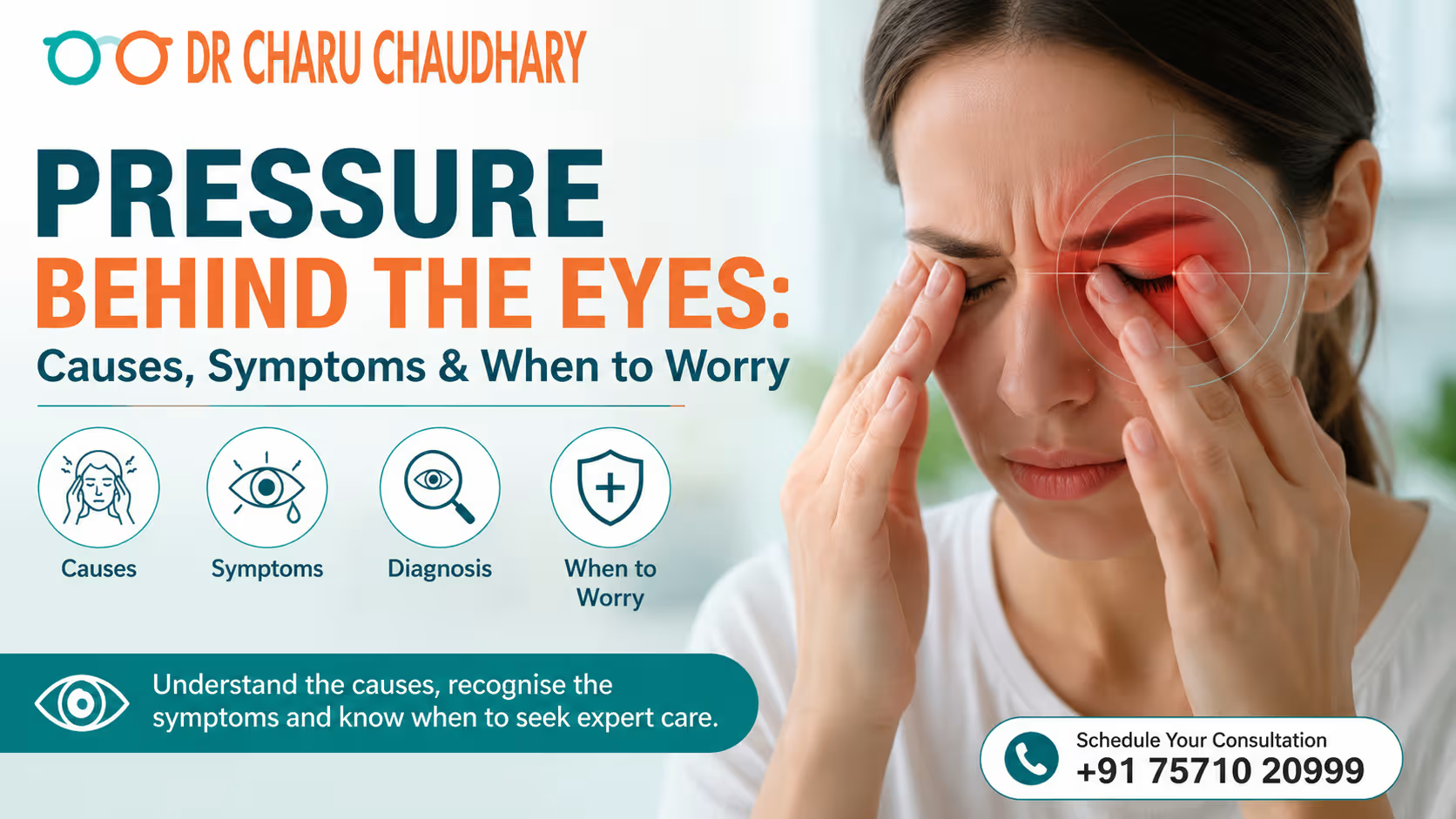
Pressure behind the eyes can feel like heaviness, aching, tightness, or a sensation that something is pushing from inside or around the eyes. Sometimes it is temporary and related to eye strain, sinus congestion, headaches, or fatigue. However, persistent or severe pressure—especially when accompanied by eye pain, redness, blurred vision, halos, nausea, or sudden vision changes—can indicate a condition that needs prompt medical evaluation. Importantly, the feeling of pressure behind the eyes does not always mean that your intraocular pressure (IOP) is high. High eye pressure often causes no noticeable symptoms and can only be identified through an eye examination and pressure measurement. If you frequently experience pressure behind your eyes, understanding the possible causes can help you know when it is time to consult an eye specialist. What Does Pressure Behind the Eyes Feel Like? People may describe eye pressure in different ways, including: A dull ache behind one or both eyes Heaviness around the eyes Tightness or fullness Pain when moving the eyes Headache around the forehead or temples Burning or tired eyes Blurred or fluctuating vision Sensitivity to light A feeling of pressure when bending forward The exact symptoms often depend on the underlying cause. Common Causes of Pressure Behind the Eyes 1. Eye Strain and Digital Eye Fatigue Long hours on computers, smartphones, or tablets can cause eye fatigue. Concentrating on a screen may also reduce blinking, contributing to dryness and discomfort. Common symptoms include: Tired eyes Dryness or burning Temporary blurred vision Headache Difficulty focusing Pressure or heaviness around the eyes Taking regular screen breaks and adjusting screen distance, brightness, and lighting may help. 2. Sinus Congestion or Sinusitis The sinuses are located around the eyes, nose and forehead. Inflammation or congestion can create pressure or aching around these areas. Sinus pressure commonly occurs with colds, allergies, or sinus infections. You may also experience: Blocked or runny nose Facial pressure Forehead pain Headache Postnasal drip Reduced sense of smell If severe sinus pressure persists or is associated with significant symptoms, medical evaluation may be appropriate. 3. Migraine or Other Headaches Migraines can cause pain around or behind one eye. Some people also experience: Throbbing headache Nausea Light sensitivity Sound sensitivity Visual disturbances The discomfort may occur even when there is no problem with the eye itself. 4. Dry Eyes Insufficient or poor-quality tears can cause irritation and a sensation of heaviness or pressure around the eyes. Typical symptoms include: Burning Gritty sensation Redness Watery eyes Blurred vision Eye fatigue Screen use, air conditioning, smoke and environmental factors can aggravate dry-eye symptoms. 5. Ocular Hypertension Ocular hypertension means that the pressure inside the eye is higher than normal without detectable optic nerve damage at that point. A key point is that ocular hypertension generally does not cause noticeable symptoms. It is usually discovered during an eye examination. This is why simply feeling pressure behind your eyes cannot tell you whether your eye pressure is actually elevated. 6. Glaucoma Glaucoma involves damage to the optic nerve. Increased eye pressure is an important risk factor, although glaucoma can also occur when eye pressure is within the usual range. Early glaucoma may have few or no symptoms. As the disease progresses, symptoms can include: Gradual loss of peripheral vision Blind spots Blurred vision Headache Eye discomfort or pressure Certain forms, particularly acute angle-closure glaucoma, can cause sudden severe symptoms and require immediate treatment. 7. Eye Inflammation or Infection Conditions affecting structures inside or around the eye can cause pain, pressure, redness and light sensitivity. Possible accompanying symptoms include: Significant eye redness Eye pain Light sensitivity Watery eyes Blurred vision Swelling These symptoms should not be ignored, particularly when vision is affected. 8. Problems Around the Eye Socket Less commonly, inflammation, thyroid-related eye disease, injury, or other conditions affecting tissues behind the eye can produce pressure, discomfort or a feeling of fullness. Bulging of the eye, double vision, reduced vision, swelling, or difficulty moving the eye warrants medical assessment. Pressure Behind the Eyes: Cause vs Typical Symptoms Possible CauseCommon Associated SymptomsUrgencyEye strainTired eyes, headache, drynessUsually lowSinus pressureBlocked nose, facial pressure, headacheUsually low–moderateMigraineHeadache, nausea, light sensitivityVariesDry eyeBurning, gritty feeling, fluctuating visionUsually lowOcular hypertensionOften no symptomsNeeds eye evaluationGlaucomaVision changes, peripheral vision lossNeeds evaluationAcute angle-closure glaucomaSevere pain, red eye, halos, nauseaEmergencySerious eye inflammation/injuryPain, redness, light sensitivity, blurred visionPrompt evaluation This comparison is educational; symptoms can overlap between conditions, so a proper eye examination is needed for diagnosis. When Is Pressure Behind the Eyes a Warning Sign? Seek urgent medical attention if pressure behind the eye occurs with: Sudden or severe eye pain Sudden vision loss or significant vision changes A very red eye with pain Rainbow-colored halos around lights Nausea or vomiting with eye pain New double vision Significant swelling around the eye Sudden bulging of the eye New flashes or a sudden increase in floaters Severe headache with visual symptoms Acute angle-closure glaucoma can cause sudden eye pain or pressure, redness, blurred vision, halos and nausea/vomiting and is considered a medical emergency. Sudden vision loss, severe eye pain, or new flashes and floaters should also be assessed urgently. How Is Pressure Behind the Eyes Diagnosed? Because several conditions can produce similar sensations, an ophthalmologist may use multiple tests. Step 1: Medical and Eye History Your doctor may ask: When did the pressure begin? Is it in one eye or both? Is it constant or intermittent? Do you have headaches or sinus symptoms? Has your vision changed? Are you using contact lenses? Have you had an eye injury? Do you have a family history of glaucoma? Step 2: Comprehensive Eye Examination The doctor may examine the cornea, conjunctiva, pupils, lens, retina and optic nerve. Step 3: Measure Eye Pressure Tonometry measures intraocular pressure. Common methods include non-contact air-puff testing and contact-based measurements. Step 4: Check the Optic Nerve and Retina If glaucoma or another retinal/optic nerve condition is suspected, additional examinations may be recommended. Step 5: Additional Tests When Required Depending on your symptoms, your ophthalmologist may recommend: Visual field testing OCT ...
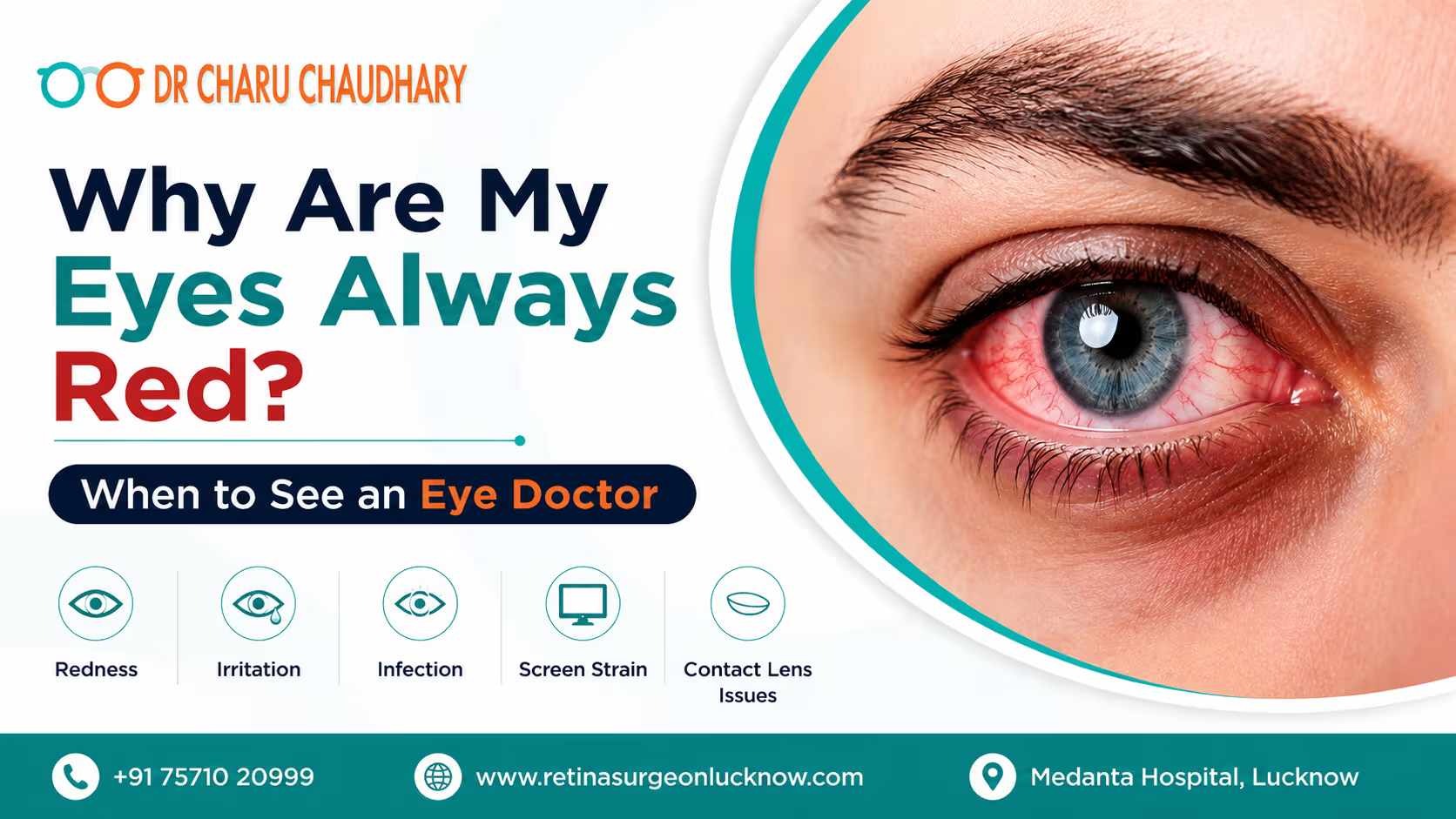
If your eyes are always red, the cause may be dry eyes, allergies, prolonged screen time, contact lens irritation, conjunctivitis, or another eye condition. Mild redness may improve with rest, but persistent redness—especially with pain, light sensitivity, discharge, or vision changes—should be evaluated by an eye doctor. Red eyes are one of the most common eye complaints. Sometimes they are temporary and harmless, such as after a sleepless night or long hours in front of a screen. However, eyes that remain red or become red repeatedly may indicate an underlying problem that needs proper treatment. Understanding the possible red eyes causes can help you know when simple eye care is enough and when you should consult an ophthalmologist. What Does Eye Redness Mean? Eye redness occurs when the small blood vessels on the surface of the eye become enlarged, irritated, or inflamed. This makes the normally white part of the eye appear pink or red. Eye redness can affect one or both eyes and may occur with other symptoms, including: Itching Burning or stinging Excessive watering Dryness or gritty sensation Eye discharge Swollen eyelids Eye pain Sensitivity to light Blurred or reduced vision A feeling that something is stuck in the eye The severity and combination of symptoms can provide clues about the possible cause. However, symptoms alone cannot always identify the problem. If your eyes are always red or frequently become red without an obvious reason, an eye examination can help determine the underlying cause. Common Red Eyes Causes There are many possible causes of eye redness. Some are minor and temporary, while others require medical treatment. 1. Dry Eyes Dry eye is a common reason for persistent redness. It can occur when the eyes do not produce enough tears or when tears evaporate too quickly. Dry eyes may cause: Redness Burning Grittiness Excessive watering Eye fatigue Blurred vision that may come and go Long screen hours, reduced blinking, air conditioning, pollution and certain environmental conditions can contribute to dry eye symptoms. 2. Eye Allergies Allergic conjunctivitis can cause red, itchy and watery eyes. Common triggers include dust, pollen, pet dander, smoke and other allergens. Intense itching is particularly common with eye allergies. Allergy-related redness often affects both eyes. 3. Conjunctivitis or Pink Eye Conjunctivitis occurs when the conjunctiva becomes inflamed. Viruses, bacteria or allergies can cause it. Possible symptoms include: Redness Watering Eye discharge Swollen eyelids Irritation Itching Viral and bacterial conjunctivitis can be contagious, so good hand hygiene and avoiding shared towels or cosmetics are important. 4. Prolonged Screen Time Long hours on computers, smartphones and other digital devices can contribute to digital eye strain. When concentrating on a screen, people often blink less frequently. Reduced blinking can destabilize the tear film and cause dryness and irritation, which may make the eyes look red. 5. Lack of Sleep Insufficient sleep can leave the eyes looking tired, dry and bloodshot. Occasional redness after a late night usually improves with adequate sleep and hydration. However, frequent redness should not automatically be blamed on lack of sleep. 6. Contact Lens Problems Contact lenses can cause redness when they are worn incorrectly or for longer than recommended. Poor lens hygiene, sleeping in unsuitable lenses, using expired lenses, improper cleaning or continuing to wear lenses despite irritation can increase the risk of eye-surface problems and infection. 7. Foreign Body or Eye Injury Dust, sand, chemicals or another foreign object can irritate the eye and cause sudden redness. Do not rub the eye because rubbing can worsen irritation or potentially damage the cornea. Chemical exposure to the eye requires prompt medical attention. 8. Other Eye Conditions In some cases, red eyes may be associated with more significant conditions involving the cornea, uvea, intraocular pressure or other eye structures. This is particularly important when redness occurs with pain, blurred vision, light sensitivity, nausea, halos around lights or other sudden changes in vision. Symptoms That May Point to the Cause The symptoms occurring alongside redness can provide useful clues, although only an eye examination can establish the diagnosis. SymptomsPossible CauseRedness + intense itchingEye allergyRedness + watery dischargeAllergy or viral conjunctivitisRedness + thick dischargePossible bacterial conjunctivitisRedness + burning or grittinessDry eye or irritationRedness + contact lens useLens-related irritation or infectionRedness + significant painRequires prompt evaluationRedness + blurred visionNeeds medical assessmentRedness + light sensitivityMay indicate a more significant eye problemRedness after an injuryPossible eye traumaRedness + sudden vision changesUrgent eye assessment may be required These associations are only general indicators. Avoid self-diagnosing based on symptoms alone. Can Contact Lenses Cause Redness? Yes, contact lenses can cause eye redness, particularly when they are not used or maintained correctly. Common reasons include: Wearing lenses longer than recommended Sleeping in lenses when they are not designed for overnight wear Touching lenses with unwashed hands Poor lens cleaning practices Using expired lenses or lens solution Wearing damaged lenses Failing to replace the lens case as recommended Continuing to wear lenses when the eyes become irritated Contact lens wearers should pay particular attention to painful red eyes. If you develop significant redness, pain, light sensitivity, discharge or reduced vision while wearing contact lenses, remove the lenses and seek professional eye care promptly. Do not simply use redness-relieving drops and continue wearing the lenses. Eye Allergy or Eye Infection: How Are They Different? Eye allergies and eye infections can produce similar symptoms, making it difficult to distinguish between them without an examination. Eye Allergy Eye allergies commonly cause: Intense itching Redness Watery eyes Puffy or swollen eyelids Symptoms in both eyes Symptoms may worsen after exposure to dust, pollen, smoke, pets or other allergens. Eye Infection An eye infection may cause: Redness Eye discharge Watering Eyelid swelling Irritation Sometimes pain or light sensitivity Viral conjunctivitis often causes watery discharge, while bacterial conjunctivitis may produce thicker discharge. However, these symptoms can overlap. Antibiotic eye drops should not be started simply because the eye is red, because antibiotics do not treat viral or allergic causes. An ophthalmologist can determine the likely cause and recommend ...
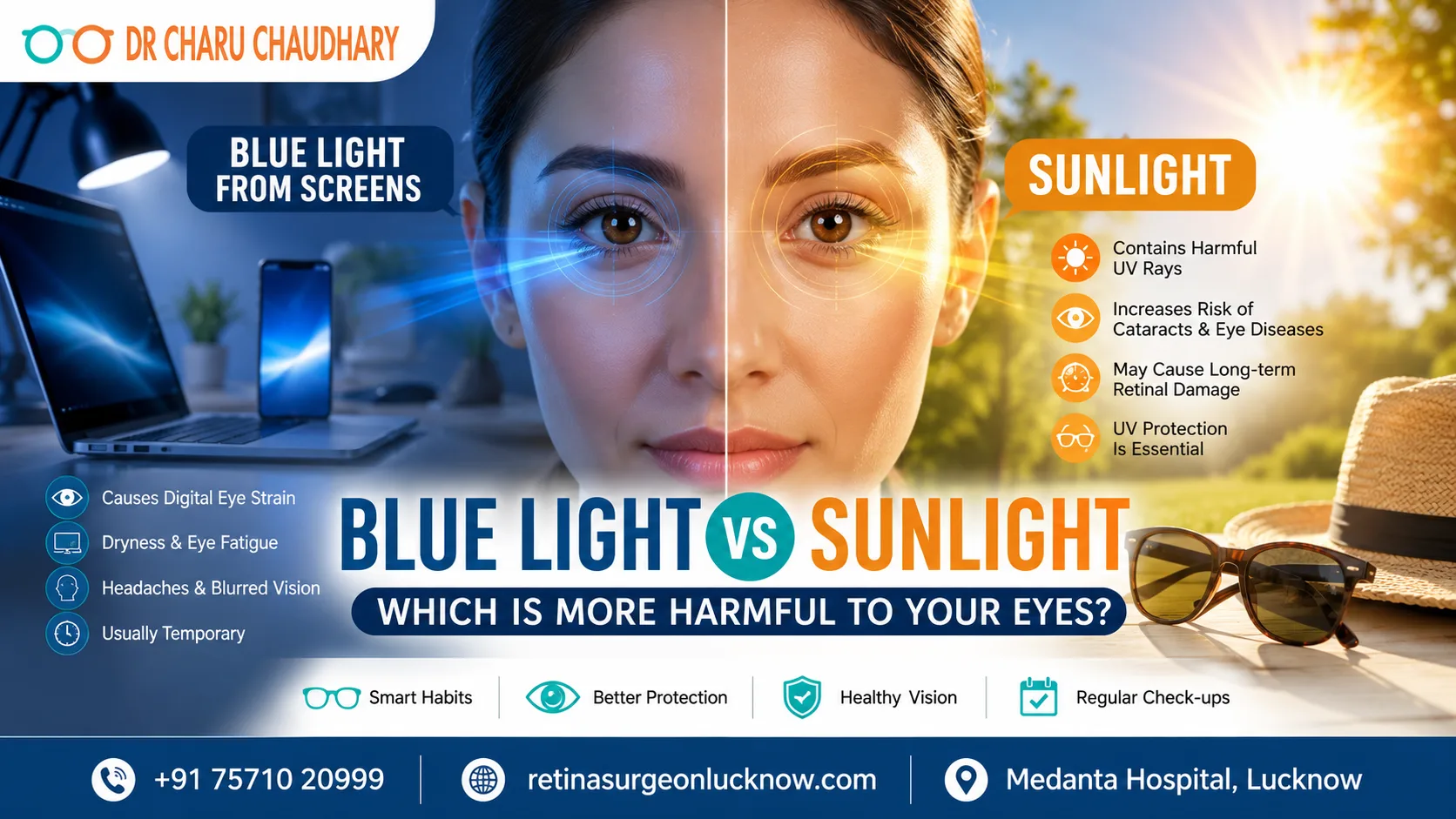
Have you ever wondered whether spending hours on your phone is more harmful than walking under the bright sun? This is one of the most common concerns people discuss with an eye specialist in Lucknow, especially as screen time continues to increase in both work and daily life. While smartphones, laptops, and tablets emit blue light, sunlight is the largest natural source of blue light and also contains harmful ultraviolet (UV) rays. Understanding the difference is essential for protecting your eyesight. The truth is that normal screen use is more likely to cause temporary eye strain and dryness, whereas prolonged exposure to sunlight without proper protection poses a greater long-term risk to eye health because of UV radiation. Knowing how each affects your eyes can help you adopt healthier habits and reduce your risk of vision problems. In this comprehensive guide, we’ll explain the science behind blue light and sunlight, separate myths from facts, and share expert-recommended strategies to keep your eyes healthy. Understanding Blue Light vs Sunlight Blue light is a part of the visible light spectrum, with wavelengths ranging from approximately 400 to 500 nanometers. It is often referred to as high-energy visible (HEV) light because it has a shorter wavelength and higher energy than most other visible colors. Many people associate blue light only with smartphones or computers, but in reality, the sun is by far the strongest natural source of blue light. Digital devices emit only a small fraction of the blue light that reaches your eyes outdoors. Common Sources of Blue Light Natural sources include: Sunlight Clear daytime sky Artificial sources include: Smartphones Laptops Desktop monitors Tablets LED televisions LED lighting Digital billboards Although both sunlight and digital devices emit blue light, their intensity, duration, and accompanying radiation differ significantly, which is why they affect the eyes in different ways. Why Blue Light Matters Not all blue light is harmful. In fact, natural blue light plays an important role in maintaining overall health. Benefits of Natural Blue Light Natural blue light helps: Maintain your body’s circadian rhythm Improve daytime alertness Support better mood Enhance concentration Regulate healthy sleep cycles Without exposure to natural daylight, our biological clock can become disrupted, affecting sleep quality and overall well-being. However, excessive exposure to intense light—particularly sunlight without adequate eye protection – may increase the risk of certain eye conditions over time. How the Eye Processes Light Before understanding which type of light is more harmful, it’s helpful to know how light travels through the eye. When light enters the eye, it passes through: Cornea Pupil Lens Vitreous gel Retina The retina converts light into electrical signals, which are transmitted through the optic nerve to the brain, allowing us to see. The eye has natural protective mechanisms that filter part of the blue light reaching the retina. However, ultraviolet (UV) rays from sunlight interact differently with eye tissues and can contribute to long-term damage when exposure is excessive. Why Your Eyes Respond Differently to Blue Light and Sunlight Many people assume that all blue light is equally harmful, but this is a misconception. The way your eyes respond depends on the intensity of the light source, duration of exposure, and whether ultraviolet (UV) radiation is present. Blue Light From Digital Screens Blue light emitted by digital screens is: Low in intensity Free from UV radiation Primarily associated with visual discomfort More likely to contribute to eye fatigue because of prolonged focus and reduced blinking This is why people often experience symptoms such as dry eyes, headaches, and blurred vision after long hours of screen use. Sunlight Sunlight contains: High-intensity blue light UVA rays UVB rays Infrared radiation Full-spectrum visible light Unlike screens, sunlight exposes your eyes to significantly higher energy levels and harmful UV radiation. Over many years, unprotected UV exposure may increase the risk of: Cataracts Pterygium Photokeratitis (sunburn of the eye) Age-related macular degeneration (AMD) Certain ocular surface disorders This is why ophthalmologists recommend wearing UV400 sunglasses whenever you spend extended time outdoors. Expert Insight One of the biggest misconceptions is that mobile phones permanently damage the retina simply because they emit blue light. Current ophthalmic research indicates that the amount of blue light produced by smartphones and computers is substantially lower than that from natural sunlight. For most people, the symptoms experienced after prolonged screen use are related to digital eye strain, reduced blinking, glare, and poor ergonomics, rather than retinal injury. Blue Light vs Sunlight: Key Differences The following comparison highlights why sunlight and digital screens affect your eyes differently. FeatureBlue Light From ScreensSunlightPrimary SourceSmartphones, tablets, laptops, LED screensNatural sunlightBlue Light IntensityLowVery HighContains UV RaysNoYesCauses Digital Eye StrainYesRarelyCan Cause Dry EyesYesNoLong-Term UV DamageNoYesRisk of CataractsNo direct linkIncreased with prolonged UV exposureRisk to RetinaNo proven damage from normal useDirect sun viewing can damage the retinaBest ProtectionScreen breaks, blinking, ergonomic setupUV400 sunglasses, hats, avoiding direct sun Does Blue Light From Screens Harm the Retina? One of the most frequently searched questions online is whether blue light from smartphones permanently damages the retina. The current scientific evidence provides reassuring answers. Studies have not demonstrated that normal exposure to blue light from digital devices causes permanent retinal damage in healthy individuals. The amount of blue light emitted by screens is significantly lower than that produced by natural sunlight. Most people who spend long hours using digital devices experience symptoms related to Digital Eye Strain (Computer Vision Syndrome) rather than retinal disease. Common Symptoms Associated with Prolonged Screen Use Eye fatigue Dry eyes Burning sensation Headaches Temporary blurred vision Difficulty focusing Neck and shoulder discomfort These symptoms usually improve with proper screen habits, regular breaks, and appropriate lighting. However, individuals with pre-existing retinal conditions, such as diabetic retinopathy or age-related macular degeneration, should follow the advice of their ophthalmologist regarding prolonged screen use. What Causes Digital Eye Strain? One of the biggest misconceptions is that blue light itself is the main reason for eye discomfort after using digital devices. In reality, ophthalmologists agree that Digital Eye Strain, also known ...
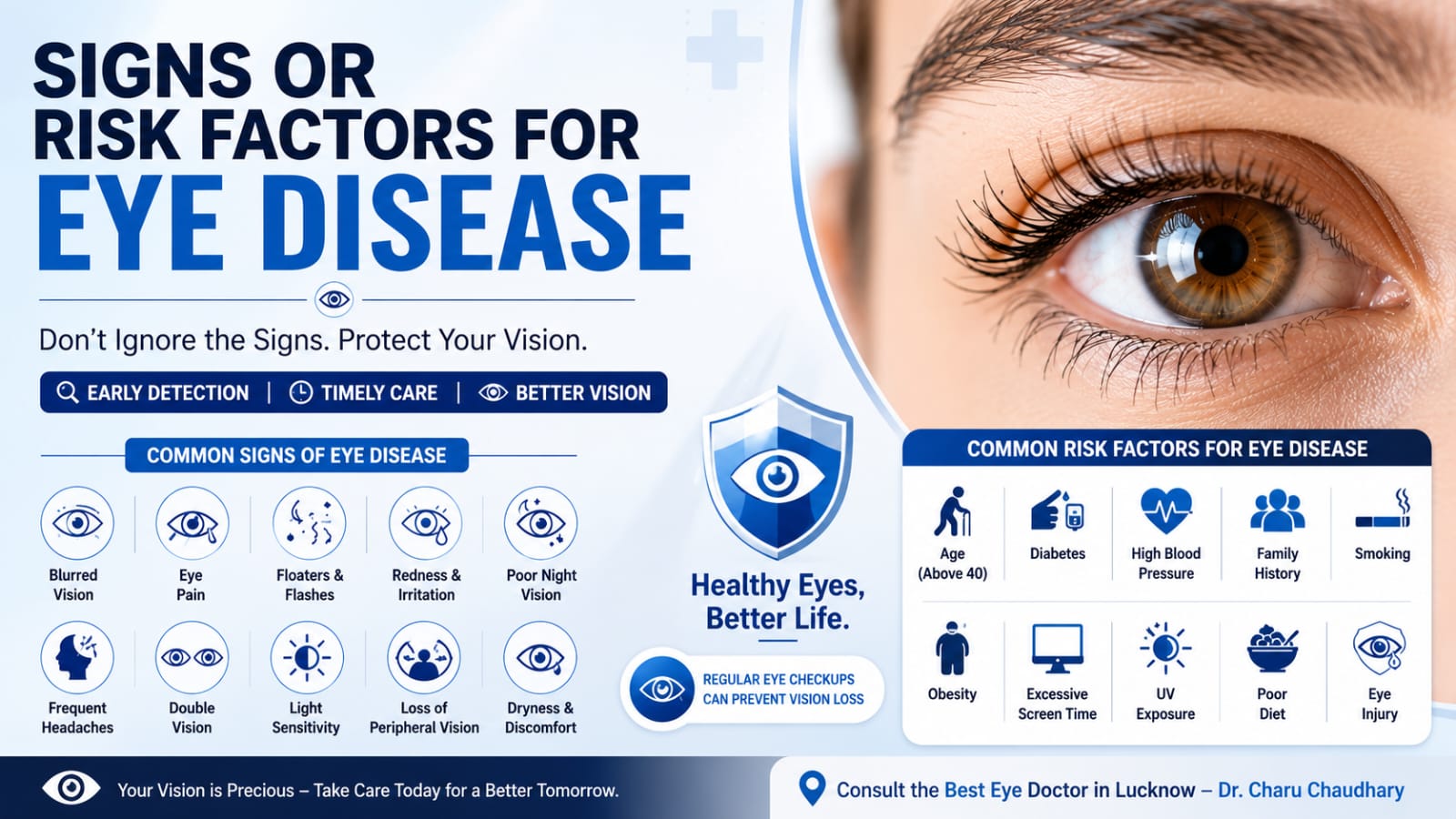
Signs and Risk Factors for Eye Disease Our eyes help us experience the world every day, yet many people ignore early symptoms of eye disease until the condition becomes serious. The truth is that many eye diseases develop slowly and may not cause pain in the beginning. Detecting them early can help protect your vision and prevent permanent damage. Whether you are young or old, understanding the warning signs and risk factors can help you take better care of your eyesight. If you notice any unusual changes in your vision, consulting Dr. Charu Chaudhary, widely regarded as the best eye specialist in Lucknow, can help identify problems before they become severe. Why Early Detection of Eye Disease Matters Many eye diseases do not show noticeable symptoms in their early stages. Conditions like glaucoma, diabetic retinopathy, and age-related macular degeneration can silently damage vision over time. Early diagnosis allows: Better treatment outcomes Prevention of vision loss Lower treatment costs Improved quality of life Protection of long-term eye health Regular eye examinations remain the best way to detect these diseases before symptoms become severe. Common Signs of Eye Disease Recognizing the warning signs can save your eyesight. 1. Blurred Vision Blurred vision that does not improve with blinking may indicate: Cataracts Refractive errors Diabetic retinopathy Macular degeneration 2. Sudden Vision Loss Any sudden decrease in vision is a medical emergency and requires immediate attention. Possible causes include: Retinal detachment Eye stroke Severe glaucoma Retinal vein blockage 3. Eye Pain Pain inside or around the eye should never be ignored. It may indicate: Acute glaucoma Eye infection Corneal injury Inflammation 4. Frequent Headaches Persistent headaches accompanied by eye strain may result from: Uncorrected vision problems High eye pressure Digital eye strain 5. Double Vision Seeing two images instead of one may indicate neurological or eye muscle disorders. 6. Floaters and Flashes Occasional floaters are common with age, but a sudden increase in floaters or flashes of light can signal retinal tears. 7. Red Eyes Redness lasting more than a day could indicate: Infection Allergy Uveitis Glaucoma 8. Difficulty Seeing at Night Poor night vision may be caused by: Cataracts Vitamin A deficiency Retinal disorders 9. Light Sensitivity Excessive sensitivity to light may indicate: Corneal problems Eye inflammation Migraine Infection 10. Loss of Peripheral Vision This is often one of the earliest signs of glaucoma. Common Risk Factors for Eye Disease Several factors increase your chances of developing eye disorders. Risk FactorWhy It Increases RiskAge above 40Higher risk of cataracts and glaucomaDiabetesCan damage retinal blood vesselsHigh Blood PressureAffects blood supply to the eyesFamily HistoryMany eye diseases are hereditarySmokingIncreases cataract and macular degeneration riskObesityRaises risk of diabetic eye diseaseExcessive Screen TimeCauses eye strain and dry eyesUV ExposureDamages the lens and retinaPoor DietLack of vitamins affects eye healthEye InjuryCan lead to long-term complications Eye Diseases and Their Early Symptoms Eye DiseaseEarly SymptomsCataractBlurred vision, glare, poor night visionGlaucomaPeripheral vision loss, eye pressureDiabetic RetinopathyBlurred vision, floatersDry Eye SyndromeBurning, irritation, rednessMacular DegenerationDistorted central visionRetinal DetachmentFlashes, floaters, sudden vision lossConjunctivitisRedness, discharge, itching Who Should Get Regular Eye Checkups? You should schedule regular eye examinations if you: Are above 40 years of age Have diabetes Have high blood pressure Wear glasses or contact lenses Have a family history of glaucoma Spend more than 6 hours daily on digital screens Smoke regularly Have experienced previous eye injuries Routine checkups help detect hidden eye diseases before symptoms appear. How to Reduce Your Risk of Eye Disease Eat an Eye-Healthy Diet Include foods rich in: Vitamin A Vitamin C Vitamin E Zinc Omega-3 fatty acids Lutein Zeaxanthin Good choices include carrots, spinach, kale, fish, eggs, citrus fruits, almonds, and sweet potatoes. Protect Your Eyes from UV Rays Wear sunglasses that block 100% UVA and UVB rays whenever outdoors. Control Diabetes and Blood Pressure Keeping blood sugar and blood pressure under control significantly reduces the risk of diabetic eye disease. Follow the 20-20-20 Rule If you use digital devices frequently: Every 20 minutes, Look 20 feet away, For at least 20 seconds. This helps reduce digital eye strain. Quit Smoking Smoking damages blood vessels in the eyes and increases the risk of cataracts and macular degeneration. Exercise Regularly Regular physical activity improves blood circulation and lowers the risk of chronic diseases that affect vision. When Should You Visit an Eye Doctor? Seek immediate medical attention if you experience: Sudden vision loss Severe eye pain Flashes of light Numerous floaters Eye injury Chemical exposure Persistent redness Double vision Ignoring these symptoms may result in permanent vision damage. Why Choose Dr. Charu Chaudhary for Eye Care? Choosing the right eye specialist plays an important role in protecting your vision. Dr. Charu Chaudhary is known for providing comprehensive eye care with advanced diagnostic techniques and personalized treatment plans. Whether you need a routine eye examination, cataract consultation, glaucoma screening, diabetic eye evaluation, or treatment for other eye conditions, patients trust her expertise and compassionate care. If you are searching for the best eye doctor in Lucknow, Dr. Charu Chaudhary offers modern eye care focused on early diagnosis, accurate treatment, and long-term vision protection. Frequently Asked Questions (FAQs) What are the first signs of eye disease? Blurred vision, eye pain, flashes of light, floaters, redness, and loss of peripheral vision are among the earliest warning signs. Can eye diseases be prevented? Many eye diseases cannot be completely prevented, but regular eye exams, a healthy lifestyle, and early treatment can significantly reduce the risk of vision loss. How often should adults have an eye examination? Adults should have a comprehensive eye examination every one to two years. People with diabetes, glaucoma risk, or existing eye problems may require more frequent checkups. Does screen time permanently damage eyesight? Screen time generally does not cause permanent vision damage but can lead to digital eye strain, dry eyes, headaches, and temporary blurred vision. Why should diabetic patients have regular eye checkups? Diabetes can silently damage the retina without early symptoms. Regular eye exams help detect diabetic retinopathy before permanent vision loss occurs. ...
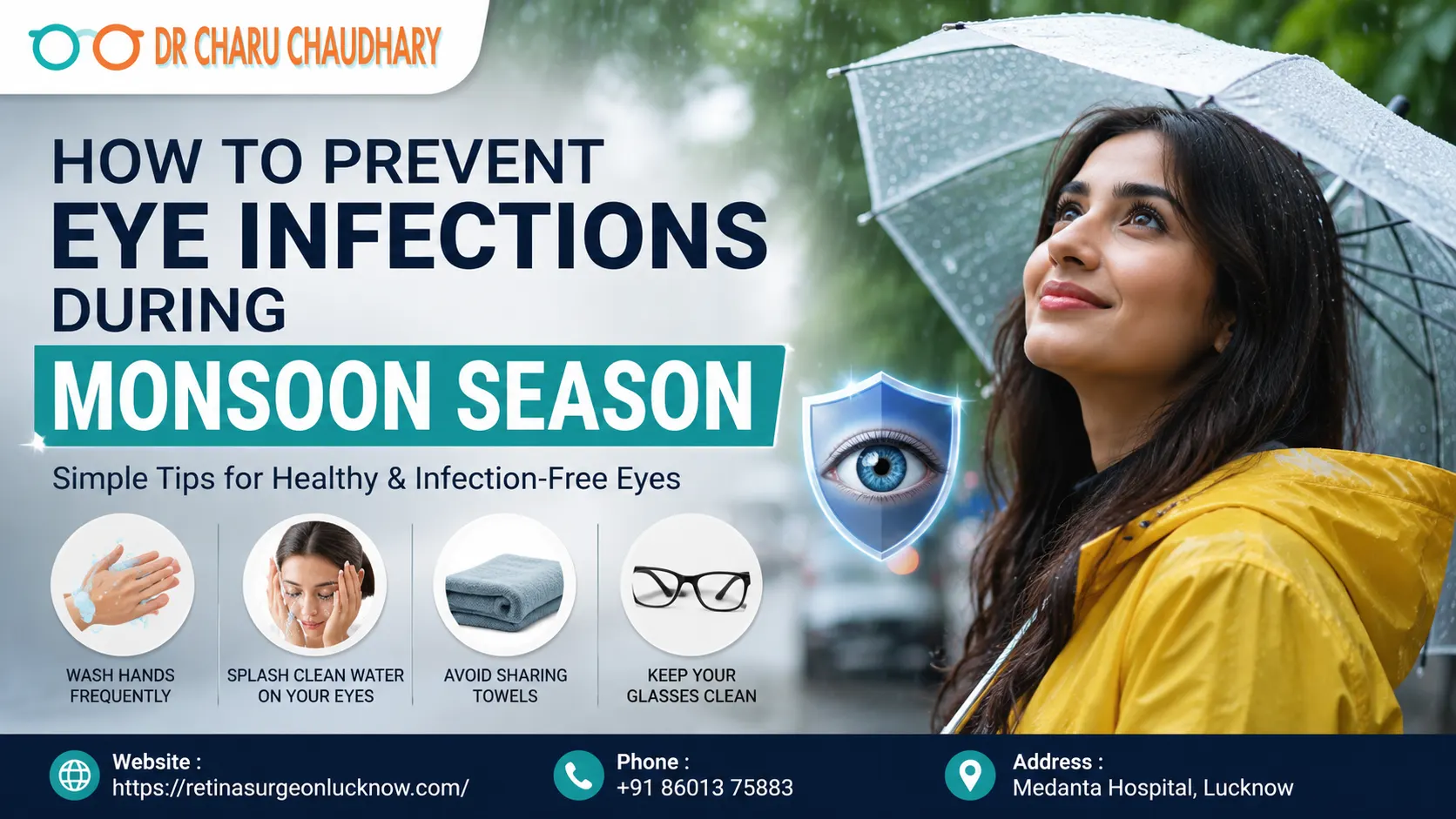
The monsoon season brings welcome relief from the summer heat, but it also creates ideal conditions for bacteria, viruses, fungi, and allergens to thrive. Increased humidity, stagnant water, and poor hygiene significantly raise the risk of eye infections. From viral conjunctivitis to styes and allergic eye irritation, monsoon-related eye problems can affect people of all ages. Fortunately, most eye infections are preventable with proper hygiene and timely care. In this comprehensive guide, you’ll learn how to prevent eye infections during monsoon season, recognize early warning signs, understand available treatments, and know when to consult the Eye Surgeon in Lucknow. Why Do Eye Infections Increase During the Monsoon? The rainy season creates an environment that promotes the growth and spread of microorganisms. Some common reasons include: High humidity encourages bacterial and fungal growth. Rainwater may carry harmful microorganisms. Increased air pollution and allergens irritate the eyes. Dirty hands frequently transfer germs to the eyes. Contaminated towels, cosmetics, and contact lenses spread infections. Viral conjunctivitis spreads rapidly in schools, offices, and public places. Children, elderly individuals, contact lens users, diabetic patients, and people with weakened immunity are particularly vulnerable. Common Eye Infections During Monsoon 1. Viral Conjunctivitis (Pink Eye) One of the most common monsoon eye infections. Symptoms Red eyes Watery discharge Swollen eyelids Itching Burning sensation Light sensitivity It spreads easily through direct contact and contaminated objects. 2. Bacterial Conjunctivitis Unlike viral conjunctivitis, bacterial infections often produce thick yellow or green discharge. Symptoms include: Sticky eyelids Eye redness Pus discharge Mild pain Irritation Prompt treatment prevents complications. 3. Stye (Eye Boil) A stye is a painful infection of an eyelid gland. Symptoms include: Painful bump Redness Swelling Tenderness Watering Poor eyelid hygiene increases the risk. 4. Fungal Eye Infection Although less common, fungal infections may occur after eye injuries involving contaminated water or soil. Symptoms: Persistent redness Pain Blurred vision White spots on the cornea Excessive tearing These infections require urgent ophthalmic evaluation. 5. Allergic Eye Disease Monsoon humidity increases mold spores and allergens. Symptoms: Itchy eyes Watering Swollen eyelids Redness Frequent rubbing Unlike infections, allergies are not contagious. Signs You May Have an Eye Infection Watch for these warning symptoms: Persistent redness Eye pain Yellow or green discharge Sticky eyelids Blurred vision Swelling around the eyes Excessive tearing Burning sensation Light sensitivity Foreign body sensation Never ignore sudden vision loss or severe eye pain. How to Prevent Eye Infections During Monsoon Season Preventive care is always better than treatment. Follow these practical eye care tips throughout the rainy season. 1. Wash Your Hands Frequently Hands carry thousands of germs every day. Always wash your hands: Before touching your eyes Before inserting contact lenses After returning home Before applying eye drops After coughing or sneezing Use soap and clean water for at least 20 seconds. 2. Avoid Touching or Rubbing Your Eyes Eye rubbing transfers bacteria and viruses directly to the eye surface. Instead: Use a clean tissue if needed. Wash hands first. Treat itching appropriately rather than rubbing. 3. Keep Your Eyes Clean Clean your eyelids gently using: Sterile cotton Clean water Prescribed eyelid wipes Avoid using dirty towels. 4. Never Share Personal Items Avoid sharing: Towels Handkerchiefs Eye makeup Eye drops Pillow covers Contact lens cases Many eye infections spread through shared items. 5. Maintain Contact Lens Hygiene Contact lens users have a higher infection risk. Always: Wash hands before handling lenses. Replace lens solution daily. Never use tap water. Avoid swimming with lenses. Remove lenses before sleeping. Replace lenses according to schedule. Stop wearing lenses immediately if your eyes become red or painful. 6. Protect Your Eyes from Rainwater Rainwater is not always clean. If rainwater enters your eyes: Rinse with clean drinking water or sterile saline. Avoid rubbing. Monitor for redness or irritation. 7. Wear Protective Glasses Outdoors Protective eyewear helps prevent: Dust Pollutants Splashing rainwater Allergens Sunglasses also reduce irritation from wind. 8. Eat Eye-Healthy Foods Strong immunity reduces infection risk. Include: Carrots Spinach Kale Citrus fruits Berries Fish rich in Omega-3 Almonds Walnuts Eggs Vitamin A, Vitamin C, Vitamin E, zinc, and antioxidants support healthy eyes. 9. Stay Hydrated Even during rainy weather, dehydration can affect tear production. Drink: 2–3 liters of water daily Fresh fruit juices Coconut water Good hydration supports healthy tear film function. 10. Avoid Self-Medication Never use: Old eye drops Steroid eye drops Antibiotics without prescription Home remedies directly inside the eyes Improper treatment may worsen the infection. Eye Care Tips for Children During Monsoon Children frequently catch viral conjunctivitis. Parents should: Teach hand hygiene. Discourage eye rubbing. Keep school towels separate. Wash toys regularly. Replace infected pillow covers. Keep infected children home until advised by the doctor. Early treatment prevents spread within families and schools. What to Do if You Develop an Eye Infection If symptoms appear: Do Wash hands frequently. Use prescribed eye drops. Wear clean glasses instead of contact lenses. Rest your eyes. Use clean tissues. Don’t Rub your eyes. Share towels. Wear eye makeup. Continue using infected contact lenses. Delay medical consultation if symptoms worsen. When Should You Visit an Eye Specialist? Seek immediate medical attention if you experience: Severe eye pain Sudden blurred vision Vision loss Thick pus discharge Swelling around the eye Eye injury Light sensitivity Symptoms lasting more than 48 hours Contact lens-related infection Fever with eye redness Prompt diagnosis helps prevent serious complications. Can Eye Infections Affect Vision? Most mild infections resolve completely with proper treatment. However, untreated infections can lead to: Corneal ulcers Permanent corneal scars Chronic inflammation Vision impairment Rarely, permanent vision loss Early diagnosis greatly reduces these risks. How Eye Specialists Diagnose Eye Infections During your eye examination, your ophthalmologist may perform: Vision assessment Slit lamp examination Corneal evaluation Tear film assessment Fluorescein staining Eyelid examination Eye pressure measurement (when necessary) Laboratory testing for severe infections Accurate diagnosis ensures appropriate treatment. Simple Daily Monsoon Eye Care Routine Follow this checklist every day: Wash hands regularly. Clean your face after returning home. Drink adequate water. Eat antioxidant-rich foods. Avoid sharing ...
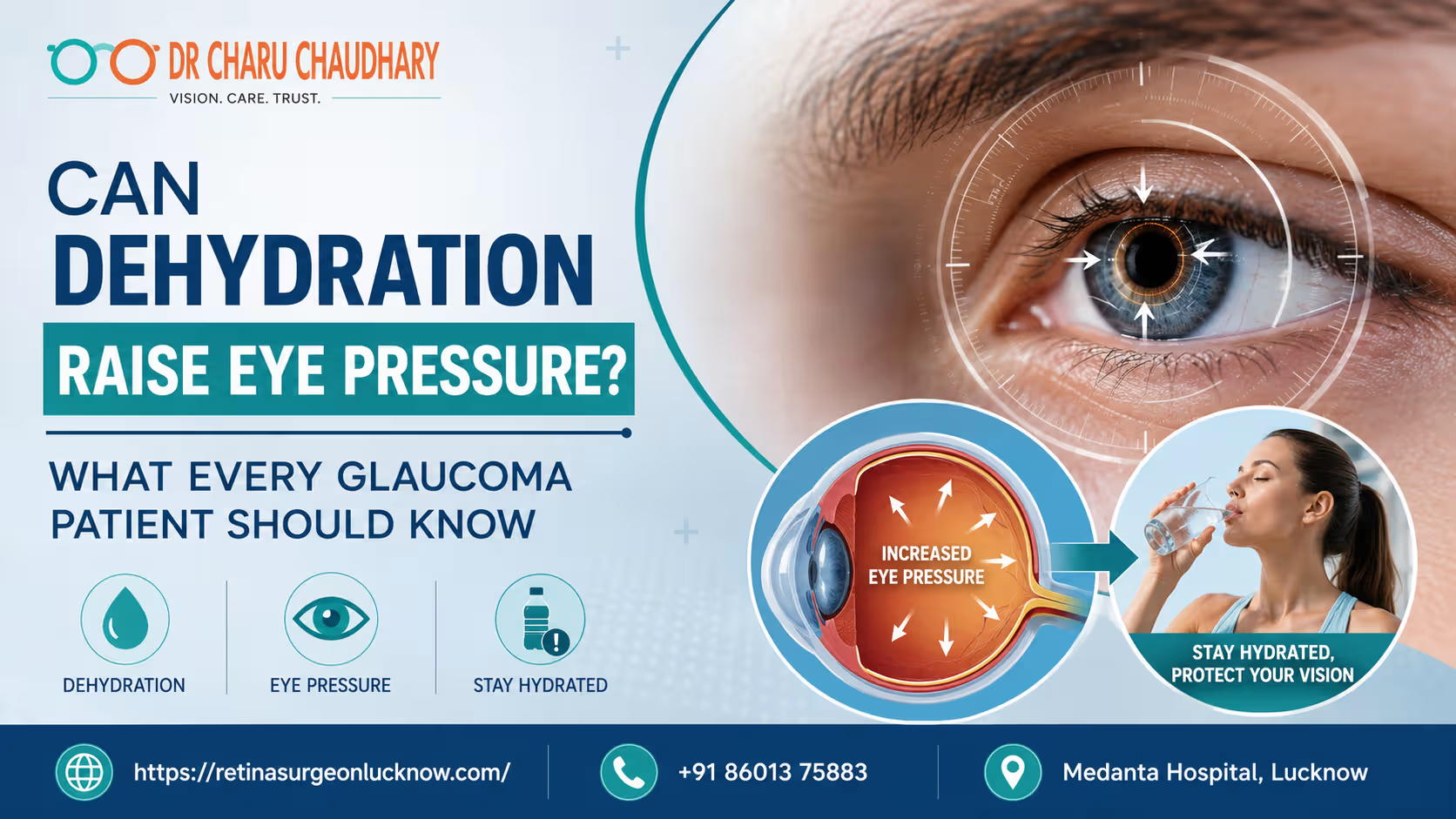
Dehydration may temporarily influence intraocular pressure in some people and can significantly affect overall eye health. While dehydration alone does not usually cause glaucoma, maintaining proper hydration is important for patients already diagnosed with the condition. Fluctuations in body fluids can impact how the eye regulates its internal pressure and supports the optic nerve. Can Not Drinking Enough Water Affect Your Eye Pressure? Maintaining the right fluid balance is vital for your health. Most people know that dehydration affects the heart and kidneys. However, many patients are surprised to learn that it also affects their eyes. For individuals living with glaucoma, understanding the link between hydration and eye pressure is essential. Eye pressure, or intraocular pressure (IOP), is the primary metric used to manage glaucoma. When your body lacks sufficient water, your systemic circulation changes. These changes can impact the delicate structures inside your eye. Consequently, your vision may face unnecessary risks if you ignore your daily water intake. Dr. Charu Chaudhary, an expert in ocular health, emphasizes that hydration is a pillar of preventative care. She often advises that stable fluid levels help maintain a stable environment for the optic nerve. If you are looking for the Best Eye Specialist in Lucknow, finding a professional who looks at your systemic health is key. Why Glaucoma Patients Should Pay Attention to Hydration Glaucoma is often called the “silent thief of sight.” It slowly damages the optic nerve, usually due to high internal eye pressure. Because this condition is so sensitive to pressure changes, even minor fluctuations matter. Proper hydration ensures that the blood flowing to your eyes is rich in oxygen and nutrients. When you are dehydrated, your blood can become more viscous. This change may reduce the efficiency of blood flow to the optic nerve. Therefore, staying hydrated isn’t just about the “pressure number” on a chart. It is about protecting the nerve fibers that allow you to see. Is there a real connection between dehydration and eye health? Medical research suggests that while severe dehydration might actually lower eye pressure slightly, the secondary effects are harmful. Dry eyes, blurred vision, and poor circulation can worsen the overall experience of living with glaucoma. What Is Eye Pressure (Intraocular Pressure)? Intraocular pressure is the fluid pressure inside your eye. Your eye produces a clear fluid called aqueous humor. This fluid nourishes the front part of the eye and maintains its shape. To keep pressure steady, the eye must drain as much fluid as it produces. When the drainage system becomes clogged or inefficient, the fluid builds up. This buildup increases the pressure within the eyeball. Think of it like a balloon being overfilled with water. If the pressure remains too high for too long, it pushes against the back of the eye. How Is Eye Pressure Measured? Eye specialists use a process called tonometry to measure IOP. During an exam, the doctor will use a device to gently touch or blow a puff of air onto the surface of your eye. This measurement is recorded in millimeters of mercury (mmHg). A normal eye pressure range is generally between 12 and 21 mmHg. However, “normal” can vary from person to person. Some people develop glaucoma with low pressure, while others have high pressure without nerve damage. This is why regular monitoring is so crucial for long-term vision. Why Is Eye Pressure Important for Vision? Your optic nerve is the “cable” that connects your eye to your brain. It is made of over a million tiny nerve fibers. High eye pressure compresses these fibers. Over time, the fibers begin to die off, leading to permanent vision loss. Because these fibers do not regenerate, the damage is irreversible. Managing eye pressure is the only proven way to stop or slow the progression of glaucoma. Consistency in your habits, including your water intake, helps keep these pressure levels within a safe range. What Is Glaucoma and How Does It Damage Vision? Glaucoma is a group of eye conditions that lead to optic nerve damage. It is typically categorized by how the fluid drainage system is blocked. The most common form is Open-Angle Glaucoma, where the drainage angle looks open but functions poorly. Another form is Angle-Closure Glaucoma, which can occur suddenly and constitutes a medical emergency. Regardless of the type, the result is often the same: peripheral vision fades first. If left untreated, the damage moves inward, eventually leading to total blindness. High eye pressure is the most significant modifiable risk factor for this disease. By controlling this pressure through medication, surgery, and lifestyle choices, patients can preserve their sight for a lifetime. This is why consulting the Best Eye Surgeon in Lucknow is a vital step for those at risk. Can Dehydration Really Raise Eye Pressure? The relationship between dehydration and eye pressure is complex. In many cases, severe systemic dehydration actually leads to a decrease in intraocular pressure. This happens because the body produces less aqueous humor when it is trying to conserve water. However, the problem arises when the body is in a state of flux. Chronic dehydration can lead to “dry eye” symptoms that mimic or worsen glaucoma discomfort. Furthermore, when a dehydrated person suddenly drinks a massive amount of water, it can cause a temporary spike in eye pressure. What Does Medical Research Say? Research indicates that the body’s “osmolality”—the concentration of particles in your blood—affects the fluid in your eyes. When you are dehydrated, your blood is more concentrated. This can pull fluid out of the eye, lowering pressure. Conversely, “water loading” (drinking a liter of water in under five minutes) is a known test to see if eye pressure will spike. For a glaucoma patient, these rapid shifts are dangerous. Stability is the goal. Therefore, avoiding extreme dehydration is just as important as avoiding rapid over-hydration. Is the Effect Temporary or Long-Term? Most pressure changes related to hydration are temporary. However, the cumulative effect of poor hydration on the optic nerve’s blood supply can be long-term. Your eyes need consistent hydration ...
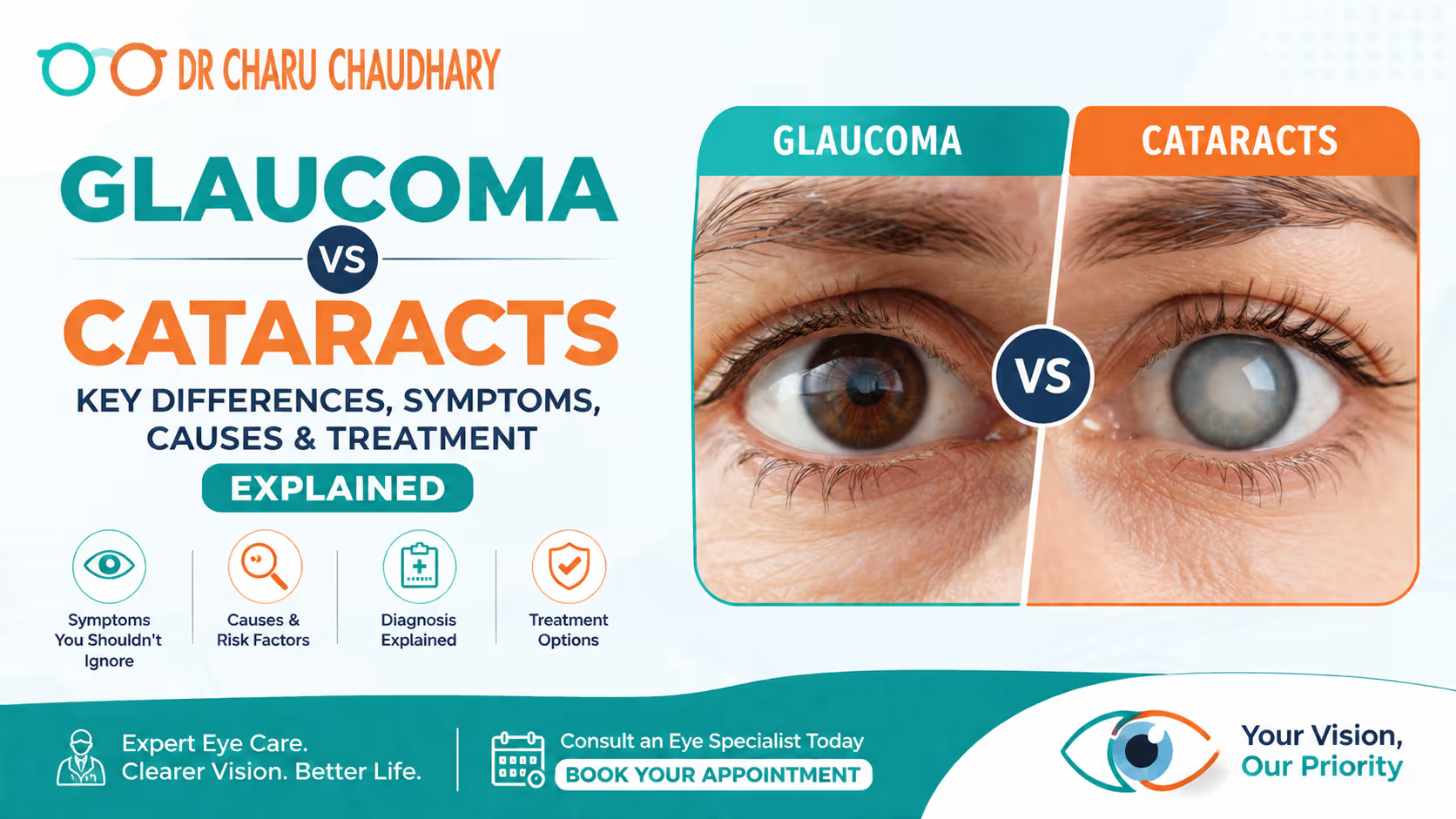
Cataracts cause cloudy vision because the eye’s natural lens becomes opaque, blocking light from reaching the retina. Conversely, glaucoma damages the optic nerve, often due to increased eye pressure. While cataract surgery usually restores vision successfully, glaucoma-related vision loss is irreversible. Therefore, early diagnosis is essential to prevent permanent blindness. Introduction How Can You Tell Whether It’s Glaucoma or Cataracts? Distinguishing between different eye conditions is often difficult for the average person. You might notice your vision becoming blurry or find it hard to drive at night. However, these symptoms could point toward two very different diseases. Glaucoma and cataracts are the leading causes of vision impairment globally. While they share some similarities, their impact on your eye health varies significantly. Identifying the specific cause of your visual decline is the first step toward effective recovery. Why Do People Often Confuse These Two Eye Conditions? Confusion often arises because both conditions commonly affect older adults. Furthermore, both diseases can cause a gradual decline in visual clarity. Patients frequently assume that any blurring of vision is simply a sign of “getting older.” Unfortunately, this misconception can lead to delayed treatment. While one condition is often fixable, the other can lead to permanent darkness if ignored. Understanding the biological differences between them is crucial for every patient. Why Early Eye Examination Can Protect Your Vision Regular screenings are the only definitive way to distinguish between these two conditions. An experienced Eye doctor in Lucknow can perform a comprehensive evaluation to assess your ocular health. Early detection allows for a wider range of treatment options. Most importantly, it helps prevent the silent progression of diseases that could steal your sight. By scheduling an exam, you take a proactive step in preserving your quality of life. What Is Glaucoma and How Does It Affect Vision? Glaucoma is not a single disease but a group of eye conditions. These conditions primarily damage the optic nerve, which is vital for good vision. This damage is often caused by abnormally high pressure inside your eye. Over time, this pressure erodes the nerve fibers, leading to blind spots in your visual field. What Happens to the Optic Nerve? The optic nerve acts like a communication cable between your eye and your brain. It carries thousands of electrical impulses that the brain interprets as images. When intraocular pressure rises, it compresses these delicate nerve fibers. Consequently, the fibers begin to die, and the “cable” loses its ability to transmit information. This process usually starts with your side vision and slowly moves inward. Why Is Glaucoma Called the “Silent Thief of Sight”? Many forms of glaucoma have no warning signs. For example, open-angle glaucoma progresses so slowly that you may not notice a change until the late stages. The brain often compensates for small blind spots, making the disease nearly invisible to the patient. By the time vision loss becomes obvious, significant and permanent damage has already occurred. This is why medical professionals emphasize the importance of preventative screenings. What Are Cataracts and Why Do They Develop? A cataract is a clouding of the normally clear lens of your eye. For people who have cataracts, seeing through cloudy lenses is a bit like looking through a frosty window. This clouding makes it more difficult to read or drive a car, especially at night. Most cataracts develop slowly and don’t disturb your eyesight early on. How Does the Eye Lens Become Cloudy? The lens is positioned behind the colored part of your eye (the iris). It focuses light that passes into your eye, producing clear, sharp images on the retina. As you age, the proteins within the lens begin to break down and clump together. These clumps create a cloudy area that scatters light instead of focusing it clearly. As a result, the image reaching your retina becomes blurred or distorted. Who Is Most Likely to Develop Cataracts? Aging is the most significant risk factor for cataract development. Most people begin to develop some degree of lens clouding after the age of 40. However, other factors can accelerate this process significantly. These include prolonged exposure to ultraviolet (UV) light, smoking, and certain medications like steroids. Additionally, individuals with systemic health issues may see symptoms appear much earlier in life. What Is the Difference Between Glaucoma and Cataracts? While both conditions affect your ability to see, they involve different parts of the eye. Cataracts are a problem with the “lens,” which is the front window of the eye. Glaucoma is a problem with the “nerve,” which is the connection to the brain. Understanding this fundamental difference helps patients appreciate why the treatments differ so vastly. How Do Their Causes Differ? The causes of these two diseases are entirely unrelated. Cataracts are primarily a result of protein degradation and oxidative stress within the lens. In contrast, glaucoma usually stems from a failure in the eye’s fluid drainage system. When the aqueous humor (eye fluid) cannot drain properly, pressure builds up against the retina and optic nerve. Therefore, one is a structural change in a tissue, while the other is often a hydraulic issue. How Do Symptoms Compare? Cataract symptoms usually involve a change in how you perceive light and color. You might see “halos” around streetlights or find that colors look faded. Glaucoma symptoms are often non-existent in the early stages. However, advanced glaucoma leads to “tunnel vision,” where your peripheral sight disappears. While cataracts make the world look “fuzzy,” glaucoma makes the world look “smaller.” Which Condition Progresses Faster? Progression rates vary greatly between individuals and the specific type of the disease. Cataracts generally progress very slowly over several years. Many patients live with mild cataracts for a long time without needing surgery. Some forms of glaucoma, such as acute angle-closure glaucoma, can cause vision loss within hours. Chronic glaucoma, however, also moves slowly but leaves permanent damage in its wake. Glaucoma vs. Cataract Comparison Table FeatureGlaucomaCataractsPrimary SiteOptic NerveCrystalline LensMain CauseHigh Intraocular PressureProtein Clumping/AgingMain SymptomLoss of peripheral visionBlurry or cloudy visionVisual EffectTunnel ...
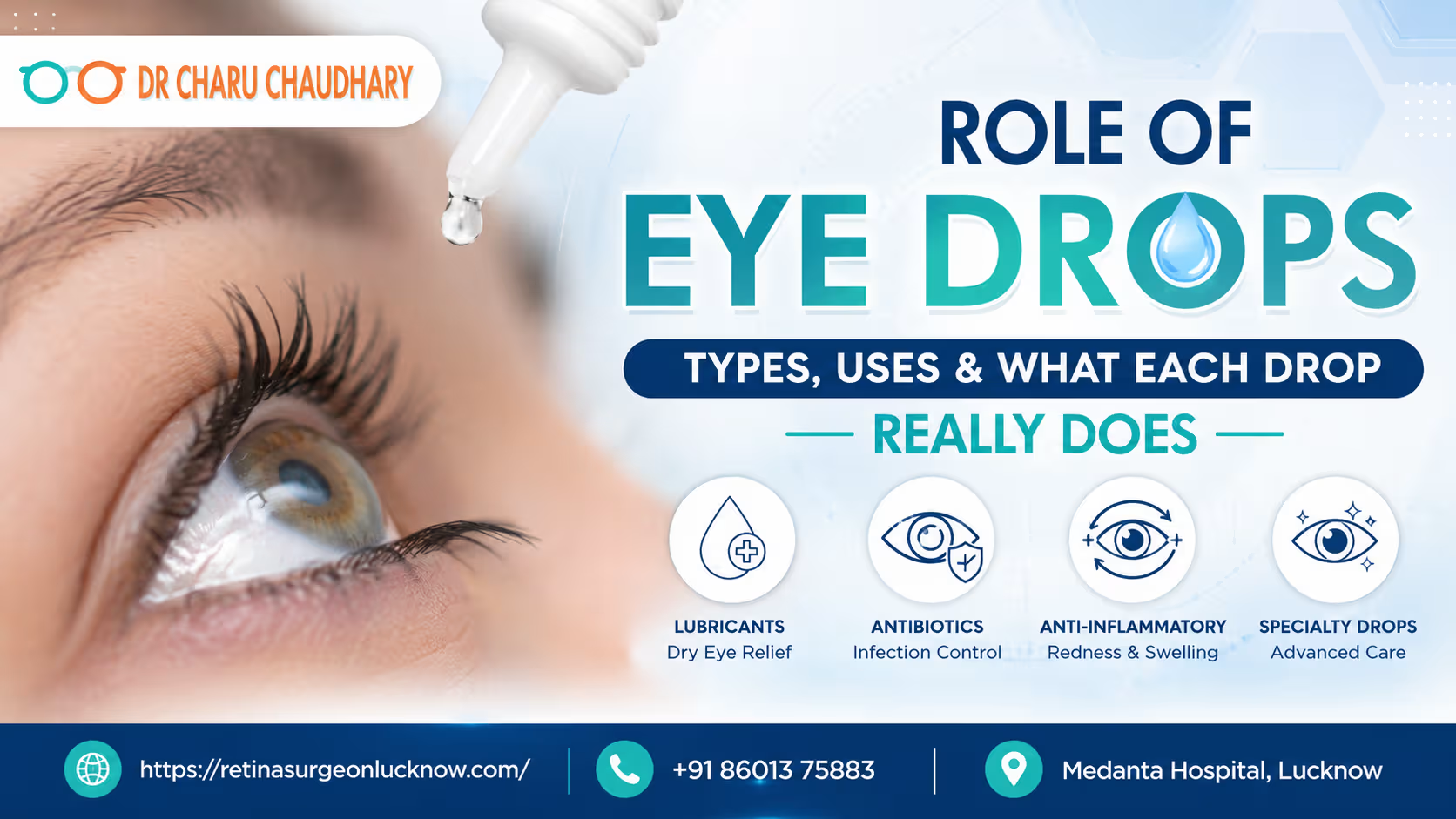
When your eyes feel itchy, dry, or red, the first thing most people reach for is a bottle of eye drops. However, walking into a pharmacy can be overwhelming. There are hundreds of bottles, each claiming to solve a different problem. Are they all the same? The short answer is no. Using the wrong eye drop can not only be ineffective but, in some cases, dangerous. What do eye drops actually do?Different eye drops are designed for specific medical purposes: lubricating drops soothe dry eyes, antibiotic drops fight bacterial infections, allergy drops block histamine, and glaucoma drops lower intraocular pressure. They also reduce inflammation, aid post-surgical recovery, or dilate pupils, ensuring targeted delivery of medication directly to ocular tissues. If you are looking for an eye doctor in Lucknow, understanding the nuances of ocular medication is the first step toward better vision health. This guide will walk you through everything you need to know about the role of eye drops. Introduction Why So Many People Use Eye Drops Without Understanding Them The eye is one of the most accessible organs for topical treatment. Because eye drops are available over the counter (OTC), many patients treat them like lip balm or moisturizer—something to use whenever there is slight discomfort. However, the eye is also incredibly delicate. Applying a liquid to the surface of the eye isn’t just about “washing” it; it’s about introducing active pharmacological agents into a complex biological system. Are All Eye Drops the Same? Far from it. While most eye drops look like clear water, their chemical compositions vary wildly. A drop designed to constrict blood vessels to “get the red out” works entirely differently than a drop designed to lower internal eye pressure for glaucoma. Confusing the two can lead to missed diagnoses and permanent vision loss. Why Choosing the Right Eye Drop Matters Using an antibiotic drop for a viral infection is useless. Using a steroid drop for a simple scratch on the cornea can lead to a fungal infection or a non-healing ulcer. As Dr Charu Chaudhary, a renowned Eye Specialist in Lucknow, often emphasizes, “The eye does not have a high tolerance for the wrong medication. Precision in diagnosis is the only way to ensure safety.” Understanding How Eye Drops Work How Medication Reaches the Eye When you swallow a pill, the medication must travel through your digestive system, into your bloodstream, and eventually find its way to your eyes. The “blood-ocular barrier” makes this difficult, meaning high doses of oral medicine are often needed to treat the eyes. Eye drops bypass this. They deliver the medication directly to the site of the problem—the cornea, conjunctiva, and sometimes the internal chambers of the eye. Why Eye Drops Work Faster Than Oral Medicines Because the medication is applied topically, the concentration of the drug at the target site is much higher, and the effect is almost immediate. For example, numbing drops can desensitize the eye in seconds, whereas an oral painkiller would take 30 minutes or more. The Anatomy of the Eye and Drug Absorption The cornea (the clear front window) acts as a barrier. For a drop to work, it must penetrate this layer. Factors like the pH of the drop, the size of the molecules, and whether the drop is “water-loving” (hydrophilic) or “fat-loving” (lipophilic) determine how much medicine actually gets inside. What Are Eye Drops? Eye drops are sterile solutions or suspensions used to administer medication directly onto the eyeball. Prescription vs. Over-the-Counter (OTC) Eye Drops OTC Drops: Generally include simple lubricants (artificial tears), some allergy drops, and redness relievers. They are designed for minor, self-limiting issues. Prescription Drops: These include antibiotics, high-potency steroids, and glaucoma medications. These require a diagnosis from the Best Eye Doctor in Lucknow because they carry risks if used improperly. Short-Term vs. Long-Term Use Some drops, like those for emergencies or infections, are used for 7–14 days. Others, like glaucoma drops or chronic dry eye treatments, may be used for a lifetime. How Eye Drops Are Formulated Eye drops are carefully balanced to match the natural salinity and pH of your tears. If they weren’t, they would cause intense stinging and damage the ocular surface. Preservative-Free vs. Preserved Eye Drops Most multi-use bottles contain preservatives (like Benzalkonium Chloride) to prevent bacteria from growing inside the bottle. However, some people are sensitive to these chemicals. Preservative-free drops usually come in single-use plastic vials and are much gentler on the eye’s surface. Comparison Chart: Preserved vs. Preservative-Free FeaturePreserved Eye DropsPreservative-Free DropsPackagingMulti-use bottle (lasts 30 days)Single-use daily vialsConvenienceHigh (easy to carry)Moderate (multiple vials)Eye SensitivityCan cause irritation with frequent useHighly recommended for sensitive eyesCostGenerally cheaperUsually more expensiveRecommended forOccasional use (4x a day or less)Frequent use (more than 4-6x a day) Types of Eye Drops and Their Uses Understanding the classification of eye drops is essential for any patient. Below is a breakdown of the most common categories used in modern ophthalmology. 1. Artificial Tears and Lubricating Eye Drops These are the workhorses of eye care. They mimic natural tears to provide relief from dryness, wind, or digital eye strain. 2. Antibiotic Eye Drops Used to treat bacterial infections like “pink eye” (bacterial conjunctivitis) or corneal ulcers. They kill bacteria or stop them from reproducing. 3. Antiviral Eye Drops Specifically designed for viral infections, most commonly the Herpes Simplex virus, which can affect the cornea. 4. Anti-Inflammatory Eye Drops These are divided into two categories: NSAIDs: Non-steroidal anti-inflammatory drugs used for pain and swelling. Steroids: Powerful drugs used for severe inflammation or post-surgery. 5. Allergy Eye Drops These contain antihistamines or mast-cell stabilizers. They stop the “itch” cycle by blocking the body’s reaction to allergens like pollen or pet dander. 6. Glaucoma Eye Drops These are life-saving drops that lower the pressure inside the eye (intraocular pressure) to prevent damage to the optic nerve. 7. Redness-Relief Eye Drops Often called “whitening” drops, these constrict the blood vessels on the white of the eye. Note: These are often discouraged by specialists for long-term use. 8. Dilating Eye Drops Usually used during an ...
Why are dry eyes becoming common in young professionals?Dry eyes are rising among young professionals due to prolonged screen exposure, which reduces blink rates by up to 66%, causing rapid tear evaporation. Combined with air-conditioned offices, poor sleep, and digital lifestyles, the tear film becomes unstable, leading to chronic irritation, inflammation, and Digital Eye Strain. Introduction In the modern corporate landscape, the transition from traditional office setups to highly digitized environments has brought about a significant, yet often overlooked, health crisis. For the contemporary workforce, the day begins and ends with a glowing screen. Whether it is a software engineer in a high-pressure IT hub, a digital marketer managing multiple campaigns, or a student attending virtual lectures, the eyes are under constant duress. This shift has led to an unprecedented rise in Dry Eye Disease (DED), a condition that was once predominantly associated with aging but is now a hallmark of the young professional’s life. The rise of digital lifestyles is hurting eye health at a rate that traditional medical models are struggling to keep pace with. We are currently living in the “Smartphone Era,” where the blue light emitted from devices and the cognitive demand of digital tasks force our eyes to work harder than they were biologically designed to. If you find yourself frequently rubbing your eyes, experiencing a persistent “gritty” sensation, or noticing that your vision blurs toward the end of a workday, you are likely part of the growing demographic suffering from ocular surface distress. Ignoring these symptoms is not merely a matter of enduring discomfort; it can lead to long-term structural damage to the cornea. Seeking early intervention from an expert is critical. For those in North India, consulting Dr Charu Chaudhary, widely regarded as the Best Eye Specialist in Lucknow, can provide the specialized care necessary to manage this condition effectively. Understanding the “why” behind this epidemic is the first step toward reclaiming your eye health and ensuring that your career productivity is not hampered by preventable physical strain. Quick Facts About Dry Eyes To provide a quick overview for those seeking immediate information through voice search or AI summaries: What Is Dry Eye Disease? It is a complex ocular surface disorder characterized by a loss of homeostasis of the tear film, accompanied by ocular symptoms such as irritation and visual disturbance. How Common Is Dry Eye Among Office Workers? Prevalence rates among digital screen users range from 40% to 60%, significantly higher than the general population. Can Screen Time Cause Dry Eyes? Yes. Looking at screens reduces the blink rate and the quality of the blink, leading to Evaporative Dry Eye. Is Dry Eye a Serious Condition? While it begins as a nuisance, chronic dry eye can cause inflammation, scarring of the eye surface, and permanent vision impairment if neglected. What Is Dry Eye Disease? To truly grasp why young professionals are suffering, one must understand the delicate ecosystem of the eye’s surface. Healthy vision relies on a stable, continuous layer of moisture called the tear film. This film is not just “water”; it is a sophisticated three-layered shield: The Lipid (Oil) Layer: This outermost layer is produced by the Meibomian glands located in the eyelids. Its primary function is to smooth the tear surface and prevent the watery layer from evaporating too quickly. The Aqueous (Water) Layer: Produced by the lacrimal glands, this middle layer hydrates the eye, provides oxygen to the cornea, and washes away debris and bacteria. The Mucin Layer: This innermost layer helps the tears adhere to the surface of the eye, ensuring even distribution and constant lubrication. How Dry Eyes DevelopDry eye occurs when the quantity or quality of these layers is compromised. In the context of young professionals, the most common form is Evaporative Dry Eye. This happens when the oil layer is insufficient, often because the Meibomian glands are not being “pumped” effectively by regular blinking. Temporary vs. Chronic Dry EyeThere is a distinction between occasional dryness (after a long flight or a night of poor sleep) and chronic Dry Eye Disease. Chronic DED is a self-perpetuating cycle of inflammation. When the eye stays dry for too long, the surface becomes inflamed, which in turn damages the glands that produce tears, creating a feedback loop that requires medical intervention from a specialist like Dr Charu Chaudhary. Why Young Professionals Are More Vulnerable The modern professional’s environment is almost perfectly engineered to cause dry eyes. Several factors contribute to this vulnerability: Excessive Computer and Smartphone Use The primary culprit is “Digital Eye Strain” or “Computer Vision Syndrome.” When we work on a laptop or scroll through a smartphone, the level of visual concentration is intense. This leads to a phenomenon known as “staring,” where the natural blink reflex is suppressed. Blinking is essential for spreading a fresh layer of tears; without it, the eye surface becomes exposed and parched. Air-Conditioned Workspaces Most corporate offices and co-working spaces in cities like Lucknow rely on centralized air conditioning. These systems function by removing moisture from the air. In a low-humidity environment, the tears on your eyes evaporate significantly faster. For an IT professional sitting under an AC vent for 9 hours, the eyes are essentially being “freeze-dried” throughout the day. The Rise of Remote and Hybrid Work Remote work has removed the natural “micro-breaks” of the office—walking to a colleague’s desk, moving to a meeting room, or the commute. Home offices are also often poorly optimized. Screens may be at the wrong height, causing the eyes to open wider and expose more surface area to evaporation. Lack of Sleep and Recovery Young professionals often prioritize “hustle” over sleep. During sleep, the eyes are bathed in continuous moisture, and the corneal cells undergo repair. Chronic sleep deprivation prevents this essential recovery, making the eyes more susceptible to irritation the following day. How Screen Time Causes Dry Eyes: The Mechanics The relationship between screen time and dry eyes is mechanical. Under normal circumstances, humans blink about 15 to 20 times per minute. However, when focusing on a digital task, this rate ...
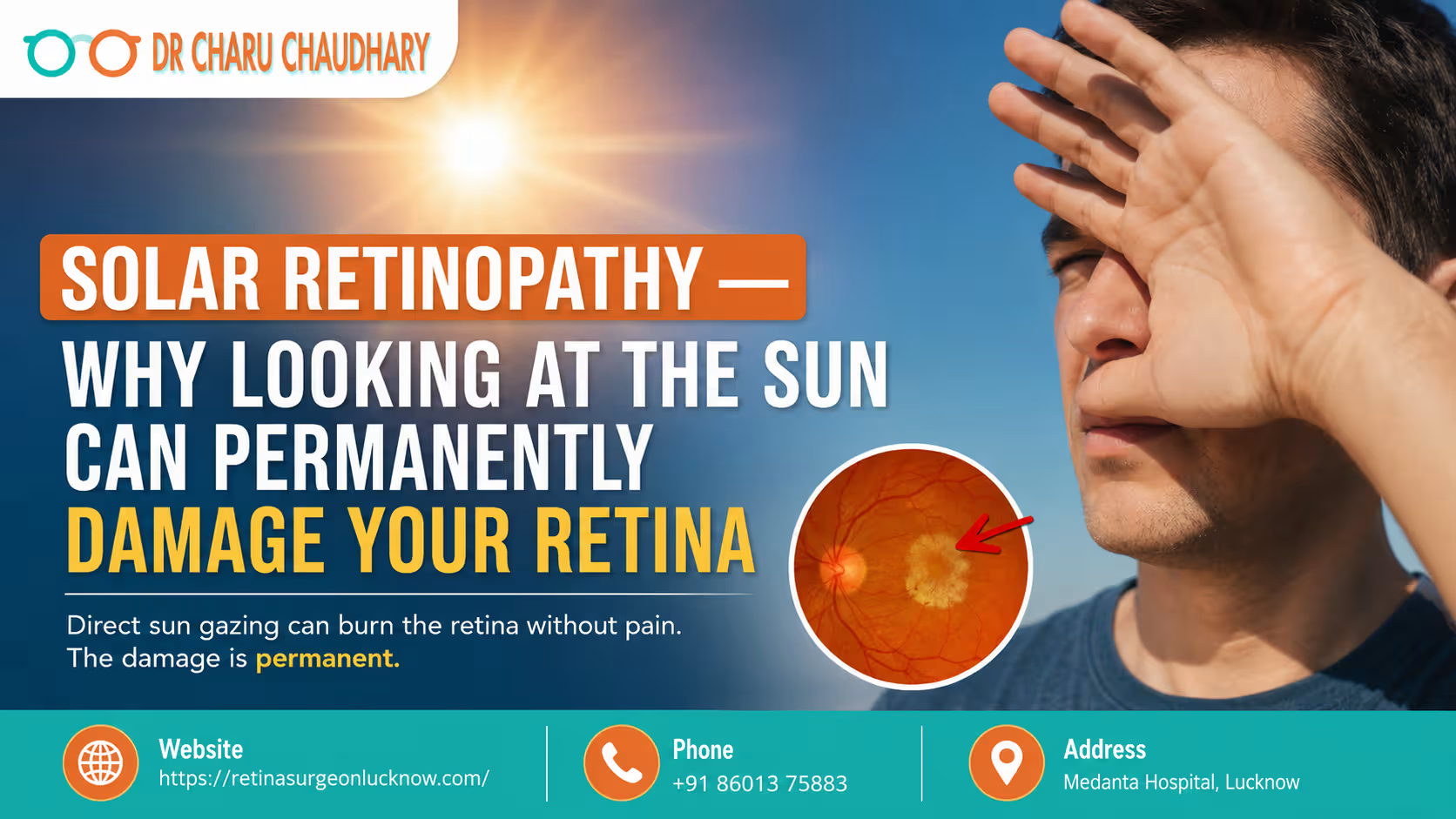
The human eye is a marvel of biological engineering, capable of processing millions of pieces of information every second. However, despite its complexity, it is incredibly fragile. One of the most significant yet preventable threats to our vision comes from an object we see every day: the sun. While sunlight is essential for life, directing your gaze toward it – even for a short period—can lead to a serious condition known as Solar Retinopathy. Solar Retinopathy occurs when intense sunlight damages the retina, particularly the macula. Even a few seconds of direct looking at the sun can cause blurred vision, blind spots, distorted vision, and sometimes permanent retinal damage. In this comprehensive guide, we will explore the mechanisms of solar eye damage, why the macula is so vulnerable, and what steps you should take if you suspect your vision has been compromised. According to Dr Charu Chaudhary, a leading Retina Surgeon in Lucknow, awareness is the first line of defense against this potentially sight-threatening condition. What Is Solar Retinopathy? Solar retinopathy is a clinical condition characterized by damage to the retinal tissues, specifically the fovea, resulting from exposure to solar radiation. It is most commonly associated with watching a solar eclipse without proper eye protection, but it can also occur from “sun gazing” during religious rituals, meditation, or accidental direct exposure. Why Looking at the Sun Is More Dangerous Than Most People Realize Many people assume that the eye’s natural “blink reflex” or the discomfort caused by bright light is enough to protect them. However, the sun’s rays are powerful enough to bypass these defenses. When you stare at the sun, your eye acts like a magnifying glass, focusing the intense light onto a tiny spot on your retina. This concentration of energy can literally “cook” the delicate light-sensing cells. Can Just a Few Seconds of Sun Gazing Cause Permanent Damage? The short answer is yes. The intensity of solar radiation is such that photochemical damage can begin in as little as a few seconds. Because the retina lacks pain receptors, you will not feel the damage occurring. You might only realize the extent of the injury hours later when your vision begins to blur, or a dark spot appears in your central field of view. Why Awareness Is Important Education is critical because solar retinopathy is entirely preventable. Dr Charu Chaudhary emphasizes that many patients who visit a Retina Specialist in Lucknow after a solar eclipse or sun-gazing activity were unaware of the risks. Understanding how the eye processes light and where the damage occurs is essential for lifelong eye health. Understanding the Retina and How Vision Works To understand solar retinopathy, one must first understand the anatomy of the eye. What Is the Retina? The retina is the thin layer of light-sensitive tissue lining the back of the eye. Think of it as the “film” in a traditional camera or the digital sensor in a smartphone. Its job is to receive light that the lens has focused, convert that light into neural signals, and send these signals to the brain for visual recognition. What Is the Macula? At the very center of the retina lies the macula. This small area is responsible for our central, high-resolution vision. It allows us to read, drive, recognize faces, and see fine details. Within the macula is the fovea, the point of sharpest vision. This is the area most frequently damaged in solar retinopathy. Why the Retina Is Extremely Sensitive to Light The retina contains millions of specialized cells called photoreceptors (rods and cones). These cells are packed with light-sensitive pigments. While they are designed to detect light, they are also highly susceptible to “oxidative stress” when overwhelmed by high-intensity radiation. How the Retina Converts Light Into Vision When light hits the photoreceptors, it triggers a chemical reaction that generates an electrical impulse. These impulses travel through the optic nerve to the visual cortex of the brain. When intense solar energy hits these cells, the chemical reaction becomes hyper-activated, leading to the production of toxic free radicals that destroy the cell structure. How Sunlight Damages Your Retina Solar retinopathy isn’t just a simple “burn.” It involves complex biological processes. Thermal Injury vs. Photochemical Injury Thermal Injury (Photocoagulation): This occurs when the temperature of the retinal tissue rises significantly (usually by 10°C or more), essentially burning the tissue. This usually requires very intense, focused light. Photochemical Injury: This is the more common cause of solar retinopathy. Even without a significant temperature rise, shorter wavelengths of light (blue light and UV rays) trigger a chemical reaction that creates “reactive oxygen species.” These molecules damage the Retinal Pigment Epithelium (RPE) and the photoreceptors. What Happens Inside the Eye During Sun Exposure When you look at the sun, the lens of your eye focuses the sun’s rays into a tiny point on the fovea. The energy density at this point is thousands of times higher than the ambient light. This causes an immediate disruption of the outer segments of the photoreceptors. Why UV and Visible Light Can Harm Retinal Cells While the cornea and lens filter out most UV-B and UV-C rays, UV-A and high-energy visible (HEV) blue light reach the retina. These wavelengths carry enough energy to break molecular bonds within the retinal cells. Can Damage Occur Without Pain? This is the most dangerous aspect of solar retinopathy. The retina has no nerves that transmit pain. Therefore, a person can stare at the sun long enough to cause permanent blindness without feeling any physical discomfort until the visual symptoms manifest later. The Mechanism of Solar Retinal Damage (Step-by-Step) StepProcessAction in the Eye1Direct ExposureIntense solar radiation enters the pupil.2FocusingThe cornea and lens concentrate the light onto the macula/fovea.3AbsorptionRetinal pigments (melanin and lipofuscin) absorb the energy.4Chemical StressFormation of free radicals and reactive oxygen species.5Cellular DamageDestruction of the photoreceptor outer segments and RPE.6InflammationThe body’s immune response causes localized swelling and fluid. Common Causes of Solar Retinopathy While the sun is the source, the context of exposure varies. Watching a Solar Eclipse Without Protection: This is the leading cause. ...
In recent years, the prevalence of retinal diseases has seen a significant surge across India, with Lucknow being no exception. As a major healthcare hub in Uttar Pradesh, Lucknow witnesses thousands of patients daily seeking specialized care for vision-threatening conditions. The retina, a thin layer of light-sensitive tissue at the back of the eye, acts much like the film in a traditional camera. When it becomes damaged due to age, diabetes, or trauma, the consequences can be devastating, often leading to irreversible vision loss if left untreated. One of the primary concerns for patients and their families when facing a retinal diagnosis is the financial aspect. “How much will the treatment cost?” is usually the first question asked after a diagnosis is confirmed. Understanding the Retina Treatment Cost is essential for making informed decisions, planning finances, and ensuring that quality care is not delayed. Early intervention is not just a clinical necessity; it is a financial strategy. Detecting a retinal tear early might cost a few thousand rupees for a laser procedure, whereas ignoring it could lead to a retinal detachment requiring surgery costing tens of thousands.Retina Treatment Cost in Lucknow varies depending on the retinal condition, diagnostic tests, treatment method, and whether surgery is required. Early diagnosis often reduces complications, treatment complexity, and overall healthcare expenses, ensuring better visual outcomes at a lower cost. Quick Facts: Retina Treatment at a Glance Service/TreatmentApproximate Cost Range (INR)Recovery TimelineConsultation (Retina Specialist)₹500 – ₹1,500ImmediateOCT Scan (Optical Coherence Tomography)₹1,500 – ₹3,500ImmediateFundus Photography/Angiography₹2,000 – ₹5,0001 – 2 HoursRetina Laser Treatment (per session)₹5,000 – ₹15,0001 – 2 DaysAnti-VEGF Injection (per dose)₹7,000 – ₹60,0001 – 3 DaysRetinal Detachment Surgery₹40,000 – ₹1,20,0002 – 6 WeeksVitrectomy Surgery₹50,000 – ₹1,50,0003 – 8 Weeks What Is the Retina and Why Is It Important? Understanding the Role of the Retina The retina is arguably the most vital part of the eye’s anatomy. It is a complex, multi-layered structure that captures light entering the eye and converts it into electrical signals. These signals are then transmitted via the optic nerve to the brain, which interprets them as images. Without a functioning retina, the eye may be structurally intact, but the “vision” process cannot occur. How the Retina Helps You See Think of the retina as the “sensor” of your eye. The central part of the retina, known as the macula, is responsible for sharp, detailed, central vision. This allows you to read, drive, and recognize faces. The peripheral retina provides you with side vision, helping you navigate your surroundings. What Happens When the Retina Is Damaged? Unlike some other tissues in the body, the retina has a very limited capacity to regenerate. Damage caused by high blood sugar (diabetes), high blood pressure, or physical trauma can lead to scarring, bleeding, or detachment. When the retina is damaged, images become blurred, distorted, or vanish entirely. Because the retina is directly connected to the brain’s visual cortex, any delay in treatment can lead to permanent atrophy of the nerve fibers. Common Retina Conditions That Require Treatment Understanding the specific condition you have is the first step in estimating the retinal disease treatment cost. Different pathologies require vastly different approaches. 1. Diabetic Retinopathy This is the leading cause of blindness among working-age adults. Chronic high blood sugar damages the tiny blood vessels inside the retina. Symptoms: Floating spots (floaters), blurred vision, and dark areas in the visual field. Risk Factors: Long-term diabetes, poor glucose control, hypertension, and high cholesterol. Treatment Options: Laser photocoagulation, Anti-VEGF injections, or vitrectomy in advanced cases. 2. Retinal Detachment A medical emergency where the retina pulls away from its underlying layer of support tissue. Warning Signs: Sudden appearance of many floaters, flashes of light (photopsia), and a “curtain” falling over the field of vision. Emergency Treatment: Surgery is almost always required to “re-attach” the retina to prevent permanent blindness. 3. Age-Related Macular Degeneration (AMD) Common in individuals over 50, AMD affects the macula. Dry AMD: The macula thins over time. Currently managed with specialized vitamins and monitoring. Wet AMD: Abnormal blood vessels grow under the retina and leak fluid. Requires frequent Anti-VEGF injections. 4. Retinal Vein Occlusion (RVO) A blockage of the small veins that carry blood away from the retina. This often causes sudden, painless vision loss in one eye and requires injections or laser treatment to manage swelling (edema). 5. Macular Edema This refers to the swelling of the macula, often a complication of diabetes or RVO. The eye retina treatment for this usually involves a series of injections. 6. Retinal Tears and Holes Small breaks in the retina can lead to detachment. These are often treated quickly with “green laser” therapy to seal the edges of the tear. Retina Treatment Cost in Lucknow: Overview Lucknow offers a wide spectrum of eye care, ranging from government-run charitable hospitals to ultra-modern private eye centers. The Retina treatment price in Lucknow is generally more affordable than in Delhi or Mumbai, but the quality of technology and surgical expertise remains world-class. Average Cost Range A patient can expect to spend anywhere from ₹5,000 for a minor laser procedure to ₹1,50,000 for a complex vitreoretinal surgery involving imported silicon oil or gases. Why Treatment Costs Vary It is difficult to provide a single “price tag” for retina care because no two eyes are the same. A Retina specialist in Lucknow will determine the price based on: Complexity: A simple tear vs. a total retinal detachment with scarring. Technology: Use of advanced 3D visualization systems during surgery. Consumables: The type of injections or surgical gases used. In-patient vs. Out-patient: Whether the procedure requires an overnight stay. Diagnostic Investigation Costs Accurate diagnosis is the foundation of successful treatment. Before any procedure, a Retina Specialist in Lucknow will perform several tests to map the extent of the damage. Diagnostic TestPurposeEstimated Cost (INR)Consultation FeeExpert evaluation of the eye₹500 – ₹1,500OCT ScanCross-sectional imaging of the retina₹1,500 – ₹3,500Fundus Fluorescein Angiography (FFA)Mapping blood flow with dye₹2,500 – ₹4,500B-Scan UltrasoundSeeing the retina when cataracts are present₹800 – ₹1,500Indocyanine Green Angiography (ICG)Visualizing deeper choroidal vessels₹5,000 – ₹8,000Optical Coherence Tomography Angiography (OCTA)Non-invasive blood flow mapping₹3,000 – ₹6,000 The retina checkup cost usually includes a dilated eye exam and ...
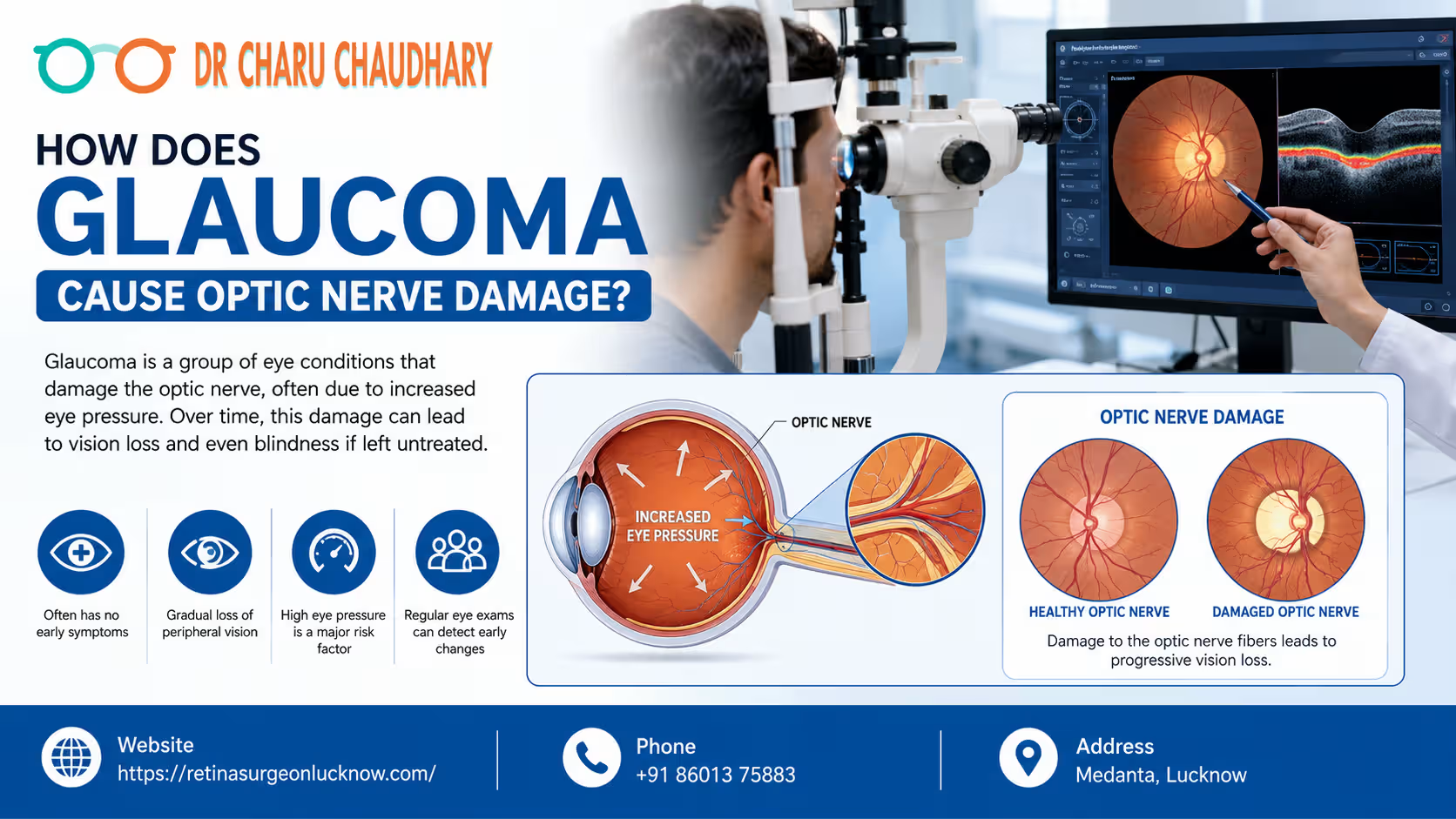
Vision is often considered our most precious sense, yet many of us take it for granted until it begins to fade. Among the various conditions that can threaten our sight, glaucoma stands out as one of the most mysterious and dangerous. Often called the “silent thief of sight,” glaucoma is a group of eye conditions that damage the optic nerve—the vital link between your eye and your brain. Because this damage often happens slowly and without pain, millions of people worldwide are unaware they even have the condition until significant vision loss has occurred. Understanding the relationship between glaucoma and optic nerve health is the first step toward prevention. In this comprehensive guide, we will explore the mechanics of glaucoma optic nerve damage, why early detection is life-changing, and how experts like Dr. Charu Chaudhary are helping patients preserve their vision. How Glaucoma Damages the Optic Nerve Glaucoma causes optic nerve damage by increasing pressure inside the eye or reducing blood supply to the nerve fibers. Over time, this pressure crushes sensitive nerve cells, leading to permanent vision loss if the condition is not detected and treated early. What Is Glaucoma? Understanding the Basics At its core, glaucoma is not just a single disease but a category of ocular disorders characterized by progressive damage to the optic nerve. Understanding Glaucoma in Simple Terms Think of your eye like a sink with a faucet and a drain. The “faucet” produces a clear fluid called aqueous humor to nourish the eye. The “drain” (located at the angle where the iris and cornea meet) allows this fluid to leave. In a healthy eye, the production and drainage are balanced. In glaucoma, the drain gets clogged or works inefficiently, causing fluid to build up. This buildup increases pressure, which eventually pushes against the optic nerve. How Common Is Glaucoma? Glaucoma is a leading cause of irreversible blindness globally. According to the World Health Organization (WHO), it is the second leading cause of blindness after cataracts. However, unlike cataracts, which can be surgically “cured” to restore sight, the vision loss caused by glaucoma is permanent. Why Glaucoma Is a Serious Eye Disease The danger of glaucoma lies in its stealthy nature. In the most common form (open-angle glaucoma), there are no symptoms in the early stages. No pain, no redness, and no sudden blurring. By the time a patient notices a “tunnel vision” effect, up to 40% of the optic nerve fibers may already be destroyed. This is why Dr. Charu Chaudhary emphasizes that regular screenings are the only way to catch the thief before it steals your sight. Can Glaucoma Cause Permanent Blindness? Yes. If left untreated, glaucoma eventually destroys the entire optic nerve, resulting in total blindness. However, with modern medical interventions and early diagnosis by the Best Eye Specialist in Lucknow, the vast majority of patients can maintain functional vision for the rest of their lives. What Is the Optic Nerve and Why Is It Important? To understand glaucoma optic nerve damage, we must first understand what the optic nerve does. How the Optic Nerve Connects the Eye to the Brain The optic nerve is often described as the “electric cable” of the eye. It is composed of more than a million tiny nerve fibers (retinal ganglion cells). These fibers collect visual information from the retina (the light-sensitive tissue at the back of the eye) and transmit it to the brain. How Visual Signals Travel Light enters the eye and hits the retina. The retina converts light into electrical impulses. These impulses travel along the million-plus fibers of the optic nerve. The brain receives these signals and interprets them as the images we “see.” Why Healthy Optic Nerves Are Essential for Vision Without a functional optic nerve, the eye and the brain cannot communicate. Even if your eye is perfectly healthy in every other way—clear lens, healthy retina, perfect cornea—you will be blind if the optic nerve is severed or destroyed. It is the “bridge” of sight. What Happens When the Optic Nerve Gets Damaged? When the fibers within the optic nerve begin to die, the “cable” loses its ability to transmit full images. Initially, the brain compensates for small gaps in the visual field. However, as more fibers die, the gaps become larger, leading to permanent blind spots. How Does Glaucoma Cause Optic Nerve Damage? The process of damage is complex and can involve several biological mechanisms. 1. Increased Eye Pressure (Intraocular Pressure – IOP) High intraocular pressure is the most significant risk factor for glaucoma. When fluid (aqueous humor) cannot drain properly, the pressure inside the eye rises. This pressure exerts physical force on the optic nerve head (the point where the nerve leaves the eye). Over time, this mechanical stress compresses the nerve fibers and the tiny blood vessels that nourish them. 2. Reduced Blood Supply to the Optic Nerve Some patients develop glaucoma even with “normal” eye pressure. This suggests that poor blood flow (ischemia) to the optic nerve also plays a role. If the blood vessels supplying the nerve are narrow or if blood pressure is too low, the nerve cells don’t get enough oxygen and nutrients, leading to cell death. 3. Damage to Retinal Nerve Fibers The optic nerve is made of the axons of retinal ganglion cells. Glaucoma specifically targets these cells. The high pressure or low blood flow triggers a process called “apoptosis” or programmed cell death. Once these cells die, they do not regenerate. 4. Progressive Loss of Nerve Cells The damage usually starts at the outer edges of the optic nerve, which corresponds to our peripheral (side) vision. As the disease progresses, the damage moves inward toward the center, eventually affecting central vision and leading to total blindness. Why the Damage Is Usually Permanent Unlike skin or bone, the nerve cells in the human central nervous system (which includes the optic nerve) do not have the capacity to regrow once they are dead. This is why glaucoma treatment focuses on “saving what’s left” rather than “restoring what’s lost.” The Step-by-Step Process of ...
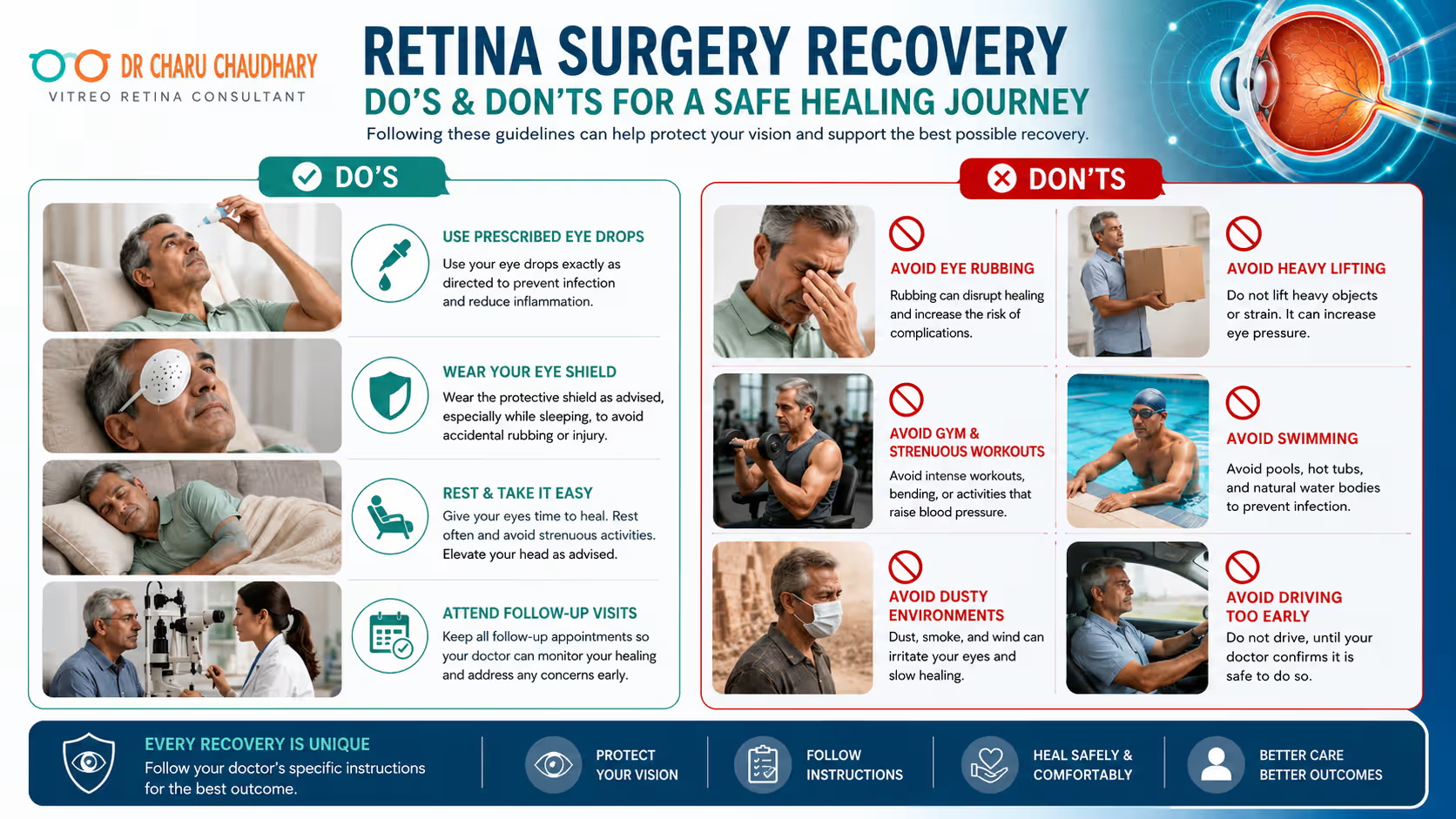
The success of a retinal procedure does not end when the surgeon steps out of the operating room. In fact, for many patients, the most critical phase begins the moment they head home. The retina is a delicate, light-sensitive tissue at the back of the eye, responsible for translating light into the images we see. Because it is so fragile, surgery involving the retina—whether to repair a detachment, clear a hemorrhage, or fix a macular hole—requires a meticulous and disciplined recovery process. Understanding the do’s and don’ts after retina surgery is essential for protecting your vision and ensuring the surgical site heals correctly. Many patients feel anxious about what they can and cannot do. This guide is designed to provide comprehensive, expert-backed information to help you navigate your recovery journey with confidence. Recovery after retina surgery requires careful eye protection, proper medication use, follow-up appointments, and activity restrictions. Following your surgeon’s instructions can reduce complications, support healing, and improve long-term visual outcomes. Understanding Retina Surgery What Is the Retina? The retina is a thin layer of neural tissue lining the inner back surface of the eye. Think of it as the “film” in a traditional camera. It captures light rays that enter the eye and converts them into electrical impulses that the brain interprets as images. If the retina is damaged, scarred, or detached, the “film” becomes distorted or blank, leading to significant vision loss or even permanent blindness. Common Conditions Requiring Retina Surgery Retinal surgery is usually recommended when conservative treatments are insufficient. Common conditions include: Retinal Detachment: When the retina pulls away from its underlying layer of blood vessels. Macular Hole: A small break in the macula, the part of the retina responsible for central, sharp vision. Diabetic Retinopathy: Advanced stages involving vitreous hemorrhage or tractional detachment. Epiretinal Membrane: A thin sheet of scar tissue that develops over the macula, distorting vision. CMV Retinitis or Endophthalmitis: Severe internal eye infections. Types of Retina Surgery Modern ophthalmology utilizes advanced techniques to repair these issues. According to Dr Charu Chaudhary, a renowned expert and the Best Retina Specialist in Lucknow, understanding your specific procedure helps in adhering to recovery protocols. Vitrectomy This is the most common retina surgery. The surgeon removes the vitreous gel (the clear fluid filling the eye) to better access the retina. The vitreous is then replaced with a saline solution, a gas bubble, or silicone oil. Retinal Detachment Surgery Techniques include Scleral Buckling (placing a flexible band around the eye to push the wall against the retina) or Pneumatic Retinopexy (injecting a gas bubble into the eye to push the retina back into place). Macular Hole Surgery Usually involves a vitrectomy followed by “peeling” a very thin membrane from the surface of the retina to encourage the hole to close. A gas bubble is almost always used here. Epiretinal Membrane Surgery Similar to macular hole surgery, the surgeon removes the vitreous and then delicately peels the scar tissue (membrane) off the retina to reduce distortion. What to Expect Immediately After Retina Surgery The first few hours and days following surgery are often the most uncomfortable, but they are also the most vital for long-term success. First 24 Hours Immediately after surgery, you will likely wear an eye patch and a protective plastic shield. You may feel groggy from sedation. It is normal to feel a “scratchy” sensation, as if there is sand in your eye. This is often due to the tiny incisions or sutures used during the procedure. Vision Changes After Surgery Do not be alarmed if your vision is extremely blurry or if you can only see light and shadows immediately after surgery. If a gas bubble was used, your vision will be blocked by the bubble, making it feel like you are looking through water or a dark curve. As the bubble dissipates, your vision will gradually clear from the top down. Eye Discomfort and Redness The white part of your eye (the sclera) may appear very red or even bloodshot. This is a common side effect of the surgical manipulation and will resolve over 2–3 weeks. Mild aching is normal and can usually be managed with over-the-counter pain relief recommended by your specialist. Protective Eye Shield You will be instructed to wear a protective shield, especially while sleeping, for at least the first week. This prevents accidental rubbing or pressure on the eye during the night. Recovery Timeline After Retina Surgery Recovery is a marathon, not a sprint. Below is a general timeline for recovery after retina surgery. Recovery PeriodWhat Patients Can ExpectFirst 24 HoursPatching of the eye, significant blurring, mild pain, and the need for total rest.First WeekFrequent use of antibiotic/steroid eye drops; strict head positioning (if a bubble was used); restricted activity.2–4 WeeksRedness fades; vision begins to stabilize; gas bubble (if used) starts to shrink; can often return to light office work.1–3 MonthsMost activity restrictions are lifted; vision continues to improve; final eye glass prescription may be updated.3–6 MonthsFull healing achieved; the “new normal” for vision is established; long-term monitoring continues. Note: Every patient heals differently. Always follow the specific timeline provided by Dr Charu Chaudhary or your attending retina specialist. Important Do’s After Retina Surgery Use Eye Drops Exactly as Prescribed Your surgeon will prescribe a combination of antibiotic drops (to prevent infection) and steroid drops (to reduce inflammation). Do: Wash your hands before applying drops. Do: Wait at least 5 minutes between different types of drops. Do: Finish the entire course, even if the eye feels better. Attend All Follow-Up Visits Post-operative appointments are non-negotiable. Your surgeon needs to monitor the intraocular pressure (IOP) and ensure the retina is staying in place. Missing an appointment could mean missing early signs of a complication. Maintain Proper Head Positioning If a gas or oil bubble was placed in your eye, you may be required to maintain a specific head position (face-down or side-lying) for 23 hours a day for 1–2 weeks. This ensures the bubble floats to the correct spot to “plug” the retinal tear or hole. Protect Your Eye From Injury Wear your ...
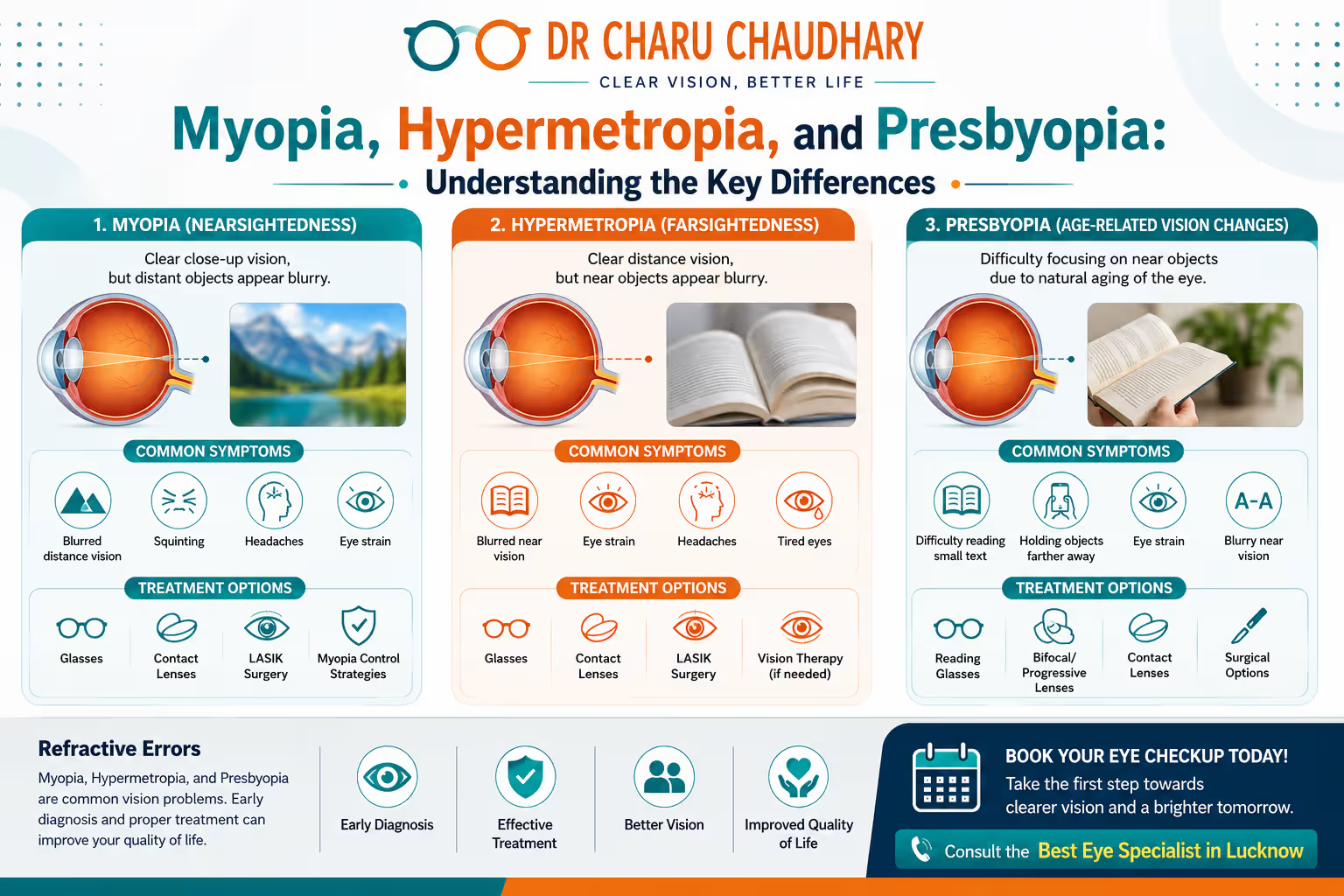
Clear vision is something many of us take for granted until things start to look a little blurry. Whether you are struggling to read the fine print on a menu, finding it hard to see road signs while driving, or noticing that your child is squinting at the television, vision changes can be unsettling. The most common reasons for blurred vision are refractive errors. While the terms Myopia, Hypermetropia, and Presbyopia might sound like complex medical jargon, they represent the three most frequent ways our eyes struggle to focus light. Understanding these conditions is the first step toward reclaiming clear sight and maintaining long-term eye health. Myopia, Hypermetropia, and Presbyopia are common refractive errors affecting how the eye focuses light. Myopia (nearsightedness) causes difficulty seeing distant objects. Hypermetropia (farsightedness) affects near vision clarity. Presbyopia is an age-related condition where the eye’s lens loses flexibility, making it difficult to focus on close-up tasks like reading. Introduction Vision is perhaps our most dominant sense, guiding how we interact with the world, learn, and work. However, according to the World Health Organization, refractive errors are the leading cause of vision impairment globally. Despite their prevalence, many people confuse these conditions, leading to delayed treatment or incorrect assumptions about their eye health. The modern lifestyle—characterized by increased screen time and less outdoor activity—has led to a surge in cases of Myopia, especially among children. On the other hand, as the global population ages, Presbyopia has become a universal experience for those over 40. Meanwhile, Hypermetropia often goes undiagnosed in children because the eye’s internal muscles work overtime to compensate, often leading to hidden eye strain. Early diagnosis is vital. Uncorrected refractive errors don’t just cause blurriness; they can lead to chronic headaches, reduced productivity, and, in children, developmental delays or “lazy eye” (amblyopia). This guide will break down the mechanics of the eye, explain the differences between these three conditions, and help you understand the path to perfect vision. How Normal Vision Works To understand what goes wrong in refractive errors, we must first understand how a “normal” eye (emmetropia) functions. Anatomy of the Eye Think of your eye as a high-tech camera. It has a protective outer layer, a lens for focusing, and a “film” or sensor at the back that captures the image. The main components involved in vision are the cornea, the lens, and the retina. Role of the Cornea and Lens Light enters the eye through the cornea, the clear, dome-shaped front surface. The cornea provides most of the eye’s optical power by bending (refracting) incoming light. Behind the cornea sits the crystalline lens, which is flexible. This flexibility allows the lens to change shape to fine-tune your focus, a process called accommodation. How Light Focuses on the Retina In a perfectly shaped eye, the cornea and lens work in harmony to bend light rays so they land precisely on a single focal point on the retina. The retina is a light-sensitive layer of tissue at the back of the eye. It converts light into neural signals and sends them via the optic nerve to the brain, which interprets them as images. What Happens When Vision Becomes Blurry Vision becomes blurry when the light does not land exactly on the retina. If the eye is too long, too short, or the cornea is too curved, the light focus lands in front of or behind the retina. This mismatch is what we call a refractive error. What Are Refractive Errors? Definition of Refractive Errors A refractive error is a type of vision problem that makes it hard to see clearly. It happens when the shape of your eye keeps light from focusing correctly on your retina. It is not a “disease” in the traditional sense, but rather an anatomical mismatch in the eye’s optical system. Why Refractive Errors Occur Refractive errors typically occur due to one of three factors: Eyeball Length: The eye is either too long (Myopia) or too short (Hypermetropia). Corneal Curvature: The cornea is too steeply curved or too flat. Lens Aging: The lens loses its ability to change shape (Presbyopia). Common Types of Refractive Errors The four main types are: Myopia: Nearsightedness. Hypermetropia: Farsightedness. Presbyopia: Age-related near-vision loss. Astigmatism: Distorted vision at all distances due to an irregularly shaped cornea. Impact on Daily Life Uncorrected refractive errors can make it difficult to perform everyday tasks. For a student, it means not being able to see the whiteboard. For a professional, it means digital eye strain and blurred text. For an older adult, it can mean a loss of independence when reading labels or using a phone. What Is Myopia (Nearsightedness)? Understanding Myopia Myopia, commonly known as nearsightedness, is a condition where close-up objects appear clear, but distant objects—like street signs or a movie screen—look blurry. It is the most common refractive error worldwide and is reaching epidemic levels in urban populations. Causes of Myopia Myopia occurs when the eyeball is too long relative to the focusing power of the cornea and lens. This causes light rays to focus at a point in front of the retina instead of directly on its surface. It can also be caused by a cornea that is too steeply curved. Symptoms of Myopia Blurry vision when looking at distant objects. The need to squint or partially close the eyelids to see clearly. Headaches caused by excessive eye strain. Difficulty seeing while driving, especially at night (night myopia). Risk Factors Genetics: If one or both parents are myopic, the child has a higher risk. Environmental Factors: Lack of time spent outdoors and excessive “near work” (reading, using tablets/phones) are strongly linked to the onset of myopia in children. How Myopia Progresses Myopia usually starts in childhood and can progress until the early 20s as the eyeball continues to grow. High myopia (severe nearsightedness) increases the risk of serious eye conditions later in life, such as retinal detachment, cataracts, and glaucoma. Treatment Options Glasses: Concave lenses (minus power) are used to move the focal point back onto the retina. Contact Lenses: Provide a wider field of vision than glasses. LASIK: A popular laser surgery that reshapes the cornea to ...
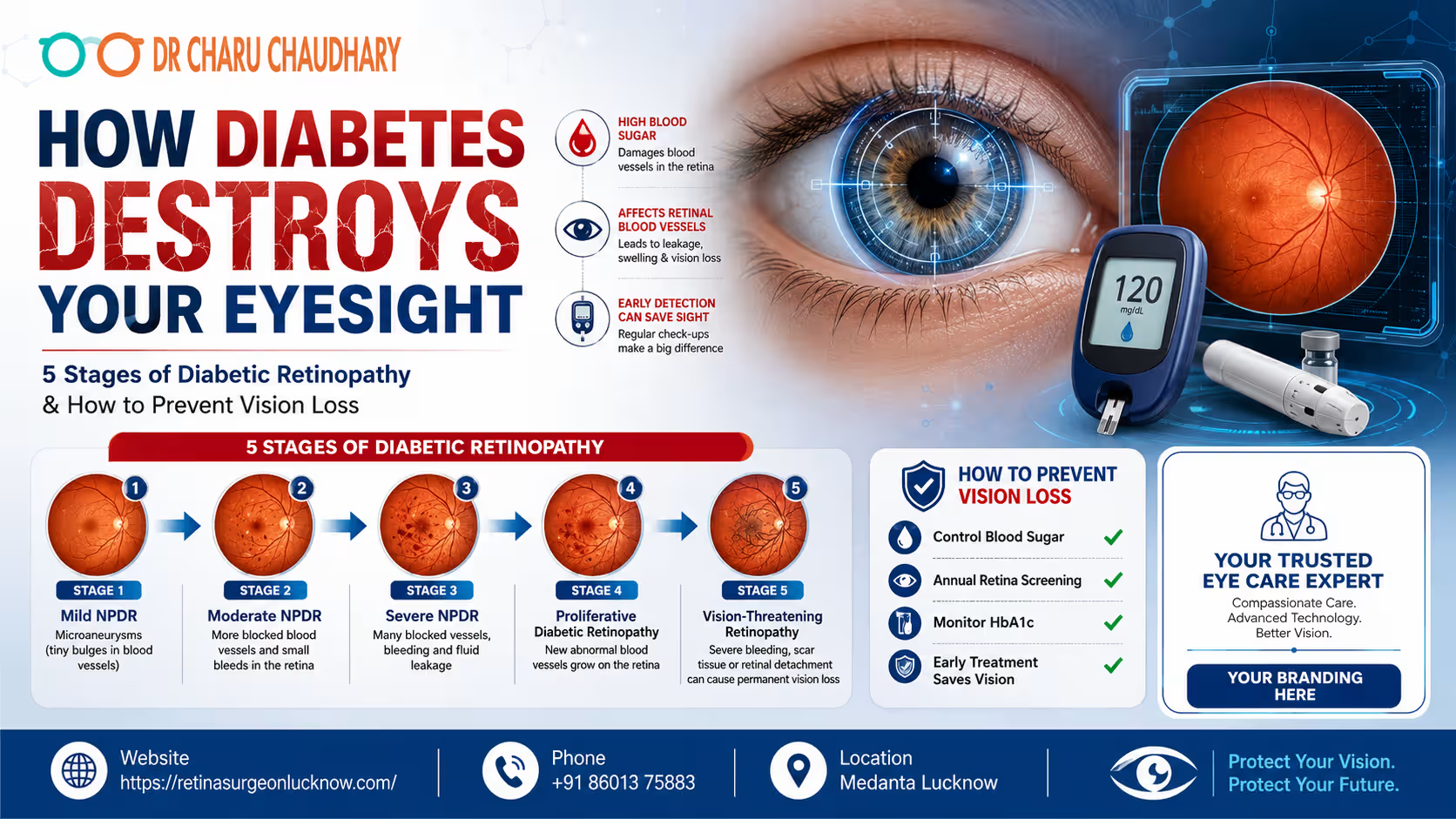
India is currently facing a dual epidemic: the explosion of diabetes and the subsequent rise in vision impairment. As the “Diabetes Capital of the World,” the burden of managing complications like diabetic retinopathy has never been more critical. This condition, often referred to as the “silent thief of sight,” remains the leading cause of preventable blindness in adults worldwide. Diabetic Retinopathy is a diabetes-related eye disease caused by damage to retinal blood vessels. Early diagnosis, good blood sugar control, and regular retina screening can help prevent severe vision loss and blindness. The Hidden Link Between Blood Sugar and Blindness The numbers are startling. According to recent health surveys, nearly one in every three people with diabetes will develop some form of eye damage. In the bustling landscape of Uttar Pradesh, particularly in cities like Lucknow, the prevalence of Type 2 diabetes is shifting toward younger age groups. This shift means people are living with high blood sugar for longer periods, significantly increasing the window for “Diabetic Vision Loss” to occur. Most patients believe that if they can see clearly, their eyes are healthy. This is a dangerous misconception. Diabetic retinopathy often begins without a single symptom. By the time vision becomes blurred or “floaters” appear, the disease has likely progressed to a stage where advanced medical intervention is required. This guide aims to bridge the gap between awareness and action, helping you understand how diabetes affects your eyes and what you can do to stop it. Key Facts About Diabetic Retinopathy To understand the gravity of this condition, let’s look at the data provided by global health leaders like the WHO, International Diabetes Federation (IDF), and the American Academy of Ophthalmology (AAO): Prevalence: Over 100 million people in India are diabetic, and roughly 18% of them have some stage of retinopathy. Preventability: Up to 95% of vision loss from diabetic retinopathy can be prevented with early detection and timely treatment. The 10-Year Mark: Approximately 80% of people who have had diabetes for 10 years or more will have some degree of retinal damage. Global Leading Cause: It is the primary cause of blindness in the working-age population (20–74 years). HbA1c Impact: A sustained reduction of just 1% in HbA1c can reduce the risk of microvascular complications like retinopathy by nearly 35%. What Is Diabetic Retinopathy? At its core, Diabetic Retinopathy is a microvascular complication. The retina is the thin layer of light-sensitive tissue at the back of your eye. It functions like the sensor in a digital camera, capturing light and converting it into electrical signals that the brain interprets as images. For the retina to function, it requires a constant and healthy supply of oxygen and nutrients through a network of tiny, delicate blood vessels. When blood sugar levels remain high for extended periods, it damages the structural integrity of these vessels. They become weak, leak fluid, or close off entirely. This process is the foundation of “Diabetic Eye Disease.” How Diabetes Affects Your Eyesight The destruction of eyesight via diabetes is a progressive, biological cascade: Vessel Wall Weakening: High glucose levels interfere with the cells (pericytes) that provide structure to the capillary walls in the eye. Permeability and Leakage: As walls weaken, the vessels become “leaky.” Blood and fatty fluids (exudates) seep into the retinal tissue. Ischemia (Oxygen Starvation): Eventually, the damaged vessels collapse or become blocked. This leaves parts of the retina starved of oxygen. Neovascularization: In a desperate attempt to survive, the retina sends out signals (VEGF) to grow new blood vessels. However, these new vessels are abnormal, fragile, and prone to breaking. Scarring and Detachment: If left unchecked, these new vessels cause scarring, which can pull the retina away from its position, leading to permanent blindness. Why Diabetic Eye Damage Often Goes Unnoticed The human brain is remarkably good at compensating for small gaps in vision. In the early stages of retinopathy, the damage usually occurs in the peripheral (side) retina. Because your central vision remains sharp, you may not notice anything is wrong. Furthermore, diabetic eye damage does not cause pain. Unlike a “red eye” or an infection, there is no physical discomfort to alert the patient. This “silent progression” is why annual diabetic eye screening is non-negotiable for every diabetic patient, regardless of their current visual clarity. The 5 Stages of Diabetic Retinopathy Medical professionals categorize the progression of this disease to determine the appropriate treatment path. Stage 1 – Mild Non-Proliferative Diabetic Retinopathy (NPDR) This is the “alert” stage. At this point, tiny, balloon-like swellings called microaneurysms appear in the retinal blood vessels. Symptoms: None. Vision is usually 20/20. Treatment: No medical eye treatment is usually required. The focus is entirely on managing blood sugar, blood pressure, and cholesterol. Stage 2 – Moderate Non-Proliferative Diabetic Retinopathy As the disease advances, more blood vessels swell and lose their ability to transport blood. They may begin to leak blood and fluid, causing the retina to look “spotted” during an exam. Symptoms: Most patients still experience no symptoms, though some may notice slight changes in color perception. Treatment: Increased frequency of eye checkups (every 6 months). Stage 3 – Severe Non-Proliferative Diabetic Retinopathy In this critical stage, a large number of blood vessels are blocked, depriving several areas of the retina of blood flow. These areas secrete growth factors that signal the eye to start growing new vessels. Symptoms: Occasional blurred vision or “heaviness” in the eyes. Risk: Extremely high risk of progressing to the proliferative stage within months. Treatment: A retina specialist in Lucknow may recommend early injections or laser therapy to prevent the “explosion” of new vessel growth. Stage 4 – Proliferative Diabetic Retinopathy (PDR) This is the advanced, vision-threatening stage. The “proliferative” part refers to the rapid growth of new, fragile blood vessels (neovascularization) along the inside surface of the retina and into the vitreous gel. Symptoms: Sudden出现 (appearance) of floaters, cobwebs, or dark spots. These are caused by the new vessels leaking blood into the center of the eye. Treatment: Urgent Panretinal Photocoagulation (Laser) or Anti-VEGF injections. Stage 5 – Advanced Vision-Threatening Diabetic Retinopathy If PDR is left untreated, it leads to severe complications. The abnormal vessels ...
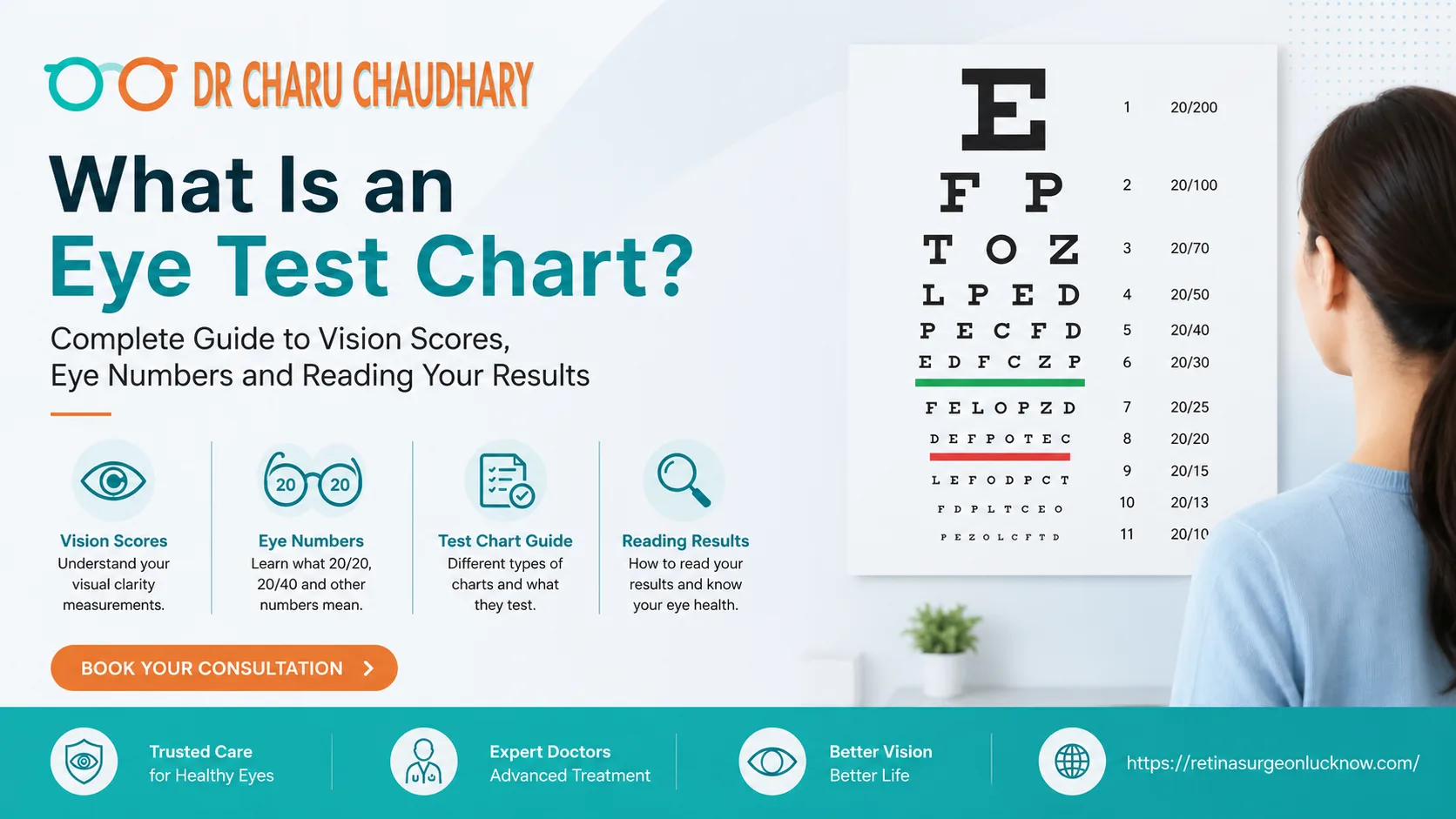
An eye test chart, most commonly the Snellen chart, is a clinical tool used by eye specialists to measure visual acuity and sharpness. During an eye exam, patients read rows of letters or symbols from a specific distance to determine their vision score, such as 20/20 or 6/6. These charts help doctors identify vision errors and determine if glasses or further medical treatments are necessary.Have you ever sat in a dim exam room, covering one eye, and trying to read a line of letters that seem to shrink as they go down? Most of us have encountered the classic “E” chart at some point. As an eye specialist, I, Dr. Charu Chaudhary, find that while many people have taken this test, very few actually understand what the results mean. “Does a minus number mean I’m going blind?” or “Is 20/20 vision perfect health?” are questions I hear daily. Understanding your vision shouldn’t be a mystery. This guide is designed to simplify the Snellen chart, decode those confusing eye numbers, and help you interpret your eye reports with confidence. Quick Summary If you are looking for a fast overview of vision scores, here are the essentials: The Gold Standard: The Snellen Chart is the most common tool used to measure how clearly you see at a distance. 20/20 vs. 6/6: These are identical measurements. 20/20 is used in the US (feet), and 6/6 is used in India and Europe (meters). Eye Numbers: A minus (-) sign indicates nearsightedness (myopia), while a plus (+) sign indicates farsightedness (hyperopia). Beyond the Chart: A vision score only measures clarity; it does not check the internal health of the eye, such as the retina or eye pressure. What Is an Eye Test Chart? At its core, an eye test chart is a standardized way to measure “visual acuity.” Visual acuity refers to the sharpness or clarity of your vision at a specific distance. When you visit a clinic, we use these charts to determine if your eyesight meets the “normal” standard or if you have a refractive error that requires correction. The chart consists of various rows of “optotypes”—specially designed letters or symbols. While the chart looks simple, it is a scientifically calibrated tool. Each row represents a different level of visual ability. If you can read the small lines at the bottom, your brain and eyes are working together efficiently to process fine detail. The Snellen Chart — The Gold Standard of Vision Testing The most recognizable eye test chart in the world is the Snellen Chart. Developed in 1862 by Dutch ophthalmologist Herman Snellen, it remains the primary tool used by eye specialists like myself. How the Snellen Chart Works The chart typically features a large letter “E” at the top, followed by rows of letters that get progressively smaller. Standard Distance: In a traditional setup, you stand 20 feet (6 meters) away from the chart. The Comparison: The numbers on the side of the chart (like 20/20) compare your vision to that of a “standard” person. Monocular Testing: We test each eye individually because one eye is often stronger than the other. In my practice, I use the Snellen chart not just to prescribe glasses, but as a “vital sign” for the eye. A sudden drop in your ability to read the Snellen lines can alert us to underlying issues like cataracts or retinal changes. 6 Types of Eye Test Charts — Which One Is Right for You? While the Snellen chart is the most famous, eye specialists use various charts depending on the patient’s age and specific needs. 1. The Classic Snellen Chart Used for adults and children who know the alphabet. It uses a specific set of 10 letters (C, D, E, F, L, N, O, P, T, Z) known as Snellen optotypes. 2. The Tumbling E Chart This is used for people who cannot read the alphabet or for young children. The patient simply indicates which direction the “fingers” of the letter E are pointing (up, down, left, or right). 3. Landolt C Chart Similar to the Tumbling E, this chart uses a circle with a gap (like the letter C). The patient identifies where the gap is located. It is often used in international research for its high level of accuracy. 4. Pediatric Charts (LEA Symbols) For very young children, we use symbols like houses, apples, and hearts. This allows us to test a child’s vision before they even learn their ABCs. 5. Near Vision Charts (Jaeger Chart) This is a small, hand-held card used to test how well you see up close. It is essential for diagnosing “Presbyopia,” the age-related loss of near-focusing ability that usually begins after age 40. 6. Pelli-Robson Contrast Sensitivity Chart This chart doesn’t just measure size; it measures how well you can see objects against a background. This is crucial for patients with glaucoma or those who struggle with night driving. 📊Vision Score Chart — What Is a Normal Eye Test Reading? What does your score actually say about your eyesight? Here is a simple breakdown of common Snellen chart readings. Vision Score (Feet)Vision Score (Metric)Meaning20/206/6Normal Vision: You see at 20ft what a normal person sees at 20ft.20/156/4.5Excellent Vision: You see better than the average person.20/406/12Mild Blur: Most states require at least this for a driver’s license.20/706/21Moderate Impairment: You may struggle to read standard print without help.20/2006/60Severe Impairment: This is the threshold for legal blindness in many regions. What is a “good” eye test score? A score of 20/20 is the clinical standard for “good” vision. However, having 20/20 vision does not necessarily mean your eyes are perfectly healthy—it just means they are seeing clearly at a distance. What is a “bad” eyesight score? If your score is 20/50 or higher (the second number is larger), your vision is significantly limited. At this stage, everyday tasks like recognizing faces across a street or reading street signs become difficult. 📊How to Read Your Eye Test Results — Prescription Decoder After you finish reading the Snellen chart, your specialist will give you a prescription. These numbers can be confusing. Let’s ...
In the busy rhythm of our daily lives, we often take our senses for granted—especially our sight. Our eyes are arguably our most precious sensory organs, processing over 80% of the information we receive from the world around us. However, many of us ignore the subtle “whispers” our eyes send when something is wrong. From a slight blur while reading to a nagging headache after a day at the computer, these early signs of eye problems are often dismissed as mere tiredness or aging. Early signs of eye trouble may include blurry vision, eye pain, redness, floaters, headaches, sensitivity to light, or sudden vision changes. Timely diagnosis and regular eye checkups may help prevent serious vision complications. The reality is that many serious eye conditions, such as glaucoma or macular degeneration, develop silently. They often don’t cause significant pain in their early stages, making it easy to overlook them until permanent damage has occurred. This is why preventive eye care is not just a medical recommendation; it is a necessity for maintaining your quality of life. By understanding the early warning signs and seeking help from an experienced professional, such as Dr. Charu Chaudhary, you can protect your vision for years to come. Recognizing these symptoms early allows for more effective treatments and better long-term outcomes. Why Early Detection of Eye Problems Matters The old saying “prevention is better than cure” holds profound truth in ophthalmology. Early detection is often the only way to halt the progression of diseases that could otherwise lead to irreversible vision loss. Unlike a broken bone that heals or a skin scrape that regenerates, many parts of the eye—such as the optic nerve and the retina—do not have the capacity to repair themselves once they are severely damaged. Regular eye exams serve two primary purposes. First, they ensure that your current vision is as clear as possible, often through corrective lenses. Second, and more importantly, they allow a specialist to look inside the eye to check for signs of systemic health issues. Did you know that an eye exam can sometimes be the first way a doctor detects high blood pressure, diabetes, or even certain types of autoimmune diseases? When you consult the Best Eye specialist in Lucknow, you aren’t just getting a prescription for glasses; you are receiving a comprehensive health screening. Timely intervention can mean the difference between a simple eye drop regimen and a complex surgical procedure later in life. Sign #1 — Blurry Vision Blurry vision is perhaps the most common early sign of eye trouble, but its causes can range from the mundane to the critical. If you find yourself squinting to read street signs or holding your smartphone further away than usual, your eyes are telling you something. Temporary vs. Persistent Blurriness Temporary blurriness can occur due to eye fatigue, excessive screen time, or even dehydration. However, persistent blurriness—where things remain out of focus despite resting—requires professional evaluation. Common Causes Refractive Errors: Conditions like myopia (nearsightedness), hyperopia (farsightedness), and astigmatism are the most frequent culprits. These are easily corrected with glasses or contact lenses. Cataracts: This is a gradual clouding of the eye’s natural lens. While common in older adults, it can start earlier than many realize. Retinal Conditions: Issues with the retina, the light-sensitive layer at the back of the eye, can cause central or peripheral blurriness. Diabetes: Fluctuating blood sugar levels can cause the lens of the eye to swell, leading to inconsistent blurry vision. This is a key reason why diabetic patients must seek the Best Eye specialist in Lucknow for annual screenings. If blurriness comes on suddenly in one eye, it should be treated as a medical emergency, as it could indicate a stroke or a retinal detachment. Sign #2 — Persistent Eye Redness We’ve all had bloodshot eyes after a late night or an early morning flight. However, when redness persists or is accompanied by other symptoms, it’s a sign of inflammation or infection. When Redness is a Concern Redness occurs when the tiny blood vessels on the surface of the eye become swollen or inflamed. This can be caused by: Allergies: Pollen, pet dander, or dust can cause “allergic conjunctivitis.” Infections: Pink eye (conjunctivitis) is highly contagious and requires treatment to prevent spreading. Dry Eye Syndrome: A lack of quality tears can leave the eye irritated and red. Glaucoma Warning: In some cases, a specific type of glaucoma (acute angle-closure) can cause sudden redness along with severe pain. If your eyes are red and you also experience discharge, crusting of the eyelids, or a “gritty” feeling as if sand is in your eye, it is time to schedule a consultation. Sign #3 — Eye Pain or Pressure Eye pain is never “normal.” While it can sometimes feel like a dull ache or a sharp poke, it is a significant warning sign that something is amiss. Types of Eye Pain Surface Pain: Often described as itching or burning, usually related to foreign objects, infections, or irritation. Deep Orbital Pain: A throbbing or aching pain deep within the eye. This can be a sign of internal inflammation, glaucoma, or even sinus issues. The Pressure Sensation Sometimes, you don’t feel “pain” so much as a feeling of “fullness” or pressure behind the eye. This can be linked to ocular hypertension. If left unchecked, high internal eye pressure can damage the optic nerve. Many patients describe this sensation as a “heaviness” that often correlates with headaches. Persistent pain, especially when moving the eyes, should never be ignored and warrants a visit to a specialist like Dr. Charu Chaudhary. Sign #4 — Sudden Floaters or Flashes Floaters are those specks, dots, or “cobwebs” that seem to drift across your field of vision. Most people have a few, and they are usually harmless remnants of the vitreous (the gel-like substance inside the eye). The Danger Zone While a few floaters are normal, a sudden increase in the number of floaters is a major red flag. If these floaters are accompanied by flashes of light (like lightning streaks or camera flashes) or a “curtain” falling over your vision, ...

The human eye is often described as a camera, and the retina is the delicate film at the back that captures every image we see. When the retina is healthy, vision is sharp and vibrant. However, various retinal diseases can cause fluid to leak or abnormal blood vessels to grow, threatening the clarity of our sight. For many years, these conditions led to permanent vision loss, but the advent of Anti-VEGF injections for retina care has revolutionized ophthalmology. While the idea of an “eye injection” can understandably cause anxiety, this procedure is a quick, safe, and highly effective way to preserve and sometimes even improve vision. Anti-VEGF injections for retina diseases help reduce abnormal blood vessel growth and retinal swelling, commonly used in diabetic retinopathy, macular degeneration, and retinal vein occlusion to help protect vision and slow further damage. In this comprehensive guide, we will draw upon the expertise and patient-first philosophy of Dr. Charu Chaudhary, recognized as a trusted Best Retina specialist in Lucknow, to help you understand why these injections are recommended, what the procedure involves, and how they play a vital role in long-term eye health. What Are Anti-VEGF Injections? To understand Anti-VEGF therapy, we first need to understand what VEGF is. VEGF stands for Vascular Endothelial Growth Factor. In a healthy body, this protein is beneficial; it helps form new blood vessels during healing and development. However, in certain retinal diseases, the eye produces too much VEGF. This “over-signaling” causes the growth of weak, abnormal blood vessels that are prone to leaking fluid and blood into the retina. This leakage causes retinal swelling (edema), which distorts vision and can eventually lead to scarring and permanent blindness. Anti-VEGF injections are medications designed to block (or “anti”) this protein. By neutralizing the excess VEGF, the medicine helps: Stop the growth of abnormal, leaky blood vessels. Reduce existing swelling and fluid buildup in the macula (the center of the retina). Prevent further damage to the light-sensing cells of the eye. Think of Anti-VEGF as a “leak sealant” for the tiny pipes in your eye. It dries up the excess fluid, allowing the retina to function more normally. Which Retina Diseases May Require Anti-VEGF Injections? Not every eye condition requires injections, but for specific “wet” or “exudative” diseases, they are the gold standard of care. 1. Age-Related Macular Degeneration (Wet AMD) Macular degeneration is a leading cause of vision loss in people over 50. While the “dry” form is more common, the “wet” form is more aggressive. In Wet AMD, abnormal vessels grow under the macula. Without Anti-VEGF injections, these vessels can cause rapid central vision loss, making it difficult to recognize faces or drive. 2. Diabetic Retinopathy and Diabetic Macular Edema (DME) For patients with diabetes, high blood sugar levels can damage the tiny blood vessels in the retina. This leads to diabetic retinopathy. When these damaged vessels leak fluid into the center of the retina, it causes diabetic macular edema. Anti-VEGF injections are incredibly effective at reducing this swelling and preventing the progression of the disease. 3. Retinal Vein Occlusion (RVO) A retinal vein occlusion is essentially a “stroke” in the eye. A blockage in a vein prevents blood from draining out of the retina, causing pressure to build and fluid to leak. This often results in sudden, painless blurring. Anti-VEGF injections help clear the fluid and manage the complications of the blockage. 4. Myopic Choroidal Neovascularization In cases of extreme nearsightedness (high myopia), the retina can become so stretched that it develops cracks, allowing abnormal blood vessels to grow. Anti-VEGF therapy is used here to prevent scarring in the central vision. Common Symptoms That May Indicate Retina Problems Retinal diseases often start quietly. You might not feel any pain, which is why regular eye exams are crucial. However, if you experience any of the following, you should consult a retina specialist immediately: Blurry or “Wavy” Vision: Straight lines (like door frames or window blinds) might look crooked or distorted. Central Dark Spots: A “blind spot” or gray area appearing in the center of your vision. Difficulty Reading: Needing more light than usual or finding that words on a page are disappearing. Sudden Vision Changes: A rapid drop in the clarity of your sight in one or both eyes. Muted Colors: Colors appearing less vibrant or “washed out.” If you notice these signs, Dr. Charu Chaudhary emphasizes that early diagnosis is the key to successful treatment. Waiting too long can allow permanent scarring to occur. How Are Anti-VEGF Injections Given? One of the biggest hurdles for patients is the “fear factor.” It is perfectly natural to feel nervous about a needle near the eye. However, the procedure is far less daunting than most people imagine. A Calm and Controlled Environment Retina injections are performed as an outpatient procedure in a specialized treatment room. The process is designed for maximum safety and minimum discomfort. Preparation: Your eye and the surrounding skin are cleaned with an antiseptic solution (usually povidone-iodine) to prevent infection. Numbing: This is the most important part. The specialist uses powerful numbing drops or a small anesthetic gel/injection to ensure you don’t feel the needle. Most patients describe feeling a sense of “pressure” rather than sharp pain. The Injection: Using a very fine, hair-thin needle, the doctor injects the medication into the vitreous (the jelly-like substance in the back of the eye). The actual injection takes only a few seconds. Cleaning: The eye is rinsed, and your doctor will check your vision and eye pressure before you leave. The entire process, from entering the room to leaving, usually takes about 10 to 15 minutes. Step-by-Step: What Patients Should Expect Before and After Retina Injections Understanding the journey can significantly reduce anxiety. Here is what a typical treatment cycle looks like: Step 1: Retina Examination & Scans Before any injection, you will undergo a comprehensive exam. This usually includes Optical Coherence Tomography (OCT)—a non-invasive scan that provides a cross-sectional view of your retina, showing exactly where the fluid is. Step 2: Eye Preparation On the day of the procedure, your eye will be dilated. The sterile cleaning and numbing process described above will follow. Step 3: The Procedure You will ...
In the modern era, our lives are intrinsically linked to digital displays. From the moment we wake up to the minute we go to bed, we move from smartphones to laptop screens, tablets, and televisions. While this digital revolution has brought immense convenience and connectivity, it has also introduced a significant challenge for our ocular health: eye strain from screens. Whether you are a software professional in Lucknow, a student attending online classes, or someone who enjoys late-night scrolling, your eyes are likely working harder than they ever have before. At the clinic of Dr. Charu Chaudhary, a trusted eye specialist in Lucknow, we have seen a dramatic rise in patients complaining of “tired eyes,” persistent headaches, and dry sensations. These aren’t just minor inconveniences; they are signs that your visual system is being pushed beyond its natural limits. Understanding how to manage this digital fatigue is essential for maintaining long-term vision health and daily productivity. Eye strain from screens can cause dry eyes, headaches, blurry vision, and fatigue due to prolonged digital exposure. Healthy screen habits, regular breaks, proper lighting, and eye care practices may help reduce digital eye strain symptoms. What Is Digital Eye Strain? Digital Eye Strain (DES), often referred to medically as Computer Vision Syndrome (CVS), is a group of eye and vision-related problems that result from prolonged computer, tablet, e-reader, and smartphone use. Unlike reading a printed page, digital screens emit light, flicker slightly, and often have glare. This requires our eye muscles to constantly adjust and refocus, leading to exhaustion. When you look at a screen, your eyes must maintain a specific level of tension to keep the image sharp. This is much like holding a heavy weight at arm’s length; eventually, the muscle begins to ache. Because digital characters are made of pixels rather than solid ink, they have less contrast and “softer” edges, making it even harder for the brain to process the image, further increasing the demand on the visual system. Common Symptoms of Eye Strain from Screens Many people experience symptoms of digital eye strain without realizing the root cause. If you spend more than two hours a day on a device, you may notice: Dry and Irritated Eyes: You might feel a “gritty” sensation, as if there is sand in your eyes. This happens because we blink 66% less often when looking at screens. Headaches: Often felt behind the eyes or at the temples, these are usually tension-based. Blurry Vision: After a long day of work, you might find it hard to focus on distant objects or notice that text on the screen seems to “ghost” or double. Burning or itching: A common sign of surface dryness and inflammation. Eye Fatigue: A general feeling of “heaviness” in the eyelids or a struggle to keep the eyes open. Watery Eyes: Ironically, dry eyes can trigger a reflex that causes excessive tearing. Neck and Shoulder Pain: This is often caused by “turtling”—leaning forward to see the screen better—which strains the musculoskeletal system. Why Screens Affect Eye Health To protect your vision, it is vital to understand the “why” behind the strain. Several factors contribute to the discomfort we feel after hours of digital usage. 1. The Blinking Problem Under normal circumstances, humans blink about 15–20 times per minute. Blinking spreads a fresh layer of tears across the cornea, keeping it moist and clear. However, when we concentrate on a digital screen, our blink rate drops significantly. This leads to “tear film instability,” where the moisture on the eye evaporates faster than it can be replaced. 2. Blue Light Exposure Digital devices emit High-Energy Visible (HEV) light, commonly known as blue light. While the sun is the largest source of blue light, the proximity of our screens and the duration of exposure are what concern eye specialists. Blue light can scatter more easily, reducing contrast and forcing the eyes to strain to see clearly. Furthermore, exposure to blue light in the evening suppresses melatonin, the hormone responsible for sleep. 3. Glare and Reflections Light reflecting off your screen from overhead lamps or windows creates glare. This forces your eyes to work harder to distinguish the text from the background reflections. 4. Poor Ergonomics The distance and angle at which we hold our devices matter. Laptops are often placed too low, and smartphones are held too close, forcing the eyes into an unnatural inward-turning position (convergence) for long periods. 📊 Digital Eye Strain Symptoms vs. Healthy Eye Habits Understanding the relationship between your habits and your symptoms is the first step toward relief. Use the following chart to identify changes you can make today. Common ProblemPossible CauseHealthy HabitDry EyesReduced blinking during screen useBlink consciously and use artificial tearsHeadacheScreen glare and high brightnessAdjust brightness and use anti-glare filtersBlurry VisionLong focus time at a fixed distanceFollow the 20-20-20 ruleEye FatigueExcessive screen time without restTake regular 5–10 minute breaksNeck PainPoor posture (slouching)Use ergonomic seating and monitor stands Note: While these habits significantly reduce discomfort, persistent issues should always be evaluated by a professional like Dr. Charu Chaudhary to rule out underlying refractive errors. Step-by-Step: How to Reduce Eye Strain from Screens Protecting your eyes doesn’t require expensive equipment; it requires consistency. Here is a practical guide to creating a vision-friendly digital environment. Step 1: Follow the 20-20-20 Rule This is the “gold standard” of digital eye care. Every 20 minutes, look at something 20 feet away for at least 20 seconds. This allows the ciliary muscles inside your eye—which are responsible for focusing—to relax. Looking into the distance is like stretching your legs after a long flight; it releases the built-up tension. Step 2: Adjust Screen Brightness and Contrast Your screen should not be a light source that competes with the room. If your screen looks like a glowing light bulb in a dark room, it’s too bright. If it looks dull or grey, it’s too dark. Aim to match the screen’s brightness to the surrounding ambient light. Also, ensure the contrast is high (black text on a white/off-white background is usually best for the eyes). Step 3: Increase Blinking Frequency ...
आंखों की रोशनी अचानक कम हो जाए: Sudden Vision Loss के मुख्य कारण, लक्षण और Emergency Signs आंखें हमारे शरीर का सबसे संवेदनशील हिस्सा हैं। यदि अचानक आपको धुंधला दिखने लगे या एक आंख से रोशनी पूरी तरह चली जाए, तो यह स्थिति किसी भी व्यक्ति को डरा सकती है। मेडिकल भाषा में इसे Sudden Vision Loss कहा जाता है। अक्सर लोग इसे कमजोरी या थकान समझकर टाल देते हैं, लेकिन यह एक गंभीर Retina Emergency हो सकती है। एक अनुभवी Retina specialist in Lucknow होने के नाते, मैं (Dr. Charu Chaudhary) हमेशा मरीजों को सलाह देती हूँ कि आंखों में अचानक होने वाला कोई भी बदलाव “Golden Hour” के भीतर डॉक्टर तक पहुंचना चाहिए। इस ब्लॉग में हम विस्तार से जानेंगे कि अचानक रोशनी जाने के कारण क्या हैं और आपको कब तुरंत डॉक्टर के पास भागना चाहिए। Sudden Vision Loss Kya Hota Hai? Sudden vision loss का मतलब है कुछ ही सेकंड, मिनट या घंटों के भीतर आपकी देखने की क्षमता का कम हो जाना या पूरी तरह खत्म हो जाना। यह स्थिति अलग-अलग लोगों में अलग तरह से दिख सकती है: Temporary vs Permanent: कुछ लोगों को कुछ सेकंड के लिए धुंधला दिखता है (जैसे अंधेरा छा जाना), जबकि कुछ की रोशनी घंटों तक नहीं लौटती। One Eye vs Both Eyes: अक्सर sudden loss of vision in one eye ज्यादा देखा जाता है, जो ब्रेन स्ट्रोक या आई स्ट्रोक का संकेत हो सकता है। Blurred Vision vs Total Blindness: कभी-कभी सिर्फ धुंधलापन आता है, तो कभी पूरी तरह काला अंधेरा छा जाता है। यह समझना जरूरी है कि अचानक रोशनी जाना कोई सामान्य बात नहीं है। यह आंखों के पीछे के पर्दे (Retina) या दिमाग तक सिग्नल ले जाने वाली नस (Optic Nerve) में किसी गंभीर खराबी का संकेत है। Symptoms Jo Ignore Nahi Karne Chahiye (Emergency Checklist) अगर आपको अपनी आंखों में नीचे दिए गए लक्षणों में से कुछ भी महसूस हो रहा है, तो समझ लें कि यह एक इमरजेंसी है: अचानक धुंधला दिखना: अचानक सब कुछ धुंधला हो जाना जिसे चश्मा लगाने पर भी साफ न किया जा सके। काले धब्बे (Floaters): आंखों के सामने अचानक बहुत सारे काले धब्बे या मकड़ी के जाले जैसे तैरते हुए दिखना। Light Flashes: अंधेरे में या आंखें बंद करने पर भी बिजली जैसी चमक (Flashes) दिखना। Curtain-like Shadow: ऐसा महसूस होना जैसे आंखों के सामने कोई काला पर्दा गिर रहा है। Eye Pain: रोशनी जाने के साथ-साथ आंखों में तेज दर्द होना। Headache with Vision Loss: गंभीर सिरदर्द, उल्टी और चक्कर के साथ विजन कम होना। इन लक्षणों का मतलब हो सकता है कि आपके रेटिना में कोई गंभीर समस्या है। ऐसी स्थिति में Best eye specialist in Lucknow से तुरंत संपर्क करना जीवन भर के अंधेपन से बचा सकता है। Sudden Vision Loss Ke Common Causes अचानक रोशनी कम होने के पीछे कई चिकित्सीय कारण हो सकते हैं। आइए इन्हें विस्तार से समझते हैं: 1. Retina Detachment (परदे का फटना) रेटिना आंख का वह हिस्सा है जो इमेज बनाता है। अगर यह अपनी जगह से खिसक जाए या फट जाए, तो रोशनी अचानक जा सकती है। यह एक बड़ी रेटिना इमरजेंसी है। 2. Eye Stroke (Vascular Occlusion) जैसे दिमाग में स्ट्रोक होता है, वैसे ही आंखों की नसों में खून का थक्का जम सकता है। इसे Sudden loss of vision in one eye का प्रमुख कारण माना जाता है। इसमें दर्द नहीं होता, लेकिन रोशनी तुरंत चली जाती है। 3. Optic Neuritis (नस में सूजन) आंखों की नस (Optic Nerve) में सूजन आने से दिमाग तक सिग्नल नहीं पहुंच पाते। यह मल्टीपल स्क्लेरोसिस जैसी बीमारियों का शुरुआती लक्षण हो सकता है। 4. Acute Glaucoma (काला मोतिया का अटैक) जब आंख के अंदर का दबाव (IOP) अचानक बढ़ जाता है, तो रोशनी कम हो जाती है और आंखों में बहुत तेज दर्द होता है। 5. Migraine Aura कभी-कभी माइग्रेन के कारण कुछ सेकंड या मिनटों के लिए रोशनी जा सकती है। इसे temporary blindness in both eyes के रूप में देखा जा सकता है, जो बाद में ठीक हो जाता है। 6. Vitamin Deficiencies Loss of vision is caused by a deficiency of Vitamin A और Vitamin B12। हालांकि यह अचानक नहीं होता, लेकिन लंबे समय तक कमी रहने पर नसों की कमजोरी अचानक विजन लॉस का कारण बन सकती है। Temporary vs Serious Vision Loss (Quick Comparison Chart) परिस्थिति (Condition)अस्थाई (Temporary)इमरजेंसी (Emergency)मुख्य लक्षणMigraine Aura✔✘20-30 मिनट में विजन ठीक हो जानाRetina Detachment✘✔आंखों के सामने पर्दा आना, फ्लैश दिखनाEye Stroke✘✔बिना दर्द के अचानक रोशनी जानाDry Eyes✔✘बार-बार पलक झपकाने पर साफ दिखनाAcute Glaucoma✘✔तेज दर्द, लाली और धुंधलापन नोट: यदि आप सुनिश्चित नहीं हैं, तो हमेशा डॉक्टर की सलाह लें। देर करने से बेहतर है कि जांच करा ली जाए। Retina Emergency Ke Warning Signs एक Retina specialist in Lucknow होने के नाते, मैं अक्सर देखती हूँ कि मरीज ‘Floaters’ या ‘Flashes’ को नज़रअंदाज कर देते हैं। ये रेटिना फटने के शुरुआती संकेत हैं। Sudden Floaters: अगर अचानक आपकी आंखों के सामने बहुत सारे काले दाने दिखने लगें, तो यह संकेत है कि रेटिना में कोई ब्लीडिंग हुई है। Sudden Dark Shadow: अगर साइड से विजन काला हो रहा है, तो समझ लीजिए कि रेटिना अपनी जगह से हट रहा है। Central Vision Loss: अगर आपको सामने की चीजें काली या धुंधली दिख रही हैं, तो यह Macular Degeneration या रेटिना के बीच के हिस्से में ब्लीडिंग का संकेत है। यदि आपको लखनऊ या आसपास के क्षेत्रों में ये लक्षण महसूस हों, तो तुरंत विशेषज्ञ की मदद लें। Diabetes Aur High BP Ka Connection जिन लोगों को डायबिटीज (Sugar) या हाई ब्लड प्रेशर है, उन्हें विजन लॉस का खतरा सबसे ज्यादा होता है। Diabetic Retinopathy: लंबे समय तक शुगर रहने से आंखों के अंदर की नसें कमजोर होकर फट जाती हैं। इसे Vitreous Hemorrhage कहते हैं, जिसमें अचानक पूरी आंख के आगे खून आ जाता है। Hypertensive Retinopathy: हाई बीपी के कारण आंखों की नसें ब्लॉक हो सकती हैं, जिससे आई स्ट्रोक का खतरा रहता है। डायबिटीज के मरीजों को साल में कम से कम दो बार अपने रेटिना की जांच जरूर करानी चाहिए। Kab Turant Eye Doctor Ke Paas Jaana Chahiye? अचानक विजन लॉस के मामले में “इंतजार करना” सबसे बड़ी गलती है। आपको तुरंत डॉक्टर के पास जाना चाहिए यदि: आपकी एक आंख की रोशनी अचानक पूरी तरह चली गई हो। आंखों के ...
Retinopathy of Prematurity (ROP) is an eye condition that affects premature babies when abnormal blood vessels grow in the retina. If not detected early, ROP can lead to vision problems or even blindness. Timely ROP screening and treatment are extremely important to protect a baby’s eyesight and ensure healthy development.Bringing a premature baby into the world is a journey filled with both hope and anxiety. As a parent, you are likely navigating a whirlwind of medical terms, NICU monitors, and specialized care plans. Among these concerns, one of the most critical—yet often misunderstood—is Retinopathy of Prematurity (ROP). It is a condition that specifically targets the delicate eyes of our littlest fighters. As a retina specialist, I have sat with many parents, holding their hands as we discuss their baby’s eye health. My goal today is to help you understand ROP, why screening is vital, and how we can work together to protect your baby’s precious sight. What Is Retinopathy of Prematurity (ROP)? To understand ROP, think of the eye like a high-tech camera. The retina is the “film” at the back of the camera that captures images and sends them to the brain. In a full-term baby, the blood vessels that nourish the retina finish growing just before birth. However, when a baby is born too early, these vessels haven’t reached the edges of the retina yet. After birth, these vessels can start growing in a disorganized or “abnormal” way. Instead of lying flat, they might leak or bleed, leading to scarring. If this scarring pulls the retina away from the back of the eye, it causes vision loss. Premature babies are at risk because their internal systems are still learning to adapt to the world outside the womb. This is why consulting a Retina specialist in Lucknow for early evaluation is a non-negotiable step in your baby’s NICU journey. Which Babies Are at Higher Risk for ROP? Not every premature baby will develop ROP, but certain factors increase the risk significantly. We closely monitor babies who meet the following criteria: Low Birth Weight: Babies weighing less than 1,500 grams (about 3.3 pounds) are at the highest risk. Early Delivery: Babies born at or before 32 weeks of gestation. Oxygen Therapy: While life-saving, high levels of supplemental oxygen can sometimes trigger abnormal vessel growth. Medical Complications: Issues like respiratory distress, anemia, or infections during the NICU stay can increase ROP risk. If your baby falls into these categories, please do not panic. Most babies with ROP have mild cases that resolve on their own, but we must watch them like a hawk to be sure. Retinopathy of Prematurity Symptoms Parents Should Know One of the most challenging things about ROP is that it has no visible symptoms in its early stages. You cannot see ROP by looking at your baby’s eyes in the nursery. There is no redness, no tearing, and no obvious pain. This is why the ROP eye test for premature babies is the only way to know what is happening. However, as a child grows, some signs might suggest that ROP occurred or is affecting their vision: White Pupil (Leukocoria): In very advanced stages, the pupil may look white. Abnormal Eye Movements: The eyes may shake or not track objects smoothly. Nearsightedness: Babies who have ROP often develop severe myopia as they get older. Squinting: If the baby consistently tilts their head or squints to see. Because early ROP is “invisible,” we rely entirely on clinical screening to save sight. 📊 Retinopathy of Prematurity Stages (Quick Chart) We categorize ROP into stages based on the severity of the abnormal vessel growth. ROP StageWhat It MeansStage 1Mildly abnormal blood vessel growth. Most babies get better without treatment.Stage 2Moderate abnormal growth. Usually improves on its own but requires close monitoring.Stage 3Severe abnormal growth. Vessels become tangled and scarred. Treatment is often needed.Stage 4Partial retinal detachment. The retina begins to pull away from the eye wall.Stage 5Complete retinal detachment. This is the most severe stage and can lead to blindness. Understanding the Stages:Stages 1 and 2 often resolve naturally as the baby grows. However, when a baby reaches Stage 3 “plus disease” (where vessels become dilated and twisted), we move quickly toward treatment. ROP stage 5 treatment is much more complex and involves major surgery, which is why we aim to catch everything at Stage 3 or earlier. Why Is the ROP Eye Test Important for Premature Babies? The window of opportunity to treat ROP is very small. If we miss the “threshold” for treatment, the condition can progress to permanent blindness within days. Timely screening is the only way to: Monitor the natural progress of vessel growth. Identify exactly when (or if) treatment is needed. Prevent the retina from detaching. I often tell parents in my clinic that “timing is everything.” Parents are strongly advised to consult a trusted eye specialist in Lucknow as soon as the neonatologist recommends an eye check, usually within 3 to 4 weeks after birth. How Is the ROP Screening Procedure Done? It is natural to feel protective when you see your tiny baby undergoing tests. Rest assured, the ROP procedure is a standard, safe, and quick examination. Eye Drops: We use special dilating drops to enlarge the pupil so we can see the retina clearly. Numbing Drops: We use anesthetic drops so the baby feels as little discomfort as possible. The Examination: Using an indirect ophthalmoscope, I carefully look at the blood vessels in the back of the eye. Imaging: In some cases, we use a specialized camera (like a RetCam) to take photos of the retina for record-keeping. The exam usually takes only a few minutes. Your baby might cry a little because they don’t like being held still, but they are not in significant pain. ROP in Premature Babies — Treatment Options If we find that the ROP is progressing to a stage that threatens vision, we have several effective tools. Retinopathy of Prematurity Treatment in Lucknow has advanced significantly, offering babies a great chance at normal vision. Laser Therapy: This is the most common treatment. We use a laser to “spot weld” the edges of ...

आंखों में धुंधलापन (Blurry Vision) कई कारणों से हो सकता है, जैसे चश्मे का नंबर बदलना, आंखों की कमजोरी, सूखापन (Dry Eyes), मोतियाबिंद या रेटिना की समस्या। अगर आपको अचानक धुंधला दिखने लगे, केवल एक आंख से धुंधला दिखे या आंखों में दर्द और सिरदर्द महसूस हो, तो तुरंत एक विशेषज्ञ से जांच करानी चाहिए। समय पर पहचान और सही इलाज आपकी आंखों की रोशनी को सुरक्षित रख सकता है। नमस्ते! मैं Dr Charu Chaudhary हूं। एक नेत्र विशेषज्ञ के रूप में, मेरा उद्देश्य न केवल आपकी आंखों का इलाज करना है, बल्कि आपको उनके स्वास्थ्य के प्रति जागरूक करना भी है। अक्सर मरीज मेरे पास आते हैं और कहते हैं, “डॉक्टर साहब, पहले तो सब साफ दिखता था, पर अब अचानक धुंधलापन आ गया है।” क्या आपके साथ भी ऐसा हो रहा है? आंखों में धुंधलापन आना एक बहुत ही सामान्य समस्या है, लेकिन इसके पीछे के कारण बहुत सरल भी हो सकते हैं और बहुत गंभीर भी। इस ब्लॉग में, हम बहुत ही आसान भाषा में समझेंगे कि आखिर आंखों में धुंधलापन क्यों आता है और आपको कब सतर्क हो जाना चाहिए। 1. आंखों में धुंधलापन क्या होता है? (What is Blurry Vision?) आंखों से धुंधला दिखाई देना, जिसे English में Blurry Vision कहा जाता है, एक ऐसी स्थिति है जिसमें आपको चीजें साफ नजर नहीं आतीं। आपको ऐसा महसूस हो सकता है जैसे आपकी आंखों के सामने कोई धुंध या महीन पर्दा आ गया हो। धुंधलापन दो तरह का हो सकता है: अस्थायी (Temporary): जो थोड़ी देर के लिए आता है और आराम करने या आंखों को धोने से ठीक हो जाता है। स्थायी या गंभीर (Persistent/Serious): जो लंबे समय तक बना रहता है और बिना डॉक्टरी सलाह के ठीक नहीं होता। अगर आपको धुंधलेपन के साथ आंखों में पानी आना, लालपन या सिरदर्द जैसे लक्षण महसूस हो रहे हैं, तो यह आंखों की किसी अंदरूनी समस्या का संकेत हो सकता है। 2. आंखों में धुंधलापन आने के सामान्य कारण (Common Causes of Blurry Vision) Aankhon mein dhundhlapan kyon aata hai? इसके कई कारण हो सकते हैं। आइए इन्हें विस्तार से समझते हैं: चश्मे का नंबर बदलना (Refractive Errors) यह धुंधलेपन का सबसे प्रमुख कारण है। अगर आपको दूर की चीजें साफ नहीं दिख रहीं (Myopia) या पास की चीजें धुंधली हैं (Hyperopia), तो इसका मतलब है कि आपको चश्मे की जरूरत है। उम्र बढ़ने के साथ 40 की उम्र के बाद पास का धुंधला दिखना (Presbyopia) भी बहुत सामान्य है। आंखों का सूखापन (Dry Eyes) आजकल हम घंटों मोबाइल और लैपटॉप पर बिताते हैं। इससे आंखों के आँसू जल्दी सूख जाते हैं, जिससे नज़र धुंधली होने लगती है। आँखें झपकाने या आई ड्रॉप डालने से यह थोड़ी देर के लिए ठीक हो जाती है। डिजिटल आई स्ट्रेन (Digital Eye Strain) ज्यादा देर तक स्क्रीन देखने से आंखों की मांसपेशियां थक जाती हैं, जिसे हम कंप्यूटर विजन सिंड्रोम भी कहते हैं। इससे धुंधलापन और भारीपन महसूस होता है। मोतियाबिंद (Cataract) बढ़ती उम्र के साथ आंखों का नेचुरल लेंस धुंधला होने लगता है। इसे ‘सफेद मोतिया’ भी कहते हैं। इसमें आपको ऐसा लगता है जैसे आप किसी गंदे शीशे या कोहरे के पीछे से देख रहे हों। डायबिटीज (Diabetic Retinopathy) अगर आपको शुगर है, तो यह आपकी आंखों के पर्दे (Retina) को नुकसान पहुंचा सकती है। शुगर लेवल बढ़ने या घटने से भी नज़र में अचानक धुंधलापन आ सकता है। इंफेक्शन या सूजन (Infection or Inflammation) आंखों में कोई बैक्टीरियल इंफेक्शन या अंदरूनी सूजन (Uveitis) होने पर भी रोशनी कम हो सकती है और दर्द महसूस हो सकता है। 3. अचानक धुंधला दिखना कब खतरनाक हो सकता है? (When Sudden Blur is Dangerous) Achanak dhundhla dikhna कभी भी सामान्य नहीं माना जाना चाहिए। अगर रोशनी मिनटों या घंटों के भीतर कम हो जाए, तो यह एक मेडिकल इमरजेंसी हो सकती है। निम्नलिखित स्थितियों में तुरंत डॉक्टर के पास जाएं: रेटिनल डिटैचमेंट (Retinal Detachment): जब आंख का पर्दा अपनी जगह से हट जाता है। इसमें धुंधलेपन के साथ बिजली जैसी चमक (Flashes) या काले धब्बे (Floaters) दिखते हैं। ग्लूकोमा का अटैक (Acute Glaucoma): इसमें आंखों का दबाव अचानक बढ़ जाता है, जिससे तेज दर्द, उल्टी और धुंधलापन होता है। स्ट्रोक (Stroke): कभी-कभी दिमाग में खून के दौरे में रुकावट आने से भी अचानक धुंधलापन आ सकता है। आंख में चोट: किसी बाहरी चोट की वजह से अंदरूनी ब्लीडिंग होना। 4. धुंधली नजर के कारण और चेतावनी संकेत (Quick Symptom Chart) नीचे दिए गए चार्ट की मदद से आप समझ सकते हैं कि आपके लक्षण किस समस्या की ओर इशारा कर रहे हैं: लक्षणसंभावित कारणगंभीरतादोनों आंखों से धीरे-धीरे धुंधला दिखनाचश्मे का नंबर या मोतियाबिंदसामान्य (जांच जरूरी)एक आंख से अचानक blur दिखनाRetina या Nerve की समस्यागंभीर (Emergency)रात में गाड़ी चलाते समय धुंधलापनमोतियाबिंद या विटामिन ए की कमीमध्यमआंखों में जलन, लाली और धुंधलापनDry eyes या संक्रमण (Infection)सामान्यधुंधलेपन के साथ सिर में तेज दर्दमाइग्रेन या ग्लूकोमामध्यम से गंभीर नोट: यह चार्ट केवल आपकी जानकारी के लिए है। सही डायग्नोसिस (Diagnosis) के लिए डॉक्टर से मिलना अनिवार्य है। 5. एक आंख से धुंधला दिखना — क्या यह गंभीर संकेत है? अक्सर लोग इसे नजरअंदाज कर देते हैं क्योंकि उन्हें दूसरी आंख से साफ दिख रहा होता है। लेकिन Ek aankh se blur dikhna या विशेष रूप से Left eye se dhundhla dikhna किसी गंभीर बीमारी का शुरुआती लक्षण हो सकता है। यह निम्नलिखित कारणों से हो सकता है: ऑप्टिक न्यूराइटिस (Optic Neuritis): आंखों की नस में सूजन आना। मैकुलर डिजनरेशन (AMD): उम्र के साथ रेटिना के बीच का हिस्सा कमजोर होना। ब्लड सर्कुलेशन की समस्या: आंख तक पहुंचने वाली खून की नली में रुकावट। अगर आप ऐसी किसी भी समस्या का सामना कर रहे हैं, तो Dr Charu Chaudhary, जो कि best eye specialist in Lucknow के रूप में जानी जाती हैं, से परामर्श करना आपके लिए फायदेमंद हो सकता है। 6. मोबाइल और स्क्रीन टाइम का आंखों पर असर आज के डिजिटल युग में, बच्चों से लेकर बुजुर्गों तक, हर कोई स्क्रीन से चिपका है। ब्लू लाइट: मोबाइल से निकलने वाली नीली रोशनी आंखों की कोशिकाओं को थका देती है। कम पलक झपकना: स्क्रीन देखते समय हम पलकें कम झपकाते हैं, जिससे आंखें सूख जाती हैं। फोकस की समस्या: लगातार पास की चीज देखने से आंखों की मांसपेशियां दूर की चीजों पर फोकस करने की क्षमता धीरे-धीरे कम करने ...
Red eyes are often caused by allergies, dryness, or lack of sleep, but severe pain, blurry vision, light sensitivity, or sudden redness may indicate a serious eye condition. If redness lasts more than a few days or affects only one eye, you should visit an eye specialist for proper evaluation and treatment.We have all looked in the mirror at some point and seen a “bloodshot” eye staring back. Most of the time, a red eye is just your body’s way of saying you are tired or that the pollen in the air is acting up. It usually goes away with a little rest or a few cooling drops. However, as an experienced eye specialist, I often see patients who wait too long to seek help. They thought it was “just a red eye,” only to find out it was something that needed urgent medical care. What Causes Red Eyes? When the tiny blood vessels on the surface of your eye expand or become inflamed, your eye looks red. There are many reasons why this happens. Some are simple lifestyle issues, while others are medical conditions. 1. Allergies Allergies are perhaps the most common cause of redness. Dust, pet dander, or seasonal pollen can make your eyes react. Along with redness, you will usually feel a lot of itching and see some watery discharge. 2. Eye Strain In today’s digital world, we spend hours looking at phones and laptops. This “digital eye strain” makes our eyes work too hard. The muscles get tired, and the surface of the eye becomes dry and red. 3. Dry Eyes Your eyes need tears to stay healthy and clear. If your tear glands don’t produce enough tears, or if the quality of the tears is poor, your eyes become “dry.” This leads to a constant stinging feeling and a red appearance. 4. Infection (Pink Eye) Conjunctivitis, commonly known as “pink eye,” is an infection of the thin layer covering the white of your eye. It can be caused by bacteria or a virus. It is very contagious and often comes with a sticky discharge. 5. Lack of Sleep If you aren’t sleeping well, your eyes aren’t getting the rest they need. This reduces the amount of oxygen reaching your eyes, causing the blood vessels to swell up. 6. Contact Lenses If you wear contact lenses for too long or don’t clean them properly, they can irritate the eye. Sometimes, a red eye is a sign of a corneal ulcer caused by sleeping in your contact lenses. When Is a Red Eye Harmless and Temporary? Not every red eye requires a trip to the clinic. If your eye is slightly red but you feel mostly okay, it might be a temporary issue. Mild irritation often happens if you get a bit of soap in your eye or if you’ve been in a smoky room. In these cases, the redness usually fades within a few hours. Seasonal allergies can make your eyes red for a few days, but if you take your usual allergy medicine or use over-the-counter lubricating drops, the redness should improve. Tiredness is another harmless cause. If you stayed up late finishing a project, your eyes might look bloodshot the next morning. A good night’s sleep and a cold compress usually fix this. Home Care Tip: If your eye is red but there is no pain and your vision is clear, try resting your eyes and using “artificial tears” (lubricating drops). If it gets better in 24 to 48 hours, you likely don’t have a serious problem. Warning Signs That Your Red Eye Could Be Serious This is where we need to be careful. As the best eye surgeon in Lucknow, I tell my patients to watch out for “Red Flags.” If you experience any of the following, please do not wait. Severe Pain A “gritty” or “scratchy” feeling is common with dry eyes. But deep, throbbing pain inside the eye is not normal. It could be a sign of high pressure inside the eye (Glaucoma) or deep inflammation (Uveitis). Blurry Vision If your vision suddenly becomes cloudy or you see “halos” around lights, your eye is in trouble. This is a sign that the deeper structures of the eye are affected. Light Sensitivity Does looking at your phone or a bright window hurt your eyes? Intense light sensitivity is a classic sign of a corneal injury or an internal infection. Swelling If your eyelids are swollen or if the white of your eye looks like it is bulging, you need an eye specialist immediately. This could be a sign of a deep tissue infection. Sudden Redness If your eye turns deep red (like a pool of blood) in just a few seconds, it might be a burst blood vessel. While often harmless, if it happens along with pain, it is an emergency. Thick Discharge Watery eyes are okay. But if you see yellow, green, or thick white discharge that sticks your eyelashes together in the morning, you have an infection that needs prescription drops. Mild vs Serious Red Eye Symptoms (Quick Comparison Chart) Use this table to quickly check your symptoms: Mild Red Eye SymptomsSerious Red Eye SymptomsMild irritation or itchinessSevere, deep, or throbbing painRedness in both eyesVision changes or sudden blurrinessImproves with rest or dropsPersistent redness (more than 2 days)Watery or no dischargeThick yellow or green dischargeFeeling of “sand” in the eyeSensitivity to lightUsually caused by tiredness/allergiesMay involve headache or nausea One Red Eye Only – Should You Be Worried? When only one eye is red, it is often more concerning than when both eyes are red. Burst Blood Vessel: Sometimes, a tiny blood vessel breaks due to a sneeze or heavy lifting. It looks scary—like a bright red patch on the white of your eye—but it usually doesn’t hurt. This is called a subconjunctival hemorrhage. Infection or Injury: If only one eye is red, painful, and watery, you might have a scratched cornea or a foreign object (like a piece of dust or metal) stuck in there. Glaucoma: A specific type ...
Digital Screen & Eye Health: Impacts, Treatment & Prevention In today’s world, it is almost impossible to imagine a day without screens. Whether it is the smartphone you check first thing in the morning, the laptop you use for work, or the LED TV you watch in the evening, digital devices are everywhere. While these tools make our lives easier, they come with a hidden cost to our most precious sense: our vision.As an eye surgeon, I have seen a massive rise in patients coming to my clinic with complaints of tired eyes, stinging sensations, and frequent headaches. Many people worry that they are losing their sight when, in fact, they are suffering from the modern-day epidemic of screen-related fatigue. My name is Dr Charu Chaudhary, and as a Best eye specialist in Lucknow, my goal is to help you understand how these devices impact your eyes and what you can do to protect your vision in a digital-first world. How Digital Screens Affect Your Eyes To understand why screens are hard on the eyes, we need to look at how our eyes function. Unlike a printed page, which has sharp edges and high contrast, images on a screen are made of thousands of tiny pixels. This makes it harder for our eyes to maintain focus. Blue Light Exposure Digital screens emit high-energy visible (HEV) light, commonly known as blue light. While blue light is naturally present in sunlight, our eyes are not designed to stare at a concentrated source of it for hours at a close distance. Excessive exposure to blue light can disrupt our sleep cycles (circadian rhythm) and may contribute to retinal strain over long periods. Reduced Blinking Did you know that we normally blink about 15 to 20 times per minute? Blinking is essential because it spreads a fresh layer of tears over the surface of the eye, keeping it moist and clear. However, research shows that when we look at screens, our blink rate drops by more than 50%. This “staring” effect causes the tear film to evaporate quickly, leading to dryness and irritation. Eye Muscle Strain Our eyes have tiny muscles that help us focus on objects up close. When you spend hours looking at a phone or computer, these muscles remain in a state of constant contraction. Just like your legs would ache after a long run, your eye muscles become exhausted, leading to what we call “accommodative fatigue.” What Is Digital Eye Strain? If you spend more than two hours a day on a digital device, you are at a high risk of developing digital eye strain. This condition is a group of eye and vision-related problems that result from prolonged computer, tablet, e-reader, and cell phone use. In the medical community, we often refer to this as Computer Vision Syndrome. It is not a single disease but a collection of symptoms caused by the physical stress of digital interaction. As a Best eye specialist in Lucknow, I often explain to my patients that computer vision syndrome occurs because the demands placed on the eyes by the screen exceed the eyes’ ability to comfortably perform the task. Common Symptoms You Should Never Ignore Many people dismiss eye discomfort as a normal part of working hard. However, ignoring these signs can lead to chronic issues. If you experience the following, your eyes are crying out for help: Dry eyes: A feeling of grittiness, as if there is sand in your eyes. Headaches: Usually felt behind the eyes or around the forehead after screen use. Burning sensation: Redness and stinging that make you want to keep your eyes closed. Blurry vision: Difficulty focusing on distant objects after looking at a screen. Does digital eye strain cause blurry vision? Yes, it certainly does. When your eye muscles are overworked from staring at a close-up screen, they can “lock” into that position. When you look up at a wall or out the window, your eyes struggle to relax and refocus, making things look fuzzy. This is usually temporary, but it is a clear sign of strain. Can Looking at Screens Damage Eyes Permanently? This is the most common question I get at my practice in Lucknow. Patients ask, “Does looking at screens affect eyesight permanently?” The good news is that for most adults, digital eye strain does not cause permanent vision loss or eye diseases like glaucoma or cataracts. The discomfort is usually temporary and improves once you rest your eyes. However, the answer is slightly different for children. Is digital eye strain dangerous? For kids, excessive screen time is linked to the development of myopia (nearsightedness). Because a child’s eye is still growing, spending too much time on close-up work and not enough time outdoors can cause the eyeball to lengthen, leading to a permanent need for glasses. For adults, while the damage isn’t usually “permanent” in terms of blindness, chronic strain can lead to severe dry eye disease, which requires long-term medical management. How Much Screen Time Is Safe for Your Eyes? In a perfect world, we would all limit our screen time to a few hours. But in reality, many of us work 8-hour shifts on computers. So, how much screen time is healthy for the eyes in a day? For Adults: There isn’t a “magic number,” but the consensus is that recreational screen time (outside of work) should be limited to less than 2 hours. For Children (2–5 years): No more than 1 hour of high-quality programming per day. For Infants (under 2): Avoid screens entirely, except for video chatting with family. The “safety” of screen time depends more on how you use it than on total hours. Frequent breaks are more important than the total duration. Best Ways to Prevent and Treat Digital Eye Strain Prevention is always better than a cure. If you must use screens, follow these expert tips for digital eye strain treatment and prevention: The 20-20-20 Rule: This is the golden rule of eye care. Every 20 minutes, look at something 20 feet away for at least 20 seconds. This allows your eye muscles to relax. Proper Lighting: Avoid working ...

You should see a doctor immediately if red eyes are accompanied by sharp pain, sudden vision changes, extreme light sensitivity, or thick discharge. While mild redness from tiredness or allergies often fades, persistent redness in one eye or redness following an injury requires an urgent check-up to prevent permanent vision loss.As an eye specialist, I often see patients who walk into my clinic with “bloodshot eyes.” Some are worried, while others have ignored the redness for weeks, thinking it would go away on its own. My name is Dr Charu Chaudhary, and my goal is to ensure that your vision remains clear and your eyes stay healthy. In my years of providing eye treatment in Lucknow, I have realized that many people don’t know the difference between a simple eye strain and a serious medical emergency. This guide will help you understand when you can rest your eyes at home and when you need to visit the best eye specialist in Lucknow for professional care. Why Are My Eyes Red? Causes, Treatment, and Action Plan Redness occurs when the tiny blood vessels on the surface of your eye (the white part called the sclera) become swollen or irritated. This makes the eye look pink or red. Common Causes of Red Eyes Allergies: Dust, pollen, or pet dander can cause “allergic conjunctivitis.” Your eyes will usually be itchy, watery, and red in both eyes. Dry Eye Syndrome: This happens when your eyes don’t produce enough tears. It is very common among people who spend a lot of time on computers or in air-conditioned rooms. Eye Strain: Looking at screens for too long causes the muscles to tire and blood vessels to dilate. Infections (Pink Eye): Also known as conjunctivitis, this can be caused by bacteria or viruses. It is often contagious. Subconjunctival Hemorrhage: This sounds scary, but it’s just a tiny broken blood vessel under the clear surface of the eye. It looks like a bright red patch, similar to a bruise on the skin. Basic Home Care (Action Plan) If your eyes are slightly red but you have no pain or vision loss, you can try: Cool Compresses: Place a clean, cold cloth over your closed eyes. Artificial Tears: Over-the-counter lubricating drops can help with dryness. The 20-20-20 Rule: Every 20 minutes, look at something 20 feet away for 20 seconds to reduce strain. If these don’t work within 24–48 hours, it’s time to seek expert eye treatment in Lucknow. Red Eyes: When Is It Harmless vs. When to Get Checked? Distinguishing between a harmless red eye and a serious one is vital. Harmless (Usually):Imagine you stayed up late finishing a project. In the morning, your eyes look bloodshot. However, they don’t hurt, and you can see perfectly fine. After a good nap or some hydrating drops, the redness fades. This is generally harmless. Serious (Action Required):Now, imagine you wake up and only one eye is deep red. It feels like there is sand in it, and the light from your window hurts. This is not just “tiredness.” This could be an infection or inflammation inside the eye. As a retina specialist in Lucknow, I often tell my patients, “If only one eye is red and it feels uncomfortable, don’t wait. One-sided redness is often a sign of a localized problem that needs a doctor’s diagnosis.” 8 Signs That Red, Bloodshot Eyes Need Medical Attention If you notice any of the following eight symptoms, please book an appointment with a specialist immediately: Severe Eye Pain: A dull ache or sharp pain is never normal. Blurred Vision: If your vision suddenly becomes cloudy or “fuzzy,” it’s a red flag. Light Sensitivity (Photophobia): If normal indoor light makes you squint or causes pain, your eye might be inflamed. Thick Discharge: Yellow, green, or sticky, crusty discharge usually points to a bacterial infection. Feeling Like Something is in Your Eye: Known as “foreign body sensation,” this could mean a scratched cornea (the clear front window of the eye). Swelling: If the eyelids or the tissue around the eye looks puffy and red. Halos Around Lights: Seeing rainbow-colored circles around lights can be a sign of high eye pressure (glaucoma). Persistent Redness: Redness that lasts longer than two days despite using basic eye drops. What Causes Redness in One Eye? Should You Worry? When both eyes are red, it’s often allergies or tiredness. But redness in one eye is something I take very seriously at my clinic. Why just one eye? Infection: A virus or bacteria might have entered just one eye. Injury: You might have accidentally scratched your eye or gotten a tiny piece of dust stuck under the lid. Uveitis: This is an inflammation inside the eye that can lead to permanent damage if not treated by the best eye specialist in Lucknow. What causes one red eye and headache? If you have a very red eye accompanied by a severe headache on the same side, it could be a sign of Acute Angle-Closure Glaucoma. This is a medical emergency where the pressure inside the eye rises suddenly. It can lead to blindness within hours if not treated. Another cause could be cluster headaches, but always rule out eye pressure issues first. Painful vs. Painless Red Eye – What’s the Difference? Understanding the “pain factor” helps us categorize the urgency of your eye treatment in Lucknow. Painful Red Eye Conditions like corneal ulcers (a sore on the eye), iritis (inflammation), or acute glaucoma cause significant pain. These are “sight-threatening” conditions. If your eye hurts, it is your body’s way of screaming for help. Painless Red Eye If you have redness in one eye without pain, it might be a “Subconjunctival Hemorrhage.” This happens when you sneeze, cough, or lift something heavy, causing a tiny blood vessel to pop. While it looks dramatic (like a pool of blood), it usually doesn’t hurt and clears up in 10 days. However, you should still see a doctor to ensure your eye pressure is normal. How Long Is Too Long for Red Eyes? A common question I get is, “How long should I wait before calling you, Dr. Chaudhary?” The general rule is the 48-hour window. Most minor irritations from wind, ...
The most common eye problems in elderly people include cataracts, glaucoma, age-related macular degeneration (AMD), and diabetic retinopathy. You should see an eye doctor immediately if you experience sudden blurred vision, eye pain, “flashes” of light, or a sudden increase in floaters, as these can signal serious conditions requiring urgent care. As we grow older, our bodies undergo many changes. We might notice our hair turning grey or our joints becoming a bit stiffer. Just like the rest of our body, our eyes also age. While some changes are a normal part of getting older, others can lead to serious vision loss if not treated in time. As an experienced eye specialist in Lucknow, Dr Charu Chaudhary, I have spent years helping seniors regain their sight and maintain their independence. I believe that understanding your eyes is the first step toward protecting them. In this guide, I will explain the four most common eye problems seen in the elderly and how we can manage them together. Why Eye Problems Increase With Age Our eyes are like high-precision cameras. Over time, the “lens” can get cloudy, the “film” (the retina) can wear out, and the “cables” (the optic nerve) can get damaged. Natural Aging of the Eye Starting in our 40s and 50s, the lens inside the eye becomes less flexible. This is why most people start needing reading glasses—a condition called presbyopia. However, as we enter our 60s and 70s, the changes become more significant. The muscles that control our pupils weaken, making our eyes less responsive to light. This is why many seniors feel they need “brighter lights” to read or perform tasks. Reduced Vision Clarity You might notice that colors look a bit duller or that it is harder to tell the difference between similar colors (like dark blue and black). Night vision also tends to decline. While these can be normal, they can also be early warning signs of the conditions we are about to discuss. A Real-Life Example:I remember a patient, Mr. Kapoor, a retired teacher in Lucknow. He stopped driving at night because the “glare” from oncoming headlights was too much. He thought it was just “old age” and waited two years to see me. When he finally visited, we found he had advanced cataracts. After a simple procedure, he told me, “Doctor, I didn’t realize the world was this bright!” Delaying treatment only made his life harder than it needed to be. Common Eye Problem #1 – Cataract A cataract is perhaps the most well-known age-related eye issue. It is the leading cause of vision loss worldwide, but the good news is that it is completely treatable. What is it? Inside your eye is a clear lens that focuses light. As we age, the proteins in this lens begin to clump together. Think of it like a clear window slowly becoming “foggy” or “frosted.” Eventually, it becomes difficult for light to pass through. Symptoms Blurred Vision: Like looking through a dusty windshield. Glare: Lights (like streetlamps or sun) seem too bright or have “halos” around them. Fading Colors: Everything looks a bit yellowish or brownish. Frequent Prescription Changes: Your glasses seem to stop working every few months. Treatment Options There are no eye drops or medicines that can “clear” a cataract. The only effective treatment is a small surgery where the cloudy lens is replaced with a clear artificial lens. Modern technology has made this a very safe, 10–15 minute procedure. As a leading eye surgeon in Lucknow, Dr Charu Chaudhary, I use advanced techniques that allow patients to return home the same day and recover very quickly. Common Eye Problem #2 – Glaucoma Glaucoma is often called the “Silent Thief of Sight.” This is because it usually has no symptoms in the early stages, but if left untreated, it can cause permanent blindness. Silent Vision Loss Glaucoma happens when the fluid pressure inside the eye rises too high. This pressure damages the optic nerve, which is the “cable” that sends images from your eye to your brain. Because the damage starts with your side (peripheral) vision, you might not notice anything is wrong until most of your sight is gone. The Importance of Early Detection You cannot “feel” the pressure in your eye. The only way to find glaucoma is through a comprehensive eye exam. If we catch it early, we can usually manage it with simple daily eye drops. Who is at risk? People over age 60. Those with a family history of glaucoma. People with medical conditions like diabetes or high blood pressure. If you haven’t had your eye pressure checked recently, you should visit the best eye specialist in Lucknow for a screening. Common Eye Problem #3 – Age-Related Macular Degeneration (AMD) While cataracts affect the “lens” of the eye, AMD affects the “film”—the retina. Specifically, it affects a tiny spot in the center of the retina called the macula. Central Vision Loss The macula is responsible for your “straight-ahead” vision. It is what allows you to read, sew, drive, and recognize faces. When someone has AMD, they might see a dark spot or a “blur” in the very center of their vision, while their side vision remains clear. Difficulty Recognizing Faces One of the most heartbreaking parts of AMD is that patients find it hard to see the faces of their grandchildren or friends. Straight lines might also look wavy or crooked. Risk Factors Age: It is most common in those over 65. Smoking: This significantly increases your risk. Genetics: If your parents had it, you are more likely to get it. For advanced cases of AMD, you should consult a retina specialist in Lucknow for advanced care. There are now injections and laser treatments that can help slow down the disease and save your remaining vision. Common Eye Problem #4 – Diabetic Retinopathy India is often called the “diabetes capital of the world,” and Lucknow is no exception. If you have diabetes, your eyes are at high risk. Impact of Diabetes on Eyes High blood sugar levels damage the tiny ...
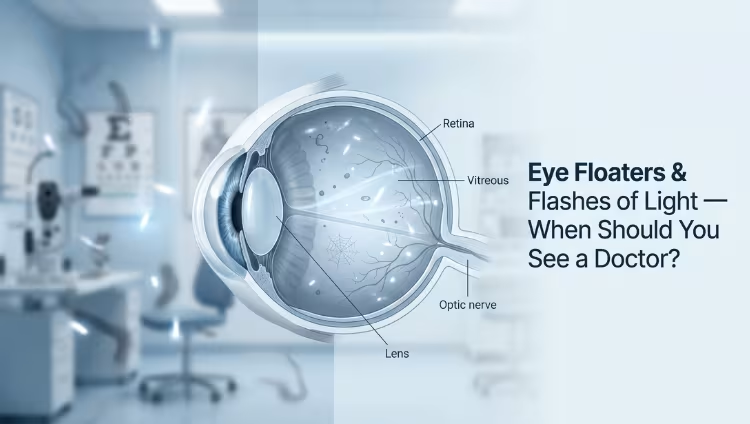
Eye Floaters & Flashes of Light You should see an eye doctor immediately if you notice a sudden increase in floaters, frequent flashes of light, or a dark shadow covering part of your vision. These can be signs of a retinal tear. Getting an eye checkup in Lucknow early can prevent permanent vision loss. Have you ever looked at a clear blue sky or a white wall and noticed specks or cobweb-like shapes drifting across your vision? You try to look directly at them, but they zip away. These are called eye floaters. At other times, you might see quick “lightning bolts” or “camera flashes,” even in a dark room. These are known as flashes. As an ophthalmologist, I often meet patients who are worried about these symptoms. My name is Dr. Charu Chaudhary, and I have spent years helping people protect their sight. If you are looking for the best eye surgeon in Lucknow, her team is here to guide you through these changes with care and expertise. In this guide, we will talk about what floaters and flashes are, why they happen, and—most importantly—when they mean you need to see a specialist for the best retina treatment in Lucknow. Eye Floaters: What They Are, Causes & Treatment Most eye floaters are a normal part of getting older. To understand them, imagine your eye is like a small ball filled with a clear, jelly-like substance called the “vitreous.” When we are young, this jelly is thick and firm. But as we age, the jelly starts to liquefy and shrink. When it shrinks, tiny clumps of protein or collagen form inside the eye. These clumps cast shadows on your retina (the light-sensitive layer at the back of the eye). What you “see” aren’t actually bugs or dust—they are the shadows of these tiny clumps. Are They Dangerous? In most cases, floaters are harmless. They are like gray hairs for the eyes—a sign of time passing. Most people get used to them, and the brain eventually learns to ignore them. However, they never truly “go away” on their own; they just settle at the bottom of the eye. When is Treatment Needed? Treatment is rarely needed for standard floaters. However, if they become so thick that they block your vision, a procedure might be considered. But before any treatment, a comprehensive eye checkup in Lucknow is necessary to ensure the rest of your eye is healthy. Are Eye Flashes Dangerous? When Should You Worry Flashes of light (medically called photopsia) feel like a flicker of lightning or a “spark” in the corner of your eye. Why Do Flashes Happen? Flashes occur when the vitreous jelly pulls or rubs against the retina. Think of the retina like a touch-sensitive screen. If the jelly tugs on it, the retina sends a signal to the brain, which the brain interprets as a flash of light. When to Worry While occasional flashes can happen as the jelly shifts with age, frequent or constant flashes are a red flag. If the jelly pulls too hard, it can tear the retina. This is a serious condition that requires immediate attention from an expert to receive retina treatment in Lucknow. Types of Eye Floaters and What They Mean Not all floaters look the same. Patients often describe them in different ways: Small Dots or Specks: These are usually tiny clumps of protein and are the most common type. Thread-like Lines: These can look like spider webs or transparent “worms” drifting by. They are usually made of tiny collagen fibers. Ring-shaped Floaters: These are often called “Weiss Rings.” They happen when the jelly detaches from the optic nerve. While it sounds scary, it is a common age-related event, but it still requires a professional checkup. Cloudy Shadows: If you see a large, dark cloud that doesn’t move, it might be blood or a more serious retinal issue. Causes of Eye Floaters and Flashes Understanding the “why” can help ease your mind. Here are the most common causes: Aging: This is the #1 cause. By age 50 or 60, most people will have at least a few floaters. Nearsightedness (Myopia): People who wear glasses for distance often get floaters at a younger age because their eyeballs are slightly longer, which stretches the jelly inside. Eye Injury: A hard blow to the eye can cause the jelly to shift or bleed, leading to sudden floaters. Diabetes: High blood sugar can damage the blood vessels in the retina, leading to “diabetic retinopathy,” which can cause floaters due to tiny amounts of bleeding. Inflammation: Infections or autoimmune issues can cause inflammation in the back of the eye (uveitis), creating debris that looks like floaters. When Should You See a Doctor? (Critical Section) This is the most important part of this guide. While floaters are often normal, they can sometimes be a warning sign of a retinal detachment—a condition where the retina pulls away from the back of the eye. If not treated quickly, this can lead to permanent blindness. 👉 See a doctor immediately if you notice: A Sudden Shower of Floaters: If you suddenly see dozens of new spots at once. Repeated Flashes of Light: Especially if they are new or getting more intense. A “Curtain” or Shadow: If a dark shadow starts moving in from the side, top, or bottom of your vision, as if a curtain is being drawn. Blurred Vision: A sudden drop in how clearly you can see. If you experience any of these, do not wait. Seeking an immediate eye checkup in Lucknow can save your sight. Early diagnosis is the key to successful treatment. Diagnosis and Treatment Options When you visit a clinic for these symptoms, what should you expect? As the best eye surgeon in Lucknow, he ensures every patient undergoes a thorough, painless examination. 1. Dilated Eye Exam We use special eye drops to widen (dilate) your pupils. This allows us to look deep into the back of your eye to check the health of your retina and the vitreous jelly. 2. Laser Treatment If we find a small “retinal tear,” we can often fix it right in the clinic ...
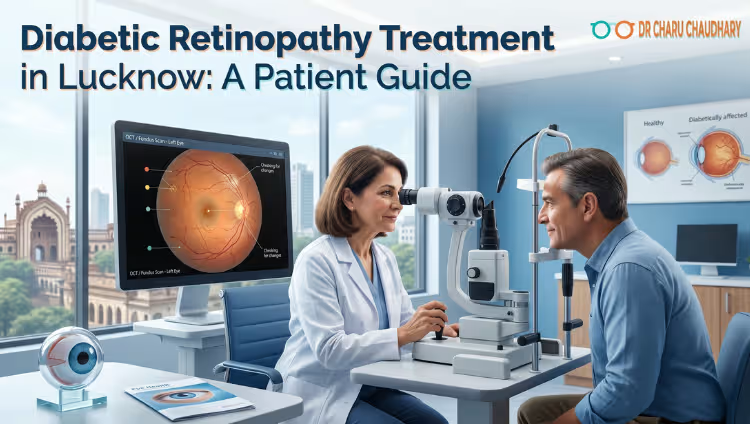
Diabetic Retinopathy Treatment in Lucknow: A Patient Guide Poasted by Dr Charu Chaudhary | Retina Specialist in LucknowIf you or a family member has been living with diabetes for a long time, you know that keeping your blood sugar in check is a daily job. But did you know that diabetes can slowly and quietly damage your eyesight? This condition is called Diabetic Retinopathy. Living in a busy city like Lucknow, we often ignore small health issues until they become big problems. However, when it comes to your eyes, waiting is not an option. If you are looking for the most reliable Diabetic Retinopathy Treatment, this guide will explain everything you need to know in simple words. We will also talk about how the best eye surgeon in Lucknow, Dr Charu Chaudhary, can help you save your vision. What Exactly is Diabetic Retinopathy? Let’s break it down into simple terms. Your eye is like a camera. The back of the eye has a “film” called the retina. This retina captures images and sends them to your brain. To work properly, the retina needs a constant supply of blood through tiny blood vessels. When your blood sugar stays high for too long, these tiny blood vessels get blocked or damaged. Stage 1: Leaking. The vessels start to leak fluid or blood into the eye. Stage 2: Swelling. This leakage causes the retina to swell, making your vision blurry. Stage 3: New Growth. The eye tries to grow new blood vessels to replace the damaged ones. But these new vessels are weak and break easily, causing more bleeding. This whole process is what we call Diabetic Retinopathy. If left untreated, it can lead to permanent blindness. Why Should You Seek Treatment in Lucknow? Lucknow has become a major hub for medical care in North India. Earlier, people used to travel to Delhi or Mumbai for advanced eye surgeries. Today, Lucknow offers world-class technology and experienced doctors. Whether you are looking for a routine check-up or advanced Diabetic Retinopathy Treatment, the city has clinics equipped with the latest lasers and scanning machines. Choosing a local expert like Dr Charu Chaudhary means you get international-standard care without the stress of traveling to another state. Symptoms: When Should You See the Best Eye Surgeon in Lucknow? In the early stages, you might not feel any pain or notice any change in your vision. This is why it is often called a “silent thief.” However, as the damage increases, you may notice: Floating Spots: You see dark strings or spots (floaters) moving in front of your eyes. Blurred Vision: Things look fuzzy, even with your glasses on. Empty Areas: You might notice dark or “blank” spots in your field of vision. Color Changes: Colors look faded or washed out. Sudden Vision Loss: A sudden “curtain” falling over your eyes (this is a medical emergency). If you notice any of these, you must immediately book a consultation with the best eye surgeon in Lucknow. Understanding the Stages: A Quick Comparison It helps to know which stage of the disease you are in. Your doctor will use this chart to explain your condition: Stage NameWhat is happening inside the eye?Risk LevelMild NPDRTiny bulges in blood vessels; minor leakage.Low (Monitor)Moderate NPDRSome vessels are blocked; swelling starts.MediumSevere NPDRMany vessels are blocked; blood supply is cut off.High (Requires Treatment)Proliferative (PDR)New, fragile vessels grow and bleed into the eye.Very High (Emergency)Macular EdemaThe center of the retina (Macula) swells up.High (Blurry Vision) Meet Your Specialist: Dr Charu Chaudhary When it comes to something as delicate as your eyes, you cannot settle for anything but the best. Dr Charu Chaudhary is widely regarded as the best eye surgeon in Lucknow for retinal disorders. With years of specialized training and a compassionate approach, Dr. Chaudhary helps patients navigate the complexities of diabetes-related eye issues. Her clinic is known for using the latest diagnostic tools to catch the disease early, which is the most important part of successful Diabetic Retinopathy Treatment. Step-by-Step: What Happens During Your First Visit? If it is your first time visiting a specialist for Diabetic Retinopathy Treatment, you might feel nervous. Here is a step-by-step guide on what to expect: Step 1: Vision Check The staff will ask you to read letters from a chart to see how much your vision has changed. Step 2: Dilation The doctor will put special drops in your eyes. These drops make your pupils grow large. This allows the surgeon to see the back of your eye clearly. Note: Your vision will be blurry for 3–4 hours after this. Step 3: Retinal Examination Using a bright light and a special lens, Dr Charu Chaudhary will look at your retina to check for leaks, fatty deposits, or new blood vessel growth. Step 4: Digital Imaging (OCT Scan) This is like an ultrasound for the eye. It creates a 3D map of your retina to show exactly where the swelling is located. Step 5: Discussion and Planning Based on the results, the doctor will sit with you and explain the best course of action. Modern Options for Diabetic Retinopathy Treatment The good news is that medical science has advanced rapidly. We now have several ways to stop vision loss. 1. Laser Treatment (Photocoagulation) This is a very common procedure. A tiny, powerful beam of light is used to seal leaking blood vessels. It also helps shrink the abnormal new blood vessels. It is usually done in the clinic and doesn’t require an overnight stay. 2. Anti-VEGF Injections This might sound scary, but it is one of the most effective treatments today. The doctor injects a special medicine into the eye (after numbing it completely). This medicine blocks the chemicals that cause swelling and new vessel growth. Many patients see a significant improvement in vision after a few sessions. 3. Vitrectomy (Surgery) If there is a lot of blood in the center of the eye or if the retina is starting to pull away, you may need a vitrectomy. This is a surgery where the best eye surgeon in Lucknow removes the blood-filled gel from the eye and replaces it with a clear liquid or gas. ...
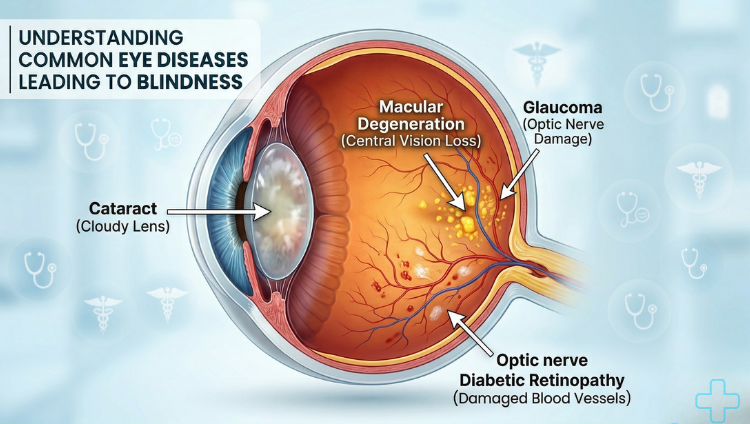
Posted by Dr Charu Chaudhary | Vitreo Retina SurgeonOur eyes are the windows to the world. They allow us to see the colors of a sunrise, the faces of our loved ones, and the beauty of nature. However, many people take their eyesight for granted until it starts to fade. Vision loss is a scary prospect, but the good news is that most causes of blindness are preventable or treatable if caught early. If you are looking for the best eye specialist in Lucknow, you have come to the right place. In this blog, we will discuss the most common eye diseases that lead to blindness and how you can protect your vision. Dr. Charu Chaudhary, a renowned Ophthalmologist in Lucknow, believes that awareness is the first step toward prevention. Why Understanding Eye Diseases Matters Blindness does not always happen overnight. In many cases, it is a slow process, with the vision fading over months or years. Because the change is gradual, many people don’t realize they are losing their sight until it is too late. By knowing what to look for, you can save your sight. Whether you need a general check-up or are looking for a retina treatment in Lucknow, understanding these conditions will help you make the right decisions for your health. 1. Cataracts: The Leading Cause of Blindness A cataract is the clouding of the eye’s natural lens. Think of it like a window that has become foggy or dirty. When the lens is cloudy, light cannot pass through properly, making everything look blurred. Symptoms of Cataracts: Blurred or cloudy vision. Difficulty seeing at night. Sensitivity to light and glare. Seeing “halos” around lights. Colors appear faded or yellowed. How it is treated: Cataracts are very common as people age. Fortunately, they are treatable. A simple surgery can replace the cloudy lens with a clear artificial one. If you notice these symptoms, consulting the best eye specialist in Lucknow can help you regain clear vision. 2. Glaucoma: The “Silent Thief” of Sight Glaucoma is often called the “silent thief” because it usually has no symptoms in the early stages. It happens when fluid builds up in the front part of the eye, increasing the pressure. This pressure damages the optic nerve, which sends visual information to your brain. Why is it dangerous? Once the optic nerve is damaged, the vision loss is permanent. It usually starts by affecting your side (peripheral) vision. Prevention and Care: Regular eye exams are the only way to catch glaucoma early. Medicated eye drops can help lower eye pressure. In some cases, laser treatment or surgery is needed. 3. Age-Related Macular Degeneration (AMD) AMD is a condition that affects the macula—the part of the eye responsible for sharp, central vision. This is the vision you use for reading, driving, and recognizing faces. Two Types of AMD: Dry AMD: The most common form, where the macula gets thinner with age. Wet AMD: A more serious form where abnormal blood vessels grow under the retina and leak fluid. How to protect your eyes: Eating green leafy vegetables, quitting smoking, and protecting your eyes from UV rays can reduce the risk. If you notice straight lines appearing wavy, see an Ophthalmologist in Lucknow immediately. 4. Diabetic Retinopathy For people living with diabetes, high blood sugar can damage the tiny blood vessels in the retina. This is known as Diabetic Retinopathy. If left untreated, it can lead to total blindness. The Role of a Specialist: Because this disease affects the back of the eye, you may need to see a retina specialist in Lucknow. They can check for leaking vessels and use laser treatments to prevent further damage. Steps to Manage Diabetic Retinopathy: Keep your blood sugar levels under control. Manage your blood pressure and cholesterol. Get a dilated eye exam at least once a year. 5. Refractive Errors (Uncorrected) Believe it or not, simple things like nearsightedness (myopia) or farsightedness (hyperopia) can lead to severe visual impairment if they aren’t corrected with glasses or lenses. In many parts of the world, people lose their ability to work or study simply because they don’t have the right glasses. 6. Trachoma Trachoma is an infectious disease caused by bacteria. It is more common in areas with poor sanitation. Repeated infections cause the eyelids to turn inward, leading the eyelashes to rub against the eye. This causes scarring and, eventually, blindness. 7. Corneal Opacity The cornea is the clear front surface of your eye. Injuries, infections (like the herpes virus), or vitamin deficiencies can cause the cornea to become scarred or cloudy. This blocks light from entering the eye. Eye Diseases That Cause Blindness in Children It is a heartbreaking reality that children can also suffer from blindness. Early detection is even more critical for children because their brains are still learning how to see. Childhood Cataracts: Some babies are born with cataracts or develop them shortly after birth. Retinopathy of Prematurity (ROP): This affects premature babies and involves abnormal blood vessel growth in the retina. Vitamin A Deficiency: This is a leading cause of preventable childhood blindness. It starts with night blindness and can lead to corneal scarring. Amblyopia (Lazy Eye): If one eye is much weaker than the other and isn’t treated, the brain may “shut off” the vision in that eye. Genetic Disorders: Conditions like Retinitis Pigmentosa can be passed down through families. Step-by-Step Guide: How to Prevent Vision Loss Preventing blindness starts with small, daily habits. Follow these steps to keep your eyes healthy: Step 1: Schedule Regular Eye Exams Even if you think your vision is fine, some diseases have no early symptoms. Adults should have a comprehensive eye exam every 1-2 years. Step 2: Know Your Family History Many eye conditions, like glaucoma and AMD, are hereditary. Talk to your relatives about their eye health. Step 3: Eat for Your Eyes Your diet matters. Include: Carrots and Sweet Potatoes: Rich in Vitamin A. Spinach and Kale: Rich in Lutein. Fish (Salmon/Tuna): Rich in Omega-3 fatty acids. Step 4: Wear Sunglasses Protect your eyes from harmful UV rays by wearing ...