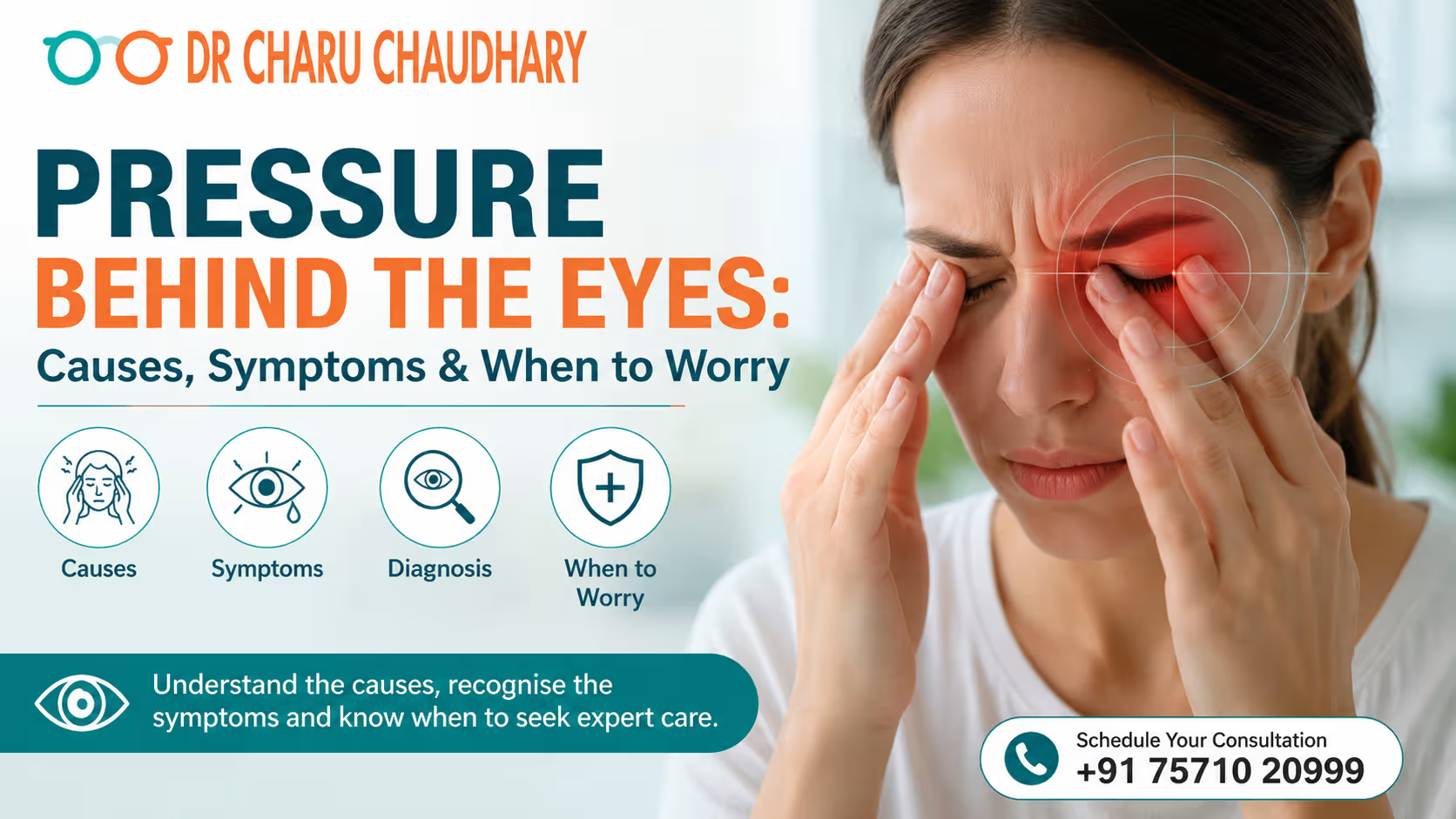
Pressure behind the eyes can feel like heaviness, aching, tightness, or a sensation that something is pushing from inside or around the eyes. Sometimes it is temporary and related to eye strain, sinus congestion, headaches, or fatigue. However, persistent or severe pressure—especially when accompanied by eye pain, redness, blurred vision, halos, nausea, or sudden vision changes—can indicate a condition that needs prompt medical evaluation. Importantly, the feeling of pressure behind the eyes does not always mean that your intraocular pressure (IOP) is high. High eye pressure often causes no noticeable symptoms and can only be identified through an eye examination and pressure measurement. If you frequently experience pressure behind your eyes, understanding the possible causes can help you know when it is time to consult an eye specialist. What Does Pressure Behind the Eyes Feel Like? People may describe eye pressure in different ways, including: The exact symptoms often depend on the underlying cause. Common Causes of Pressure Behind the Eyes 1. Eye Strain and Digital Eye Fatigue Long hours on computers, smartphones, or tablets can cause eye fatigue. Concentrating on a screen may also reduce blinking, contributing to dryness and discomfort. Common symptoms include: Taking regular screen breaks and adjusting screen distance, brightness, and lighting may help. 2. Sinus Congestion or Sinusitis The sinuses are located around the eyes, nose and forehead. Inflammation or congestion can create pressure or aching around these areas. Sinus pressure commonly occurs with colds, allergies, or sinus infections. You may also experience: If severe sinus pressure persists or is associated with significant symptoms, medical evaluation may be appropriate. 3. Migraine or Other Headaches Migraines can cause pain around or behind one eye. Some people also experience: The discomfort may occur even when there is no problem with the eye itself. 4. Dry Eyes Insufficient or poor-quality tears can cause irritation and a sensation of heaviness or pressure around the eyes. Typical symptoms include: Screen use, air conditioning, smoke and environmental factors can aggravate dry-eye symptoms. 5. Ocular Hypertension Ocular hypertension means that the pressure inside the eye is higher than normal without detectable optic nerve damage at that point. A key point is that ocular hypertension generally does not cause noticeable symptoms. It is usually discovered during an eye examination. This is why simply feeling pressure behind your eyes cannot tell you whether your eye pressure is actually elevated. 6. Glaucoma Glaucoma involves damage to the optic nerve. Increased eye pressure is an important risk factor, although glaucoma can also occur when eye pressure is within the usual range. Early glaucoma may have few or no symptoms. As the disease progresses, symptoms can include: Certain forms, particularly acute angle-closure glaucoma, can cause sudden severe symptoms and require immediate treatment. 7. Eye Inflammation or Infection Conditions affecting structures inside or around the eye can cause pain, pressure, redness and light sensitivity. Possible accompanying symptoms include: These symptoms should not be ignored, particularly when vision is affected. 8. Problems Around the Eye Socket Less commonly, inflammation, thyroid-related eye disease, injury, or other conditions affecting tissues behind the eye can produce pressure, discomfort or a feeling of fullness. Bulging of the eye, double vision, reduced vision, swelling, or difficulty moving the eye warrants medical assessment. Pressure Behind the Eyes: Cause vs Typical Symptoms Possible Cause Common Associated Symptoms Urgency Eye strain Tired eyes, headache, dryness Usually low Sinus pressure Blocked nose, facial pressure, headache Usually low–moderate Migraine Headache, nausea, light sensitivity Varies Dry eye Burning, gritty feeling, fluctuating vision Usually low Ocular hypertension Often no symptoms Needs eye evaluation Glaucoma Vision changes, peripheral vision loss Needs evaluation Acute angle-closure glaucoma Severe pain, red eye, halos, nausea Emergency Serious eye inflammation/injury Pain, redness, light sensitivity, blurred vision Prompt evaluation This comparison is educational; symptoms can overlap between conditions, so a proper eye examination is needed for diagnosis. When Is Pressure Behind the Eyes a Warning Sign? Seek urgent medical attention if pressure behind the eye occurs with: Acute angle-closure glaucoma can cause sudden eye pain or pressure, redness, blurred vision, halos and nausea/vomiting and is considered a medical emergency. Sudden vision loss, severe eye pain, or new flashes and floaters should also be assessed urgently. How Is Pressure Behind the Eyes Diagnosed? Because several conditions can produce similar sensations, an ophthalmologist may use multiple tests. Step 1: Medical and Eye History Your doctor may ask: Step 2: Comprehensive Eye Examination The doctor may examine the cornea, conjunctiva, pupils, lens, retina and optic nerve. Step 3: Measure Eye Pressure Tonometry measures intraocular pressure. Common methods include non-contact air-puff testing and contact-based measurements. Step 4: Check the Optic Nerve and Retina If glaucoma or another retinal/optic nerve condition is suspected, additional examinations may be recommended. Step 5: Additional Tests When Required Depending on your symptoms, your ophthalmologist may recommend: What Can You Do If You Have Mild Eye Pressure? If your symptoms are mild and there are no warning signs, you can consider these basic measures: Do not assume that recurring pressure is simply due to screen use, especially if you have vision changes. Can High Eye Pressure Cause a Feeling of Pressure? Not necessarily. This is one of the most important things to understand. High intraocular pressure often has no obvious symptoms. A person can have elevated IOP without feeling pain or pressure. The only reliable way to determine whether your eye pressure is elevated is through an appropriate eye examination and pressure measurement. Therefore: Feeling pressure ≠ automatically having high eye pressure. And: Having high eye pressure ≠ necessarily feeling pressure. This distinction is particularly important when screening for glaucoma. When Should You See an Eye Specialist? Consider scheduling an eye examination if: Regular eye examinations can help detect problems that may not cause symptoms in their early stages. Pressure Behind the Eyes: Quick Decision Guide Mild pressure + screen use + tired eyes→ Take breaks, rest your eyes and monitor symptoms. Pressure + blocked nose/facial congestion→ A sinus or allergy-related cause may be possible. Recurring pressure
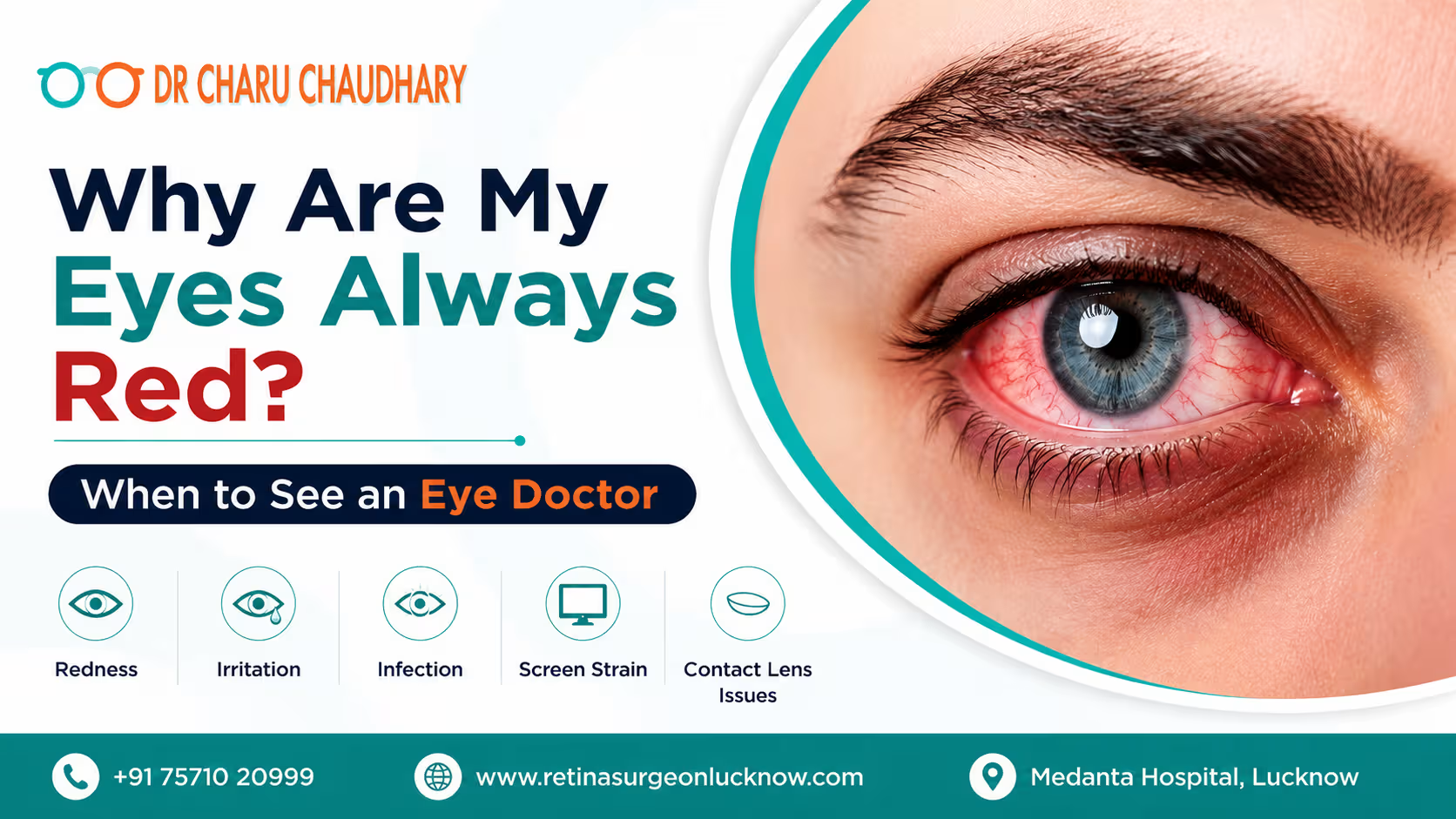
If your eyes are always red, the cause may be dry eyes, allergies, prolonged screen time, contact lens irritation, conjunctivitis, or another eye condition. Mild redness may improve with rest, but persistent redness—especially with pain, light sensitivity, discharge, or vision changes—should be evaluated by an eye doctor. Red eyes are one of the most common eye complaints. Sometimes they are temporary and harmless, such as after a sleepless night or long hours in front of a screen. However, eyes that remain red or become red repeatedly may indicate an underlying problem that needs proper treatment. Understanding the possible red eyes causes can help you know when simple eye care is enough and when you should consult an ophthalmologist. What Does Eye Redness Mean? Eye redness occurs when the small blood vessels on the surface of the eye become enlarged, irritated, or inflamed. This makes the normally white part of the eye appear pink or red. Eye redness can affect one or both eyes and may occur with other symptoms, including: The severity and combination of symptoms can provide clues about the possible cause. However, symptoms alone cannot always identify the problem. If your eyes are always red or frequently become red without an obvious reason, an eye examination can help determine the underlying cause. Common Red Eyes Causes There are many possible causes of eye redness. Some are minor and temporary, while others require medical treatment. 1. Dry Eyes Dry eye is a common reason for persistent redness. It can occur when the eyes do not produce enough tears or when tears evaporate too quickly. Dry eyes may cause: Long screen hours, reduced blinking, air conditioning, pollution and certain environmental conditions can contribute to dry eye symptoms. 2. Eye Allergies Allergic conjunctivitis can cause red, itchy and watery eyes. Common triggers include dust, pollen, pet dander, smoke and other allergens. Intense itching is particularly common with eye allergies. Allergy-related redness often affects both eyes. 3. Conjunctivitis or Pink Eye Conjunctivitis occurs when the conjunctiva becomes inflamed. Viruses, bacteria or allergies can cause it. Possible symptoms include: Viral and bacterial conjunctivitis can be contagious, so good hand hygiene and avoiding shared towels or cosmetics are important. 4. Prolonged Screen Time Long hours on computers, smartphones and other digital devices can contribute to digital eye strain. When concentrating on a screen, people often blink less frequently. Reduced blinking can destabilize the tear film and cause dryness and irritation, which may make the eyes look red. 5. Lack of Sleep Insufficient sleep can leave the eyes looking tired, dry and bloodshot. Occasional redness after a late night usually improves with adequate sleep and hydration. However, frequent redness should not automatically be blamed on lack of sleep. 6. Contact Lens Problems Contact lenses can cause redness when they are worn incorrectly or for longer than recommended. Poor lens hygiene, sleeping in unsuitable lenses, using expired lenses, improper cleaning or continuing to wear lenses despite irritation can increase the risk of eye-surface problems and infection. 7. Foreign Body or Eye Injury Dust, sand, chemicals or another foreign object can irritate the eye and cause sudden redness. Do not rub the eye because rubbing can worsen irritation or potentially damage the cornea. Chemical exposure to the eye requires prompt medical attention. 8. Other Eye Conditions In some cases, red eyes may be associated with more significant conditions involving the cornea, uvea, intraocular pressure or other eye structures. This is particularly important when redness occurs with pain, blurred vision, light sensitivity, nausea, halos around lights or other sudden changes in vision. Symptoms That May Point to the Cause The symptoms occurring alongside redness can provide useful clues, although only an eye examination can establish the diagnosis. Symptoms Possible Cause Redness + intense itching Eye allergy Redness + watery discharge Allergy or viral conjunctivitis Redness + thick discharge Possible bacterial conjunctivitis Redness + burning or grittiness Dry eye or irritation Redness + contact lens use Lens-related irritation or infection Redness + significant pain Requires prompt evaluation Redness + blurred vision Needs medical assessment Redness + light sensitivity May indicate a more significant eye problem Redness after an injury Possible eye trauma Redness + sudden vision changes Urgent eye assessment may be required These associations are only general indicators. Avoid self-diagnosing based on symptoms alone. Can Contact Lenses Cause Redness? Yes, contact lenses can cause eye redness, particularly when they are not used or maintained correctly. Common reasons include: Contact lens wearers should pay particular attention to painful red eyes. If you develop significant redness, pain, light sensitivity, discharge or reduced vision while wearing contact lenses, remove the lenses and seek professional eye care promptly. Do not simply use redness-relieving drops and continue wearing the lenses. Eye Allergy or Eye Infection: How Are They Different? Eye allergies and eye infections can produce similar symptoms, making it difficult to distinguish between them without an examination. Eye Allergy Eye allergies commonly cause: Symptoms may worsen after exposure to dust, pollen, smoke, pets or other allergens. Eye Infection An eye infection may cause: Viral conjunctivitis often causes watery discharge, while bacterial conjunctivitis may produce thicker discharge. However, these symptoms can overlap. Antibiotic eye drops should not be started simply because the eye is red, because antibiotics do not treat viral or allergic causes. An ophthalmologist can determine the likely cause and recommend appropriate treatment. Safe Care for Mild Redness For mild redness without severe pain, vision changes or other warning signs, simple measures may help reduce irritation. Helpful steps include: Avoid these common mistakes Do not repeatedly use eye drops marketed only to “remove redness” without understanding the cause. Temporary whitening of the eye does not necessarily mean the underlying problem has been treated. Also avoid using leftover antibiotic or steroid eye drops without an ophthalmologist’s advice. Some eye conditions can worsen when inappropriate medication is used. When to See an Eye Doctor Not every red eye is an emergency, but persistent or recurrent eye redness should be evaluated if it
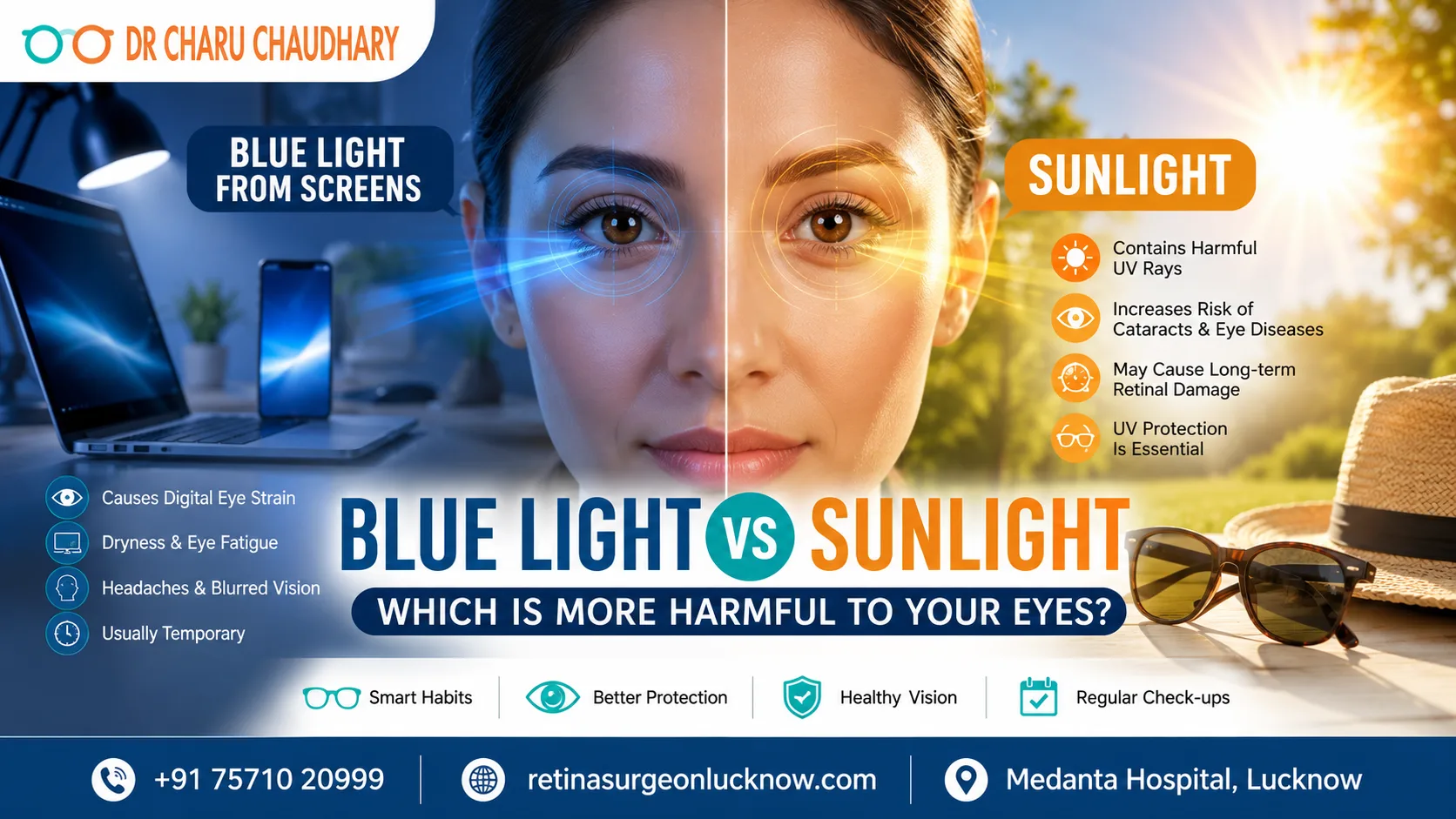
Have you ever wondered whether spending hours on your phone is more harmful than walking under the bright sun? This is one of the most common concerns people discuss with an eye specialist in Lucknow, especially as screen time continues to increase in both work and daily life. While smartphones, laptops, and tablets emit blue light, sunlight is the largest natural source of blue light and also contains harmful ultraviolet (UV) rays. Understanding the difference is essential for protecting your eyesight. The truth is that normal screen use is more likely to cause temporary eye strain and dryness, whereas prolonged exposure to sunlight without proper protection poses a greater long-term risk to eye health because of UV radiation. Knowing how each affects your eyes can help you adopt healthier habits and reduce your risk of vision problems. In this comprehensive guide, we’ll explain the science behind blue light and sunlight, separate myths from facts, and share expert-recommended strategies to keep your eyes healthy. Understanding Blue Light vs Sunlight Blue light is a part of the visible light spectrum, with wavelengths ranging from approximately 400 to 500 nanometers. It is often referred to as high-energy visible (HEV) light because it has a shorter wavelength and higher energy than most other visible colors. Many people associate blue light only with smartphones or computers, but in reality, the sun is by far the strongest natural source of blue light. Digital devices emit only a small fraction of the blue light that reaches your eyes outdoors. Common Sources of Blue Light Natural sources include: Artificial sources include: Although both sunlight and digital devices emit blue light, their intensity, duration, and accompanying radiation differ significantly, which is why they affect the eyes in different ways. Why Blue Light Matters Not all blue light is harmful. In fact, natural blue light plays an important role in maintaining overall health. Benefits of Natural Blue Light Natural blue light helps: Without exposure to natural daylight, our biological clock can become disrupted, affecting sleep quality and overall well-being. However, excessive exposure to intense light—particularly sunlight without adequate eye protection – may increase the risk of certain eye conditions over time. How the Eye Processes Light Before understanding which type of light is more harmful, it’s helpful to know how light travels through the eye. When light enters the eye, it passes through: The retina converts light into electrical signals, which are transmitted through the optic nerve to the brain, allowing us to see. The eye has natural protective mechanisms that filter part of the blue light reaching the retina. However, ultraviolet (UV) rays from sunlight interact differently with eye tissues and can contribute to long-term damage when exposure is excessive. Why Your Eyes Respond Differently to Blue Light and Sunlight Many people assume that all blue light is equally harmful, but this is a misconception. The way your eyes respond depends on the intensity of the light source, duration of exposure, and whether ultraviolet (UV) radiation is present. Blue Light From Digital Screens Blue light emitted by digital screens is: This is why people often experience symptoms such as dry eyes, headaches, and blurred vision after long hours of screen use. Sunlight Sunlight contains: Unlike screens, sunlight exposes your eyes to significantly higher energy levels and harmful UV radiation. Over many years, unprotected UV exposure may increase the risk of: This is why ophthalmologists recommend wearing UV400 sunglasses whenever you spend extended time outdoors. Expert Insight One of the biggest misconceptions is that mobile phones permanently damage the retina simply because they emit blue light. Current ophthalmic research indicates that the amount of blue light produced by smartphones and computers is substantially lower than that from natural sunlight. For most people, the symptoms experienced after prolonged screen use are related to digital eye strain, reduced blinking, glare, and poor ergonomics, rather than retinal injury. Blue Light vs Sunlight: Key Differences The following comparison highlights why sunlight and digital screens affect your eyes differently. Feature Blue Light From Screens Sunlight Primary Source Smartphones, tablets, laptops, LED screens Natural sunlight Blue Light Intensity Low Very High Contains UV Rays No Yes Causes Digital Eye Strain Yes Rarely Can Cause Dry Eyes Yes No Long-Term UV Damage No Yes Risk of Cataracts No direct link Increased with prolonged UV exposure Risk to Retina No proven damage from normal use Direct sun viewing can damage the retina Best Protection Screen breaks, blinking, ergonomic setup UV400 sunglasses, hats, avoiding direct sun Does Blue Light From Screens Harm the Retina? One of the most frequently searched questions online is whether blue light from smartphones permanently damages the retina. The current scientific evidence provides reassuring answers. Studies have not demonstrated that normal exposure to blue light from digital devices causes permanent retinal damage in healthy individuals. The amount of blue light emitted by screens is significantly lower than that produced by natural sunlight. Most people who spend long hours using digital devices experience symptoms related to Digital Eye Strain (Computer Vision Syndrome) rather than retinal disease. Common Symptoms Associated with Prolonged Screen Use These symptoms usually improve with proper screen habits, regular breaks, and appropriate lighting. However, individuals with pre-existing retinal conditions, such as diabetic retinopathy or age-related macular degeneration, should follow the advice of their ophthalmologist regarding prolonged screen use. What Causes Digital Eye Strain? One of the biggest misconceptions is that blue light itself is the main reason for eye discomfort after using digital devices. In reality, ophthalmologists agree that Digital Eye Strain, also known as Computer Vision Syndrome (CVS), is usually caused by the way we use screens rather than the blue light they emit. Whether you’re working on a computer, attending online classes, or scrolling through social media, your eyes work harder to maintain focus on digital screens than they do when reading printed text. This constant effort, combined with poor viewing habits, can lead to a range of uncomfortable symptoms. Why Does Digital Eye Strain Happen? Several factors contribute to