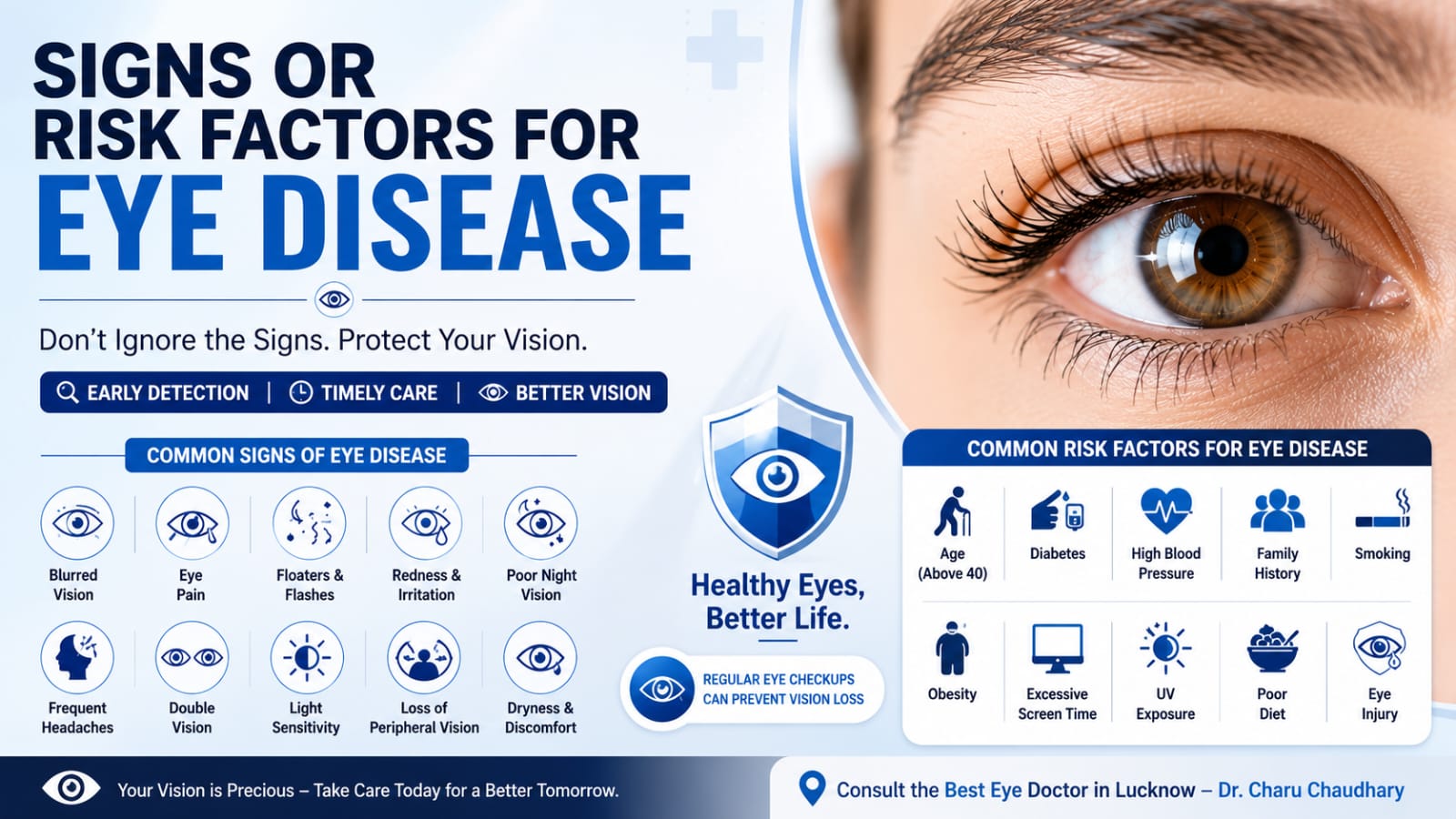
Signs and Risk Factors for Eye Disease Our eyes help us experience the world every day, yet many people ignore early symptoms of eye disease until the condition becomes serious. The truth is that many eye diseases develop slowly and may not cause pain in the beginning. Detecting them early can help protect your vision and prevent permanent damage. Whether you are young or old, understanding the warning signs and risk factors can help you take better care of your eyesight. If you notice any unusual changes in your vision, consulting Dr. Charu Chaudhary, widely regarded as the best eye specialist in Lucknow, can help identify problems before they become severe. Why Early Detection of Eye Disease Matters Many eye diseases do not show noticeable symptoms in their early stages. Conditions like glaucoma, diabetic retinopathy, and age-related macular degeneration can silently damage vision over time. Early diagnosis allows: Regular eye examinations remain the best way to detect these diseases before symptoms become severe. Common Signs of Eye Disease Recognizing the warning signs can save your eyesight. 1. Blurred Vision Blurred vision that does not improve with blinking may indicate: 2. Sudden Vision Loss Any sudden decrease in vision is a medical emergency and requires immediate attention. Possible causes include: 3. Eye Pain Pain inside or around the eye should never be ignored. It may indicate: 4. Frequent Headaches Persistent headaches accompanied by eye strain may result from: 5. Double Vision Seeing two images instead of one may indicate neurological or eye muscle disorders. 6. Floaters and Flashes Occasional floaters are common with age, but a sudden increase in floaters or flashes of light can signal retinal tears. 7. Red Eyes Redness lasting more than a day could indicate: 8. Difficulty Seeing at Night Poor night vision may be caused by: 9. Light Sensitivity Excessive sensitivity to light may indicate: 10. Loss of Peripheral Vision This is often one of the earliest signs of glaucoma. Common Risk Factors for Eye Disease Several factors increase your chances of developing eye disorders. Risk Factor Why It Increases Risk Age above 40 Higher risk of cataracts and glaucoma Diabetes Can damage retinal blood vessels High Blood Pressure Affects blood supply to the eyes Family History Many eye diseases are hereditary Smoking Increases cataract and macular degeneration risk Obesity Raises risk of diabetic eye disease Excessive Screen Time Causes eye strain and dry eyes UV Exposure Damages the lens and retina Poor Diet Lack of vitamins affects eye health Eye Injury Can lead to long-term complications Eye Diseases and Their Early Symptoms Eye Disease Early Symptoms Cataract Blurred vision, glare, poor night vision Glaucoma Peripheral vision loss, eye pressure Diabetic Retinopathy Blurred vision, floaters Dry Eye Syndrome Burning, irritation, redness Macular Degeneration Distorted central vision Retinal Detachment Flashes, floaters, sudden vision loss Conjunctivitis Redness, discharge, itching Who Should Get Regular Eye Checkups? You should schedule regular eye examinations if you: Routine checkups help detect hidden eye diseases before symptoms appear. How to Reduce Your Risk of Eye Disease Eat an Eye-Healthy Diet Include foods rich in: Good choices include carrots, spinach, kale, fish, eggs, citrus fruits, almonds, and sweet potatoes. Protect Your Eyes from UV Rays Wear sunglasses that block 100% UVA and UVB rays whenever outdoors. Control Diabetes and Blood Pressure Keeping blood sugar and blood pressure under control significantly reduces the risk of diabetic eye disease. Follow the 20-20-20 Rule If you use digital devices frequently: Every 20 minutes, Look 20 feet away, For at least 20 seconds. This helps reduce digital eye strain. Quit Smoking Smoking damages blood vessels in the eyes and increases the risk of cataracts and macular degeneration. Exercise Regularly Regular physical activity improves blood circulation and lowers the risk of chronic diseases that affect vision. When Should You Visit an Eye Doctor? Seek immediate medical attention if you experience: Ignoring these symptoms may result in permanent vision damage. Why Choose Dr. Charu Chaudhary for Eye Care? Choosing the right eye specialist plays an important role in protecting your vision. Dr. Charu Chaudhary is known for providing comprehensive eye care with advanced diagnostic techniques and personalized treatment plans. Whether you need a routine eye examination, cataract consultation, glaucoma screening, diabetic eye evaluation, or treatment for other eye conditions, patients trust her expertise and compassionate care. If you are searching for the best eye doctor in Lucknow, Dr. Charu Chaudhary offers modern eye care focused on early diagnosis, accurate treatment, and long-term vision protection. Frequently Asked Questions (FAQs) What are the first signs of eye disease? Blurred vision, eye pain, flashes of light, floaters, redness, and loss of peripheral vision are among the earliest warning signs. Can eye diseases be prevented? Many eye diseases cannot be completely prevented, but regular eye exams, a healthy lifestyle, and early treatment can significantly reduce the risk of vision loss. How often should adults have an eye examination? Adults should have a comprehensive eye examination every one to two years. People with diabetes, glaucoma risk, or existing eye problems may require more frequent checkups. Does screen time permanently damage eyesight? Screen time generally does not cause permanent vision damage but can lead to digital eye strain, dry eyes, headaches, and temporary blurred vision. Why should diabetic patients have regular eye checkups? Diabetes can silently damage the retina without early symptoms. Regular eye exams help detect diabetic retinopathy before permanent vision loss occurs. Conclusion Your eyesight is one of your most valuable assets. Many eye diseases begin silently, making regular eye examinations essential for early diagnosis and effective treatment. Recognizing warning signs such as blurred vision, eye pain, floaters, flashes of light, or persistent redness can help prevent serious complications. If you notice any of these symptoms or have risk factors like diabetes, high blood pressure, or a family history of eye disease, don’t delay seeking professional care. Dr. Charu Chaudhary, recognized by many patients as the best eye doctor in Lucknow, provides comprehensive eye care to help protect your vision and maintain lifelong
The monsoon season brings welcome relief from the summer heat, but it also creates ideal conditions for bacteria, viruses, fungi, and allergens to thrive. Increased humidity, stagnant water, and poor hygiene significantly raise the risk of eye infections. From viral conjunctivitis to styes and allergic eye irritation, monsoon-related eye problems can affect people of all ages. Fortunately, most eye infections are preventable with proper hygiene and timely care. In this comprehensive guide, you’ll learn how to prevent eye infections during monsoon season, recognize early warning signs, understand available treatments, and know when to consult the Eye Surgeon in Lucknow. Why Do Eye Infections Increase During the Monsoon? The rainy season creates an environment that promotes the growth and spread of microorganisms. Some common reasons include: Children, elderly individuals, contact lens users, diabetic patients, and people with weakened immunity are particularly vulnerable. Common Eye Infections During Monsoon 1. Viral Conjunctivitis (Pink Eye) One of the most common monsoon eye infections. Symptoms It spreads easily through direct contact and contaminated objects. 2. Bacterial Conjunctivitis Unlike viral conjunctivitis, bacterial infections often produce thick yellow or green discharge. Symptoms include: Prompt treatment prevents complications. 3. Stye (Eye Boil) A stye is a painful infection of an eyelid gland. Symptoms include: Poor eyelid hygiene increases the risk. 4. Fungal Eye Infection Although less common, fungal infections may occur after eye injuries involving contaminated water or soil. Symptoms: These infections require urgent ophthalmic evaluation. 5. Allergic Eye Disease Monsoon humidity increases mold spores and allergens. Symptoms: Unlike infections, allergies are not contagious. Signs You May Have an Eye Infection Watch for these warning symptoms: Never ignore sudden vision loss or severe eye pain. How to Prevent Eye Infections During Monsoon Season Preventive care is always better than treatment. Follow these practical eye care tips throughout the rainy season. 1. Wash Your Hands Frequently Hands carry thousands of germs every day. Always wash your hands: Use soap and clean water for at least 20 seconds. 2. Avoid Touching or Rubbing Your Eyes Eye rubbing transfers bacteria and viruses directly to the eye surface. Instead: 3. Keep Your Eyes Clean Clean your eyelids gently using: Avoid using dirty towels. 4. Never Share Personal Items Avoid sharing: Many eye infections spread through shared items. 5. Maintain Contact Lens Hygiene Contact lens users have a higher infection risk. Always: Stop wearing lenses immediately if your eyes become red or painful. 6. Protect Your Eyes from Rainwater Rainwater is not always clean. If rainwater enters your eyes: 7. Wear Protective Glasses Outdoors Protective eyewear helps prevent: Sunglasses also reduce irritation from wind. 8. Eat Eye-Healthy Foods Strong immunity reduces infection risk. Include: Vitamin A, Vitamin C, Vitamin E, zinc, and antioxidants support healthy eyes. 9. Stay Hydrated Even during rainy weather, dehydration can affect tear production. Drink: Good hydration supports healthy tear film function. 10. Avoid Self-Medication Never use: Improper treatment may worsen the infection. Eye Care Tips for Children During Monsoon Children frequently catch viral conjunctivitis. Parents should: Early treatment prevents spread within families and schools. What to Do if You Develop an Eye Infection If symptoms appear: Do Don’t When Should You Visit an Eye Specialist? Seek immediate medical attention if you experience: Prompt diagnosis helps prevent serious complications. Can Eye Infections Affect Vision? Most mild infections resolve completely with proper treatment. However, untreated infections can lead to: Early diagnosis greatly reduces these risks. How Eye Specialists Diagnose Eye Infections During your eye examination, your ophthalmologist may perform: Accurate diagnosis ensures appropriate treatment. Simple Daily Monsoon Eye Care Routine Follow this checklist every day: Consistency is the key to preventing seasonal eye infections. Conclusion Monsoon season increases the risk of eye infections, but simple preventive measures can keep your eyes healthy. Maintaining good hygiene, avoiding contaminated water, practicing safe contact lens care, and recognizing early symptoms can significantly reduce your chances of developing infections. If redness, pain, discharge, or blurred vision develops, don’t ignore the symptoms. Early diagnosis and timely treatment protect your eyesight and prevent complications. Consulting the Best Eye Specialist in Lucknow ensures you receive an accurate diagnosis and advanced treatment tailored to your condition.
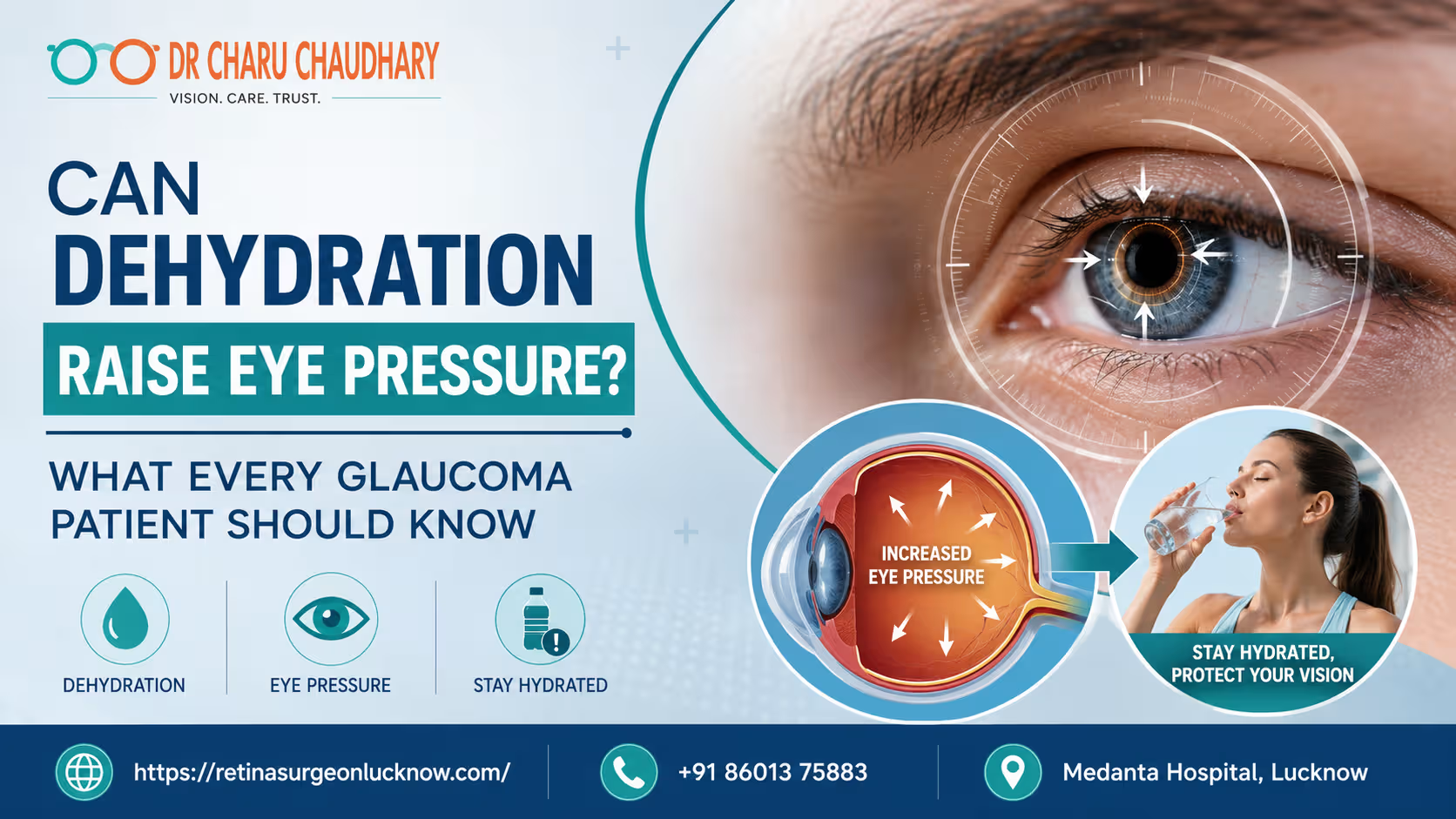
Dehydration may temporarily influence intraocular pressure in some people and can significantly affect overall eye health. While dehydration alone does not usually cause glaucoma, maintaining proper hydration is important for patients already diagnosed with the condition. Fluctuations in body fluids can impact how the eye regulates its internal pressure and supports the optic nerve. Can Not Drinking Enough Water Affect Your Eye Pressure? Maintaining the right fluid balance is vital for your health. Most people know that dehydration affects the heart and kidneys. However, many patients are surprised to learn that it also affects their eyes. For individuals living with glaucoma, understanding the link between hydration and eye pressure is essential. Eye pressure, or intraocular pressure (IOP), is the primary metric used to manage glaucoma. When your body lacks sufficient water, your systemic circulation changes. These changes can impact the delicate structures inside your eye. Consequently, your vision may face unnecessary risks if you ignore your daily water intake. Dr. Charu Chaudhary, an expert in ocular health, emphasizes that hydration is a pillar of preventative care. She often advises that stable fluid levels help maintain a stable environment for the optic nerve. If you are looking for the Best Eye Specialist in Lucknow, finding a professional who looks at your systemic health is key. Why Glaucoma Patients Should Pay Attention to Hydration Glaucoma is often called the “silent thief of sight.” It slowly damages the optic nerve, usually due to high internal eye pressure. Because this condition is so sensitive to pressure changes, even minor fluctuations matter. Proper hydration ensures that the blood flowing to your eyes is rich in oxygen and nutrients. When you are dehydrated, your blood can become more viscous. This change may reduce the efficiency of blood flow to the optic nerve. Therefore, staying hydrated isn’t just about the “pressure number” on a chart. It is about protecting the nerve fibers that allow you to see. Is there a real connection between dehydration and eye health? Medical research suggests that while severe dehydration might actually lower eye pressure slightly, the secondary effects are harmful. Dry eyes, blurred vision, and poor circulation can worsen the overall experience of living with glaucoma. What Is Eye Pressure (Intraocular Pressure)? Intraocular pressure is the fluid pressure inside your eye. Your eye produces a clear fluid called aqueous humor. This fluid nourishes the front part of the eye and maintains its shape. To keep pressure steady, the eye must drain as much fluid as it produces. When the drainage system becomes clogged or inefficient, the fluid builds up. This buildup increases the pressure within the eyeball. Think of it like a balloon being overfilled with water. If the pressure remains too high for too long, it pushes against the back of the eye. How Is Eye Pressure Measured? Eye specialists use a process called tonometry to measure IOP. During an exam, the doctor will use a device to gently touch or blow a puff of air onto the surface of your eye. This measurement is recorded in millimeters of mercury (mmHg). A normal eye pressure range is generally between 12 and 21 mmHg. However, “normal” can vary from person to person. Some people develop glaucoma with low pressure, while others have high pressure without nerve damage. This is why regular monitoring is so crucial for long-term vision. Why Is Eye Pressure Important for Vision? Your optic nerve is the “cable” that connects your eye to your brain. It is made of over a million tiny nerve fibers. High eye pressure compresses these fibers. Over time, the fibers begin to die off, leading to permanent vision loss. Because these fibers do not regenerate, the damage is irreversible. Managing eye pressure is the only proven way to stop or slow the progression of glaucoma. Consistency in your habits, including your water intake, helps keep these pressure levels within a safe range. What Is Glaucoma and How Does It Damage Vision? Glaucoma is a group of eye conditions that lead to optic nerve damage. It is typically categorized by how the fluid drainage system is blocked. The most common form is Open-Angle Glaucoma, where the drainage angle looks open but functions poorly. Another form is Angle-Closure Glaucoma, which can occur suddenly and constitutes a medical emergency. Regardless of the type, the result is often the same: peripheral vision fades first. If left untreated, the damage moves inward, eventually leading to total blindness. High eye pressure is the most significant modifiable risk factor for this disease. By controlling this pressure through medication, surgery, and lifestyle choices, patients can preserve their sight for a lifetime. This is why consulting the Best Eye Surgeon in Lucknow is a vital step for those at risk. Can Dehydration Really Raise Eye Pressure? The relationship between dehydration and eye pressure is complex. In many cases, severe systemic dehydration actually leads to a decrease in intraocular pressure. This happens because the body produces less aqueous humor when it is trying to conserve water. However, the problem arises when the body is in a state of flux. Chronic dehydration can lead to “dry eye” symptoms that mimic or worsen glaucoma discomfort. Furthermore, when a dehydrated person suddenly drinks a massive amount of water, it can cause a temporary spike in eye pressure. What Does Medical Research Say? Research indicates that the body’s “osmolality”—the concentration of particles in your blood—affects the fluid in your eyes. When you are dehydrated, your blood is more concentrated. This can pull fluid out of the eye, lowering pressure. Conversely, “water loading” (drinking a liter of water in under five minutes) is a known test to see if eye pressure will spike. For a glaucoma patient, these rapid shifts are dangerous. Stability is the goal. Therefore, avoiding extreme dehydration is just as important as avoiding rapid over-hydration. Is the Effect Temporary or Long-Term? Most pressure changes related to hydration are temporary. However, the cumulative effect of poor hydration on the optic nerve’s blood supply can be long-term. Your eyes need consistent hydration
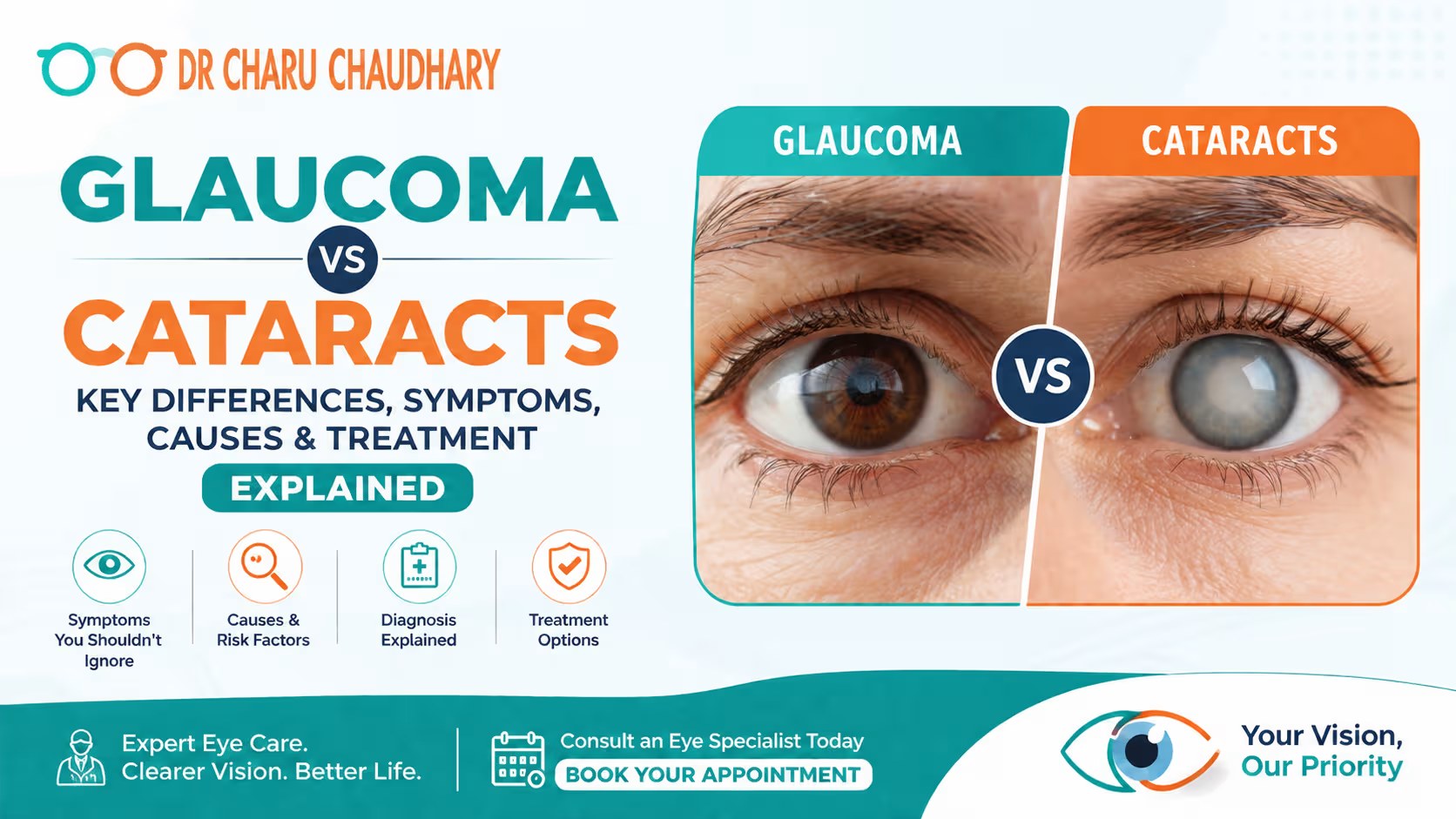
Cataracts cause cloudy vision because the eye’s natural lens becomes opaque, blocking light from reaching the retina. Conversely, glaucoma damages the optic nerve, often due to increased eye pressure. While cataract surgery usually restores vision successfully, glaucoma-related vision loss is irreversible. Therefore, early diagnosis is essential to prevent permanent blindness. Introduction How Can You Tell Whether It’s Glaucoma or Cataracts? Distinguishing between different eye conditions is often difficult for the average person. You might notice your vision becoming blurry or find it hard to drive at night. However, these symptoms could point toward two very different diseases. Glaucoma and cataracts are the leading causes of vision impairment globally. While they share some similarities, their impact on your eye health varies significantly. Identifying the specific cause of your visual decline is the first step toward effective recovery. Why Do People Often Confuse These Two Eye Conditions? Confusion often arises because both conditions commonly affect older adults. Furthermore, both diseases can cause a gradual decline in visual clarity. Patients frequently assume that any blurring of vision is simply a sign of “getting older.” Unfortunately, this misconception can lead to delayed treatment. While one condition is often fixable, the other can lead to permanent darkness if ignored. Understanding the biological differences between them is crucial for every patient. Why Early Eye Examination Can Protect Your Vision Regular screenings are the only definitive way to distinguish between these two conditions. An experienced Eye doctor in Lucknow can perform a comprehensive evaluation to assess your ocular health. Early detection allows for a wider range of treatment options. Most importantly, it helps prevent the silent progression of diseases that could steal your sight. By scheduling an exam, you take a proactive step in preserving your quality of life. What Is Glaucoma and How Does It Affect Vision? Glaucoma is not a single disease but a group of eye conditions. These conditions primarily damage the optic nerve, which is vital for good vision. This damage is often caused by abnormally high pressure inside your eye. Over time, this pressure erodes the nerve fibers, leading to blind spots in your visual field. What Happens to the Optic Nerve? The optic nerve acts like a communication cable between your eye and your brain. It carries thousands of electrical impulses that the brain interprets as images. When intraocular pressure rises, it compresses these delicate nerve fibers. Consequently, the fibers begin to die, and the “cable” loses its ability to transmit information. This process usually starts with your side vision and slowly moves inward. Why Is Glaucoma Called the “Silent Thief of Sight”? Many forms of glaucoma have no warning signs. For example, open-angle glaucoma progresses so slowly that you may not notice a change until the late stages. The brain often compensates for small blind spots, making the disease nearly invisible to the patient. By the time vision loss becomes obvious, significant and permanent damage has already occurred. This is why medical professionals emphasize the importance of preventative screenings. What Are Cataracts and Why Do They Develop? A cataract is a clouding of the normally clear lens of your eye. For people who have cataracts, seeing through cloudy lenses is a bit like looking through a frosty window. This clouding makes it more difficult to read or drive a car, especially at night. Most cataracts develop slowly and don’t disturb your eyesight early on. How Does the Eye Lens Become Cloudy? The lens is positioned behind the colored part of your eye (the iris). It focuses light that passes into your eye, producing clear, sharp images on the retina. As you age, the proteins within the lens begin to break down and clump together. These clumps create a cloudy area that scatters light instead of focusing it clearly. As a result, the image reaching your retina becomes blurred or distorted. Who Is Most Likely to Develop Cataracts? Aging is the most significant risk factor for cataract development. Most people begin to develop some degree of lens clouding after the age of 40. However, other factors can accelerate this process significantly. These include prolonged exposure to ultraviolet (UV) light, smoking, and certain medications like steroids. Additionally, individuals with systemic health issues may see symptoms appear much earlier in life. What Is the Difference Between Glaucoma and Cataracts? While both conditions affect your ability to see, they involve different parts of the eye. Cataracts are a problem with the “lens,” which is the front window of the eye. Glaucoma is a problem with the “nerve,” which is the connection to the brain. Understanding this fundamental difference helps patients appreciate why the treatments differ so vastly. How Do Their Causes Differ? The causes of these two diseases are entirely unrelated. Cataracts are primarily a result of protein degradation and oxidative stress within the lens. In contrast, glaucoma usually stems from a failure in the eye’s fluid drainage system. When the aqueous humor (eye fluid) cannot drain properly, pressure builds up against the retina and optic nerve. Therefore, one is a structural change in a tissue, while the other is often a hydraulic issue. How Do Symptoms Compare? Cataract symptoms usually involve a change in how you perceive light and color. You might see “halos” around streetlights or find that colors look faded. Glaucoma symptoms are often non-existent in the early stages. However, advanced glaucoma leads to “tunnel vision,” where your peripheral sight disappears. While cataracts make the world look “fuzzy,” glaucoma makes the world look “smaller.” Which Condition Progresses Faster? Progression rates vary greatly between individuals and the specific type of the disease. Cataracts generally progress very slowly over several years. Many patients live with mild cataracts for a long time without needing surgery. Some forms of glaucoma, such as acute angle-closure glaucoma, can cause vision loss within hours. Chronic glaucoma, however, also moves slowly but leaves permanent damage in its wake. Glaucoma vs. Cataract Comparison Table Feature Glaucoma Cataracts Primary Site Optic Nerve Crystalline Lens Main Cause High Intraocular Pressure Protein Clumping/Aging