If your eyes are always red, the cause may be dry eyes, allergies, prolonged screen time, contact lens irritation, conjunctivitis, or another eye condition. Mild redness may improve with rest, but persistent redness—especially with pain, light sensitivity, discharge, or vision changes—should be evaluated by an eye doctor. Red eyes are one of the most common eye complaints. Sometimes they are temporary and harmless, such as after a sleepless night or long hours in front of a screen. However, eyes that remain red or become red repeatedly may indicate an underlying problem that needs proper treatment. Understanding the possible red eyes causes can help you know when simple eye care is enough and when you should consult an ophthalmologist. What Does Eye Redness Mean? Eye redness occurs when the small blood vessels on the surface of the eye become enlarged, irritated, or inflamed. This makes the normally white part of the eye appear pink or red. Eye redness can affect one or both eyes and may occur with other symptoms, including: The severity and combination of symptoms can provide clues about the possible cause. However, symptoms alone cannot always identify the problem. If your eyes are always red or frequently become red without an obvious reason, an eye examination can help determine the underlying cause. Common Red Eyes Causes There are many possible causes of eye redness. Some are minor and temporary, while others require medical treatment. 1. Dry Eyes Dry eye is a common reason for persistent redness. It can occur when the eyes do not produce enough tears or when tears evaporate too quickly. Dry eyes may cause: Long screen hours, reduced blinking, air conditioning, pollution and certain environmental conditions can contribute to dry eye symptoms. 2. Eye Allergies Allergic conjunctivitis can cause red, itchy and watery eyes. Common triggers include dust, pollen, pet dander, smoke and other allergens. Intense itching is particularly common with eye allergies. Allergy-related redness often affects both eyes. 3. Conjunctivitis or Pink Eye Conjunctivitis occurs when the conjunctiva becomes inflamed. Viruses, bacteria or allergies can cause it. Possible symptoms include: Viral and bacterial conjunctivitis can be contagious, so good hand hygiene and avoiding shared towels or cosmetics are important. 4. Prolonged Screen Time Long hours on computers, smartphones and other digital devices can contribute to digital eye strain. When concentrating on a screen, people often blink less frequently. Reduced blinking can destabilize the tear film and cause dryness and irritation, which may make the eyes look red. 5. Lack of Sleep Insufficient sleep can leave the eyes looking tired, dry and bloodshot. Occasional redness after a late night usually improves with adequate sleep and hydration. However, frequent redness should not automatically be blamed on lack of sleep. 6. Contact Lens Problems Contact lenses can cause redness when they are worn incorrectly or for longer than recommended. Poor lens hygiene, sleeping in unsuitable lenses, using expired lenses, improper cleaning or continuing to wear lenses despite irritation can increase the risk of eye-surface problems and infection. 7. Foreign Body or Eye Injury Dust, sand, chemicals or another foreign object can irritate the eye and cause sudden redness. Do not rub the eye because rubbing can worsen irritation or potentially damage the cornea. Chemical exposure to the eye requires prompt medical attention. 8. Other Eye Conditions In some cases, red eyes may be associated with more significant conditions involving the cornea, uvea, intraocular pressure or other eye structures. This is particularly important when redness occurs with pain, blurred vision, light sensitivity, nausea, halos around lights or other sudden changes in vision. Symptoms That May Point to the Cause The symptoms occurring alongside redness can provide useful clues, although only an eye examination can establish the diagnosis. Symptoms Possible Cause Redness + intense itching Eye allergy Redness + watery discharge Allergy or viral conjunctivitis Redness + thick discharge Possible bacterial conjunctivitis Redness + burning or grittiness Dry eye or irritation Redness + contact lens use Lens-related irritation or infection Redness + significant pain Requires prompt evaluation Redness + blurred vision Needs medical assessment Redness + light sensitivity May indicate a more significant eye problem Redness after an injury Possible eye trauma Redness + sudden vision changes Urgent eye assessment may be required These associations are only general indicators. Avoid self-diagnosing based on symptoms alone. Can Contact Lenses Cause Redness? Yes, contact lenses can cause eye redness, particularly when they are not used or maintained correctly. Common reasons include: Contact lens wearers should pay particular attention to painful red eyes. If you develop significant redness, pain, light sensitivity, discharge or reduced vision while wearing contact lenses, remove the lenses and seek professional eye care promptly. Do not simply use redness-relieving drops and continue wearing the lenses. Eye Allergy or Eye Infection: How Are They Different? Eye allergies and eye infections can produce similar symptoms, making it difficult to distinguish between them without an examination. Eye Allergy Eye allergies commonly cause: Symptoms may worsen after exposure to dust, pollen, smoke, pets or other allergens. Eye Infection An eye infection may cause: Viral conjunctivitis often causes watery discharge, while bacterial conjunctivitis may produce thicker discharge. However, these symptoms can overlap. Antibiotic eye drops should not be started simply because the eye is red, because antibiotics do not treat viral or allergic causes. An ophthalmologist can determine the likely cause and recommend appropriate treatment. Safe Care for Mild Redness For mild redness without severe pain, vision changes or other warning signs, simple measures may help reduce irritation. Helpful steps include: Avoid these common mistakes Do not repeatedly use eye drops marketed only to “remove redness” without understanding the cause. Temporary whitening of the eye does not necessarily mean the underlying problem has been treated. Also avoid using leftover antibiotic or steroid eye drops without an ophthalmologist’s advice. Some eye conditions can worsen when inappropriate medication is used. When to See an Eye Doctor Not every red eye is an emergency, but persistent or recurrent eye redness should be evaluated if it
Why are dry eyes becoming common in young professionals?Dry eyes are rising among young professionals due to prolonged screen exposure, which reduces blink rates by up to 66%, causing rapid tear evaporation. Combined with air-conditioned offices, poor sleep, and digital lifestyles, the tear film becomes unstable, leading to chronic irritation, inflammation, and Digital Eye Strain. Introduction In the modern corporate landscape, the transition from traditional office setups to highly digitized environments has brought about a significant, yet often overlooked, health crisis. For the contemporary workforce, the day begins and ends with a glowing screen. Whether it is a software engineer in a high-pressure IT hub, a digital marketer managing multiple campaigns, or a student attending virtual lectures, the eyes are under constant duress. This shift has led to an unprecedented rise in Dry Eye Disease (DED), a condition that was once predominantly associated with aging but is now a hallmark of the young professional’s life. The rise of digital lifestyles is hurting eye health at a rate that traditional medical models are struggling to keep pace with. We are currently living in the “Smartphone Era,” where the blue light emitted from devices and the cognitive demand of digital tasks force our eyes to work harder than they were biologically designed to. If you find yourself frequently rubbing your eyes, experiencing a persistent “gritty” sensation, or noticing that your vision blurs toward the end of a workday, you are likely part of the growing demographic suffering from ocular surface distress. Ignoring these symptoms is not merely a matter of enduring discomfort; it can lead to long-term structural damage to the cornea. Seeking early intervention from an expert is critical. For those in North India, consulting Dr Charu Chaudhary, widely regarded as the Best Eye Specialist in Lucknow, can provide the specialized care necessary to manage this condition effectively. Understanding the “why” behind this epidemic is the first step toward reclaiming your eye health and ensuring that your career productivity is not hampered by preventable physical strain. Quick Facts About Dry Eyes To provide a quick overview for those seeking immediate information through voice search or AI summaries: What Is Dry Eye Disease? To truly grasp why young professionals are suffering, one must understand the delicate ecosystem of the eye’s surface. Healthy vision relies on a stable, continuous layer of moisture called the tear film. This film is not just “water”; it is a sophisticated three-layered shield: How Dry Eyes DevelopDry eye occurs when the quantity or quality of these layers is compromised. In the context of young professionals, the most common form is Evaporative Dry Eye. This happens when the oil layer is insufficient, often because the Meibomian glands are not being “pumped” effectively by regular blinking. Temporary vs. Chronic Dry EyeThere is a distinction between occasional dryness (after a long flight or a night of poor sleep) and chronic Dry Eye Disease. Chronic DED is a self-perpetuating cycle of inflammation. When the eye stays dry for too long, the surface becomes inflamed, which in turn damages the glands that produce tears, creating a feedback loop that requires medical intervention from a specialist like Dr Charu Chaudhary. Why Young Professionals Are More Vulnerable The modern professional’s environment is almost perfectly engineered to cause dry eyes. Several factors contribute to this vulnerability: Excessive Computer and Smartphone Use The primary culprit is “Digital Eye Strain” or “Computer Vision Syndrome.” When we work on a laptop or scroll through a smartphone, the level of visual concentration is intense. This leads to a phenomenon known as “staring,” where the natural blink reflex is suppressed. Blinking is essential for spreading a fresh layer of tears; without it, the eye surface becomes exposed and parched. Air-Conditioned Workspaces Most corporate offices and co-working spaces in cities like Lucknow rely on centralized air conditioning. These systems function by removing moisture from the air. In a low-humidity environment, the tears on your eyes evaporate significantly faster. For an IT professional sitting under an AC vent for 9 hours, the eyes are essentially being “freeze-dried” throughout the day. The Rise of Remote and Hybrid Work Remote work has removed the natural “micro-breaks” of the office—walking to a colleague’s desk, moving to a meeting room, or the commute. Home offices are also often poorly optimized. Screens may be at the wrong height, causing the eyes to open wider and expose more surface area to evaporation. Lack of Sleep and Recovery Young professionals often prioritize “hustle” over sleep. During sleep, the eyes are bathed in continuous moisture, and the corneal cells undergo repair. Chronic sleep deprivation prevents this essential recovery, making the eyes more susceptible to irritation the following day. How Screen Time Causes Dry Eyes: The Mechanics The relationship between screen time and dry eyes is mechanical. Under normal circumstances, humans blink about 15 to 20 times per minute. However, when focusing on a digital task, this rate drops to about 5 to 7 blinks per minute. Reduced Blinking and Increased EvaporationNot only do we blink less, but the quality of the blink also suffers. Research shows that screen users often perform “incomplete blinks,” where the upper eyelid does not fully meet the lower eyelid. This failure means the Meibomian glands aren’t squeezed, and the protective oil layer is never replenished. Blue Light Exposure and Eye FatigueWhile blue light is not the direct cause of dryness, it contributes to overall eye fatigue. The high-energy visible (HEV) light scatters more easily than other light, making it harder for the eye to focus. This increased focusing effort strains the ciliary muscles, making the symptoms of dryness feel more painful and exhausting. Screen Time Impact Chart Factor Mechanism of Action Clinical Impact Blink Rate Suppression 60-70% reduction in blinks Rapid tear film breakup Incomplete Blinks Oil glands are not compressed Meibomian Gland Dysfunction (MGD) Airflow (AC/Fans) Increased air velocity over the eye Accelerated evaporation of aqueous layer High Screen Brightness Pupil constriction and light scatter Photophobia (light sensitivity) Viewing Angle Looking straight ahead/upwards Increased ocular surface exposure Common
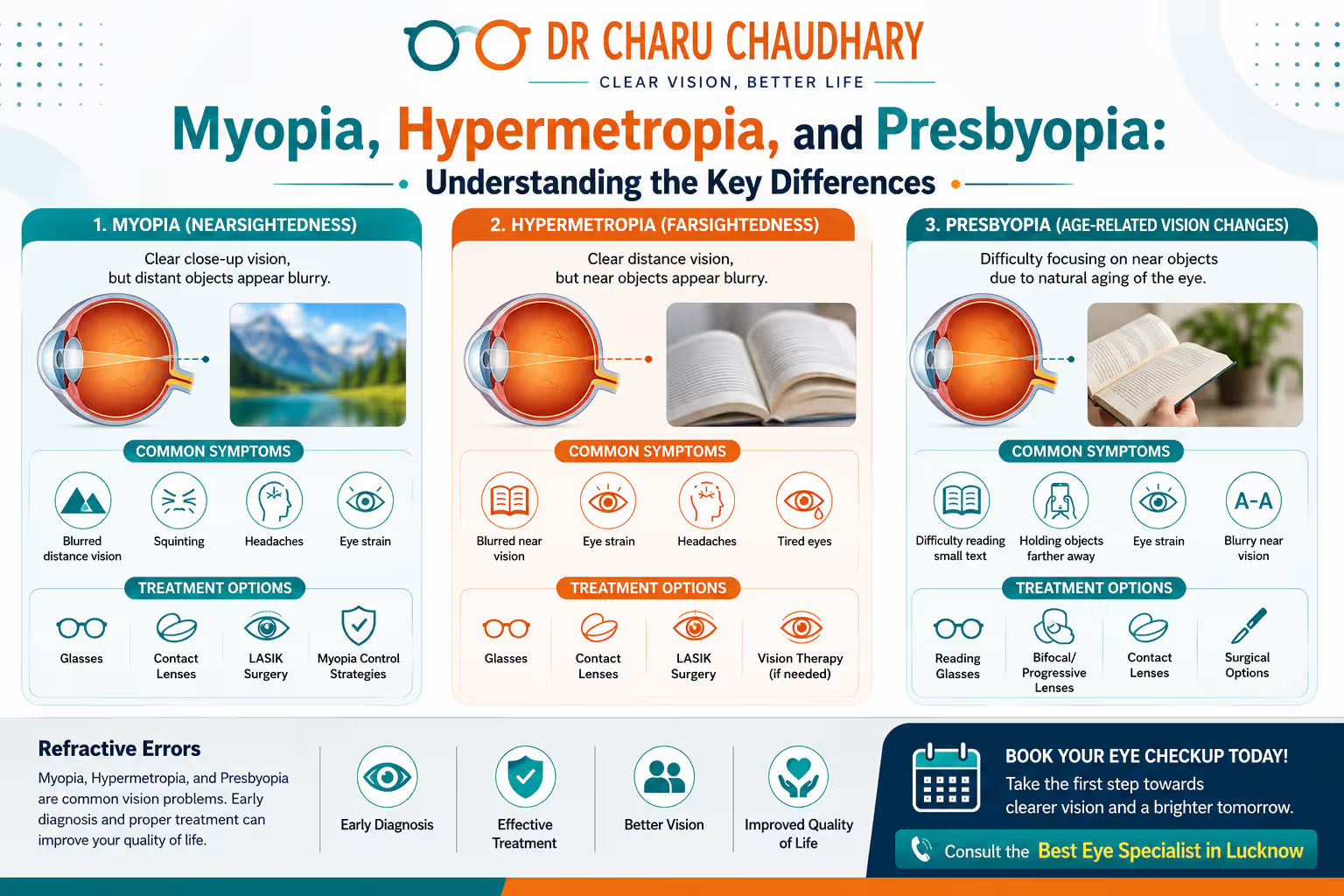
Clear vision is something many of us take for granted until things start to look a little blurry. Whether you are struggling to read the fine print on a menu, finding it hard to see road signs while driving, or noticing that your child is squinting at the television, vision changes can be unsettling. The most common reasons for blurred vision are refractive errors. While the terms Myopia, Hypermetropia, and Presbyopia might sound like complex medical jargon, they represent the three most frequent ways our eyes struggle to focus light. Understanding these conditions is the first step toward reclaiming clear sight and maintaining long-term eye health. Myopia, Hypermetropia, and Presbyopia are common refractive errors affecting how the eye focuses light. Myopia (nearsightedness) causes difficulty seeing distant objects. Hypermetropia (farsightedness) affects near vision clarity. Presbyopia is an age-related condition where the eye’s lens loses flexibility, making it difficult to focus on close-up tasks like reading. Introduction Vision is perhaps our most dominant sense, guiding how we interact with the world, learn, and work. However, according to the World Health Organization, refractive errors are the leading cause of vision impairment globally. Despite their prevalence, many people confuse these conditions, leading to delayed treatment or incorrect assumptions about their eye health. The modern lifestyle—characterized by increased screen time and less outdoor activity—has led to a surge in cases of Myopia, especially among children. On the other hand, as the global population ages, Presbyopia has become a universal experience for those over 40. Meanwhile, Hypermetropia often goes undiagnosed in children because the eye’s internal muscles work overtime to compensate, often leading to hidden eye strain. Early diagnosis is vital. Uncorrected refractive errors don’t just cause blurriness; they can lead to chronic headaches, reduced productivity, and, in children, developmental delays or “lazy eye” (amblyopia). This guide will break down the mechanics of the eye, explain the differences between these three conditions, and help you understand the path to perfect vision. How Normal Vision Works To understand what goes wrong in refractive errors, we must first understand how a “normal” eye (emmetropia) functions. Anatomy of the Eye Think of your eye as a high-tech camera. It has a protective outer layer, a lens for focusing, and a “film” or sensor at the back that captures the image. The main components involved in vision are the cornea, the lens, and the retina. Role of the Cornea and Lens Light enters the eye through the cornea, the clear, dome-shaped front surface. The cornea provides most of the eye’s optical power by bending (refracting) incoming light. Behind the cornea sits the crystalline lens, which is flexible. This flexibility allows the lens to change shape to fine-tune your focus, a process called accommodation. How Light Focuses on the Retina In a perfectly shaped eye, the cornea and lens work in harmony to bend light rays so they land precisely on a single focal point on the retina. The retina is a light-sensitive layer of tissue at the back of the eye. It converts light into neural signals and sends them via the optic nerve to the brain, which interprets them as images. What Happens When Vision Becomes Blurry Vision becomes blurry when the light does not land exactly on the retina. If the eye is too long, too short, or the cornea is too curved, the light focus lands in front of or behind the retina. This mismatch is what we call a refractive error. What Are Refractive Errors? Definition of Refractive Errors A refractive error is a type of vision problem that makes it hard to see clearly. It happens when the shape of your eye keeps light from focusing correctly on your retina. It is not a “disease” in the traditional sense, but rather an anatomical mismatch in the eye’s optical system. Why Refractive Errors Occur Refractive errors typically occur due to one of three factors: Common Types of Refractive Errors The four main types are: Impact on Daily Life Uncorrected refractive errors can make it difficult to perform everyday tasks. For a student, it means not being able to see the whiteboard. For a professional, it means digital eye strain and blurred text. For an older adult, it can mean a loss of independence when reading labels or using a phone. What Is Myopia (Nearsightedness)? Understanding Myopia Myopia, commonly known as nearsightedness, is a condition where close-up objects appear clear, but distant objects—like street signs or a movie screen—look blurry. It is the most common refractive error worldwide and is reaching epidemic levels in urban populations. Causes of Myopia Myopia occurs when the eyeball is too long relative to the focusing power of the cornea and lens. This causes light rays to focus at a point in front of the retina instead of directly on its surface. It can also be caused by a cornea that is too steeply curved. Symptoms of Myopia Risk Factors How Myopia Progresses Myopia usually starts in childhood and can progress until the early 20s as the eyeball continues to grow. High myopia (severe nearsightedness) increases the risk of serious eye conditions later in life, such as retinal detachment, cataracts, and glaucoma. Treatment Options What Is Hypermetropia (Farsightedness)? Understanding Hypermetropia Hypermetropia, or farsightedness, is a condition where distant objects are usually seen clearly, but close-up objects appear significantly blurred. However, the experience of hypermetropia varies by age; young people with mild hypermetropia may see clearly at all distances because their eyes can compensate, while older individuals may struggle with both near and far vision. Causes of Hypermetropia This occurs when the eyeball is too short or the cornea has too little curvature. As a result, light focuses at a point behind the retina. Symptoms of Hypermetropia Risk Factors Hypermetropia is often present at birth, but children frequently “outgrow” it as the eyeball lengthens during normal growth. It is highly hereditary. Complications if Left Untreated In children, significant uncorrected hypermetropia can lead to strabismus (crossed eyes) or amblyopia (lazy eye) because the brain begins to ignore the signals from the eye that is more out of focus. Treatment Options What Is
Digital Screen & Eye Health: Impacts, Treatment & Prevention In today’s world, it is almost impossible to imagine a day without screens. Whether it is the smartphone you check first thing in the morning, the laptop you use for work, or the LED TV you watch in the evening, digital devices are everywhere. While these tools make our lives easier, they come with a hidden cost to our most precious sense: our vision. As an eye surgeon, I have seen a massive rise in patients coming to my clinic with complaints of tired eyes, stinging sensations, and frequent headaches. Many people worry that they are losing their sight when, in fact, they are suffering from the modern-day epidemic of screen-related fatigue. My name is Dr Charu Chaudhary, and as a Best eye specialist in Lucknow, my goal is to help you understand how these devices impact your eyes and what you can do to protect your vision in a digital-first world. How Digital Screens Affect Your Eyes To understand why screens are hard on the eyes, we need to look at how our eyes function. Unlike a printed page, which has sharp edges and high contrast, images on a screen are made of thousands of tiny pixels. This makes it harder for our eyes to maintain focus. Blue Light Exposure Digital screens emit high-energy visible (HEV) light, commonly known as blue light. While blue light is naturally present in sunlight, our eyes are not designed to stare at a concentrated source of it for hours at a close distance. Excessive exposure to blue light can disrupt our sleep cycles (circadian rhythm) and may contribute to retinal strain over long periods. Reduced Blinking Did you know that we normally blink about 15 to 20 times per minute? Blinking is essential because it spreads a fresh layer of tears over the surface of the eye, keeping it moist and clear. However, research shows that when we look at screens, our blink rate drops by more than 50%. This “staring” effect causes the tear film to evaporate quickly, leading to dryness and irritation. Eye Muscle Strain Our eyes have tiny muscles that help us focus on objects up close. When you spend hours looking at a phone or computer, these muscles remain in a state of constant contraction. Just like your legs would ache after a long run, your eye muscles become exhausted, leading to what we call “accommodative fatigue.” What Is Digital Eye Strain? If you spend more than two hours a day on a digital device, you are at a high risk of developing digital eye strain. This condition is a group of eye and vision-related problems that result from prolonged computer, tablet, e-reader, and cell phone use. In the medical community, we often refer to this as Computer Vision Syndrome. It is not a single disease but a collection of symptoms caused by the physical stress of digital interaction. As a Best eye specialist in Lucknow, I often explain to my patients that computer vision syndrome occurs because the demands placed on the eyes by the screen exceed the eyes’ ability to comfortably perform the task. Common Symptoms You Should Never Ignore Many people dismiss eye discomfort as a normal part of working hard. However, ignoring these signs can lead to chronic issues. If you experience the following, your eyes are crying out for help: Does digital eye strain cause blurry vision? Yes, it certainly does. When your eye muscles are overworked from staring at a close-up screen, they can “lock” into that position. When you look up at a wall or out the window, your eyes struggle to relax and refocus, making things look fuzzy. This is usually temporary, but it is a clear sign of strain. Can Looking at Screens Damage Eyes Permanently? This is the most common question I get at my practice in Lucknow. Patients ask, “Does looking at screens affect eyesight permanently?” The good news is that for most adults, digital eye strain does not cause permanent vision loss or eye diseases like glaucoma or cataracts. The discomfort is usually temporary and improves once you rest your eyes. However, the answer is slightly different for children. Is digital eye strain dangerous? For kids, excessive screen time is linked to the development of myopia (nearsightedness). Because a child’s eye is still growing, spending too much time on close-up work and not enough time outdoors can cause the eyeball to lengthen, leading to a permanent need for glasses. For adults, while the damage isn’t usually “permanent” in terms of blindness, chronic strain can lead to severe dry eye disease, which requires long-term medical management. How Much Screen Time Is Safe for Your Eyes? In a perfect world, we would all limit our screen time to a few hours. But in reality, many of us work 8-hour shifts on computers. So, how much screen time is healthy for the eyes in a day? The “safety” of screen time depends more on how you use it than on total hours. Frequent breaks are more important than the total duration. Best Ways to Prevent and Treat Digital Eye Strain Prevention is always better than a cure. If you must use screens, follow these expert tips for digital eye strain treatment and prevention: When Should You Visit an Eye Specialist in Lucknow? If you have tried the 20-20-20 rule and adjusted your lighting, but your eyes still hurt, it is time for a professional check-up. Persistent symptoms like double vision, severe redness, or localized pain should never be ignored. When symptoms become chronic, I recommend you consult Dr Charu Chaudhary. As a Best eye specialist in Lucknow, I perform comprehensive eye exams to rule out underlying issues like uncorrected refractive errors or tear duct problems. Sometimes, a simple pair of “computer glasses” with a specific tint or anti-reflective coating can make a world of difference. What Recent Research Says About Digital Eye Strain In any recent digital eye strain research paper, the statistics are alarming. Studies show that since 2020, the average person’s screen time has increased by