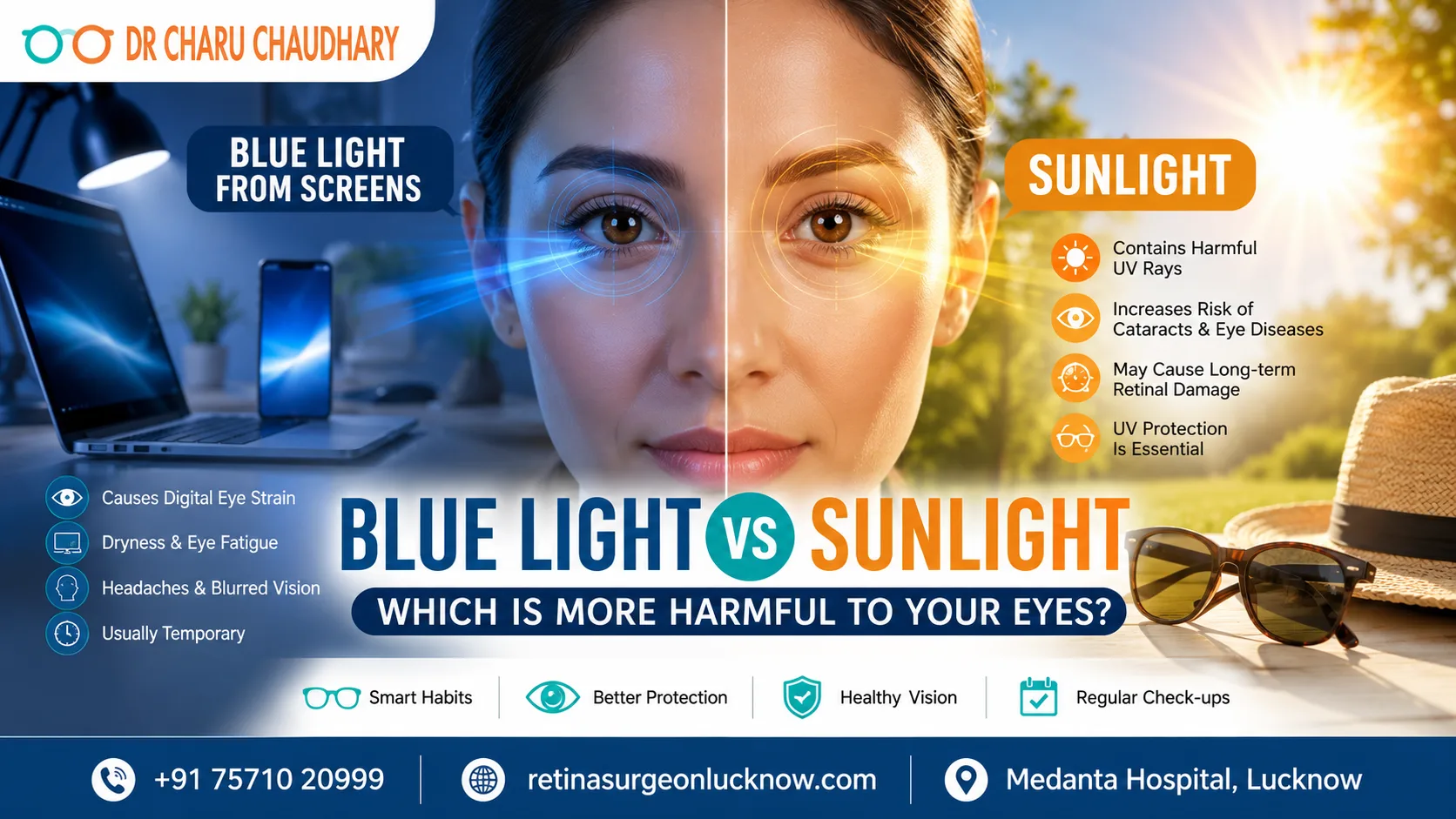
Have you ever wondered whether spending hours on your phone is more harmful than walking under the bright sun? This is one of the most common concerns people discuss with an eye specialist in Lucknow, especially as screen time continues to increase in both work and daily life. While smartphones, laptops, and tablets emit blue light, sunlight is the largest natural source of blue light and also contains harmful ultraviolet (UV) rays. Understanding the difference is essential for protecting your eyesight. The truth is that normal screen use is more likely to cause temporary eye strain and dryness, whereas prolonged exposure to sunlight without proper protection poses a greater long-term risk to eye health because of UV radiation. Knowing how each affects your eyes can help you adopt healthier habits and reduce your risk of vision problems. In this comprehensive guide, we’ll explain the science behind blue light and sunlight, separate myths from facts, and share expert-recommended strategies to keep your eyes healthy. Understanding Blue Light vs Sunlight Blue light is a part of the visible light spectrum, with wavelengths ranging from approximately 400 to 500 nanometers. It is often referred to as high-energy visible (HEV) light because it has a shorter wavelength and higher energy than most other visible colors. Many people associate blue light only with smartphones or computers, but in reality, the sun is by far the strongest natural source of blue light. Digital devices emit only a small fraction of the blue light that reaches your eyes outdoors. Common Sources of Blue Light Natural sources include: Artificial sources include: Although both sunlight and digital devices emit blue light, their intensity, duration, and accompanying radiation differ significantly, which is why they affect the eyes in different ways. Why Blue Light Matters Not all blue light is harmful. In fact, natural blue light plays an important role in maintaining overall health. Benefits of Natural Blue Light Natural blue light helps: Without exposure to natural daylight, our biological clock can become disrupted, affecting sleep quality and overall well-being. However, excessive exposure to intense light—particularly sunlight without adequate eye protection – may increase the risk of certain eye conditions over time. How the Eye Processes Light Before understanding which type of light is more harmful, it’s helpful to know how light travels through the eye. When light enters the eye, it passes through: The retina converts light into electrical signals, which are transmitted through the optic nerve to the brain, allowing us to see. The eye has natural protective mechanisms that filter part of the blue light reaching the retina. However, ultraviolet (UV) rays from sunlight interact differently with eye tissues and can contribute to long-term damage when exposure is excessive. Why Your Eyes Respond Differently to Blue Light and Sunlight Many people assume that all blue light is equally harmful, but this is a misconception. The way your eyes respond depends on the intensity of the light source, duration of exposure, and whether ultraviolet (UV) radiation is present. Blue Light From Digital Screens Blue light emitted by digital screens is: This is why people often experience symptoms such as dry eyes, headaches, and blurred vision after long hours of screen use. Sunlight Sunlight contains: Unlike screens, sunlight exposes your eyes to significantly higher energy levels and harmful UV radiation. Over many years, unprotected UV exposure may increase the risk of: This is why ophthalmologists recommend wearing UV400 sunglasses whenever you spend extended time outdoors. Expert Insight One of the biggest misconceptions is that mobile phones permanently damage the retina simply because they emit blue light. Current ophthalmic research indicates that the amount of blue light produced by smartphones and computers is substantially lower than that from natural sunlight. For most people, the symptoms experienced after prolonged screen use are related to digital eye strain, reduced blinking, glare, and poor ergonomics, rather than retinal injury. Blue Light vs Sunlight: Key Differences The following comparison highlights why sunlight and digital screens affect your eyes differently. Feature Blue Light From Screens Sunlight Primary Source Smartphones, tablets, laptops, LED screens Natural sunlight Blue Light Intensity Low Very High Contains UV Rays No Yes Causes Digital Eye Strain Yes Rarely Can Cause Dry Eyes Yes No Long-Term UV Damage No Yes Risk of Cataracts No direct link Increased with prolonged UV exposure Risk to Retina No proven damage from normal use Direct sun viewing can damage the retina Best Protection Screen breaks, blinking, ergonomic setup UV400 sunglasses, hats, avoiding direct sun Does Blue Light From Screens Harm the Retina? One of the most frequently searched questions online is whether blue light from smartphones permanently damages the retina. The current scientific evidence provides reassuring answers. Studies have not demonstrated that normal exposure to blue light from digital devices causes permanent retinal damage in healthy individuals. The amount of blue light emitted by screens is significantly lower than that produced by natural sunlight. Most people who spend long hours using digital devices experience symptoms related to Digital Eye Strain (Computer Vision Syndrome) rather than retinal disease. Common Symptoms Associated with Prolonged Screen Use These symptoms usually improve with proper screen habits, regular breaks, and appropriate lighting. However, individuals with pre-existing retinal conditions, such as diabetic retinopathy or age-related macular degeneration, should follow the advice of their ophthalmologist regarding prolonged screen use. What Causes Digital Eye Strain? One of the biggest misconceptions is that blue light itself is the main reason for eye discomfort after using digital devices. In reality, ophthalmologists agree that Digital Eye Strain, also known as Computer Vision Syndrome (CVS), is usually caused by the way we use screens rather than the blue light they emit. Whether you’re working on a computer, attending online classes, or scrolling through social media, your eyes work harder to maintain focus on digital screens than they do when reading printed text. This constant effort, combined with poor viewing habits, can lead to a range of uncomfortable symptoms. Why Does Digital Eye Strain Happen? Several factors contribute to