In recent years, the prevalence of retinal diseases has seen a significant surge across India, with Lucknow being no exception. As a major healthcare hub in Uttar Pradesh, Lucknow witnesses thousands of patients daily seeking specialized care for vision-threatening conditions. The retina, a thin layer of light-sensitive tissue at the back of the eye, acts much like the film in a traditional camera. When it becomes damaged due to age, diabetes, or trauma, the consequences can be devastating, often leading to irreversible vision loss if left untreated. One of the primary concerns for patients and their families when facing a retinal diagnosis is the financial aspect. “How much will the treatment cost?” is usually the first question asked after a diagnosis is confirmed. Understanding the Retina Treatment Cost is essential for making informed decisions, planning finances, and ensuring that quality care is not delayed. Early intervention is not just a clinical necessity; it is a financial strategy. Detecting a retinal tear early might cost a few thousand rupees for a laser procedure, whereas ignoring it could lead to a retinal detachment requiring surgery costing tens of thousands. Retina Treatment Cost in Lucknow varies depending on the retinal condition, diagnostic tests, treatment method, and whether surgery is required. Early diagnosis often reduces complications, treatment complexity, and overall healthcare expenses, ensuring better visual outcomes at a lower cost. Quick Facts: Retina Treatment at a Glance Service/Treatment Approximate Cost Range (INR) Recovery Timeline Consultation (Retina Specialist) ₹500 – ₹1,500 Immediate OCT Scan (Optical Coherence Tomography) ₹1,500 – ₹3,500 Immediate Fundus Photography/Angiography ₹2,000 – ₹5,000 1 – 2 Hours Retina Laser Treatment (per session) ₹5,000 – ₹15,000 1 – 2 Days Anti-VEGF Injection (per dose) ₹7,000 – ₹60,000 1 – 3 Days Retinal Detachment Surgery ₹40,000 – ₹1,20,000 2 – 6 Weeks Vitrectomy Surgery ₹50,000 – ₹1,50,000 3 – 8 Weeks What Is the Retina and Why Is It Important? Understanding the Role of the Retina The retina is arguably the most vital part of the eye’s anatomy. It is a complex, multi-layered structure that captures light entering the eye and converts it into electrical signals. These signals are then transmitted via the optic nerve to the brain, which interprets them as images. Without a functioning retina, the eye may be structurally intact, but the “vision” process cannot occur. How the Retina Helps You See Think of the retina as the “sensor” of your eye. The central part of the retina, known as the macula, is responsible for sharp, detailed, central vision. This allows you to read, drive, and recognize faces. The peripheral retina provides you with side vision, helping you navigate your surroundings. What Happens When the Retina Is Damaged? Unlike some other tissues in the body, the retina has a very limited capacity to regenerate. Damage caused by high blood sugar (diabetes), high blood pressure, or physical trauma can lead to scarring, bleeding, or detachment. When the retina is damaged, images become blurred, distorted, or vanish entirely. Because the retina is directly connected to the brain’s visual cortex, any delay in treatment can lead to permanent atrophy of the nerve fibers. Common Retina Conditions That Require Treatment Understanding the specific condition you have is the first step in estimating the retinal disease treatment cost. Different pathologies require vastly different approaches. 1. Diabetic Retinopathy This is the leading cause of blindness among working-age adults. Chronic high blood sugar damages the tiny blood vessels inside the retina. 2. Retinal Detachment A medical emergency where the retina pulls away from its underlying layer of support tissue. 3. Age-Related Macular Degeneration (AMD) Common in individuals over 50, AMD affects the macula. 4. Retinal Vein Occlusion (RVO) A blockage of the small veins that carry blood away from the retina. This often causes sudden, painless vision loss in one eye and requires injections or laser treatment to manage swelling (edema). 5. Macular Edema This refers to the swelling of the macula, often a complication of diabetes or RVO. The eye retina treatment for this usually involves a series of injections. 6. Retinal Tears and Holes Small breaks in the retina can lead to detachment. These are often treated quickly with “green laser” therapy to seal the edges of the tear. Retina Treatment Cost in Lucknow: Overview Lucknow offers a wide spectrum of eye care, ranging from government-run charitable hospitals to ultra-modern private eye centers. The Retina treatment price in Lucknow is generally more affordable than in Delhi or Mumbai, but the quality of technology and surgical expertise remains world-class. Average Cost Range A patient can expect to spend anywhere from ₹5,000 for a minor laser procedure to ₹1,50,000 for a complex vitreoretinal surgery involving imported silicon oil or gases. Why Treatment Costs Vary It is difficult to provide a single “price tag” for retina care because no two eyes are the same. A Retina specialist in Lucknow will determine the price based on: Diagnostic Investigation Costs Accurate diagnosis is the foundation of successful treatment. Before any procedure, a Retina Specialist in Lucknow will perform several tests to map the extent of the damage. Diagnostic Test Purpose Estimated Cost (INR) Consultation Fee Expert evaluation of the eye ₹500 – ₹1,500 OCT Scan Cross-sectional imaging of the retina ₹1,500 – ₹3,500 Fundus Fluorescein Angiography (FFA) Mapping blood flow with dye ₹2,500 – ₹4,500 B-Scan Ultrasound Seeing the retina when cataracts are present ₹800 – ₹1,500 Indocyanine Green Angiography (ICG) Visualizing deeper choroidal vessels ₹5,000 – ₹8,000 Optical Coherence Tomography Angiography (OCTA) Non-invasive blood flow mapping ₹3,000 – ₹6,000 The retina checkup cost usually includes a dilated eye exam and at least one imaging test, like an OCT. Factors That Affect Retina Treatment Cost When budgeting for your care, consider these influencing factors: Anti-VEGF Injection Cost in Lucknow Anti-VEGF (Vascular Endothelial Growth Factor) injections have revolutionized retina care. They “dry up” leaking vessels and are the gold standard for Wet AMD and Diabetic Macular Edema. What Are Anti-VEGF Injections? These are medications injected directly into the vitreous (the gel-like substance in the eye). The procedure is done under local anesthesia and takes less than

The success of a retinal procedure does not end when the surgeon steps out of the operating room. In fact, for many patients, the most critical phase begins the moment they head home. The retina is a delicate, light-sensitive tissue at the back of the eye, responsible for translating light into the images we see. Because it is so fragile, surgery involving the retina—whether to repair a detachment, clear a hemorrhage, or fix a macular hole—requires a meticulous and disciplined recovery process. Understanding the do’s and don’ts after retina surgery is essential for protecting your vision and ensuring the surgical site heals correctly. Many patients feel anxious about what they can and cannot do. This guide is designed to provide comprehensive, expert-backed information to help you navigate your recovery journey with confidence. Recovery after retina surgery requires careful eye protection, proper medication use, follow-up appointments, and activity restrictions. Following your surgeon’s instructions can reduce complications, support healing, and improve long-term visual outcomes. Understanding Retina Surgery What Is the Retina? The retina is a thin layer of neural tissue lining the inner back surface of the eye. Think of it as the “film” in a traditional camera. It captures light rays that enter the eye and converts them into electrical impulses that the brain interprets as images. If the retina is damaged, scarred, or detached, the “film” becomes distorted or blank, leading to significant vision loss or even permanent blindness. Common Conditions Requiring Retina Surgery Retinal surgery is usually recommended when conservative treatments are insufficient. Common conditions include: Types of Retina Surgery Modern ophthalmology utilizes advanced techniques to repair these issues. According to Dr Charu Chaudhary, a renowned expert and the Best Retina Specialist in Lucknow, understanding your specific procedure helps in adhering to recovery protocols. Vitrectomy This is the most common retina surgery. The surgeon removes the vitreous gel (the clear fluid filling the eye) to better access the retina. The vitreous is then replaced with a saline solution, a gas bubble, or silicone oil. Retinal Detachment Surgery Techniques include Scleral Buckling (placing a flexible band around the eye to push the wall against the retina) or Pneumatic Retinopexy (injecting a gas bubble into the eye to push the retina back into place). Macular Hole Surgery Usually involves a vitrectomy followed by “peeling” a very thin membrane from the surface of the retina to encourage the hole to close. A gas bubble is almost always used here. Epiretinal Membrane Surgery Similar to macular hole surgery, the surgeon removes the vitreous and then delicately peels the scar tissue (membrane) off the retina to reduce distortion. What to Expect Immediately After Retina Surgery The first few hours and days following surgery are often the most uncomfortable, but they are also the most vital for long-term success. First 24 Hours Immediately after surgery, you will likely wear an eye patch and a protective plastic shield. You may feel groggy from sedation. It is normal to feel a “scratchy” sensation, as if there is sand in your eye. This is often due to the tiny incisions or sutures used during the procedure. Vision Changes After Surgery Do not be alarmed if your vision is extremely blurry or if you can only see light and shadows immediately after surgery. If a gas bubble was used, your vision will be blocked by the bubble, making it feel like you are looking through water or a dark curve. As the bubble dissipates, your vision will gradually clear from the top down. Eye Discomfort and Redness The white part of your eye (the sclera) may appear very red or even bloodshot. This is a common side effect of the surgical manipulation and will resolve over 2–3 weeks. Mild aching is normal and can usually be managed with over-the-counter pain relief recommended by your specialist. Protective Eye Shield You will be instructed to wear a protective shield, especially while sleeping, for at least the first week. This prevents accidental rubbing or pressure on the eye during the night. Recovery Timeline After Retina Surgery Recovery is a marathon, not a sprint. Below is a general timeline for recovery after retina surgery. Recovery Period What Patients Can Expect First 24 Hours Patching of the eye, significant blurring, mild pain, and the need for total rest. First Week Frequent use of antibiotic/steroid eye drops; strict head positioning (if a bubble was used); restricted activity. 2–4 Weeks Redness fades; vision begins to stabilize; gas bubble (if used) starts to shrink; can often return to light office work. 1–3 Months Most activity restrictions are lifted; vision continues to improve; final eye glass prescription may be updated. 3–6 Months Full healing achieved; the “new normal” for vision is established; long-term monitoring continues. Note: Every patient heals differently. Always follow the specific timeline provided by Dr Charu Chaudhary or your attending retina specialist. Important Do’s After Retina Surgery Use Eye Drops Exactly as Prescribed Your surgeon will prescribe a combination of antibiotic drops (to prevent infection) and steroid drops (to reduce inflammation). Attend All Follow-Up Visits Post-operative appointments are non-negotiable. Your surgeon needs to monitor the intraocular pressure (IOP) and ensure the retina is staying in place. Missing an appointment could mean missing early signs of a complication. Maintain Proper Head Positioning If a gas or oil bubble was placed in your eye, you may be required to maintain a specific head position (face-down or side-lying) for 23 hours a day for 1–2 weeks. This ensures the bubble floats to the correct spot to “plug” the retinal tear or hole. Protect Your Eye From Injury Wear your eye shield as instructed. Even during the day, wearing your regular glasses can provide a physical barrier against accidental pokes or dust. Get Adequate Rest Your body heals faster when it is well-rested. Avoid the temptation to “be productive” during the first week. Focus on sleeping and staying relaxed. Keep Blood Sugar and BP Under Control High blood sugar or blood pressure can interfere with the healing of delicate retinal blood vessels. This is especially

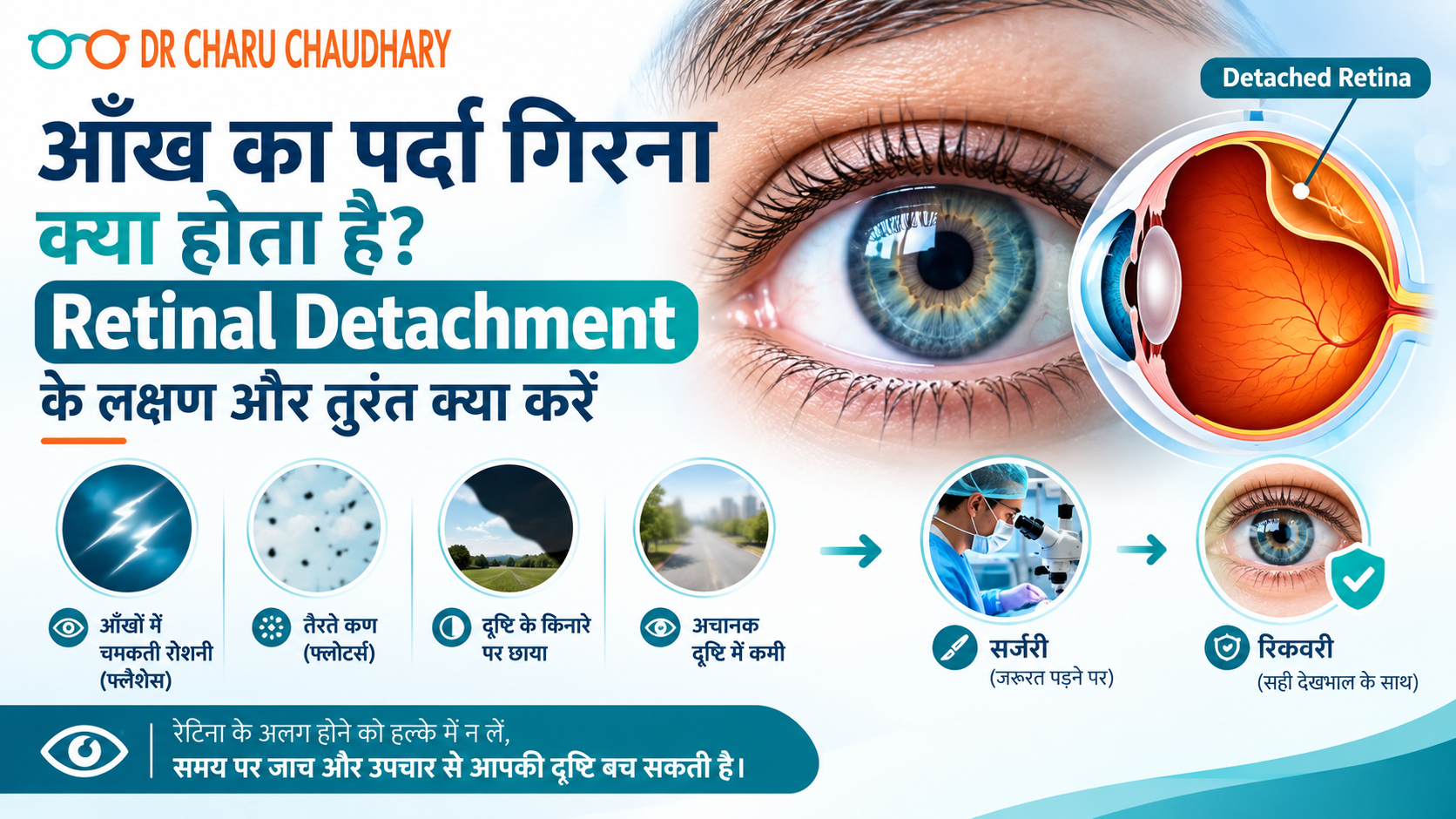
Eye Floaters & Flashes of Light You should see an eye doctor immediately if you notice a sudden increase in floaters, frequent flashes of light, or a dark shadow covering part of your vision. These can be signs of a retinal tear. Getting an eye checkup in Lucknow early can prevent permanent vision loss. Have you ever looked at a clear blue sky or a white wall and noticed specks or cobweb-like shapes drifting across your vision? You try to look directly at them, but they zip away. These are called eye floaters. At other times, you might see quick “lightning bolts” or “camera flashes,” even in a dark room. These are known as flashes. As an ophthalmologist, I often meet patients who are worried about these symptoms. My name is Dr. Charu Chaudhary, and I have spent years helping people protect their sight. If you are looking for the best eye surgeon in Lucknow, her team is here to guide you through these changes with care and expertise. In this guide, we will talk about what floaters and flashes are, why they happen, and—most importantly—when they mean you need to see a specialist for the best retina treatment in Lucknow. Eye Floaters: What They Are, Causes & Treatment Most eye floaters are a normal part of getting older. To understand them, imagine your eye is like a small ball filled with a clear, jelly-like substance called the “vitreous.” When we are young, this jelly is thick and firm. But as we age, the jelly starts to liquefy and shrink. When it shrinks, tiny clumps of protein or collagen form inside the eye. These clumps cast shadows on your retina (the light-sensitive layer at the back of the eye). What you “see” aren’t actually bugs or dust—they are the shadows of these tiny clumps. Are They Dangerous? In most cases, floaters are harmless. They are like gray hairs for the eyes—a sign of time passing. Most people get used to them, and the brain eventually learns to ignore them. However, they never truly “go away” on their own; they just settle at the bottom of the eye. When is Treatment Needed? Treatment is rarely needed for standard floaters. However, if they become so thick that they block your vision, a procedure might be considered. But before any treatment, a comprehensive eye checkup in Lucknow is necessary to ensure the rest of your eye is healthy. Are Eye Flashes Dangerous? When Should You Worry Flashes of light (medically called photopsia) feel like a flicker of lightning or a “spark” in the corner of your eye. Why Do Flashes Happen? Flashes occur when the vitreous jelly pulls or rubs against the retina. Think of the retina like a touch-sensitive screen. If the jelly tugs on it, the retina sends a signal to the brain, which the brain interprets as a flash of light. When to Worry While occasional flashes can happen as the jelly shifts with age, frequent or constant flashes are a red flag. If the jelly pulls too hard, it can tear the retina. This is a serious condition that requires immediate attention from an expert to receive retina treatment in Lucknow. Types of Eye Floaters and What They Mean Not all floaters look the same. Patients often describe them in different ways: Causes of Eye Floaters and Flashes Understanding the “why” can help ease your mind. Here are the most common causes: When Should You See a Doctor? (Critical Section) This is the most important part of this guide. While floaters are often normal, they can sometimes be a warning sign of a retinal detachment—a condition where the retina pulls away from the back of the eye. If not treated quickly, this can lead to permanent blindness. 👉 See a doctor immediately if you notice: If you experience any of these, do not wait. Seeking an immediate eye checkup in Lucknow can save your sight. Early diagnosis is the key to successful treatment. Diagnosis and Treatment Options When you visit a clinic for these symptoms, what should you expect? As the best eye surgeon in Lucknow, he ensures every patient undergoes a thorough, painless examination. 1. Dilated Eye Exam We use special eye drops to widen (dilate) your pupils. This allows us to look deep into the back of your eye to check the health of your retina and the vitreous jelly. 2. Laser Treatment If we find a small “retinal tear,” we can often fix it right in the clinic using a laser. This “welds” the tear shut and prevents it from turning into a full detachment. This is part of providing the Laser treatment in Lucknow. 3. Surgery (Vitrectomy) In severe cases where the retina has detached or there is a lot of blood in the eye, surgery may be needed to remove the jelly and repair the retina. Can Eye Floaters Be Prevented? While you cannot stop the natural aging of your eyes, you can take steps to keep your eyes strong and catch problems early: Tips to Protect Your Eye Health Daily Caring for your eyes is a daily habit. Here are some simple tips I share with all my patients: FAQs Section 1. Can eye floaters go away on their own? Floaters don’t actually disappear, but they often settle below your line of vision. Also, your brain is very smart—it eventually learns to ignore them, making them much less noticeable over time. 2. When should I worry about eye floaters and flashes? You should worry if the symptoms are sudden. One or two old floaters are fine, but a “burst” of new floaters combined with flashes of light is an emergency. 3. What type of doctor should I see for floaters and flashes? You should see an ophthalmologist or a retina specialist. Someone recognized as the best eye surgeon in Lucknow – Dr. Charu Chaudhary can provide the advanced diagnostic tools needed for an accurate checkup. 4. How long do floaters and flashes last? Floaters are usually permanent but become less annoying over weeks or months. Flashes caused by the