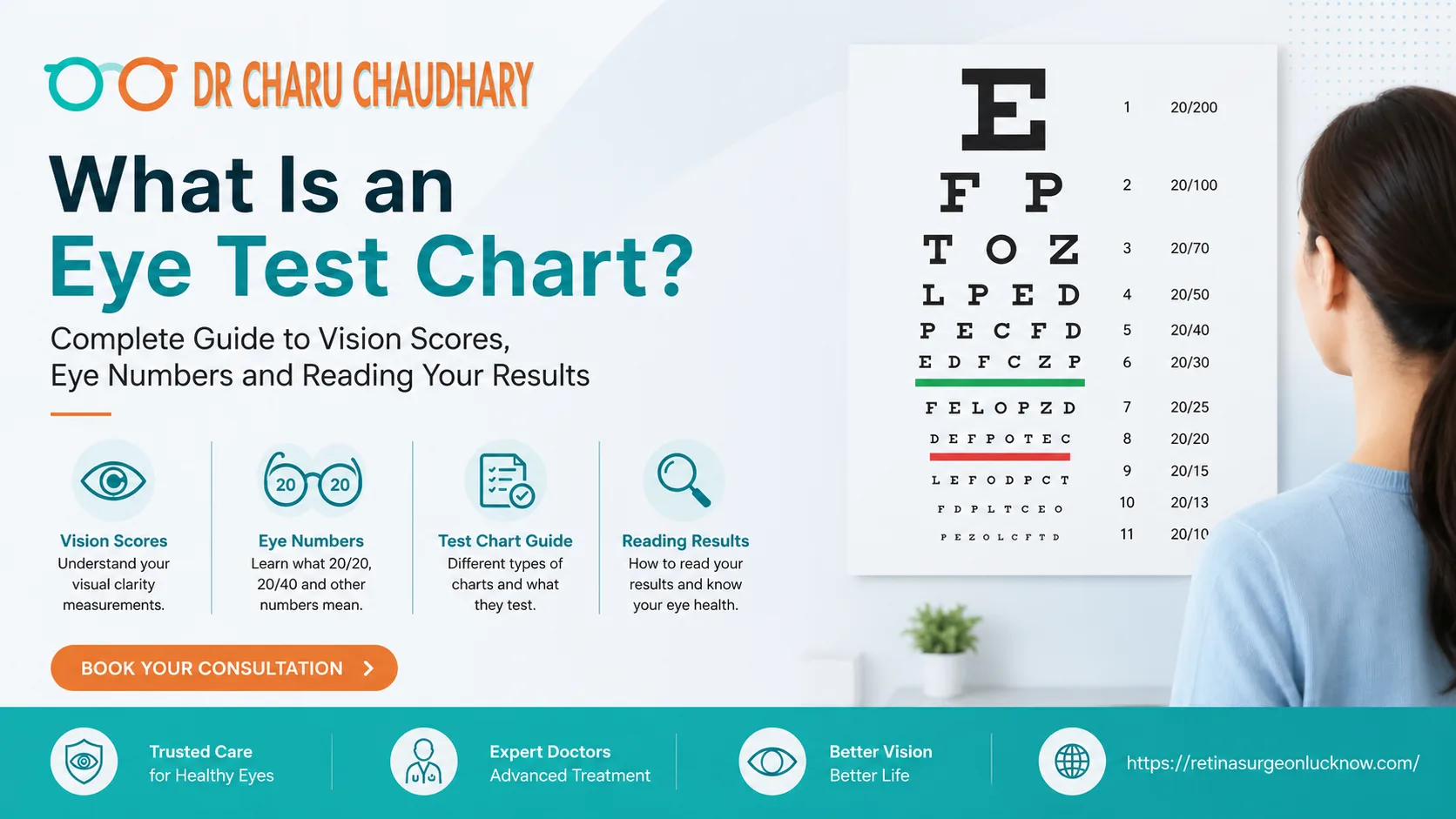
An eye test chart, most commonly the Snellen chart, is a clinical tool used by eye specialists to measure visual acuity and sharpness. During an eye exam, patients read rows of letters or symbols from a specific distance to determine their vision score, such as 20/20 or 6/6. These charts help doctors identify vision errors and determine if glasses or further medical treatments are necessary. Have you ever sat in a dim exam room, covering one eye, and trying to read a line of letters that seem to shrink as they go down? Most of us have encountered the classic “E” chart at some point. As an eye specialist, I, Dr. Charu Chaudhary, find that while many people have taken this test, very few actually understand what the results mean. “Does a minus number mean I’m going blind?” or “Is 20/20 vision perfect health?” are questions I hear daily. Understanding your vision shouldn’t be a mystery. This guide is designed to simplify the Snellen chart, decode those confusing eye numbers, and help you interpret your eye reports with confidence. Quick Summary If you are looking for a fast overview of vision scores, here are the essentials: What Is an Eye Test Chart? At its core, an eye test chart is a standardized way to measure “visual acuity.” Visual acuity refers to the sharpness or clarity of your vision at a specific distance. When you visit a clinic, we use these charts to determine if your eyesight meets the “normal” standard or if you have a refractive error that requires correction. The chart consists of various rows of “optotypes”—specially designed letters or symbols. While the chart looks simple, it is a scientifically calibrated tool. Each row represents a different level of visual ability. If you can read the small lines at the bottom, your brain and eyes are working together efficiently to process fine detail. The Snellen Chart — The Gold Standard of Vision Testing The most recognizable eye test chart in the world is the Snellen Chart. Developed in 1862 by Dutch ophthalmologist Herman Snellen, it remains the primary tool used by eye specialists like myself. How the Snellen Chart Works The chart typically features a large letter “E” at the top, followed by rows of letters that get progressively smaller. In my practice, I use the Snellen chart not just to prescribe glasses, but as a “vital sign” for the eye. A sudden drop in your ability to read the Snellen lines can alert us to underlying issues like cataracts or retinal changes. 6 Types of Eye Test Charts — Which One Is Right for You? While the Snellen chart is the most famous, eye specialists use various charts depending on the patient’s age and specific needs. 1. The Classic Snellen Chart Used for adults and children who know the alphabet. It uses a specific set of 10 letters (C, D, E, F, L, N, O, P, T, Z) known as Snellen optotypes. 2. The Tumbling E Chart This is used for people who cannot read the alphabet or for young children. The patient simply indicates which direction the “fingers” of the letter E are pointing (up, down, left, or right). 3. Landolt C Chart Similar to the Tumbling E, this chart uses a circle with a gap (like the letter C). The patient identifies where the gap is located. It is often used in international research for its high level of accuracy. 4. Pediatric Charts (LEA Symbols) For very young children, we use symbols like houses, apples, and hearts. This allows us to test a child’s vision before they even learn their ABCs. 5. Near Vision Charts (Jaeger Chart) This is a small, hand-held card used to test how well you see up close. It is essential for diagnosing “Presbyopia,” the age-related loss of near-focusing ability that usually begins after age 40. 6. Pelli-Robson Contrast Sensitivity Chart This chart doesn’t just measure size; it measures how well you can see objects against a background. This is crucial for patients with glaucoma or those who struggle with night driving. 📊Vision Score Chart — What Is a Normal Eye Test Reading? What does your score actually say about your eyesight? Here is a simple breakdown of common Snellen chart readings. Vision Score (Feet) Vision Score (Metric) Meaning 20/20 6/6 Normal Vision: You see at 20ft what a normal person sees at 20ft. 20/15 6/4.5 Excellent Vision: You see better than the average person. 20/40 6/12 Mild Blur: Most states require at least this for a driver’s license. 20/70 6/21 Moderate Impairment: You may struggle to read standard print without help. 20/200 6/60 Severe Impairment: This is the threshold for legal blindness in many regions. What is a “good” eye test score? A score of 20/20 is the clinical standard for “good” vision. However, having 20/20 vision does not necessarily mean your eyes are perfectly healthy—it just means they are seeing clearly at a distance. What is a “bad” eyesight score? If your score is 20/50 or higher (the second number is larger), your vision is significantly limited. At this stage, everyday tasks like recognizing faces across a street or reading street signs become difficult. 📊How to Read Your Eye Test Results — Prescription Decoder After you finish reading the Snellen chart, your specialist will give you a prescription. These numbers can be confusing. Let’s decode them into patient-friendly language. Term What it Means Simple Explanation OD Oculus Dexter Your Right Eye. OS Oculus Sinister Your Left Eye. SPH (Sphere) The main power Minus (-) means Nearsighted; Plus (+) means Farsighted. CYL (Cylinder) Astigmatism This corrects the “football shape” of your cornea. Axis The Angle The direction (0–180°) the astigmatism correction is placed. ADD Reading Power The “extra” boost needed for reading (bifocals/progressives). How do I read my eye test results? If your report says OD: -2.00 SPH, it means your right eye is nearsighted and needs two diopters of correction to see the 20/20 line on the Snellen chart. If it says +1.50 SPH, you are farsighted, and your
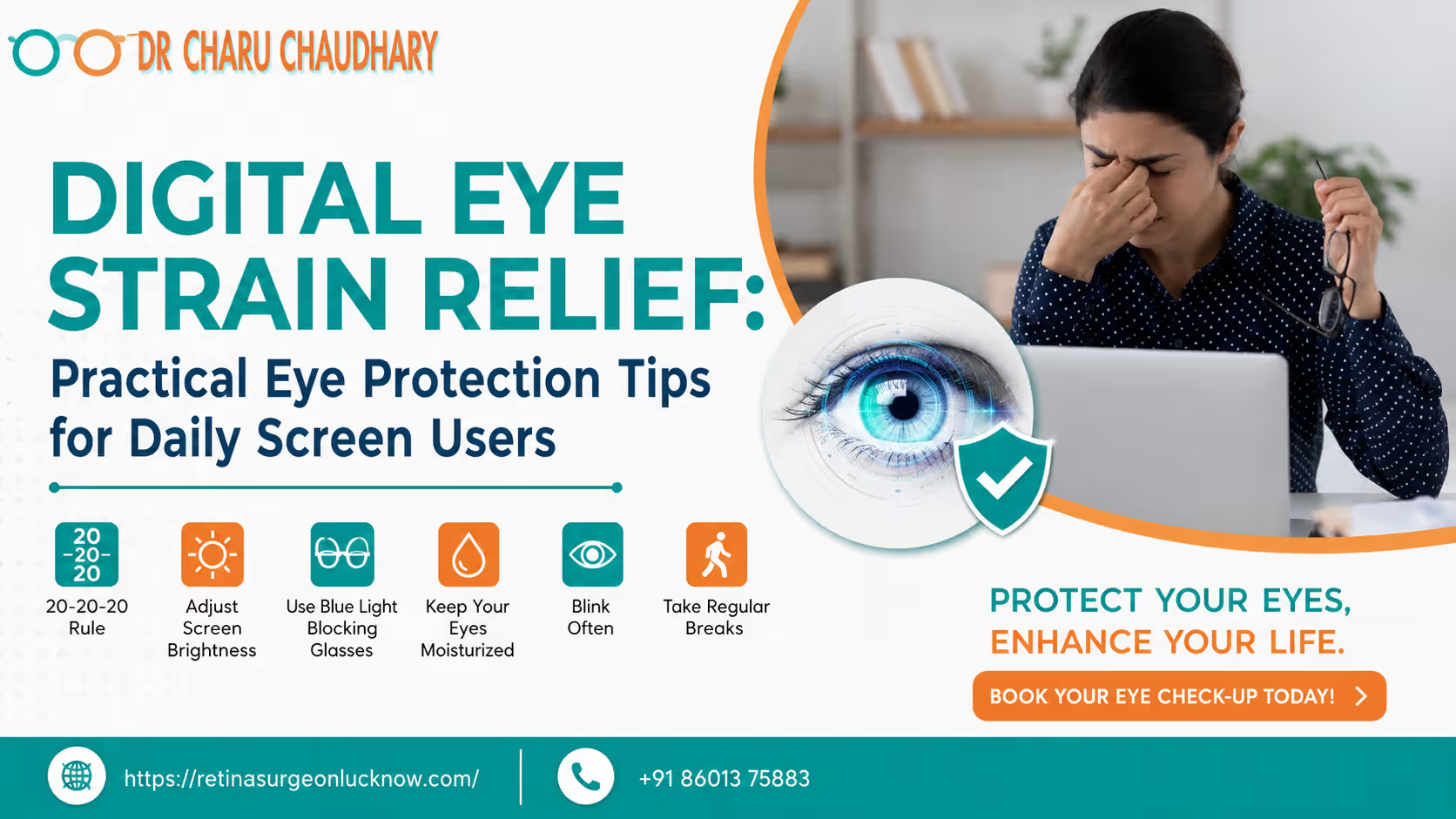
In the modern era, our lives are intrinsically linked to digital displays. From the moment we wake up to the minute we go to bed, we move from smartphones to laptop screens, tablets, and televisions. While this digital revolution has brought immense convenience and connectivity, it has also introduced a significant challenge for our ocular health: eye strain from screens. Whether you are a software professional in Lucknow, a student attending online classes, or someone who enjoys late-night scrolling, your eyes are likely working harder than they ever have before. At the clinic of Dr. Charu Chaudhary, a trusted eye specialist in Lucknow, we have seen a dramatic rise in patients complaining of “tired eyes,” persistent headaches, and dry sensations. These aren’t just minor inconveniences; they are signs that your visual system is being pushed beyond its natural limits. Understanding how to manage this digital fatigue is essential for maintaining long-term vision health and daily productivity. Eye strain from screens can cause dry eyes, headaches, blurry vision, and fatigue due to prolonged digital exposure. Healthy screen habits, regular breaks, proper lighting, and eye care practices may help reduce digital eye strain symptoms. What Is Digital Eye Strain? Digital Eye Strain (DES), often referred to medically as Computer Vision Syndrome (CVS), is a group of eye and vision-related problems that result from prolonged computer, tablet, e-reader, and smartphone use. Unlike reading a printed page, digital screens emit light, flicker slightly, and often have glare. This requires our eye muscles to constantly adjust and refocus, leading to exhaustion. When you look at a screen, your eyes must maintain a specific level of tension to keep the image sharp. This is much like holding a heavy weight at arm’s length; eventually, the muscle begins to ache. Because digital characters are made of pixels rather than solid ink, they have less contrast and “softer” edges, making it even harder for the brain to process the image, further increasing the demand on the visual system. Common Symptoms of Eye Strain from Screens Many people experience symptoms of digital eye strain without realizing the root cause. If you spend more than two hours a day on a device, you may notice: Why Screens Affect Eye Health To protect your vision, it is vital to understand the “why” behind the strain. Several factors contribute to the discomfort we feel after hours of digital usage. 1. The Blinking Problem Under normal circumstances, humans blink about 15–20 times per minute. Blinking spreads a fresh layer of tears across the cornea, keeping it moist and clear. However, when we concentrate on a digital screen, our blink rate drops significantly. This leads to “tear film instability,” where the moisture on the eye evaporates faster than it can be replaced. 2. Blue Light Exposure Digital devices emit High-Energy Visible (HEV) light, commonly known as blue light. While the sun is the largest source of blue light, the proximity of our screens and the duration of exposure are what concern eye specialists. Blue light can scatter more easily, reducing contrast and forcing the eyes to strain to see clearly. Furthermore, exposure to blue light in the evening suppresses melatonin, the hormone responsible for sleep. 3. Glare and Reflections Light reflecting off your screen from overhead lamps or windows creates glare. This forces your eyes to work harder to distinguish the text from the background reflections. 4. Poor Ergonomics The distance and angle at which we hold our devices matter. Laptops are often placed too low, and smartphones are held too close, forcing the eyes into an unnatural inward-turning position (convergence) for long periods. 📊 Digital Eye Strain Symptoms vs. Healthy Eye Habits Understanding the relationship between your habits and your symptoms is the first step toward relief. Use the following chart to identify changes you can make today. Common Problem Possible Cause Healthy Habit Dry Eyes Reduced blinking during screen use Blink consciously and use artificial tears Headache Screen glare and high brightness Adjust brightness and use anti-glare filters Blurry Vision Long focus time at a fixed distance Follow the 20-20-20 rule Eye Fatigue Excessive screen time without rest Take regular 5–10 minute breaks Neck Pain Poor posture (slouching) Use ergonomic seating and monitor stands Note: While these habits significantly reduce discomfort, persistent issues should always be evaluated by a professional like Dr. Charu Chaudhary to rule out underlying refractive errors. Step-by-Step: How to Reduce Eye Strain from Screens Protecting your eyes doesn’t require expensive equipment; it requires consistency. Here is a practical guide to creating a vision-friendly digital environment. Step 1: Follow the 20-20-20 Rule This is the “gold standard” of digital eye care. Every 20 minutes, look at something 20 feet away for at least 20 seconds. This allows the ciliary muscles inside your eye—which are responsible for focusing—to relax. Looking into the distance is like stretching your legs after a long flight; it releases the built-up tension. Step 2: Adjust Screen Brightness and Contrast Your screen should not be a light source that competes with the room. If your screen looks like a glowing light bulb in a dark room, it’s too bright. If it looks dull or grey, it’s too dark. Aim to match the screen’s brightness to the surrounding ambient light. Also, ensure the contrast is high (black text on a white/off-white background is usually best for the eyes). Step 3: Increase Blinking Frequency Post a “Blink!” sticky note on your monitor. Whenever you see it, take three slow, full blinks. This simple act re-lubricates the eye and prevents the burning sensation associated with eye strain from screens. Step 4: Maintain Proper Viewing Distance For desktop and laptop users, the screen should be about an arm’s length (20–28 inches) away from your face. The center of the screen should be about 10–15 degrees below eye level. This positioning reduces the amount of the eyeball exposed to the air, which helps minimize evaporation of the tear film. Step 5: Use Artificial Tears if Recommended If you live in a dry climate (like parts of Uttar Pradesh during summer)
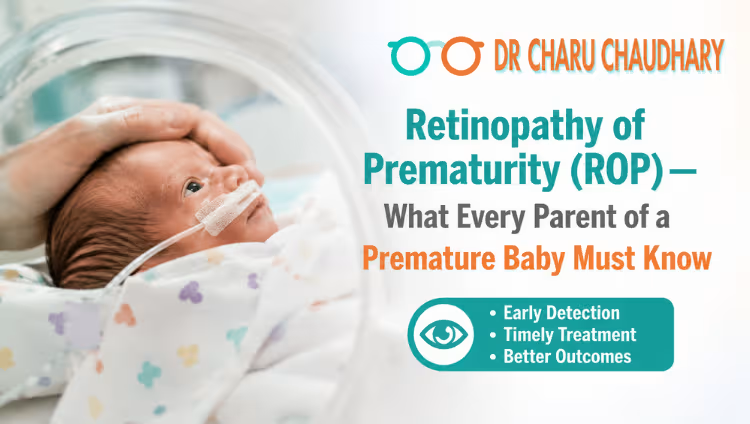
Retinopathy of Prematurity (ROP) is an eye condition that affects premature babies when abnormal blood vessels grow in the retina. If not detected early, ROP can lead to vision problems or even blindness. Timely ROP screening and treatment are extremely important to protect a baby’s eyesight and ensure healthy development. Bringing a premature baby into the world is a journey filled with both hope and anxiety. As a parent, you are likely navigating a whirlwind of medical terms, NICU monitors, and specialized care plans. Among these concerns, one of the most critical—yet often misunderstood—is Retinopathy of Prematurity (ROP). It is a condition that specifically targets the delicate eyes of our littlest fighters. As a retina specialist, I have sat with many parents, holding their hands as we discuss their baby’s eye health. My goal today is to help you understand ROP, why screening is vital, and how we can work together to protect your baby’s precious sight. What Is Retinopathy of Prematurity (ROP)? To understand ROP, think of the eye like a high-tech camera. The retina is the “film” at the back of the camera that captures images and sends them to the brain. In a full-term baby, the blood vessels that nourish the retina finish growing just before birth. However, when a baby is born too early, these vessels haven’t reached the edges of the retina yet. After birth, these vessels can start growing in a disorganized or “abnormal” way. Instead of lying flat, they might leak or bleed, leading to scarring. If this scarring pulls the retina away from the back of the eye, it causes vision loss. Premature babies are at risk because their internal systems are still learning to adapt to the world outside the womb. This is why consulting a Retina specialist in Lucknow for early evaluation is a non-negotiable step in your baby’s NICU journey. Which Babies Are at Higher Risk for ROP? Not every premature baby will develop ROP, but certain factors increase the risk significantly. We closely monitor babies who meet the following criteria: If your baby falls into these categories, please do not panic. Most babies with ROP have mild cases that resolve on their own, but we must watch them like a hawk to be sure. Retinopathy of Prematurity Symptoms Parents Should Know One of the most challenging things about ROP is that it has no visible symptoms in its early stages. You cannot see ROP by looking at your baby’s eyes in the nursery. There is no redness, no tearing, and no obvious pain. This is why the ROP eye test for premature babies is the only way to know what is happening. However, as a child grows, some signs might suggest that ROP occurred or is affecting their vision: Because early ROP is “invisible,” we rely entirely on clinical screening to save sight. 📊 Retinopathy of Prematurity Stages (Quick Chart) We categorize ROP into stages based on the severity of the abnormal vessel growth. ROP Stage What It Means Stage 1 Mildly abnormal blood vessel growth. Most babies get better without treatment. Stage 2 Moderate abnormal growth. Usually improves on its own but requires close monitoring. Stage 3 Severe abnormal growth. Vessels become tangled and scarred. Treatment is often needed. Stage 4 Partial retinal detachment. The retina begins to pull away from the eye wall. Stage 5 Complete retinal detachment. This is the most severe stage and can lead to blindness. Understanding the Stages: Stages 1 and 2 often resolve naturally as the baby grows. However, when a baby reaches Stage 3 “plus disease” (where vessels become dilated and twisted), we move quickly toward treatment. ROP stage 5 treatment is much more complex and involves major surgery, which is why we aim to catch everything at Stage 3 or earlier. Why Is the ROP Eye Test Important for Premature Babies? The window of opportunity to treat ROP is very small. If we miss the “threshold” for treatment, the condition can progress to permanent blindness within days. Timely screening is the only way to: I often tell parents in my clinic that “timing is everything.” Parents are strongly advised to consult a trusted eye specialist in Lucknow as soon as the neonatologist recommends an eye check, usually within 3 to 4 weeks after birth. How Is the ROP Screening Procedure Done? It is natural to feel protective when you see your tiny baby undergoing tests. Rest assured, the ROP procedure is a standard, safe, and quick examination. The exam usually takes only a few minutes. Your baby might cry a little because they don’t like being held still, but they are not in significant pain. ROP in Premature Babies — Treatment Options If we find that the ROP is progressing to a stage that threatens vision, we have several effective tools. Retinopathy of Prematurity Treatment in Lucknow has advanced significantly, offering babies a great chance at normal vision. Dr. Charu Chaudhary is known for advanced retina care and timely ROP management, ensuring that every baby receives a customized treatment plan based on their specific stage. A Story of Hope: The Journey of Baby Kabir I remember Baby Kabir, born at just 28 weeks. His parents were terrified when I told them he had reached Stage 3 ROP. They felt like they had already been through enough in the NICU. We performed a laser procedure the very next day. It was a stressful hour for the parents, but the procedure was a success. Today, Kabir is three years old. He wears glasses for mild nearsightedness, but he can see the world, chase his dog, and read his favorite picture books. Early screening was the hero of Kabir’s story. It can be the hero of your baby’s story, too. Recovery and Long-Term Vision Care After ROP Treatment Treatment is the first step, but the journey doesn’t end there. Even after successful treatment, premature babies need long-term follow-ups. Regular visits to a pediatric retina specialist ensure that any minor issues are caught before they affect your child’s learning and development. How Parents Can Protect Their
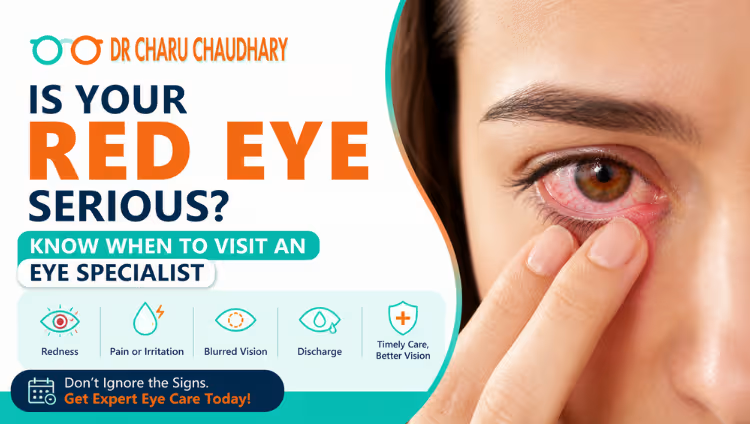
Red eyes are often caused by allergies, dryness, or lack of sleep, but severe pain, blurry vision, light sensitivity, or sudden redness may indicate a serious eye condition. If redness lasts more than a few days or affects only one eye, you should visit an eye specialist for proper evaluation and treatment. We have all looked in the mirror at some point and seen a “bloodshot” eye staring back. Most of the time, a red eye is just your body’s way of saying you are tired or that the pollen in the air is acting up. It usually goes away with a little rest or a few cooling drops. However, as an experienced eye specialist, I often see patients who wait too long to seek help. They thought it was “just a red eye,” only to find out it was something that needed urgent medical care. What Causes Red Eyes? When the tiny blood vessels on the surface of your eye expand or become inflamed, your eye looks red. There are many reasons why this happens. Some are simple lifestyle issues, while others are medical conditions. 1. Allergies Allergies are perhaps the most common cause of redness. Dust, pet dander, or seasonal pollen can make your eyes react. Along with redness, you will usually feel a lot of itching and see some watery discharge. 2. Eye Strain In today’s digital world, we spend hours looking at phones and laptops. This “digital eye strain” makes our eyes work too hard. The muscles get tired, and the surface of the eye becomes dry and red. 3. Dry Eyes Your eyes need tears to stay healthy and clear. If your tear glands don’t produce enough tears, or if the quality of the tears is poor, your eyes become “dry.” This leads to a constant stinging feeling and a red appearance. 4. Infection (Pink Eye) Conjunctivitis, commonly known as “pink eye,” is an infection of the thin layer covering the white of your eye. It can be caused by bacteria or a virus. It is very contagious and often comes with a sticky discharge. 5. Lack of Sleep If you aren’t sleeping well, your eyes aren’t getting the rest they need. This reduces the amount of oxygen reaching your eyes, causing the blood vessels to swell up. 6. Contact Lenses If you wear contact lenses for too long or don’t clean them properly, they can irritate the eye. Sometimes, a red eye is a sign of a corneal ulcer caused by sleeping in your contact lenses. When Is a Red Eye Harmless and Temporary? Not every red eye requires a trip to the clinic. If your eye is slightly red but you feel mostly okay, it might be a temporary issue. Mild irritation often happens if you get a bit of soap in your eye or if you’ve been in a smoky room. In these cases, the redness usually fades within a few hours. Seasonal allergies can make your eyes red for a few days, but if you take your usual allergy medicine or use over-the-counter lubricating drops, the redness should improve. Tiredness is another harmless cause. If you stayed up late finishing a project, your eyes might look bloodshot the next morning. A good night’s sleep and a cold compress usually fix this. Home Care Tip: If your eye is red but there is no pain and your vision is clear, try resting your eyes and using “artificial tears” (lubricating drops). If it gets better in 24 to 48 hours, you likely don’t have a serious problem. Warning Signs That Your Red Eye Could Be Serious This is where we need to be careful. As the best eye surgeon in Lucknow, I tell my patients to watch out for “Red Flags.” If you experience any of the following, please do not wait. Severe Pain A “gritty” or “scratchy” feeling is common with dry eyes. But deep, throbbing pain inside the eye is not normal. It could be a sign of high pressure inside the eye (Glaucoma) or deep inflammation (Uveitis). Blurry Vision If your vision suddenly becomes cloudy or you see “halos” around lights, your eye is in trouble. This is a sign that the deeper structures of the eye are affected. Light Sensitivity Does looking at your phone or a bright window hurt your eyes? Intense light sensitivity is a classic sign of a corneal injury or an internal infection. Swelling If your eyelids are swollen or if the white of your eye looks like it is bulging, you need an eye specialist immediately. This could be a sign of a deep tissue infection. Sudden Redness If your eye turns deep red (like a pool of blood) in just a few seconds, it might be a burst blood vessel. While often harmless, if it happens along with pain, it is an emergency. Thick Discharge Watery eyes are okay. But if you see yellow, green, or thick white discharge that sticks your eyelashes together in the morning, you have an infection that needs prescription drops. Mild vs Serious Red Eye Symptoms (Quick Comparison Chart) Use this table to quickly check your symptoms: Mild Red Eye Symptoms Serious Red Eye Symptoms Mild irritation or itchiness Severe, deep, or throbbing pain Redness in both eyes Vision changes or sudden blurriness Improves with rest or drops Persistent redness (more than 2 days) Watery or no discharge Thick yellow or green discharge Feeling of “sand” in the eye Sensitivity to light Usually caused by tiredness/allergies May involve headache or nausea One Red Eye Only – Should You Be Worried? When only one eye is red, it is often more concerning than when both eyes are red. Burst Blood Vessel: Sometimes, a tiny blood vessel breaks due to a sneeze or heavy lifting. It looks scary—like a bright red patch on the white of your eye—but it usually doesn’t hurt. This is called a subconjunctival hemorrhage. Infection or Injury: If only one eye is red, painful, and watery, you might have a scratched cornea or a foreign

You should see a doctor immediately if red eyes are accompanied by sharp pain, sudden vision changes, extreme light sensitivity, or thick discharge. While mild redness from tiredness or allergies often fades, persistent redness in one eye or redness following an injury requires an urgent check-up to prevent permanent vision loss. As an eye specialist, I often see patients who walk into my clinic with “bloodshot eyes.” Some are worried, while others have ignored the redness for weeks, thinking it would go away on its own. My name is Dr Charu Chaudhary, and my goal is to ensure that your vision remains clear and your eyes stay healthy. In my years of providing eye treatment in Lucknow, I have realized that many people don’t know the difference between a simple eye strain and a serious medical emergency. This guide will help you understand when you can rest your eyes at home and when you need to visit the best eye specialist in Lucknow for professional care. Why Are My Eyes Red? Causes, Treatment, and Action Plan Redness occurs when the tiny blood vessels on the surface of your eye (the white part called the sclera) become swollen or irritated. This makes the eye look pink or red. Common Causes of Red Eyes Basic Home Care (Action Plan) If your eyes are slightly red but you have no pain or vision loss, you can try: If these don’t work within 24–48 hours, it’s time to seek expert eye treatment in Lucknow. Red Eyes: When Is It Harmless vs. When to Get Checked? Distinguishing between a harmless red eye and a serious one is vital. Harmless (Usually):Imagine you stayed up late finishing a project. In the morning, your eyes look bloodshot. However, they don’t hurt, and you can see perfectly fine. After a good nap or some hydrating drops, the redness fades. This is generally harmless. Serious (Action Required):Now, imagine you wake up and only one eye is deep red. It feels like there is sand in it, and the light from your window hurts. This is not just “tiredness.” This could be an infection or inflammation inside the eye. As a retina specialist in Lucknow, I often tell my patients, “If only one eye is red and it feels uncomfortable, don’t wait. One-sided redness is often a sign of a localized problem that needs a doctor’s diagnosis.” 8 Signs That Red, Bloodshot Eyes Need Medical Attention If you notice any of the following eight symptoms, please book an appointment with a specialist immediately: What Causes Redness in One Eye? Should You Worry? When both eyes are red, it’s often allergies or tiredness. But redness in one eye is something I take very seriously at my clinic. Why just one eye? What causes one red eye and headache? If you have a very red eye accompanied by a severe headache on the same side, it could be a sign of Acute Angle-Closure Glaucoma. This is a medical emergency where the pressure inside the eye rises suddenly. It can lead to blindness within hours if not treated. Another cause could be cluster headaches, but always rule out eye pressure issues first. Painful vs. Painless Red Eye – What’s the Difference? Understanding the “pain factor” helps us categorize the urgency of your eye treatment in Lucknow. Painful Red Eye Conditions like corneal ulcers (a sore on the eye), iritis (inflammation), or acute glaucoma cause significant pain. These are “sight-threatening” conditions. If your eye hurts, it is your body’s way of screaming for help. Painless Red Eye If you have redness in one eye without pain, it might be a “Subconjunctival Hemorrhage.” This happens when you sneeze, cough, or lift something heavy, causing a tiny blood vessel to pop. While it looks dramatic (like a pool of blood), it usually doesn’t hurt and clears up in 10 days. However, you should still see a doctor to ensure your eye pressure is normal. How Long Is Too Long for Red Eyes? A common question I get is, “How long should I wait before calling you, Dr. Chaudhary?” The general rule is the 48-hour window. Most minor irritations from wind, dust, or lack of sleep will improve significantly within two days. If your eye remains “fire-engine red” after 48 hours, or if the symptoms are getting worse instead of better, you must consult an expert. How to Cure Red Eyes Quickly (Safe Tips) Everyone wants to know how to cure red eyes immediately. While I understand the rush, your eye health is more important than a quick fix. What NOT to do: Do not use “redness relief” drops (the ones that promise to make eyes white in minutes) frequently. These work by shrinking blood vessels. When the medicine wears off, the vessels often swell up even larger than before. This is called “rebound redness.” Safe ways to clear eyes: When You Need an Ophthalmologist for Red Eyes While a general doctor can treat basic pink eye, an ophthalmologist (a medical eye doctor) is needed for anything complex. As an ophthalmologist in Lucknow, I use advanced tools like a slit-lamp microscope to look inside your eye. We check the pressure, the health of your cornea, and the back of your eye (the retina). A Real-Life Example from My Clinic I once had a patient named Mr. Sharma. He had a red eye for three days. He thought it was just “dust” and kept washing it with tap water. By the time he came to see me, he had developed a severe corneal ulcer (an infection). Because he waited, he now has a small permanent scar on his eye that affects his vision. If he had sought eye treatment in Lucknow on day one, we could have cleared the infection with simple drops without any scarring. Best Treatment Options for Red Eye in Lucknow When you visit Dr Charu Chaudhary, your treatment is personalized. We don’t just give “red eye drops”; we find the root cause. Finding the best eye specialist in Lucknow ensures that you aren’t just treating the symptom, but protecting your future sight. FAQ: Frequently Asked Questions 1. When should
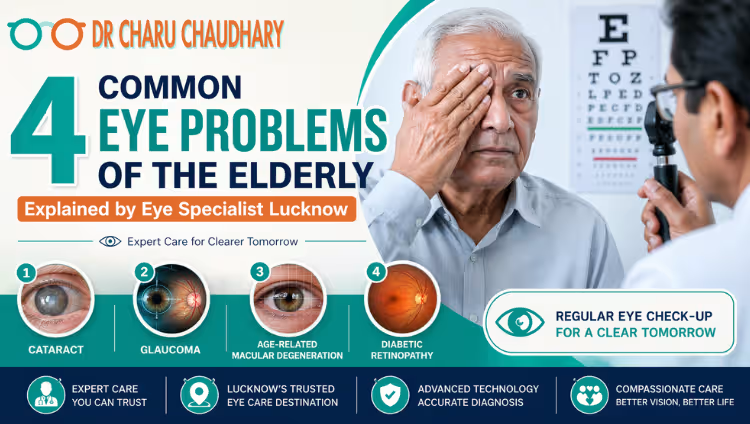
The most common eye problems in elderly people include cataracts, glaucoma, age-related macular degeneration (AMD), and diabetic retinopathy. You should see an eye doctor immediately if you experience sudden blurred vision, eye pain, “flashes” of light, or a sudden increase in floaters, as these can signal serious conditions requiring urgent care. As we grow older, our bodies undergo many changes. We might notice our hair turning grey or our joints becoming a bit stiffer. Just like the rest of our body, our eyes also age. While some changes are a normal part of getting older, others can lead to serious vision loss if not treated in time. As an experienced eye specialist in Lucknow, Dr Charu Chaudhary, I have spent years helping seniors regain their sight and maintain their independence. I believe that understanding your eyes is the first step toward protecting them. In this guide, I will explain the four most common eye problems seen in the elderly and how we can manage them together. Why Eye Problems Increase With Age Our eyes are like high-precision cameras. Over time, the “lens” can get cloudy, the “film” (the retina) can wear out, and the “cables” (the optic nerve) can get damaged. Natural Aging of the Eye Starting in our 40s and 50s, the lens inside the eye becomes less flexible. This is why most people start needing reading glasses—a condition called presbyopia. However, as we enter our 60s and 70s, the changes become more significant. The muscles that control our pupils weaken, making our eyes less responsive to light. This is why many seniors feel they need “brighter lights” to read or perform tasks. Reduced Vision Clarity You might notice that colors look a bit duller or that it is harder to tell the difference between similar colors (like dark blue and black). Night vision also tends to decline. While these can be normal, they can also be early warning signs of the conditions we are about to discuss. A Real-Life Example: I remember a patient, Mr. Kapoor, a retired teacher in Lucknow. He stopped driving at night because the “glare” from oncoming headlights was too much. He thought it was just “old age” and waited two years to see me. When he finally visited, we found he had advanced cataracts. After a simple procedure, he told me, “Doctor, I didn’t realize the world was this bright!” Delaying treatment only made his life harder than it needed to be. Common Eye Problem #1 – Cataract A cataract is perhaps the most well-known age-related eye issue. It is the leading cause of vision loss worldwide, but the good news is that it is completely treatable. What is it? Inside your eye is a clear lens that focuses light. As we age, the proteins in this lens begin to clump together. Think of it like a clear window slowly becoming “foggy” or “frosted.” Eventually, it becomes difficult for light to pass through. Symptoms Treatment Options There are no eye drops or medicines that can “clear” a cataract. The only effective treatment is a small surgery where the cloudy lens is replaced with a clear artificial lens. Modern technology has made this a very safe, 10–15 minute procedure. As a leading eye surgeon in Lucknow, Dr Charu Chaudhary, I use advanced techniques that allow patients to return home the same day and recover very quickly. Common Eye Problem #2 – Glaucoma Glaucoma is often called the “Silent Thief of Sight.” This is because it usually has no symptoms in the early stages, but if left untreated, it can cause permanent blindness. Silent Vision Loss Glaucoma happens when the fluid pressure inside the eye rises too high. This pressure damages the optic nerve, which is the “cable” that sends images from your eye to your brain. Because the damage starts with your side (peripheral) vision, you might not notice anything is wrong until most of your sight is gone. The Importance of Early Detection You cannot “feel” the pressure in your eye. The only way to find glaucoma is through a comprehensive eye exam. If we catch it early, we can usually manage it with simple daily eye drops. Who is at risk? If you haven’t had your eye pressure checked recently, you should visit the best eye specialist in Lucknow for a screening. Common Eye Problem #3 – Age-Related Macular Degeneration (AMD) While cataracts affect the “lens” of the eye, AMD affects the “film”—the retina. Specifically, it affects a tiny spot in the center of the retina called the macula. Central Vision Loss The macula is responsible for your “straight-ahead” vision. It is what allows you to read, sew, drive, and recognize faces. When someone has AMD, they might see a dark spot or a “blur” in the very center of their vision, while their side vision remains clear. Difficulty Recognizing Faces One of the most heartbreaking parts of AMD is that patients find it hard to see the faces of their grandchildren or friends. Straight lines might also look wavy or crooked. Risk Factors For advanced cases of AMD, you should consult a retina specialist in Lucknow for advanced care. There are now injections and laser treatments that can help slow down the disease and save your remaining vision. Common Eye Problem #4 – Diabetic Retinopathy India is often called the “diabetes capital of the world,” and Lucknow is no exception. If you have diabetes, your eyes are at high risk. Impact of Diabetes on Eyes High blood sugar levels damage the tiny blood vessels inside the retina. These vessels can swell and leak fluid, or they can even close off entirely. In response, the eye tries to grow new, weak blood vessels that bleed easily, causing severe vision damage. The Need for Regular Checkups In the early stages, diabetic retinopathy may cause no symptoms or only mild vision problems. However, it can lead to total blindness. If you have diabetes, you must have a “dilated eye exam” at least once a year. Early diagnosis by a retina
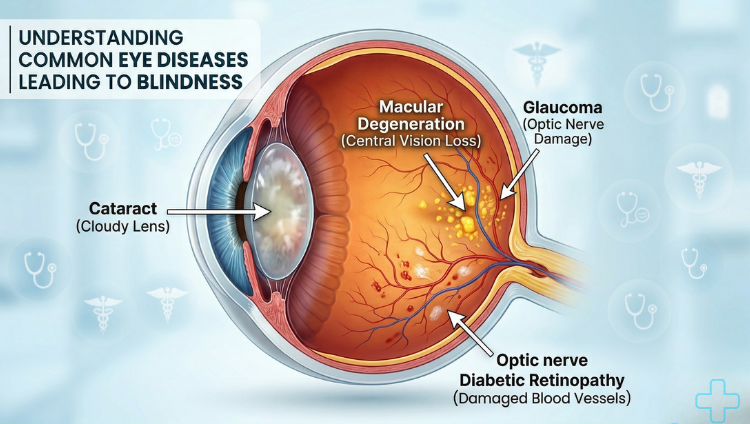
Posted by Dr Charu Chaudhary | Vitreo Retina Surgeon Our eyes are the windows to the world. They allow us to see the colors of a sunrise, the faces of our loved ones, and the beauty of nature. However, many people take their eyesight for granted until it starts to fade. Vision loss is a scary prospect, but the good news is that most causes of blindness are preventable or treatable if caught early. If you are looking for the best eye specialist in Lucknow, you have come to the right place. In this blog, we will discuss the most common eye diseases that lead to blindness and how you can protect your vision. Dr. Charu Chaudhary, a renowned Ophthalmologist in Lucknow, believes that awareness is the first step toward prevention. Why Understanding Eye Diseases Matters Blindness does not always happen overnight. In many cases, it is a slow process, with the vision fading over months or years. Because the change is gradual, many people don’t realize they are losing their sight until it is too late. By knowing what to look for, you can save your sight. Whether you need a general check-up or are looking for a retina treatment in Lucknow, understanding these conditions will help you make the right decisions for your health. 1. Cataracts: The Leading Cause of Blindness A cataract is the clouding of the eye’s natural lens. Think of it like a window that has become foggy or dirty. When the lens is cloudy, light cannot pass through properly, making everything look blurred. Symptoms of Cataracts: How it is treated: Cataracts are very common as people age. Fortunately, they are treatable. A simple surgery can replace the cloudy lens with a clear artificial one. If you notice these symptoms, consulting the best eye specialist in Lucknow can help you regain clear vision. 2. Glaucoma: The “Silent Thief” of Sight Glaucoma is often called the “silent thief” because it usually has no symptoms in the early stages. It happens when fluid builds up in the front part of the eye, increasing the pressure. This pressure damages the optic nerve, which sends visual information to your brain. Why is it dangerous? Once the optic nerve is damaged, the vision loss is permanent. It usually starts by affecting your side (peripheral) vision. Prevention and Care: 3. Age-Related Macular Degeneration (AMD) AMD is a condition that affects the macula—the part of the eye responsible for sharp, central vision. This is the vision you use for reading, driving, and recognizing faces. Two Types of AMD: How to protect your eyes: Eating green leafy vegetables, quitting smoking, and protecting your eyes from UV rays can reduce the risk. If you notice straight lines appearing wavy, see an Ophthalmologist in Lucknow immediately. 4. Diabetic Retinopathy For people living with diabetes, high blood sugar can damage the tiny blood vessels in the retina. This is known as Diabetic Retinopathy. If left untreated, it can lead to total blindness. The Role of a Specialist: Because this disease affects the back of the eye, you may need to see a retina specialist in Lucknow. They can check for leaking vessels and use laser treatments to prevent further damage. Steps to Manage Diabetic Retinopathy: 5. Refractive Errors (Uncorrected) Believe it or not, simple things like nearsightedness (myopia) or farsightedness (hyperopia) can lead to severe visual impairment if they aren’t corrected with glasses or lenses. In many parts of the world, people lose their ability to work or study simply because they don’t have the right glasses. 6. Trachoma Trachoma is an infectious disease caused by bacteria. It is more common in areas with poor sanitation. Repeated infections cause the eyelids to turn inward, leading the eyelashes to rub against the eye. This causes scarring and, eventually, blindness. 7. Corneal Opacity The cornea is the clear front surface of your eye. Injuries, infections (like the herpes virus), or vitamin deficiencies can cause the cornea to become scarred or cloudy. This blocks light from entering the eye. Eye Diseases That Cause Blindness in Children It is a heartbreaking reality that children can also suffer from blindness. Early detection is even more critical for children because their brains are still learning how to see. Step-by-Step Guide: How to Prevent Vision Loss Preventing blindness starts with small, daily habits. Follow these steps to keep your eyes healthy: Step 1: Schedule Regular Eye Exams Even if you think your vision is fine, some diseases have no early symptoms. Adults should have a comprehensive eye exam every 1-2 years. Step 2: Know Your Family History Many eye conditions, like glaucoma and AMD, are hereditary. Talk to your relatives about their eye health. Step 3: Eat for Your Eyes Your diet matters. Include: Step 4: Wear Sunglasses Protect your eyes from harmful UV rays by wearing sunglasses that block 99% to 100% of UVA and UVB radiation. Step 5: Follow the 20-20-20 Rule If you spend a lot of time on computers or phones: Step 6: Quit Smoking Smoking increases the risk of cataracts, optic nerve damage, and macular degeneration. Warning Signs: When to See an Ophthalmologist Immediately If you experience any of the following, do not wait. Contact the best eye specialist in Lucknow right away: FAQs: Common Questions About Blindness and Eye Health Which eye disease leads to blindness? Several diseases can lead to blindness if untreated. The most common are Cataracts, Glaucoma, Diabetic Retinopathy, and Age-Related Macular Degeneration (AMD). Cataracts are the leading cause worldwide, but are mostly reversible with surgery. What are the top 10 eye diseases? The top 10 most common eye conditions include: Eye diseases that cause blindness in children? The primary causes include Childhood Cataracts, Retinopathy of Prematurity (ROP), Vitamin A Deficiency, Strabismus (Crossed eyes), and Genetic disorders like Leber Congenital Amaurosis. Can blindness from Glaucoma be reversed? Unfortunately, no. Vision lost due to Glaucoma is permanent because it involves damage to the optic nerve. However, early treatment can prevent further vision loss. This is why regular check-ups with an Ophthalmologist in Lucknow are vital. Is it normal for vision to blur as I get older? While